






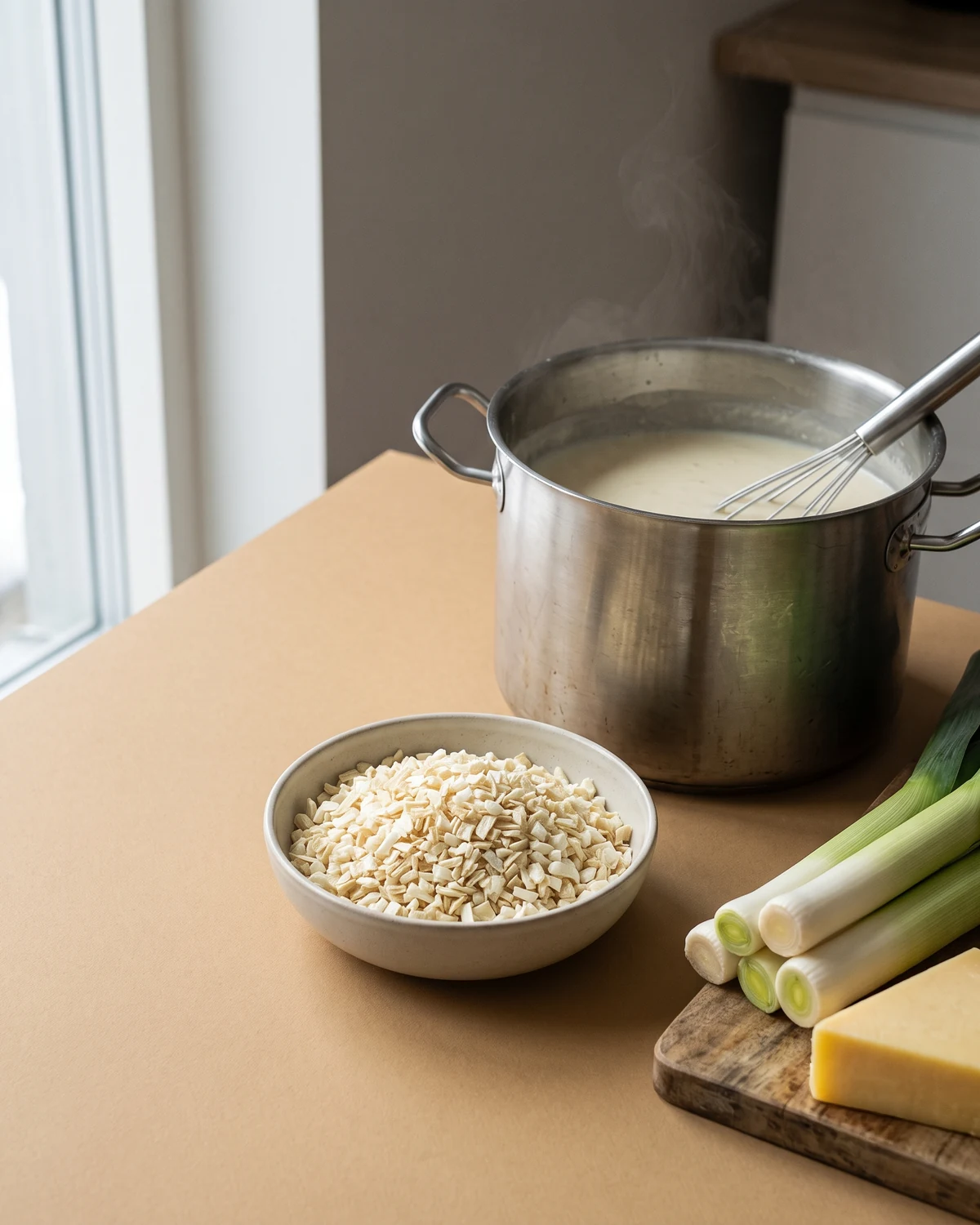

CHOPPED · 3-5 MM
White Onion Chopped
Uniform pieces for even distribution in dry mixes, stuffings and ready-meal bases.
View details for white onion choppedExport market · Belgium
Belgium is a small country with one of Europe's largest ports and one of its densest food industries. Antwerp serves not only Belgian manufacturers but France, Luxembourg and West Germany behind them, and the Belgian sauce, soup, frozen-vegetable and prepared-meal sector buys dehydrated onion by the container. A dehydrated onion exporter to Belgium prepares the EU document set, adds what the Federal Agency for the Safety of the Food Chain asks for, and ships to Antwerp in four to five weeks.
KlarHarvest does exactly that, from one pallet upwards, with the lot's laboratory report before loading.
The market
Belgium's food industry punches above its size: it is the country of frozen vegetables, of industrial sauces and mayonnaise, of chocolate and biscuits, and of a prepared-meal sector that supplies retailers across Western Europe. Dehydrated onion goes into the savoury half of that - sauces, soups, frozen vegetable mixes, meat products and the ready meals - mostly as chopped, minced and powder, less often as flakes. That is the market a dehydrated onion exporter to Belgium sells into.
Antwerp is the second-largest port in Europe and, for dried vegetables, a close rival to Rotterdam. Belgian importers and traders buy at origin and resell into France and Germany the way the Dutch do, and Indian customs data shows Belgium alongside the Netherlands as a destination that pays for specification and documents rather than for the cheapest lot. A container cleared at Antwerp is in free circulation for the whole EU. A dehydrated onion exporter to Belgium has to answer to that buyer, not to a slogan.
Belgian buyers work in two languages and three regions, and their quality departments are certified to IFS or BRCGS almost without exception, because Belgian retail and the export customers demand it. The supplier questionnaire is standard, the residue file is standard, and a Belgian quality manager expects the documents before the samples, not after the order.
KlarHarvest is built for that buyer: a merchant exporter sixty kilometres from the plants, selecting and supervising every lot, with the EU document set - certificate of analysis against Regulation 396/2005, plant certificate, allergen, GMO and food-fraud statements, specification - prepared with the quotation, in English, with French and Dutch labels on request.
Products
The Belgian sauce, soup and frozen-food industry buys chopped and minced white onion and onion powder; the meat and snack sector takes minced and granules; traders in Antwerp buy flakes, granules and powder in full containers for France and Germany; the ethnic-food trade specifies red onion. Every product below ships with the EU document set. It is the range a dehydrated onion exporter to Belgium is asked for first.
CHOPPED · 3-5 MM
Uniform pieces for even distribution in dry mixes, stuffings and ready-meal bases.
View details for white onion chopped
MINCED · 1-3 MM
Fine cut with fast rehydration - ideal for sauces, dressings and short-cook recipes.
View details for white onion minced
POWDER · 100 MESH
Fine powder with concentrated flavour - the base ingredient for spice blends, marinades and snack seasonings.
View details for white onion powder
FLAKES · 8-20 MM
Large dried pieces, neutral cream-white colour. The workhorse form for soups, sauces and visible-piece applications.
View details for white onion flakes (kibbled)
CHOPPED · 3-5 MM
Red onion pieces for ethnic cuisine ranges, chutneys, curry bases and dry mixes.
View details for red onion chopped
GRANULES · 0.5-1 MM
Free-flowing granulation for seasoning blends and coating systems. Consistent mesh size, lot after lot.
View details for white onion granulesCompliance
Belgian import control of dried onion is EU food law applied by the FASFC (AFSCA/FAVV) and Belgian customs. These are the points a Belgian importer and their broker raise, and the document that answers each. A dehydrated onion exporter to Belgium is judged on this list before the price is discussed.
Customs
Belgium applies the Common Customs Tariff; its reduced VAT rate on food is the lowest of the three Benelux and North Sea entry points. Every quotation from a dehydrated onion exporter to Belgium states which line and which rate it expects.
| Item | Belgium (EU) | Note |
|---|---|---|
| Customs code | CN 0712 20 00 | Onions, dried, whole, cut, sliced, broken or in powder |
| Third-country duty | 6.4 % of customs value | Common Customs Tariff |
| Preferential duty | Scheme-dependent | Confirmed per shipment on the certificate of origin |
| Import VAT | 6 % reduced rate for food | Reclaimable; deferral licence (ET 14000) available to Belgian importers |
| Customs value | Product price plus freight and insurance to the EU border | CIF Antwerp makes this explicit |
| Free circulation | Clearance at Antwerp covers onward sale to France, Germany, Luxembourg | The trader's model |
Logistics
Antwerp handles almost everything; Zeebrugge serves a smaller volume on the coast. These are the routes a dehydrated onion exporter to Belgium actually books.
| Destination | Port of loading | Transit (sea) | 20 ft load | 40 ft HC load |
|---|---|---|---|---|
| Antwerp | Pipavav | 4-5 weeks | 9-13 t by cut | 21-26 t |
| Zeebrugge | Pipavav, via transhipment | 5 weeks | 9-13 t by cut | 21-26 t |
| Onward by truck to Lille, Luxembourg, Cologne | via Antwerp | +1-2 days | - | - |
| LCL to Antwerp | Pipavav | 5-6 weeks | from one pallet | - |
Chopped and minced, the Belgian industry's cuts, stow ten to thirteen tonnes in a 20 ft container; powder reaches the weight limit at twelve to thirteen.
Packing
Belgian frozen-food and sauce plants run on Europallets and automated intake; the bag and the pallet are specified accordingly. It is the packing instruction a dehydrated onion exporter to Belgium writes for this market.
Applications
Belgium's savoury food industry is export-led, and Indian onion goes out again inside it. These are the segments a dehydrated onion exporter to Belgium supplies most often.
Onion powder and minced onion in the sauce and condiment ranges Belgium supplies to European retail and foodservice.
Chopped white onion in frozen vegetable mixes, gratins and the frozen ready-meal sector of Flanders.
Chopped and minced onion in dry and wet soups for the Belgian and French markets.
Minced onion in sausage, meatballs and the charcuterie sector.
Granules and powder in crisps and seasoning blends.
Flakes, granules and powder in full containers for Antwerp importers supplying France and Germany.
Quality
The Belgian self-checking system and the IFS and BRCGS certification of Belgian manufacturers set the bar; every lot is prepared to it. This file is what a dehydrated onion exporter to Belgium hands over with every lot.
Every lot is filled and sealed inside a BRCGS-certified dehydration plant in Mahuva; the plant certificate travels in the supplier file.
Pesticides to Regulation 396/2005, heavy metals to Regulation 2023/915, microbiology and physical parameters by an NABL-accredited laboratory before loading; a retained sample for a Belgian laboratory on arrival.
No sulphites, no preservatives, no anti-caking agent unless specified and declared.
A lot code and QR on every bag link to the plant, the harvest window and the laboratory report - the record the FASFC and an IFS auditor ask for.
FSSAI licence and APEDA registration in process; numbers are published on this page the day they are issued. Every other claim a dehydrated onion exporter to Belgium makes on this page is held to the same rule.
Order flow
Eight documented steps between the inquiry and the container at Antwerp, each visible in the client portal. This is the order flow with KlarHarvest as your dehydrated onion exporter to Belgium.
Product, cut, quantity, Antwerp; within one business day the specification, price, freight and lead time in one document. It is the first document a dehydrated onion exporter to Belgium is measured on.
200-500 g per cut by courier with the sample lot's laboratory report and the supplier-approval file for your quality department.
On confirmation the raw-material price is fixed with the plant the same day.
The lot is filled and sealed inside the certified plant; photos and video in the portal, a live video call at packing on request.
The NABL-accredited laboratory tests the finished lot; the COA reaches you before loading, and nothing ships without your release.
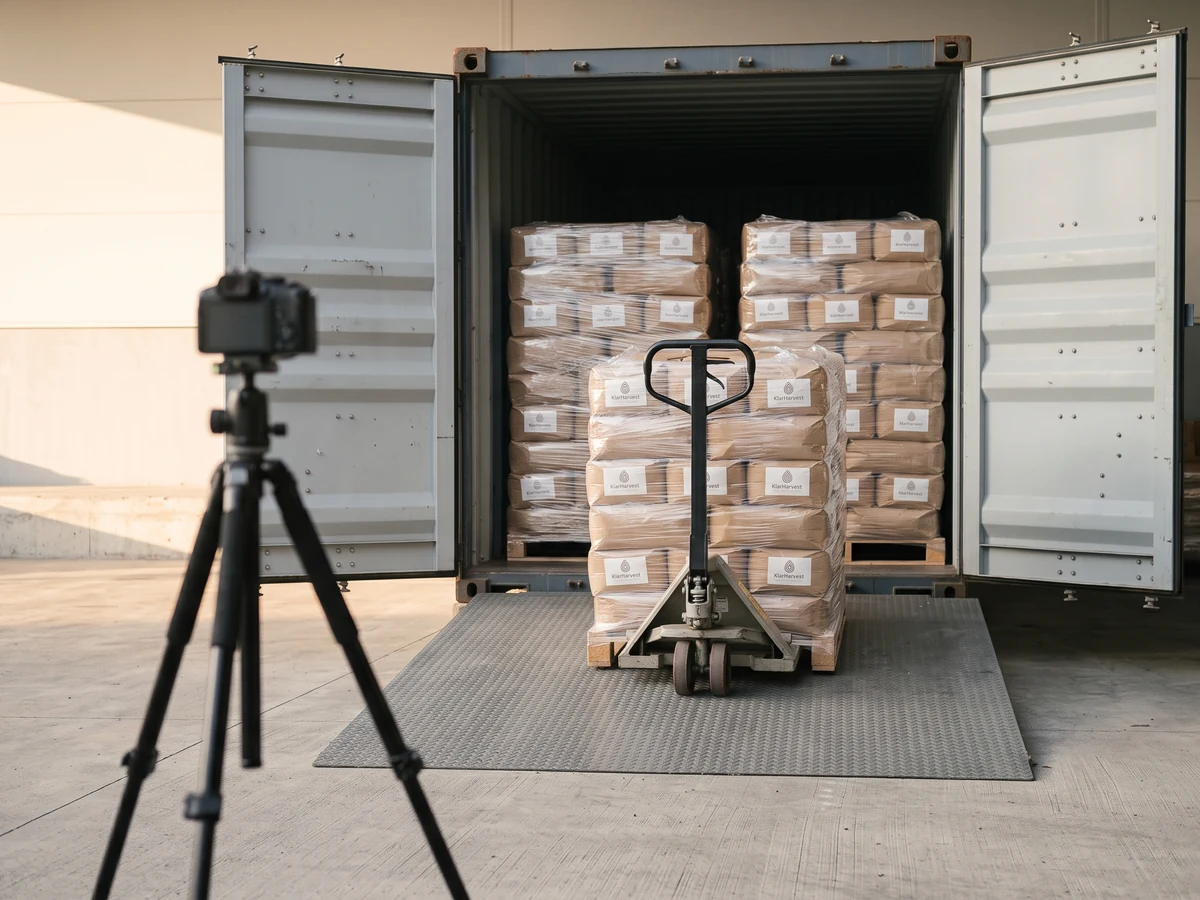
Bags counted into the container on video at our premises, seal number recorded, container tracked on the four-to-five-week sailing to Antwerp.
Invoice, packing list, certificate of origin, COA and bill of lading as drafts before sailing, originals as your terms require.
Your broker clears at Antwerp; the goods are in free circulation for Belgium and its neighbours, and the lot record behind the QR code stays online for your traceability file.
Why KlarHarvest
Six things you can check before the first order, not after.
Belgian quality departments want the documents first; the supplier-approval file comes with the quotation.
The EU residue and microbiology report exists before stuffing, and nothing ships without your release.
French and Dutch retail labels under your brand, printed at the plant.
LCL and mixed pallets for product development and for the smaller sauce and snack producers.
Raw-material price fixed with the plant the day you confirm; quotes valid 7-10 days with no buffer.
Bags counted into the box on video, the seal number, the container followed to Antwerp.
FAQ
What importers in Belgium ask before the first order. Anything not covered here, send us the question - you have an answer within one business day.
Antwerp, in four to five weeks from Pipavav; Zeebrugge on request. From Antwerp the container reaches Lille, Luxembourg or Cologne by truck within a day or two.
It can sample at import under the EU official-controls regulation, as any member-state authority can; dried onion clears on documents and the lot's certificate of analysis answers the sampling.
Yes - bilingual retail labels under your brand with the mandatory particulars, printed and applied at the plant on request.
Yes, with documents: plant certificate, lot COA, allergen, GMO and food-fraud statements, specification sheet - sent with the quotation.
One pallet of dehydrated onion, as LCL or on a mixed pallet; a full container for fresh onion.
About 10-15 days from order to loading for a new lot, then four to five weeks on the water; LCL adds about a week.
Chopped white onion for visible pieces, minced for even distribution, onion powder for sauces and mayonnaise; a mixed pallet of the three is a common first order.
Yes. Neutral bags, certificate of origin and COA per lot, and mixed containers whose pallets can be sold on separately with their own papers.
Yes, in every cut: a validated steam step and re-drying, tested per lot, for mayonnaise, dressings and other cold-filled products.
FOB Pipavav by default with freight shown separately; CFR or CIF Antwerp on request. DDP is not offered.
Because the file is ready before the price is discussed: the specification, the lot laboratory report, the plant certificate and the market's own documents come with the quotation, the raw-material price is locked the day you confirm, and the container waits for your release. A dehydrated onion exporter to Belgium should be measured on that, not on the adjectives.
Which plant fills the lot, which laboratory tests it and against which limits, what the container load is for the cut you want, and what happens to the price between quotation and confirmation. A dehydrated onion exporter to Belgium that answers those four in writing, before the samples, is the one to test; KlarHarvest answers them in the quotation.
By having made it unlikely first - the certificate of analysis is issued before loading and you release the lot - and then by the contract: a retained sample from every lot is kept at origin, a counter-analysis at an accredited laboratory is agreed in advance, and a confirmed deviation is settled by replacement or credit, in writing, as any dehydrated onion exporter to Belgium should be prepared to sign.
KlarHarvest supplies white and red onion in all five cuts on one pallet with one document set, and fresh onion in ventilated containers to the markets where the sailing is short enough. Ask a dehydrated onion exporter to Belgium for the whole range on one quotation rather than three suppliers for three products.
Seasons
Indian white onion is harvested from March to May and dried within the season; the freshest lots and the brightest colour grades are available from April to June, and the plants sell from stored stock for the rest of the year. The Belgian frozen-vegetable and sauce industry runs its own seasonal peaks in the autumn and before the holidays, and a buyer who covers them in the spring buys the freshest lots at the year's firmest supply. A dehydrated onion exporter to Belgium that states this calendar plainly is easier to plan with.
Prices at origin follow the raw onion - 8-9 kg of fresh make one kilo of dried - so our quotations carry a short validity and the raw-material price is locked with the plant the day you confirm. Antwerp traders buy in the same market and resell with a margin; a Belgian manufacturer that buys direct saves it and sees the plant. We quote in euros or US dollars, FOB Pipavav by default, with freight to Antwerp shown separately. The same calendar governs every dehydrated onion exporter to Belgium; the difference is whether it is said before the order.
Choosing
Belgian purchasing starts with the sauce: onion powder for smooth mayonnaise, dressings and sauce bases, minced white onion where the onion should be tasted throughout a sauce or a meat product without pieces, chopped where pieces should show in a frozen vegetable mix, a soup or a gratin. Granules serve the snack and seasoning sector; flakes are the smaller request. Red onion goes to the ethnic-food trade. A dehydrated onion exporter to Belgium that quotes a mixed pallet lets the development kitchen decide.
The Belgian question that follows is the tier: Extra Low Bacterial for the cold-filled sauces and dressings that are Belgium's speciality, Standard for the frozen and cooked products. A first order is often a mixed pallet of powder, minced and chopped so the development kitchen can compare from one delivery. That comparison is the first real test of a dehydrated onion exporter to Belgium.
First order
A sauce manufacturer in Flanders asks for onion powder in Extra Low Bacterial tier for a cold-filled dressing and minced white onion for a cooked sauce. Within one business day it has one quotation: two specifications with the tiers stated, prices FOB Pipavav in euros, freight to Antwerp and a lead time of six to seven weeks door to port. Samples with laboratory reports go out by courier; the IFS supplier-approval file goes to its quality department. That is a first order with a dehydrated onion exporter to Belgium as it actually happens.
The order is one pallet of each as LCL. The raw-material price is locked the same day; the lots are filled and sealed inside the certified plant, the Extra Low lot steam-treated and re-dried; the certificates of analysis against Regulation 396/2005 arrive before loading and the manufacturer releases the shipment. Six weeks later the pallets are cleared at Antwerp by the manufacturer's broker with the EU document set. The second order is a 20 ft container.
Antwerp's importers sell into France, Luxembourg, the Netherlands and West Germany, and a container cleared at Antwerp is in free circulation for all of them. What a re-exporter needs from a dehydrated onion exporter to Belgium is papers that survive a split: a certificate of origin and a certificate of analysis per lot rather than per container, a lot code and QR on every bag, neutral bags where the customer re-labels, and a specification sheet that can be passed on as it is. All of it is standard here, prepared for the first buyer and for the buyer after that.
Other markets
The same lot, a different document set - pick the page for your destination.
The EU as one market - CN 0712 20 00, Regulation 396/2005, IFS and BRCGS supplier approval, Rotterdam and Hamburg in 4-5 weeks.
Exporting to EuropeThe world's largest importer of dried onion and one of our main markets; German-language contact, Hamburg in 4-5 weeks.
Exporting to GermanyEurope's trading hub for dried vegetables - Rotterdam, importers and re-exporters, neutral bags and papers made for re-sale.
Exporting to the NetherlandsUKGT 0712 20 00, IPAFFS where it applies, BRCGS supplier files and red onion for the curry trade; Felixstowe and Southampton.
Exporting to the UKOutside the EU customs union but inside the EEA food rules - Mattilsynet, Norwegian tariff 0712 20, Oslo via Rotterdam or direct.
Exporting to NorwayFDA-registered source plant, prior notice filed by us, FSVP-ready COA, HTS 0712.20 by form; New York, Savannah, Los Angeles.
Exporting to the USASafe Food for Canadians licence holders, CFIA import requirements, bilingual labels, Montreal and Vancouver in 5-6 weeks.
Exporting to CanadaFraction 0712.20.01, SENASICA module and COFEPRIS file, bulk bags outside NOM-051, 48 x 40 pallets; Manzanillo, Veracruz and Altamira in 5-7 weeks.
Exporting to MexicoHalal certificate, Arabic labelling, SFDA and GSO requirements, two weeks from Pipavav for dried and fresh onion; Jebel Ali, Dammam, Jeddah.
Exporting to the GulfSingapore, Malaysia and Vietnam in 2-3 weeks; SFA and MAQIS importer licences, JAKIM halal, ventilated containers for fresh onion.
Exporting to Southeast AsiaMHLW import notification, positive-list residue screening, duty free under the India-Japan CEPA, JIS pallets; Tokyo and Kobe in 4-5 weeks.
Exporting to JapanDAFF import conditions on BICON, the importer as the responsible party, Melbourne, Sydney and Brisbane in 3-4 weeks.
Exporting to AustraliaMPI import health standards and the Food Act importer registration, Auckland and Tauranga in 4-5 weeks, LCL for the smaller market.
Exporting to New ZealandFiji and Papua New Guinea by the pallet - BAF and NAQIA pathways stated, LCL via Singapore, Suva in 5-6 weeks, Fiji the hub for the smaller islands.
Exporting to the Pacific IslandsStart here
Product, cut size, quantity, destination port - that's all we need to start. You'll receive a written quotation with full specifications from a dehydrated onion exporter, not a one-line price.
info@klarharvest.com · WhatsApp +91 97371 01599 · Bhavnagar, Gujarat, India
Samples
200-500 g per product from a current lot, dispatched by courier with the specification sheet and the sample lot's lab report.
A complete written quotation - specification sheet, price with freight shown separately, and lead time - within one business day.
The complete specification sheet as a PDF - cut size and sieve range, moisture, microbiology tiers, packing options and container loads - sent to your e-mail within one business day.
Thank you - your sample request is in. You'll have our written reply with dispatch details within one business day, and the parcel ships by courier with the specification sheet and the lot's lab report.
Thank you - your inquiry is in. You'll have a complete written quotation - specification sheet, price with freight shown separately, and lead time - within one business day.
Thank you - the specification sheet is on its way. You'll have the PDF in your inbox within one business day.