












Standard
Total plate count ≤ 100,000 cfu/g, yeast and mould ≤ 1,000 cfu/g, Salmonella absent in 25 g, E. coli absent. The right tier for products that are cooked - soups, sauces, canned and retorted foods, baked goods.
Quality & certifications
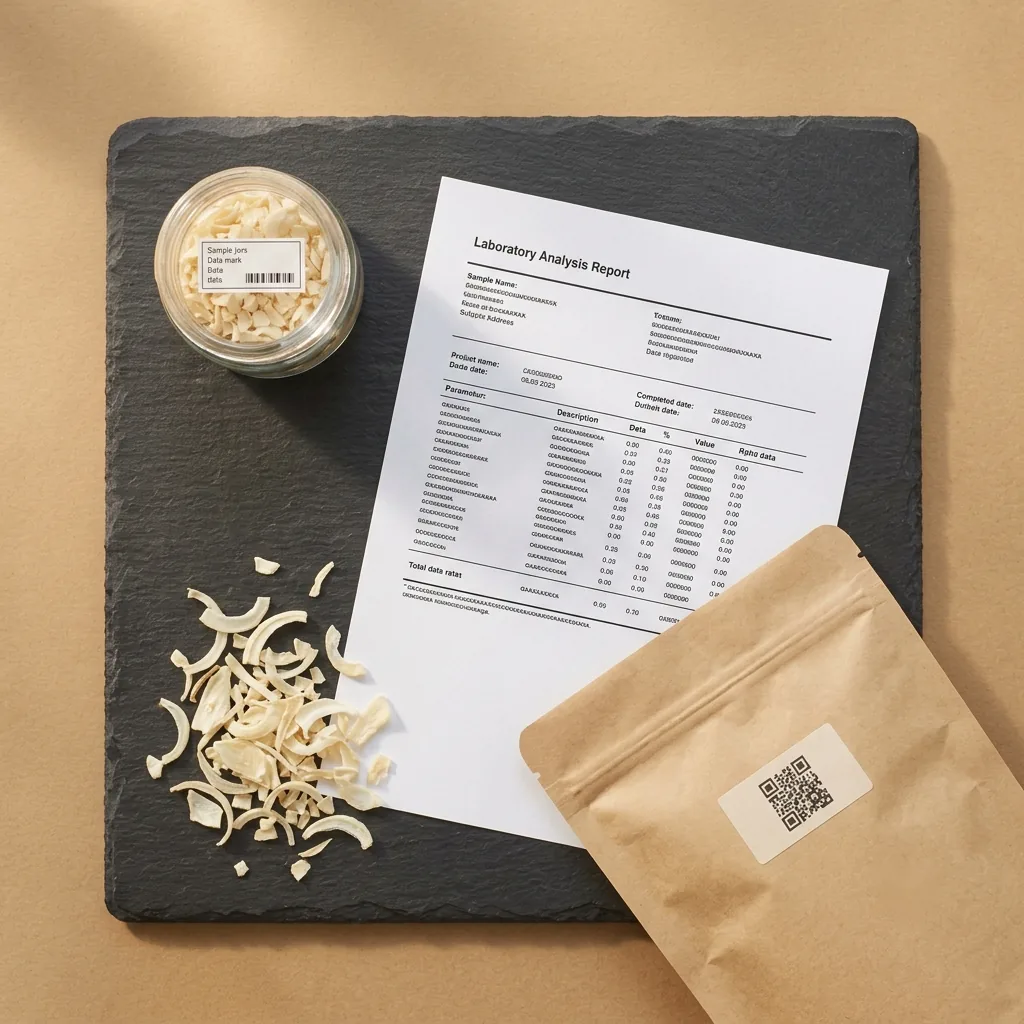
We don't promise dehydrated onion quality - we document it. Every lot that leaves KlarHarvest has a lab report, a lot code, and a QR code linking the two. This page explains what we measure, where the risks in dehydrated onion quality actually sit, and what you can check yourself before the first order.
Parameters
Dehydrated onion quality is not one number. It is a short list of measurable parameters, each with a limit, each checked on every lot before it is released. When a buyer asks us "what is your quality", this table is the answer - the specification of the cut you order fills in the exact values.
| Parameter | What it tells you | Typical specification |
|---|---|---|
| Moisture | Shelf life and caking risk; the single most important dehydrated onion quality figure | ≤ 6 % (flakes, chopped, minced); ≤ 5 % (granules, powder) |
| Colour (L* value) | Grade - white A / B / C, red by depth of colour | White Grade A: L* ≥ 70; agreed per lot |
| Cut-size distribution | How much of the lot is on-size for your line | ≥ 90 % within the nominal band |
| Total ash / acid-insoluble ash | Mineral content and sand or soil carry-over | ≤ 5.0 % / ≤ 0.5 % |
| Foreign matter | Skins, roots, stem plates, anything that is not onion | ≤ 0.5 % by weight; no visible extraneous matter |
| Sulphur dioxide | Bleaching agent - we do not use it | Not added; below detection |
| Pesticide residues | Compliance with EU MRLs | Within Regulation (EC) No 396/2005 |
| Heavy metals | Lead, cadmium, arsenic, mercury | Within Regulation (EU) 2023/915 |
| Microbiology | Hygiene of the drying line and the pack | Standard, Low or Extra-Low Bacterial tier - see below |
| Pyruvate (on request) | Pungency, for buyers who blend to a flavour target | Reported, not limited |
Two of these decide most complaints in practice: moisture and microbiology. A lot that leaves the dryer at 4 % and travels sealed arrives at 4 %; a lot packed at 7 % in a humid week cakes in the bag by the time it clears customs. Dehydrated onion quality is therefore mostly a question of discipline at the plant and honesty about the numbers - which is why the certificate of analysis reaches you before the container moves, not after.
Our model
KlarHarvest is a merchant exporter. We do not own a dehydration plant - dehydrated onion quality is decided at the plant, so we select, from more than 120 plants in the Mahuva region, the ones that meet our criteria, and we supervise every production run on site:
Selection criteria
Why this model instead of "our own plant"? Because selection and control are the strength: we are not tied to one machine park, so for each order we can choose the plant that best matches your specification. A powder order goes to a plant with a fine-milling line and a dedicated sifting room; an extra-low-bacterial order goes to a plant with a validated steam step. Dehydrated onion quality improves when the order and the plant are matched, and a single-plant exporter cannot do that.
Testing
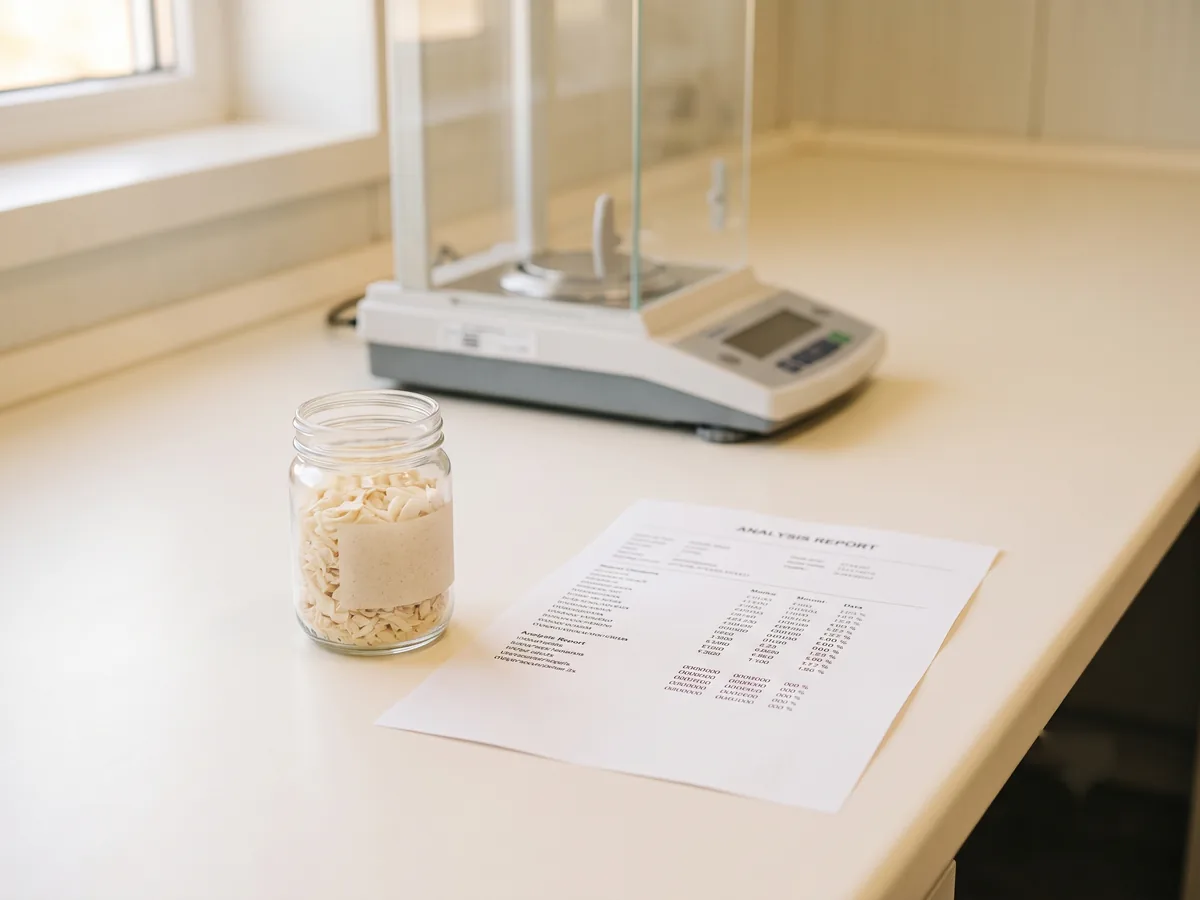
Before loading, an accredited laboratory (NABL) tests each lot for:
| Parameter | Tested against |
|---|---|
| Pesticide residues | EU Regulation (EC) No 396/2005 (MRLs) |
| Microbiology | Total plate count, coliforms, E. coli, Salmonella, yeast/mold |
| Heavy metals | Lead, cadmium, arsenic - EU limits |
| Physical | Moisture, ash, foreign matter, cut-size distribution |
No additives: no sulphur dioxide, no anti-caking agent (unless requested), no preservatives - 100 % onion. You receive the certificate of analysis (COA) before loading, for your release - dehydrated onion quality on paper before the container moves.
Microbiology
Onion is a root-zone crop; it arrives at the plant carrying soil flora, and drying alone does not sterilise it. Every buyer has a hygiene target that depends on what the ingredient goes into, so dehydrated onion quality is quoted in three microbiological tiers rather than one blanket claim:
Total plate count ≤ 100,000 cfu/g, yeast and mould ≤ 1,000 cfu/g, Salmonella absent in 25 g, E. coli absent. The right tier for products that are cooked - soups, sauces, canned and retorted foods, baked goods.
Total plate count ≤ 10,000 cfu/g, coliforms ≤ 100 cfu/g, the same absence criteria. Achieved by a steam or controlled-heat step after drying. For dry blends, seasonings and dressings that are not cooked again.
Total plate count ≤ 1,000 cfu/g, yeast and mould ≤ 100 cfu/g. A validated steam treatment with a documented log; a small loss of flavour volatiles is the price. For ready-to-eat applications, dairy dips, infant and clinical foods, and any buyer whose own specification says so.
The tier is part of the quotation and of the lot's specification sheet. Two notes from experience: a higher tier does not make a wet lot dry - moisture is a separate parameter and the tier is meaningless if the bag cakes; and steam-treated dehydrated onion quality is only as good as the packing room after the treatment, which is one reason the plant's BRC certificate is mandatory for us.
Lot record
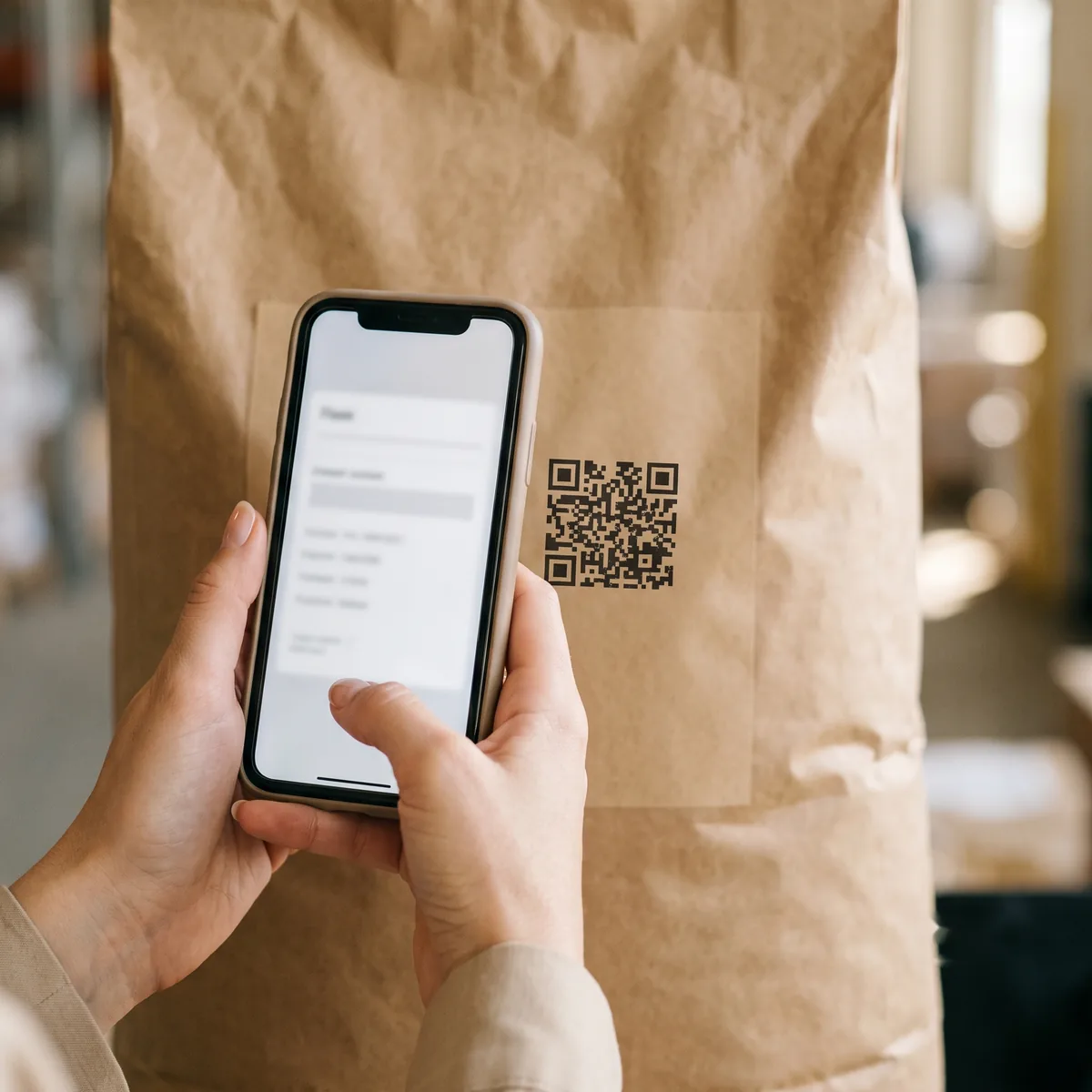
Every bag carries a lot code and a QR code, the two links between dehydrated onion quality and the lot in your warehouse:
KH-[year]-[plant]-[lot] → scan → lab report, production date, plant region and loading documentation for your lot, online.
Our godown
Our bags are filled and sealed inside the BRC-certified plant and are never opened again until they reach your line. What happens between the plant and the port is our own premises in Bhavnagar GIDC, and it is designed to add nothing and lose nothing:
The plant seals the plain bags; we apply the brand, lot and QR labels to the outside of sealed bags. We never open, re-pack or re-blend - that would break the plant's certified chain and the moisture seal at once.
A closed godown, off the floor on pallets, away from walls, no direct sun on the stack. Dehydrated onion is hygroscopic; the store is kept dry and the doors are kept shut.
A scheduled programme with a log - bait stations, monitors, a treatment record you can ask for. Nothing is sprayed near open product because there is no open product.
One lot, one stack, one label set. No mixing of lots on a pallet, no mixing of white and red on a pallet, no other goods in the same room.
The container is stuffed at our premises under camera; the video of your load is part of the lot record.
The container is sealed with a customs e-seal on our premises, so the box is closed from our floor to your yard.
The point of the godown step is buyer confidence, not processing: dehydrated onion quality is created at the plant and protected on the way to the port. What it costs is inside our FOB price, not on top of it.
Failure types
Most dehydrated onion quality complaints fall into a handful of failure types. Naming them is more useful than promising they never happen:
Cause - moisture above 6 % at packing or a punctured liner. Prevention - moisture read on the line before packing, a second reading by the lab, double-liner bags, no goods packed during the wettest monsoon days without a dryer check.
Cause - over-drying, high dryer temperature, or old raw material. Prevention - L* value measured per lot, a colour reference sample agreed with the buyer, drying curves kept within the plant's validated range.
Cause - rough handling, worn sieves, over-dried brittle product. Prevention - sieve check per shift, cut-size distribution on the certificate, careful pallet handling at our godown.
Cause - dirty raw material, a wet sorting stage, contamination after drying. Prevention - the tier is chosen at the order, steam treatment where the tier needs it, swab records in the packing room.
Cause - a farmer's late spray or a compound the plant did not screen. Prevention - plants that source from known growing areas, the NABL residue screen against the EU list before release, no release without the report.
Cause - a missed metal-detection step or skins passing the sorters. Prevention - metal detection and magnets on the line, optical or manual sorting, foreign matter counted in the lab sample.
Cause - mixed raw lots at the yard. Prevention - white and red runs separated in time, the plant's raw-material log, admixture counted in the sample.
Cause - a wet container, a broken pallet, a door seal that leaked. Prevention - container inspection before stuffing (dry, no holes, no smell), loading video, pallets shrink-wrapped, marine insurance offered on every CIF quote.
If a lot still fails at your end, the procedure is fixed and written into our terms: you send the sample and your lab result, we send the same lot's retained sample to the NABL lab for a repeat test, and the outcome - replacement, credit or a shared-cost re-test - is settled on the report, not on opinion.
By market
The lot is the same; the paperwork and the limits your authorities apply are not. This is what changes by destination:
| Market | Residue and contaminant limits | Hygiene expectation | Extra documents |
|---|---|---|---|
| EU (Germany, Netherlands, Belgium) | Regulation (EC) 396/2005 MRLs; Regulation (EU) 2023/915 for lead, cadmium | Standard tier accepted for cooked uses; Low bacterial commonly specified by seasoning houses | Health certificate, phytosanitary certificate, IFS or BRCGS supplier questionnaire |
| United Kingdom | Retained EU MRLs (GB MRL statutory register) | Same as the EU | IPAFFS pre-notification where it applies |
| United States and Canada | US EPA tolerances; FDA action levels | FSVP importers ask for the tier and the steam validation | FDA facility registration of the plant, prior notice, COA for the FSVP file |
| Gulf (UAE, Saudi Arabia) | GSO standards; SFDA where applicable | Standard or Low bacterial | Halal certificate on request, certificate of conformity where the port requires it |
| Southeast Asia (Singapore, Malaysia) | Codex-based national limits | Standard or Low bacterial | SFA or MAQIS import permit on the buyer's side; halal for Malaysia |
| Australia and New Zealand | FSANZ Standard 1.4.2 (Australia), MPI (New Zealand) | Standard | Biosecurity import conditions checked at quotation |
We confirm the destination's list with every quotation. The lab test is always run against the EU list, which is the strictest set most buyers will meet; a lot that passes it needs no second residue screen for the other markets - only different paper.
Sampling
Dehydrated onion quality is judged on a sample, so how the sample is drawn matters as much as the test itself. Our procedure:
The plant's QC draws a composite sample from the finished lot - increments from the beginning, middle and end of the packing run, from several bags, combined and quartered down to the laboratory portion. The lab receives one part; we keep a second, sealed and labelled with the lot code, for twelve months in dry storage. That retained sample is what settles a dispute: if your incoming inspection differs from our certificate, the same material goes back to the lab, not a fresh sample from a different bag.
Pre-shipment samples for your approval are drawn the same way from the same lot you will receive - 200-500 g per product, by courier, with the sample lot's report. A sample from a "representative" lot months earlier is not how we work; the sample you approve is the lot that ships.
Audits
Every claim on this page can be checked in person or remotely:
With notice, you or your auditor visit the partner plant that will produce your lot; the BRC certificate, the last audit report and the HACCP plan are available in advance.
Our premises in Bhavnagar GIDC, the storage, the pest-control log and the labelling step.
A call from the packing line while your bags are filled and sealed - the practical alternative to a flight.
The plant's certificates, the lab's NABL accreditation certificate, our registrations as they are issued, and a sample lot record - sent as one file on request.
SGS, Bureau Veritas or Intertek pre-shipment inspection can be arranged at cost; the inspector draws the sample and seals the container.
We would rather spend an afternoon on an audit before the first order than a month on a complaint after it. Dehydrated onion quality that cannot be inspected is a promise; ours is inspected.
Registrations
Each number is published here the day it is issued - not before.
| Registration | Number |
|---|---|
| IEC (Import Export Code, India) | In process - published on issue |
| FSSAI (Indian food authority) | In process - published on issue |
| APEDA RCMC (agri-export registry) | In process - published on issue |
Certification and registration numbers displayed once issued · documentation available to buyers on request
Paperwork
Everything your customs broker and your goods-in team need, in one file.
Complete draft set for your review before the vessel sails.
FAQ
What buyers ask about dehydrated onion quality before the first order. Anything not covered here, send us the question - you have an answer within one business day.
Six percent or lower for flakes, chopped and minced; five percent or lower for granules and powder. Below about three percent the product turns brittle and produces fines; above six it starts to cake and the microbiological risk rises. We state the actual reading on every certificate rather than only "within spec".
No sulphur dioxide, ever - it is not needed for white onion of the right raw variety, and many EU buyers exclude it by specification. Anti-caking agent (typically silicon dioxide, up to 1-2 % in powder) only if you ask for it; it is then declared on the label and the certificate. Dehydrated onion quality without additives is our default.
The producing plant holds BRC (Global Standard for Food Safety); many also hold ISO 22000, HACCP, Kosher and Halal certificates, which we state per lot. KlarHarvest's own registrations - IEC, FSSAI and APEDA RCMC - are in process and their numbers are published here the day they are issued. We do not print a certificate we do not have.
Yes. Lots are tested by a NABL-accredited laboratory (India's national accreditation board, an ILAC signatory) that is not owned by the plant or by us. On request we can name the lab in the quotation and send its accreditation scope.
Please do. The pre-shipment sample is drawn from the lot you will receive; test it against your own specification and, if the results differ from our certificate, we investigate before anything ships. Dehydrated onion quality disputes are cheapest before the container is booked.
You send your result and a sample; we send the retained sample of the same lot for a repeat NABL test. If the lot is out of specification, you choose replacement or credit; if it is within, the re-test cost is shared. The procedure is in our terms of sale, not improvised per case.
Sealed bags with an inner liner, shrink-wrapped pallets, a container inspected for dryness and holes before stuffing, a customs e-seal applied at our premises and a loading video in your lot record. For long routes in the monsoon season we add desiccant bags in the container.
Not today. Organic supply from Mahuva is small and certification of the chain is a separate project; we would rather say so than sell conventional as something else. If organic volume matters to you, tell us - it is on our list for a later season.
Twenty-four months from production in the sealed bag at ambient, dry storage; twelve months after opening if the bag is closed again and kept dry. Colour and flavour fade slowly with time and light, so we recommend a first-in, first-out rotation and stating the production date, which is on every bag.
Yes, with notice - see the section above. If a visit is not practical, a live video call from the packing line and a document audit by e-mail cover most of what an auditor needs.
Start here
Product, cut size, quantity, destination port - that's all we need to start. You'll receive a written quotation with full specifications from a dehydrated onion exporter, not a one-line price.
info@klarharvest.com · WhatsApp +91 97371 01599 · Bhavnagar, Gujarat, India
Samples
200-500 g per product from a current lot, dispatched by courier with the specification sheet and the sample lot's lab report.
A complete written quotation - specification sheet, price with freight shown separately, and lead time - within one business day.
The complete specification sheet as a PDF - cut size and sieve range, moisture, microbiology tiers, packing options and container loads - sent to your e-mail within one business day.
Thank you - your sample request is in. You'll have our written reply with dispatch details within one business day, and the parcel ships by courier with the specification sheet and the lot's lab report.
Thank you - your inquiry is in. You'll have a complete written quotation - specification sheet, price with freight shown separately, and lead time - within one business day.
Thank you - the specification sheet is on its way. You'll have the PDF in your inbox within one business day.