












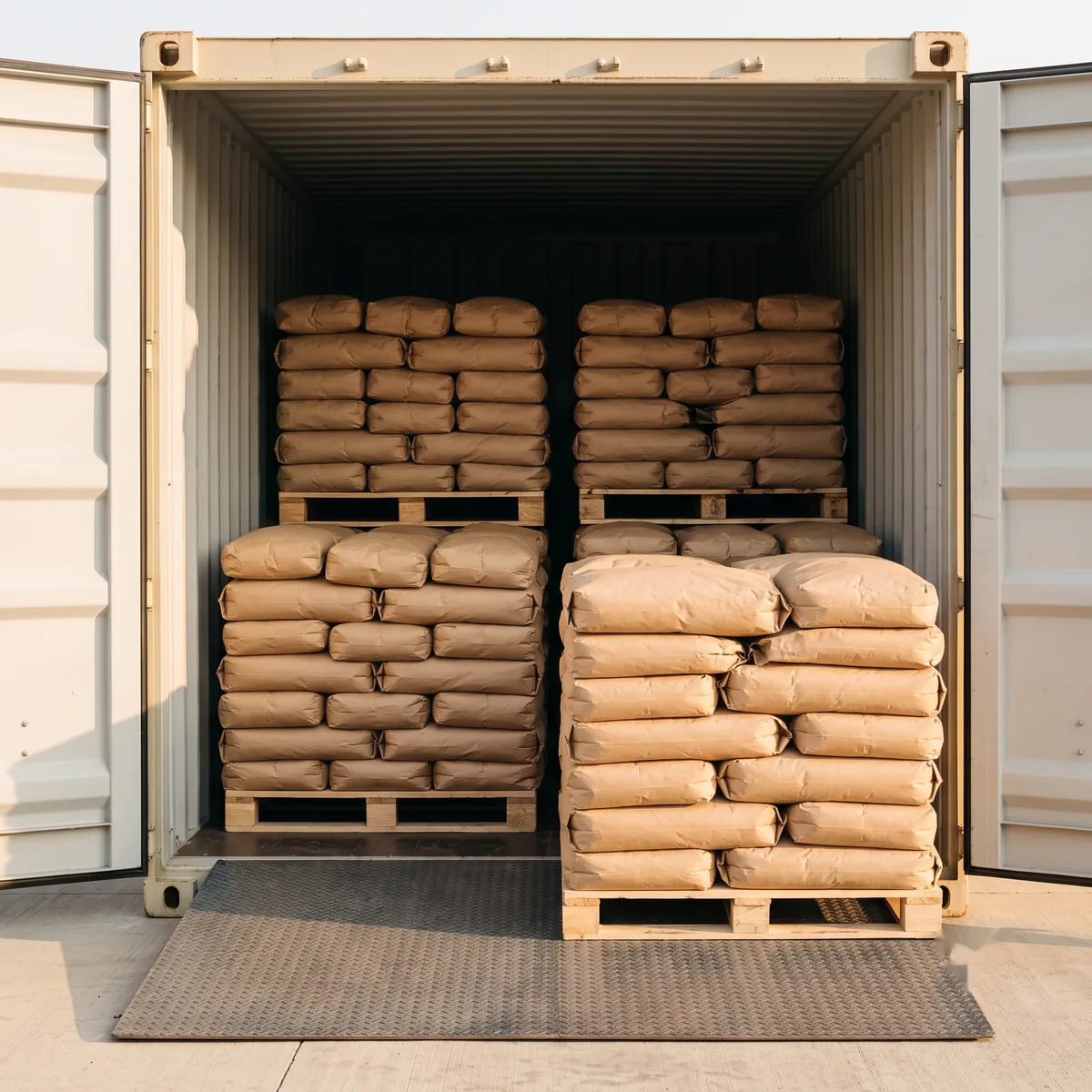
FOB Pipavav
The goods are cleared for export and loaded on the vessel; you nominate the forwarder and pay the freight. Our internal pricing basis, and the term most experienced importers prefer because they control the freight contract.
How we work
Importing dehydrated onion from India has a reputation for opacity. Our process is built to be the opposite: at every step you can see what is happening with your goods - before you pay, during production, and until the container reaches your port.
The process
Importing dehydrated onion from India is a sequence of small, checkable events, not one leap of faith. Roughly eight to twelve weeks pass between your first e-mail and a container at your yard, and in that time the goods change hands four times: farm to plant, plant to our godown, godown to the shipping line, shipping line to you. Each hand-over produces a document and a photograph, and every one of them ends up in your lot record.
What makes importing dehydrated onion from India feel opaque is not the distance; it is a supplier who answers "in production, no problem" for three weeks. We replace that sentence with dates, images and reports. The seven steps below are the operating procedure - the same for a first pallet in a consolidated container and for a repeat order of ten full containers.
Our process
Transparency is not a slogan here; it is the operating procedure. This is the exact path your order takes.
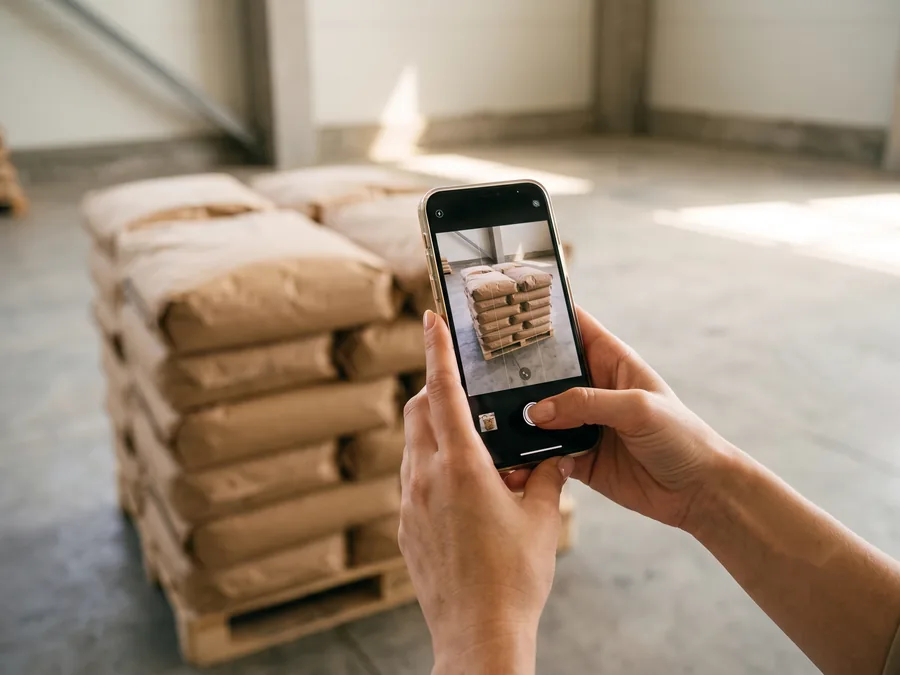
At any point, you can ask:
“show me my lot.”
And we can.
Send product, cut size, quantity and delivery port. Within one business day you receive a complete quote: specification sheet, price (FOB/CIF as preferred), freight and lead time. No partial answers.
A complete quotation for importing dehydrated onion from India has six parts, and you get all six in one PDF: the specification of the cut with the moisture, colour and microbiological tier; the price per kilogram with the Incoterm and the port it applies to; the packing (bag weight, bags per pallet, pallets per container); the lead time from order to loading; the payment terms; and the validity date. A quotation like this is the first document of importing dehydrated onion from India through us, and it is meant to be compared. If you sent a specification of your own, the quotation says line by line where ours matches and where it differs. If we cannot supply something - an organic grade, a tier a plant cannot reach this month - the quote says so rather than leaving it vague.
200-500 g per product, by courier, with the lab report of the sample lot. You check taste, color, cut and analysis before ordering.
Samples are drawn from a current production lot, not from a display jar, and they travel with that lot's certificate of analysis so your lab can compare its own results with ours. Courier time to Europe is three to five days, to the Gulf two to three, to North America four to six. For most buyers the sample is the first physical step of importing dehydrated onion from India, and they use it for three things: a rehydration test on their own line, a colour comparison against the incumbent supplier, and a residue or microbiology check by their laboratory. If the sample passes, the lot you order is produced to the same specification and a pre-shipment sample of the actual lot follows before loading - two samples, one before the order and one before the ship.
With your confirmation we lock the raw material price with the plant - the same day. This is why our quotes are valid 7-10 days: the onion market moves, and we price honestly instead of padding a buffer.
Your purchase order or a signed quotation is the confirmation. On the same day we place the order with the plant, fix the raw-onion price for the quantity, and send you an order confirmation with the production window and the target loading week. The price on that confirmation does not change afterwards - not for a raw-material move, not for a currency move - and the confirmation lists the documents you will receive and when. Importing dehydrated onion from India goes wrong most often at this step, when a supplier quotes low, waits for the buyer to commit, and then reopens the price; the lock is our answer to that.
Your lot is produced and packed - documented with photos and video: raw material, drying, sorting, packing. On request, we put you on a live video call while your goods are packed.
Production is the step of importing dehydrated onion from India that a buyer normally never sees; here it is the most documented one. One container lot takes five to ten working days depending on the cut and the plant's schedule. You receive photographs at four points - raw onion at intake, the drying line, sorting and metal detection, and packing and sealing - with the date and the lot code on each set. The plant's QC readings (moisture on the line, sieve check, colour) are shared as they are taken. Bags are filled and sealed at the plant; they are not opened again. If something is off during the run - a colour drifting, a moisture reading high - you hear it from us the same day with the corrective action, not after the lot has been shipped.
An accredited laboratory tests the finished lot (pesticides, microbiology, heavy metals, physical parameters). The COA reaches you before loading. Nothing ships without your release.
The composite sample goes to a NABL-accredited laboratory after packing; results take five to seven working days for the full panel. The certificate of analysis is sent to you as soon as it arrives, together with the pre-shipment sample of the same lot by courier. You then release the lot - an e-mail is enough - and only then do we book the container. If a parameter is outside the specification, the lot is not offered to you; it is re-worked or replaced, and the loading week moves. Importing dehydrated onion from India without a release step is how off-spec lots end up on ships; we have made the release the gate.
You receive the loading video, the container number and a tracking link. Route: Pipavav port (90 minutes from Mahuva) → your port. Importing dehydrated onion from India means about two weeks on the water to the Gulf and Southeast Asia and four to five weeks to North Europe and the US east coast. LCL shipments use the same corridor in consolidated containers.
The container is inspected before stuffing - dry floor, no holes, no odour, working door seals - and photographed. Stuffing happens at our godown in Bhavnagar GIDC under camera: the pallet count, the seal number and the closing of the doors are on the video that goes into your lot record. A customs e-seal is applied on our premises; the box is then trucked to Pipavav and gate-in is confirmed to you with the container number. From the sailing date you follow the vessel on the shipping line's tracking link; we forward the line's schedule changes, which happen, rather than let you discover them at the port.
Full document set (invoice, packing list, COO, phyto, health certificate, COA, B/L) - sent as drafts for review in advance. On every bag: the QR code linking to the report and lot data.
Delivery is where importing dehydrated onion from India is decided at your customs office, so draft documents go to you and, if you name them, to your customs broker before the vessel sails, so that a wrong consignee address or a missing HS code is corrected while it costs nothing. Originals follow by courier or, where your broker accepts them, as a telex-released bill of lading. At your warehouse, the QR code on each bag opens the lot record: the certificate, the production photographs, the loading video and the documents. If your goods-in inspection raises a question, the retained sample of the lot is still in our store for a repeat test.
Documents
Importing dehydrated onion from India produces a fixed set of documents; this is what each one is for and when it arrives:
| Document | What it is for | When you have it |
|---|---|---|
| Quotation with specification sheet | Your comparison and approval of the product | Within one business day of the inquiry |
| Order confirmation | Locked price, production window, loading week, document list | Same day as your order |
| Production photographs and QC readings | Evidence of the run in progress | During production, four sets |
| Certificate of analysis (NABL) | Your release and your importer's file | Before loading, with the pre-shipment sample |
| Packing list and commercial invoice | Customs value and count; matches the B/L | Draft before sailing, original with the B/L |
| Certificate of origin | Preferential or non-preferential origin at your customs | Draft before sailing, original with the B/L |
| Phytosanitary certificate | Plant-health clearance for a dried plant product | Issued at export, original with the B/L |
| Health certificate | Food-safety attestation where the destination requires it | Issued at export, original with the B/L |
| Bill of lading | Title to the goods; release at the destination port | Draft for check, original or telex release after sailing |
| Loading video and seal number | Proof of load and closure | Day of stuffing, in the lot record |
| Insurance certificate (CIF only) | Marine cover for the transit | With the shipping documents |
Every document carries the lot code, so your broker, your quality team and your accounts department are looking at the same lot without cross-referencing.
Lead times
The calendar for importing dehydrated onion from India, from the day you place the order (a current-lot product; longer for a special tier or a fresh production in the off-season):
| Destination | Production and release | Transit from Pipavav | Order to port, typical |
|---|---|---|---|
| Germany, Netherlands, Belgium (Hamburg, Rotterdam, Antwerp) | 2-3 weeks | 4-5 weeks | 7-8 weeks |
| United Kingdom (Felixstowe, Southampton) | 2-3 weeks | 4-5 weeks | 7-8 weeks |
| Norway (Oslo, via transhipment) | 2-3 weeks | 5-6 weeks | 8-9 weeks |
| US east coast (New York, Savannah) | 2-3 weeks | 4-5 weeks | 7-8 weeks |
| Canada (Montreal, Toronto by rail) | 2-3 weeks | 5-6 weeks | 8-9 weeks |
| Gulf (Jebel Ali, Dammam) | 2-3 weeks | 1-2 weeks | 4-5 weeks |
| Singapore, Malaysia, Vietnam | 2-3 weeks | 2-3 weeks | 5-6 weeks |
| Australia, New Zealand | 2-3 weeks | 4-6 weeks | 7-9 weeks |
The transit weeks are shipping-line schedules and are confirmed in each quotation; a blank-sailing week or a transhipment delay is forwarded to you the day we hear of it. LCL adds roughly one week at each end for consolidation and deconsolidation.
Commercial
Every quotation names the Incoterm and the port, because a price for importing dehydrated onion from India without them is not a price:
The goods are cleared for export and loaded on the vessel; you nominate the forwarder and pay the freight. Our internal pricing basis, and the term most experienced importers prefer because they control the freight contract.
We book the freight (and, for CIF, the marine insurance) and show them as a pass-through line on the invoice - the freight we pay, plus nothing. Convenient for a first order and for buyers without a freight contract of their own.
DAP is possible for the EU and the UK through our forwarder's customs agent, quoted case by case; DDP is not offered, because the import formalities belong with the importer of record. Under DAP you stay the importer of record: your broker clears the goods, and the duty and import VAT are paid at your end. The quotation shows product price and transport as separate lines.
For a first order, 30 % with the order confirmation and 70 % against the copy of the bill of lading is the usual structure; a confirmed irrevocable letter of credit at sight is accepted for any order. After two or three orders, open-account terms are discussed with a credit insurer's cover. We do not ask for 100 % in advance from a company we have not met, and we do not ship on 100 % open account to one either.
For buyers who want to check the numbers behind importing dehydrated onion from India, our blog explains the difference between FOB and CIF pricing and how a landed-cost calculation is built; the quotation itself already shows the lines.
Samples
A sample is only useful if it is tested the way the ingredient will be used. Three tests cover almost every application:
Weigh 10 g of flakes, add 40 g of water at room temperature, wait 20 minutes, drain and weigh. A ratio around 1 : 3.5 to 1 : 4 is normal; note the texture, the colour after rehydration and any off-odour.
Blend 2 % into your base mix and check flow, dust and colour after 24 hours in a closed container; lumps point to moisture, not to the grind.
Add the rehydrated product to a small batch of your actual recipe - soup base, sauce, filling - beside the incumbent supplier's sample and taste blind. Onion pungency varies by variety and season; a colour match does not guarantee a flavour match.
Send us your results either way. A sample that fails tells us which plant or which tier to use for the next one; importing dehydrated onion from India goes faster when the second sample is right.
Price lock
Raw onion is the largest cost in dehydrated onion - eight to nine kilograms of fresh onion per kilogram dried - and its price moves by the week. A ₹3 to ₹4 per kilogram move in the field becomes ₹25 to ₹30 per kilogram in the dried product. This is why a quotation for importing dehydrated onion from India is valid seven to ten days and not thirty: a thirty-day price would have to carry a buffer against the market, and you would pay that buffer whether the market moved or not.
When you confirm, we buy the raw material or fix it with the plant for your lot the same day - the one moment in importing dehydrated onion from India where the market stops mattering to you. From that moment your price is closed. If the market falls the next week, your price stays - that is the trade for the certainty; if it rises, it stays too. Repeat buyers with a monthly programme can fix a season's volume in advance at a price that reflects the harvest, which is usually the best price of the year for the rabi crop in March to May.
Contact
India is 4.5 hours ahead of Central European Time in winter, 3.5 in summer, 9.5 to 10.5 hours ahead of the US east coast and 2.5 hours behind Singapore. For a buyer importing dehydrated onion from India this means an e-mail sent from Germany in the morning is answered before the German lunch break, and a question from New York at the end of the day is answered by the time the office opens. The one-business-day promise applies to inquiries; for a running order you have one contact, the founder, on e-mail, WhatsApp and phone, and every message about the order - photographs, readings, schedule changes - also goes into the lot record so that nothing lives only in a chat thread.
Avoid these
The mistakes below are the ones we see most often when a company starts importing dehydrated onion from India - with the step of our process that prevents each one:
An FOB price for the standard tier against a CIF price for extra-low bacterial says nothing. Step 1's quotation states both on every line.
Colour and cut in a photo are lighting and a phone. Step 2 puts the material and its report in your hands first.
A price that is "valid until further notice" is re-opened when the market moves. Step 3 locks it on the day you order.
Paying against a certificate that arrives with the goods means finding an off-spec lot in your warehouse. Step 5 makes the certificate the gate before booking.
A damp box or a leaking door seal spoils a dry product in four weeks. Step 6 inspects, films and seals the container at our premises.
A wrong consignee, an HS code that does not match the invoice, a missing phytosanitary certificate. Step 7 sends drafts before the vessel sails.
When that person is on leave, the order history is gone. The client portal holds the record for every order.
July to October moisture is the highest-risk window; the lot must be dried and packed with a check, not bought on price. Our production photographs and moisture readings show it was.
After you order
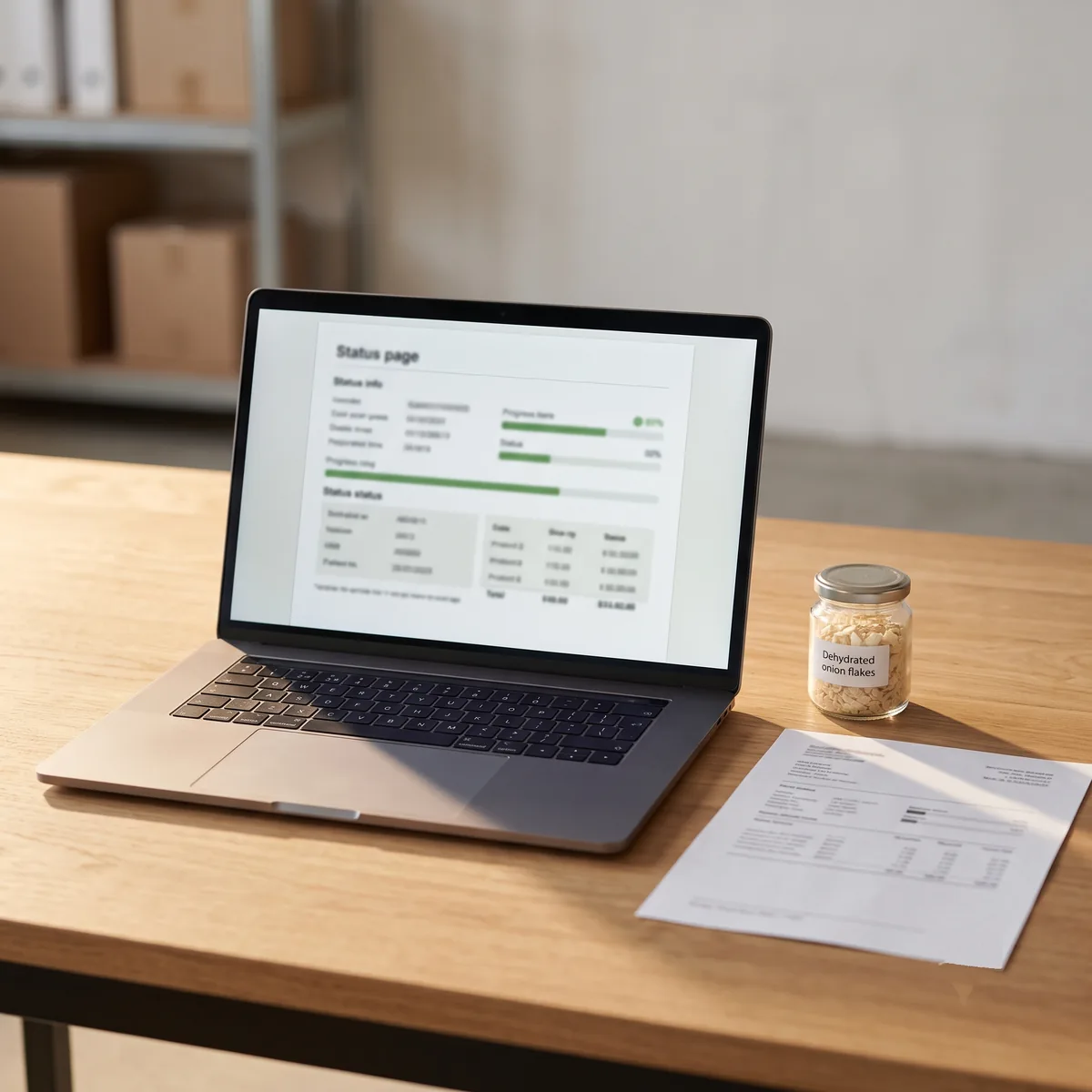
One link per order, with the whole record of importing dehydrated onion from India behind it: status, all photos and videos, all documents, the tracking. No chasing, no waiting for e-mail replies - you just look.
FAQ
What first-time importers ask about the process. Anything not covered here, send us the question - you have an answer within one business day.
Seven to nine weeks from the order to a North European or North American port, four to six weeks to the Gulf and Southeast Asia - two to three weeks of production and release, the rest transit. A repeat order from a lot already in stock can load within a week of the release.
One pallet in a consolidated (LCL) container - importing dehydrated onion from India does not have to start with a full container - roughly 500 to 800 kg depending on the cut. The process is identical for one pallet and for ten containers; the per-kilogram freight is higher for LCL and the quotation shows it.
Yes, both. A plant visit with notice, or a live video call from the packing line during Step 4. Most buyers take the video call for the first order and visit once a programme is running.
Tell us before releasing the lot. The lot is not booked until you release it; if the pre-shipment sample is off, we find the cause with the plant, re-work or replace, and send a new sample. Nothing ships against an unreleased lot.
Pipavav (APM Terminals), about 90 minutes from Mahuva and India's largest port for dried onion, so most of the trade in importing dehydrated onion from India moves through it. Mundra and Nhava Sheva are used when a shipping line's schedule from Pipavav does not fit; the quotation names the port.
Not by default - for importing dehydrated onion from India your own broker, who knows your local system, is faster and cheaper, and our draft documents go to them before sailing. For the EU and the UK a DAP delivery through our forwarder's agent can be quoted if you have no broker; you remain the importer of record. DDP is not offered.
The price for importing dehydrated onion from India follows the raw-onion market, which moves weekly; a long-validity quote would carry a buffer you pay for whether or not the market moves. When you confirm, the raw material is fixed with the plant the same day and your price is closed for that lot.
Typically 30 % with the order confirmation and 70 % against the copy of the bill of lading, or a confirmed letter of credit at sight. Open-account terms are discussed after a few orders, with credit insurance.
Yes. Mixed pallets and mixed containers are normal for importing dehydrated onion from India through us - each product keeps its own lot code, certificate and label; the packing list shows the pallet plan.
You send your inspection result and a sample; we send the retained sample of the same lot for a repeat NABL test. The outcome - replacement, credit or a shared re-test cost - follows the result, as written in our terms of sale. The lot record shows the whole history so nobody has to reconstruct it from e-mails.
Start here
Product, cut size, quantity, destination port - that's all we need to start. You'll receive a written quotation with full specifications from a dehydrated onion exporter, not a one-line price.
info@klarharvest.com · WhatsApp +91 97371 01599 · Bhavnagar, Gujarat, India
Samples
200-500 g per product from a current lot, dispatched by courier with the specification sheet and the sample lot's lab report.
A complete written quotation - specification sheet, price with freight shown separately, and lead time - within one business day.
The complete specification sheet as a PDF - cut size and sieve range, moisture, microbiology tiers, packing options and container loads - sent to your e-mail within one business day.
Thank you - your sample request is in. You'll have our written reply with dispatch details within one business day, and the parcel ships by courier with the specification sheet and the lot's lab report.
Thank you - your inquiry is in. You'll have a complete written quotation - specification sheet, price with freight shown separately, and lead time - within one business day.
Thank you - the specification sheet is on its way. You'll have the PDF in your inbox within one business day.