












KlarHarvest
Dehydrated Onion Export FAQ
Everything buyers ask about dehydrated onion export before the first order - grouped so you find it fast. Anything not covered here, send us the question: you'll have an answer within one business day.
- Sourced from BRC-certified units
- NABL-accredited lab testing
- Low minimums · LCL welcome
- Lab report per lot
Products
Dehydrated Onion Export Products & Cut Sizes
Which products and cut sizes do you supply?
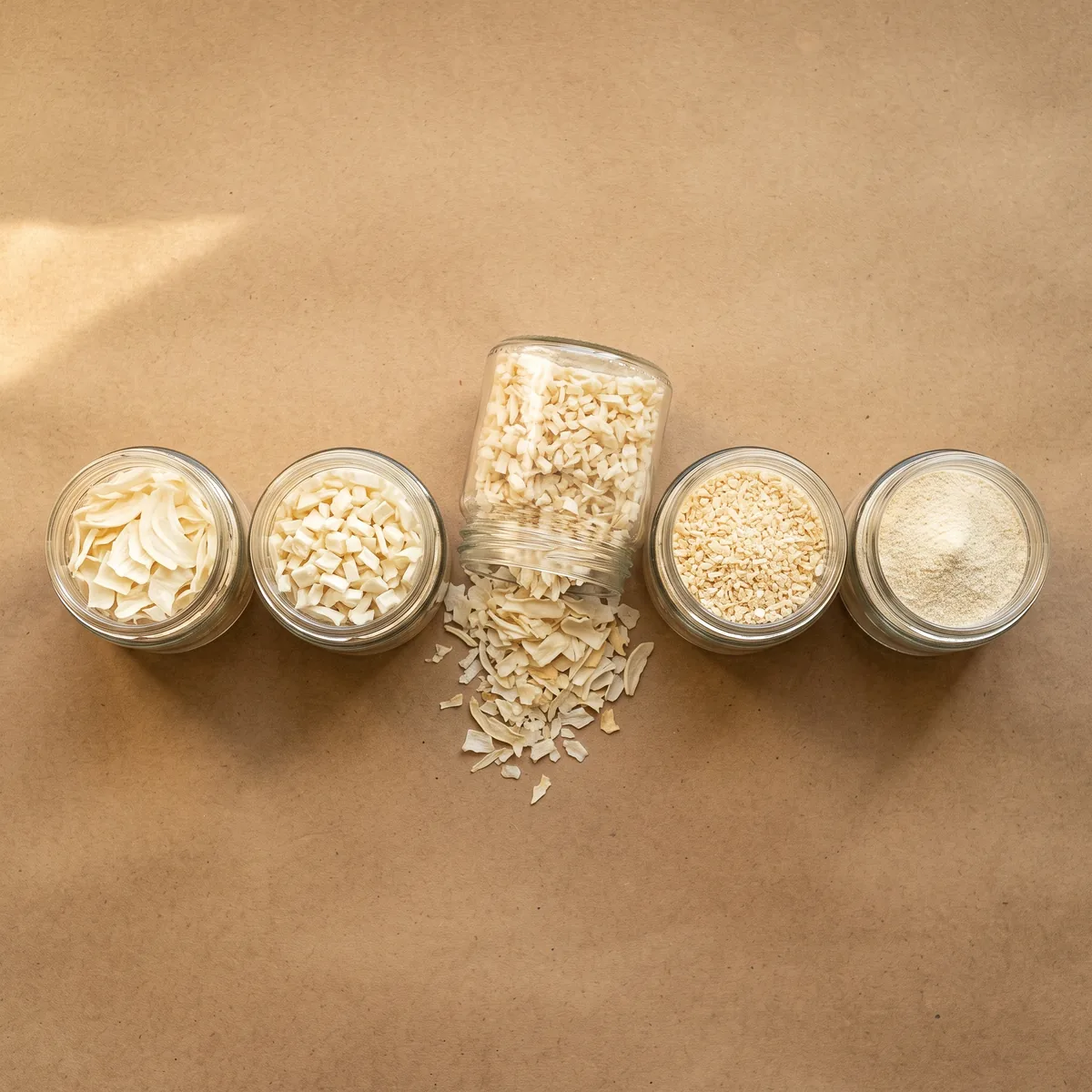
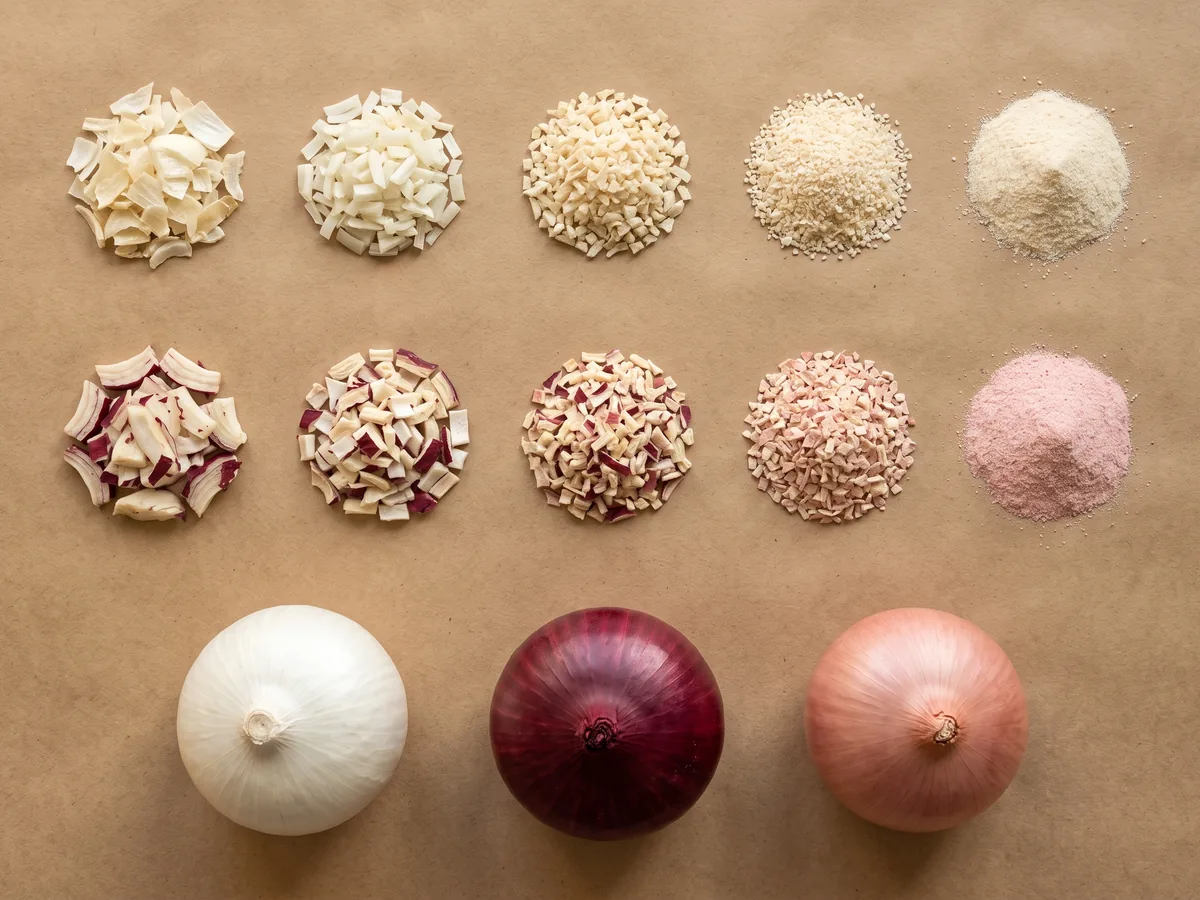
Dehydrated white and red onion in five forms - flakes (kibbled), chopped, minced, granules and powder - plus export-grade fresh onions in white, red and pink. Detailed specifications for each form are on the product pages, and a written spec sheet accompanies every dehydrated onion export quotation.
How do I choose between flakes, chopped, minced, granules and powder?
By what the finished product should look like and how fast the onion has to rehydrate. Flakes (8-20 mm) stay visible and take 15-20 minutes; chopped (3-5 mm) and minced (1-3 mm) sit in the middle; granules (0.5-1 mm) and powder (80-100 mesh) disappear into the recipe and work almost instantly. Every cut comes from the same onion, the same line and the same lot documentation, which is what makes dehydrated onion export by cut a specification question rather than a sourcing one.
How much dehydrated onion replaces fresh onion in a recipe?
Roughly 1 kg of dehydrated onion corresponds to 8-9 kg of fresh - that is what the drying removes. Flakes rehydrate in 15-20 minutes in cold water; finer cuts are faster. Dosing guidance for each cut is on its product page.
When should I choose red onion instead of white?
When the onion should be seen or the recipe expects it: burgundy skin flecks say "onion" on a bowl, a flatbread or a snack, and curry bases, chutneys and pickles built on red onion taste authentic. White onion is the neutral all-rounder for light sauces, soups and doughs. Specify a colour range for red rather than a fixed shade - pigment varies naturally by season.
What packing options are available?
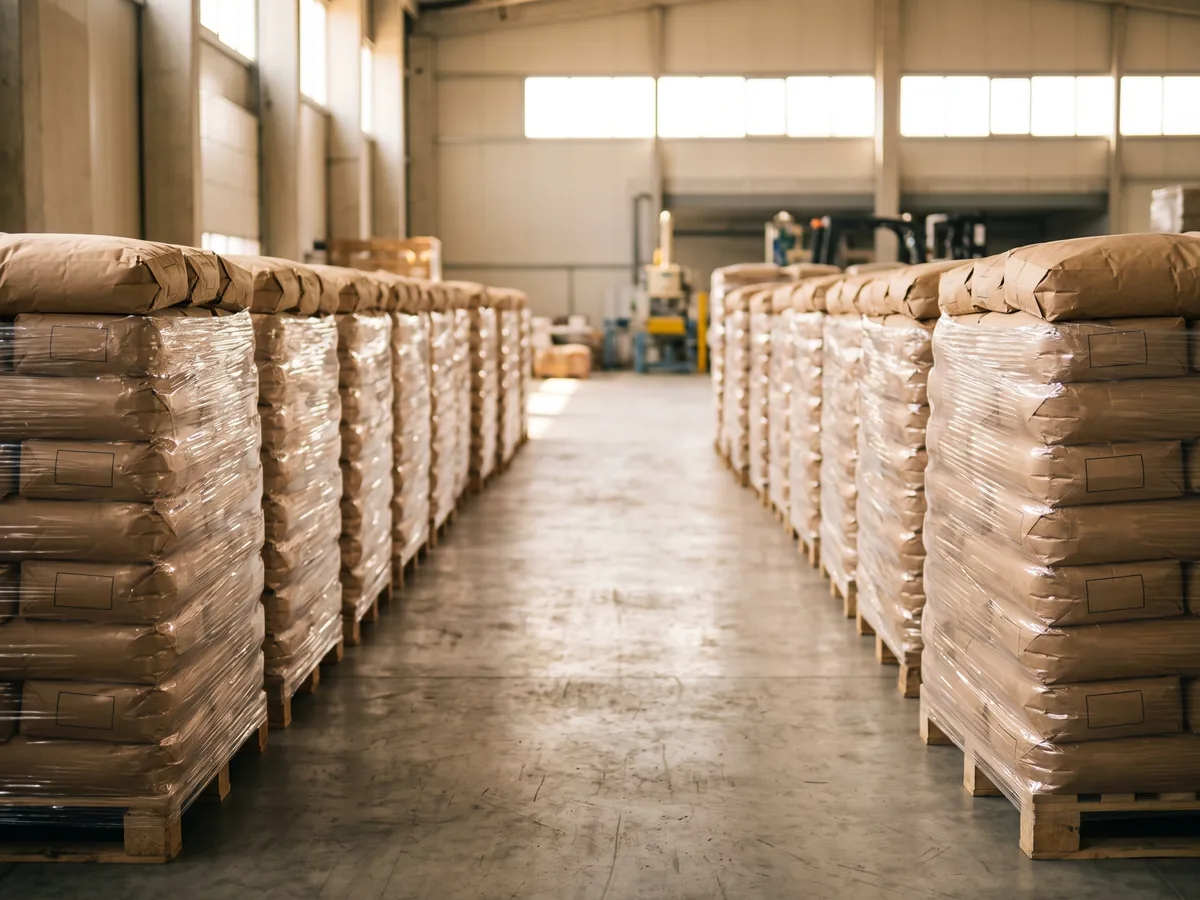
Dehydrated onion ships in laminated paper bags with double PE liners - 10-14 kg or 20/25 kg - palletised and stretch-wrapped. Private label packing under your brand is standard. Fresh onion ships in mesh bags. The packing for your order is confirmed on the quotation.
What is the shelf life of dehydrated onion?
Typically 18-24 months from production when stored cool, dry and sealed in original packaging. Exact best-before dating is stated on the spec sheet and label of each lot; in dehydrated onion export the production date on the bag matters more than the best-before date, because colour and flavour fade slowly with time and light.
What is the difference between kibbled and flakes, and between granules and powder?
Kibbled is the trade name for flakes - the same 8-20 mm cut. Granules (0.5-1 mm) are a coarse grind that still pours and does not dust; powder (80-100 mesh) is a fine grind that disperses instantly and needs a dry, sealed store. In dehydrated onion export both are quoted per cut, and the cut-size distribution on the certificate tells you how much of the lot is on size.
Do you toast or roast dehydrated onion?
Toasted (roasted) onion - flakes or granules dried further to a golden-brown colour and a caramelised flavour - is available on request from plants with a toasting step. It is a separate specification with its own colour reference sample; say so in the inquiry, because natural and toasted lots are not interchangeable in a recipe.
What colour grades exist for white onion?
White onion is graded on the L* value of the dried product: Grade A is the whitest (L* above about 70), B slightly creamier, C off-white. Most dehydrated onion export to Europe is Grade A or B; the grade is agreed per lot and measured by the laboratory, not judged by eye.
How much dehydrated onion should I plan per tonne of finished product?
It depends on the recipe, but as a rule of thumb 1 kg of dehydrated onion replaces 8-9 kg of fresh, so a recipe that used 5 % fresh onion needs roughly 0.6 % dehydrated. Flakes and chopped need water and time to rehydrate; granules and powder can be dosed dry into a blend. The how-to-use section on each product page gives ratios per cut.
Ordering
Dehydrated Onion Export MOQ, Samples & Quotations
What is your minimum order quantity (MOQ)?
In dehydrated onion export we accept orders well below full-container volume - LCL shipments and mixed pallets are part of our standard offer, from one pallet. Tell us your required quantity and we will confirm feasibility in our quote. Fresh onion is typically shipped in full-container loads.
How do I get samples?
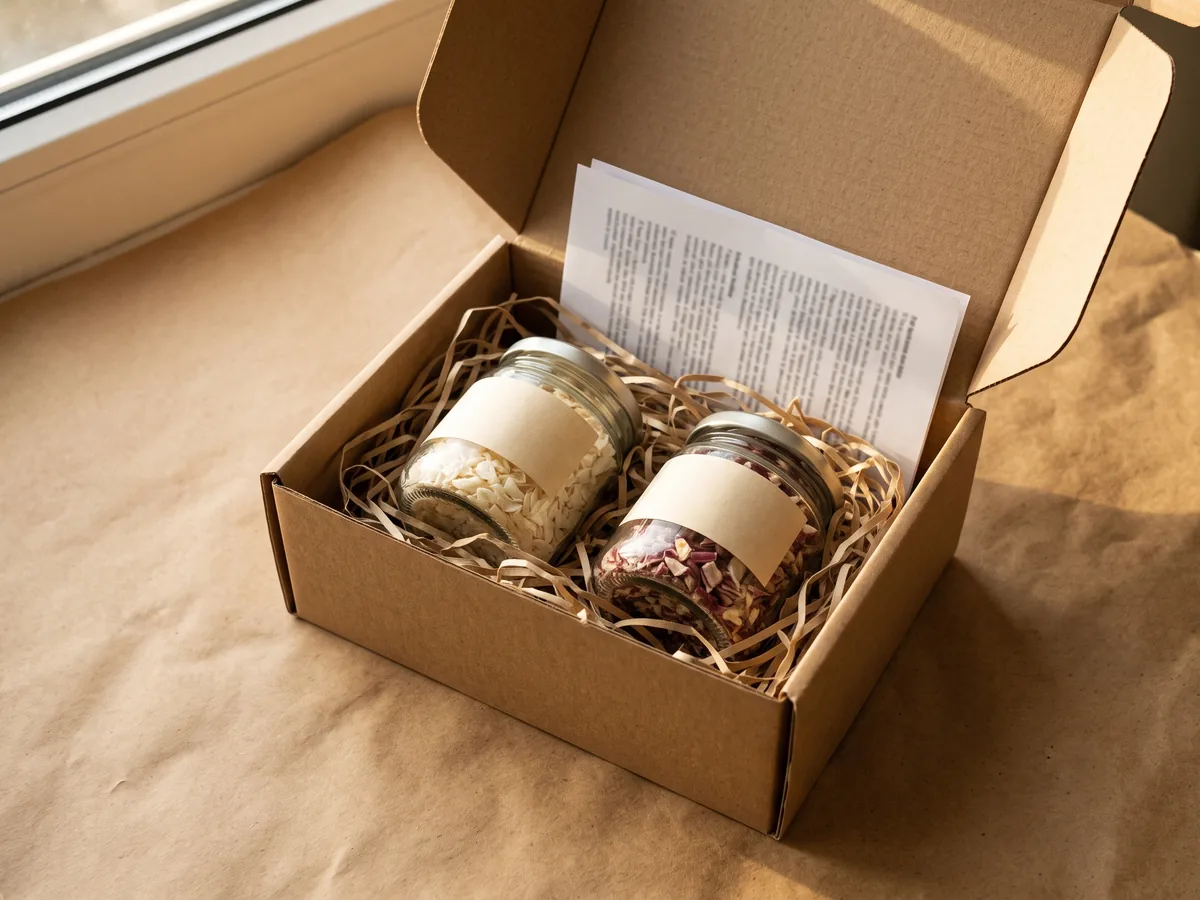
Request samples through the form or by e-mail. We dispatch 200-500 g per product by courier, with the specification sheet and the sample lot's own lab report, and share the tracking number with you.
How fast will I get a quotation, and what does it include?
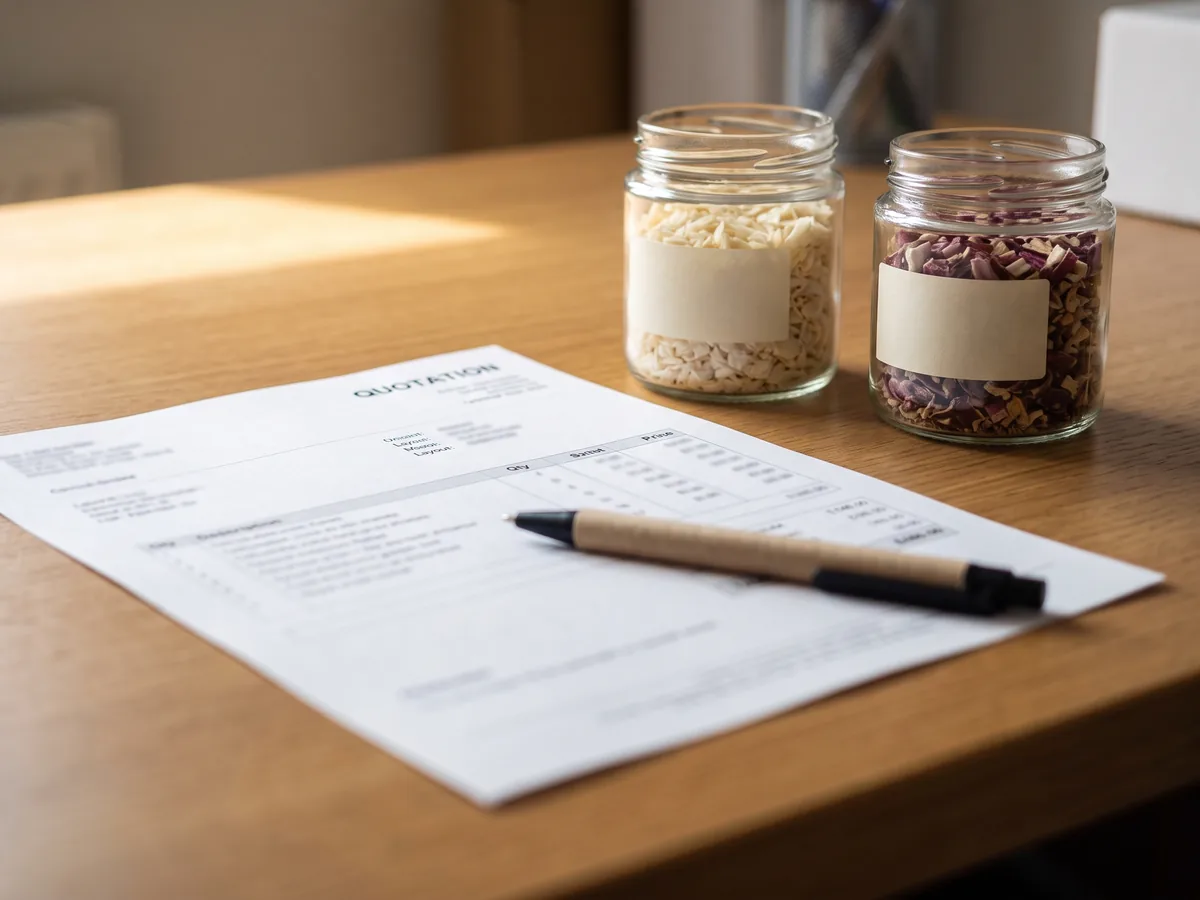
A complete written dehydrated onion export quotation within one business day: the specification sheet, the price with freight shown separately, packing, and the lead time - not a one-line price.
How long is a quotation valid?
The validity is stated on each quotation and it is deliberately short. Raw onion prices move, and we would rather re-confirm a real price than pad every quote with a safety margin. On confirmation we lock the raw material price with the plant the same day.
Can you pack under our brand?
Yes. Dehydrated products can be packed under your brand with your label design, applied under our documented labeling process. Artwork requirements are shared at order stage, and private label is the normal case in dehydrated onion export, not a premium service.
Can I combine several products and cuts in one order?
Yes - mixed pallets and mixed containers across products, cuts and colours are part of the standard offer. Because labeling and container stuffing happen at our own facility, one container can carry white flakes, red powder and anything in between.
Are samples free?
Up to three products, yes; the courier cost for larger sets is charged and credited against the first order. Samples are drawn from a current lot and travel with that lot's certificate of analysis, so your laboratory can compare its results with ours before you order.
Can I get a quotation in euros or dollars?
Yes. Dehydrated onion export prices are quoted in USD by default and in EUR on request, fixed for the validity period and, once you order, for the lot. The currency risk between quotation and order is ours for that period; that is one more reason validity is short.
What does a first order look like for a small buyer?
Typically a mixed pallet or one to three pallets in a consolidated (LCL) container, 30 % with the order confirmation and 70 % against the copy of the bill of lading, and the same lot record as a full container: photographs, certificate before loading, loading video. The per-kilogram freight is higher for LCL and the quotation shows it.
Do you offer a season or annual contract price?
For a monthly programme, yes: the volume for a season can be fixed with the plant after the rabi harvest (March to May), usually the best price of the year, with call-offs per month. Dehydrated onion export contracts state the price basis, the tier and what happens if an Indian export measure lands mid-season.
Quality
Dehydrated Onion Export Quality, Testing & Certifications
Is KlarHarvest a manufacturer or a trading company?
A merchant exporter - and we say so openly. We do not own a dehydration plant; we select from more than 120 plants in the Mahuva region, work only with BRC-certified units, and supervise every production run on site. Selection and control are the strength: for each order we choose the plant that best matches your specification.
Which certifications and registrations back the products?
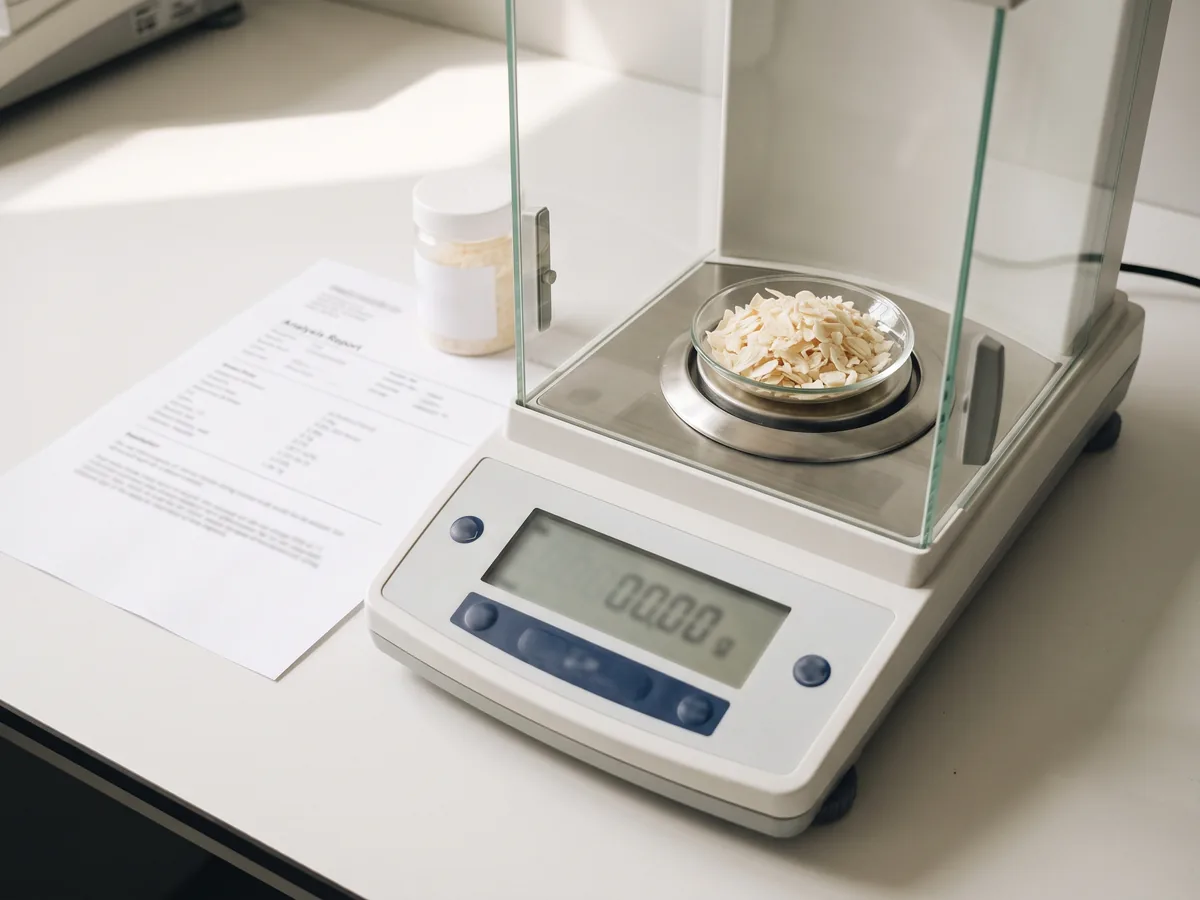
Sourcing is from BRC-certified units and every lot is tested at an NABL-accredited laboratory. KlarHarvest's own dehydrated onion export registrations - IEC, APEDA and FSSAI - are listed on the quality page, where each number is published the day it is issued.
What do the microbiology tiers mean?
Three levels for the same product: Standard, Low Bacterial, and Extra Low Bacterial (produced with steam treatment, on request). Which tier you need depends on your application and your buyer's specification - the values actually achieved are on each lot's certificate of analysis.
What is tested before a lot ships?
An accredited laboratory tests each lot for pesticide residues against EU MRLs, microbiology (total plate count, coliforms, E. coli, Salmonella, yeast/mold), heavy metals, and physical parameters - moisture, ash, foreign matter, cut-size distribution. You receive the certificate of analysis before loading, for your release.
Do the products contain additives or preservatives?
No. No sulphur dioxide, no anti-caking agent (unless requested), no preservatives - 100 % onion. Additive-free is the default in our dehydrated onion export lots; an anti-caking agent for powder is added only on request and declared.
What can I trace from the QR code on the bag?
Every bag carries a lot code and a QR code. Scanning it opens the lot record online: the lab report, production date, plant region and the loading documentation for your lot - the same record we work from.
Can I test the sample or the lot in my own laboratory?
Please do. The pre-shipment sample is drawn from the lot you will receive; if your results differ from our certificate we investigate before anything ships, and the retained sample of the lot stays in our store for twelve months for a repeat test. Disputes in dehydrated onion export are cheapest before the container is booked.
Is the product free of allergens, GMO and irradiation?
Onion is not an allergen under EU labelling law and there is no genetically modified onion in commercial cultivation; lots can be declared GMO-free on that basis. Our lots are not irradiated and not treated with ethylene oxide; a statement to that effect is issued with the certificate when your quality system asks for it.
What moisture level do you guarantee?
Six percent or lower for flakes, chopped and minced; five percent or lower for granules and powder - and the actual reading of the lot is on the certificate, not just "within specification". Moisture is the single most important figure in dehydrated onion export because a wet lot cakes in the bag on the voyage.
Do you have Halal or Kosher certification?
Many partner plants hold Halal and some hold Kosher certificates; where a lot is produced at such a plant the certificate travels with it. Say which certification your market needs in the inquiry and the plant is chosen accordingly.
Logistics
Dehydrated Onion Export Shipping, Ports & Delivery
Which ports do you ship from, and where do you deliver?
Primary port: Pipavav (APM Terminals). Alternatives: Mundra and Nhava Sheva. Dehydrated onion export runs FCL and LCL to major ports worldwide - send us your destination port and we will include the routing in your quotation.
What documentation comes with a shipment?
Every dehydrated onion export shipment carries a commercial invoice, packing list, certificate of origin, phytosanitary certificate, lab analysis report for the lot, bill of lading, and - for every order - QC photos and container loading video. Additional certificates per destination-country requirements on request.
How much fits in a 20-ft container?
It depends on the cut, because dehydrated onion fills a container by volume before weight. Flakes stow roughly 9-10 tonnes per 20-ft; finer cuts stow 12-13 tonnes. Fresh onion loads 12-14 tonnes per 20-ft and 26-28 tonnes per 40-ft in ventilated containers. Exact loads are confirmed in the quotation; a dehydrated onion export quotation that promises 12.5 tonnes of flakes in a 20-foot box has not measured a pallet.
Can I order less than a full container?
Yes - for dehydrated products. LCL shipments and mixed pallets across products and cuts are standard, from one pallet. Fresh onion is a living cargo and ships FCL only.
How is the cargo protected in transit?
Dehydrated onion ships in laminated paper bags with double PE liners, palletised and stretch-wrapped. Fresh onion ships cured, in mesh bags, in ventilated containers. Every order is documented with QC photos and a container loading video, so you see the condition at loading - not just at arrival.
How do I know what was actually loaded?
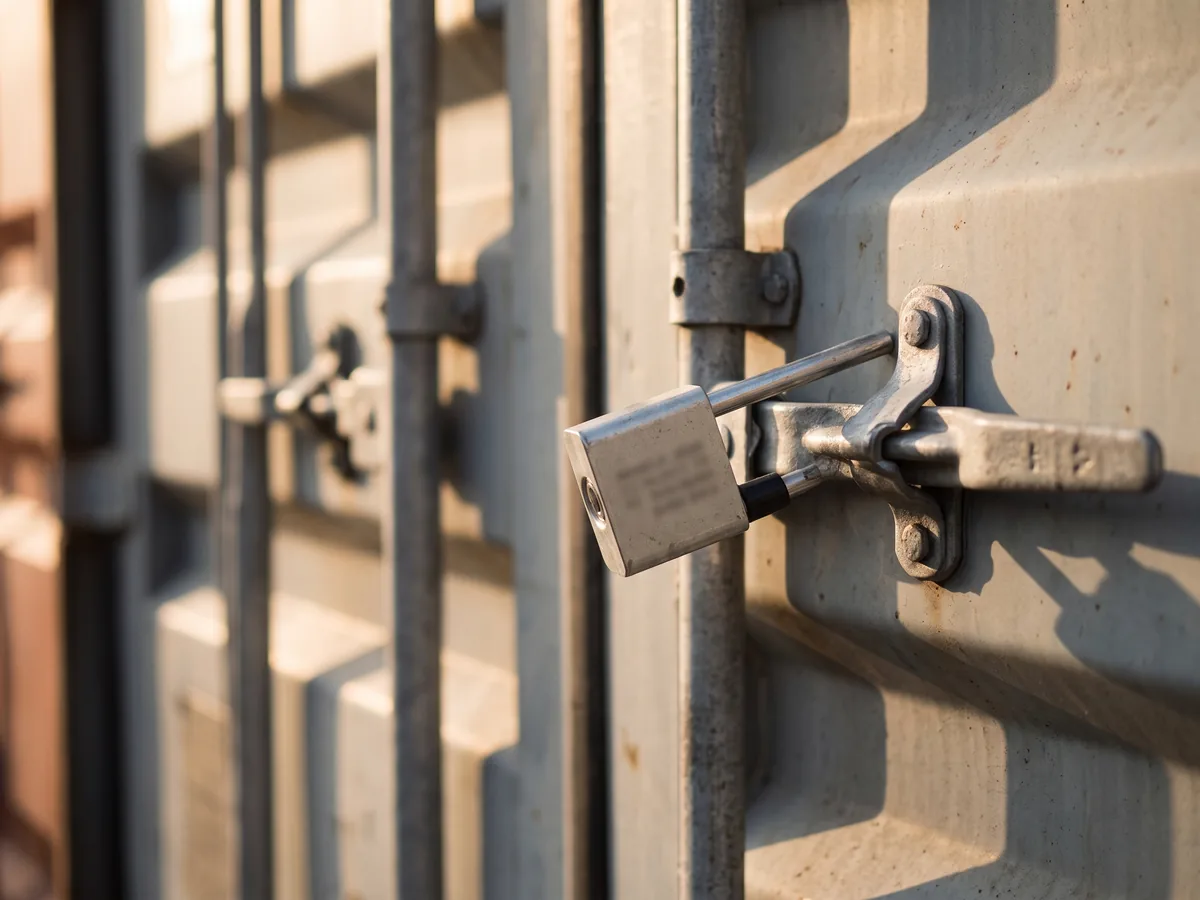
You see it: every order gets QC photos and a container loading video from our own facility, plus the seal number on the shipping documents. The container is stuffed and sealed where we can document every pallet going in.
How long does delivery take to Europe, the Gulf and Asia?
From the order: two to three weeks of production and release, then transit - about two weeks to the Gulf, two to three to Singapore, four to five to North Europe and the US east coast, four to six to Australia. Seven to nine weeks to a European port is a realistic total for dehydrated onion export; a lot already in stock loads within a week of your release.
Do you insure the cargo?
On CIF orders, yes - marine cover to your port is part of the price and the certificate is in the document set. On FOB orders insurance is yours from the ship's rail; we recommend it for every shipment and can arrange it at cost.
What happens if the container is delayed or damaged?
Schedule changes from the shipping line are forwarded to you the day we hear of them. Damage is documented at your end with photographs and, if it affects the goods, handled through the marine insurance and the retained sample for a repeat test; the loading video shows the condition at stuffing, which settles most questions about where damage occurred.
Can you deliver to my warehouse (DAP or DDP)?
DAP, yes, for the EU and the UK, through our forwarder's customs agent, quoted case by case; you stay the importer of record and your broker clears the goods. DDP is not offered, because the import formalities belong with the importer of record. For most buyers clearing with their own broker is cheaper; our draft documents go to that broker before the vessel sails so that dehydrated onion export clearance is a formality.
Commercial
Dehydrated Onion Export Payment & Commercial Terms
What are your payment terms?
Standard dehydrated onion export terms are agreed per order - typically an advance with balance against shipping documents; letters of credit can be discussed for regular volumes. Full terms are stated clearly in every quotation.
Which Incoterms do you quote?
FOB Indian port by default for dehydrated onion export, with sea freight shown separately as a pass-through - so you always see what is product and what is transport. CFR/CIF to your destination port on request.
Why do dehydrated onion prices move during the year?
Because 8-9 kg of fresh onion become 1 kg of dried product, a small move in the raw onion price is a large move in the dried price. That is why our quotes carry a short validity - and why we lock the plant price the same day you confirm, instead of padding every dehydrated onion export offer.
Do your prices include freight?
The product price and the freight are always shown separately in the quotation, so you see exactly what is product and what is transport. Freight is passed through at actual cost to your destination port, so a dehydrated onion export CIF price is the FOB price plus the freight we actually pay.
What happens if India restricts onion exports?
India manages onion exports actively - minimum export prices, duties and, in some years, restrictions at short notice, mainly concerning fresh onion. That is one more reason our quotes carry a short validity, and the contract states in advance what happens if a measure lands between confirmation and loading. No surprises, in either direction.
Do you accept a letter of credit?
Yes - a confirmed, irrevocable letter of credit at sight from a recognised bank is accepted for any order size. For small first orders the 30 / 70 structure is simpler and cheaper for both sides; open-account terms are discussed after a few orders, with credit insurance.
What are your terms of sale?
The terms of sale on this site: quotation validity, price lock at confirmation, release before loading, document set, the procedure for a disputed lot (retained sample, repeat NABL test, replacement or credit on the result) and what happens if an Indian export measure lands between confirmation and loading. A contract for a programme adds the volume, the call-off rhythm and the price basis.
Is there a price list?
No published prices. A dehydrated onion export price depends on the cut, the tier, the quantity, the Incoterm and the raw-onion market of the week, so a list would be wrong within days; a written quotation within one business day is the honest alternative.
Which currency and which bank?
USD or EUR, by bank transfer to the company's Indian account (details on the pro-forma invoice) or by letter of credit. Bank details never change by e-mail alone - any change is confirmed by phone with the person you have spoken to before; treat an e-mailed change as a fraud attempt.
Company
About KlarHarvest as a Dehydrated Onion Export Partner
Who is KlarHarvest?
An onion products specialist based in Bhavnagar, Gujarat - 60 km from Mahuva, India's onion dehydration belt of more than 120 plants. Founded in 2025 for dehydrated onion export: white and red onion in five cuts, and fresh onions, to food manufacturers, importers and distributors worldwide. Every lot ships with its own lab report, QC photos and loading documentation.
Why do you label and load at your own facility?
Control and documentation. Sealed bags from the BRC-certified plant are labeled with brand, lot code and QR at our own Bhavnagar facility, containers can mix several products and cuts, and the loading happens where we can film and document every pallet. The sealed bags themselves are never opened outside the plant.
Can we visit or audit before ordering?
Yes - by appointment, in Bhavnagar and at the partner plants in Mahuva. A visit is the fastest way to judge a dehydrated onion export partner; if one is not practical, every order is documented regardless: QC photos, the lot's lab report and the container loading video reach you without asking.
Who do you typically supply?
Food manufacturers (soups, sauces, ready meals, canned foods), seasoning and spice blenders, snack producers, importers and distributors, food service and HoReCa suppliers, and fresh produce importers. Applications where consistency matters more than the lowest price on the day - the buyers for whom dehydrated onion export documentation is worth as much as the product.
Do you supply anything other than onion?
Deliberately not: thirteen products, one crop. Depth in one product - every cut, every tier, fresh and dehydrated, fully documented - beats breadth for the buyers we serve. If your purchasing programme has adjacent needs, tell us anyway; the sourcing belt we work in produces more than onion, and we will say honestly what we can and cannot do.
How do I reach the right person?
The contact page lists our e-mail, WhatsApp and phone; every inquiry reaches the founder. Whatever channel you choose, the working promise is the same: a complete answer within one business day.
How new are you, honestly?
Founded in 2025. The founder's twelve years with European and international clients are in software, not onion - which is why the company is built on procedure and documentation rather than on a trading history. The lot record on every order is the reference we offer until the second and third orders are.
Do you have a presence in Europe?
Not yet. Regional contacts in our main export markets and a local presence for invoicing and support are planned once the first orders are confirmed; until then the German-language version at klarharvest.com/de, e-mail in English or German and the one-business-day reply are what a dehydrated onion export buyer anywhere gets from us directly.
Can you supply a certificate of analysis format my quality system requires?
Yes. The NABL laboratory's certificate is the primary document; where your system needs a specific template or additional parameters (pyruvate, water activity, specific pesticides), tell us at the inquiry and the test panel is extended for your lots.
Start here
Get a Dehydrated Onion Quote Within One Business Day
Product, cut size, quantity, destination port - that's all we need to start. You'll receive a written quotation with full specifications from a dehydrated onion exporter, not a one-line price.
info@klarharvest.com · WhatsApp +91 97371 01599 · Bhavnagar, Gujarat, India