- How the code is built: chapter 07, heading 0712, subheading 0712.20
- National extensions: EU CN and TARIC, UK, US HTS, India ITC-HS
- What 0712.20 covers and what it excludes
- Duty rates by market, February 2026
- Preferences, quotas and origin proof
- Customs value, duty and import VAT: the calculation
- Classification traps: powder with additives, toasted onion, blends
- Binding tariff information: settling the code in advance
- Who declares: importer of record, EORI and the broker
- Codes for the products that ship alongside onion
- The code on the Indian export side
- Where the code must appear on the documents
- Reading trade statistics by HS code
- How KlarHarvest documents the classification
- Frequently asked questions
Judge the product, not the words
200-500 g from a current lot, dispatched by courier with the lot lab report.
Request a sampleThe dehydrated onion HS code is 0712.20, and that six-digit number decides the duty you pay, the documents customs asks for, the statistics you can look up and, occasionally, whether a container is held at the border while an officer decides whether onion powder with an anti-caking agent is still onion. Most buyers meet the code on the first commercial invoice and never think about it again; the ones who read it carefully save money on duty, avoid reclassification disputes and can read the trade data that shows what everyone else is paying.
This guide explains how the Harmonized System code for dried onion is built, from the chapter down to the national extensions in the EU, the UK, the USA and India, what the heading covers and what it excludes, the duty rates that apply in the main importing markets as of February 2026 and where preferences and quotas do and do not exist, the products that get misclassified, how customs value and import VAT are calculated on top of the duty, how the code works on the Indian export side, and how to use it to read customs statistics. It is written for the importer's desk, not the customs broker's, and it says where the broker is needed.
Duty rates change with trade agreements and budgets; every figure below is dated and should be confirmed in the tariff database of the country of import before a shipment is costed.

What this guide covers
- How the code is built: chapter 07, heading 0712, subheading 0712.20
- National extensions: EU CN and TARIC, UK, US HTS, India ITC-HS
- What 0712.20 covers and what it excludes
- Duty rates by market, February 2026
- Preferences, quotas and origin proof
- Customs value, duty and import VAT: the calculation
- Classification traps: powder with additives, toasted onion, blends
- Binding tariff information: settling the code in advance
- Who declares: importer of record, EORI and the broker
- Codes for the products that ship alongside onion
- The code on the Indian export side
- Where the code must appear on the documents
- Reading trade statistics by HS code
- How KlarHarvest documents the classification
- Frequently asked questions
How the code is built: chapter 07, heading 0712, subheading 0712.20
The Harmonized System is the World Customs Organization's product nomenclature, used by nearly every country for tariffs and trade statistics. It is a tree. Chapter 07 covers edible vegetables and certain roots and tubers. Heading 07.12 covers dried vegetables, whole, cut, sliced, broken or in powder, but not further prepared. Subheading 0712.20 is onions. The six digits, 0712.20, are the same everywhere in the world; that is the point of the system. Fresh onions sit in a different heading, 0703.10, because fresh and dried vegetables are separated at heading level, and dried garlic sits under 0712.90 with the other dried vegetables rather than under its own subheading.
Three words in the heading text do the work. "Dried" distinguishes the product from fresh (07.03), frozen (07.10) and provisionally preserved (07.11) onion. "Cut, sliced, broken or in powder" means the cut does not change the code: flakes, chopped, minced, granules and powder are all 0712.20. "Not further prepared" excludes onion that has been cooked, fried, salted for preservation, mixed into a seasoning or treated with additives beyond what the chapter notes allow, and it is the phrase behind every classification dispute in the exclusions section below.
National extensions: EU CN and TARIC, UK, US HTS, India ITC-HS
Countries add digits beyond the six for their own tariff lines and statistics. For dried onion the extensions are short, because there is not much to subdivide.
| Territory | Nomenclature | Code for dried onion | Description as written |
|---|---|---|---|
| Worldwide | HS (WCO) | 0712.20 | Onions (dried, whole, cut, sliced, broken or in powder, not further prepared) |
| European Union | Combined Nomenclature (8 digits) / TARIC (10) | 0712 20 00 / 0712 20 00 00 | Onions |
| United Kingdom | UK Trade Tariff (10 digits) | 0712 20 00 00 | Onions |
| United States | HTSUS (10 digits) | 0712.20.20.00 and 0712.20.40.00 | Onion powder or flour; other (flakes, chopped, granules) |
| India | ITC-HS (8 digits) | 0712 20 00 | Onions |
| Switzerland | Tares (8 digits) | 0712.2000 | Onions |
The United States is the one market that splits the subheading by cut, with powder and flour on one line and everything else on another, and the two lines carry different duty rates. Everywhere else, the cut is a description on the invoice, not a tariff line. A buyer who sends a specification with the cut and a packing list with "dried onion flakes, HS 0712.20" has given customs what it needs in every territory.
What 0712.20 covers and what it excludes
Inside the subheading: dried onion of any variety and colour, white, red, pink; any cut from whole dried bulbs to powder; sulphite-treated or untreated, since sulphur dioxide is a permitted preservative treatment that does not change the heading; steam-treated low-bacterial grades, since sterilisation is not "preparation"; onion with a small addition of an anti-caking agent, which the chapter notes tolerate as long as the product keeps the character of dried onion; and toasted or roasted dried onion that has simply been dried at higher heat without oil, which most customs administrations keep in 0712, though the section on traps says where that is argued.
Outside it, and the codes they take instead:
| Product | Why it leaves 0712.20 | Where it goes |
|---|---|---|
| Fresh or chilled onion | Not dried | 0703.10 |
| Frozen onion | Frozen, not dried | 0710.80 |
| Fried onion (crispy fried onions in oil) | Cooked in fat: further prepared | 2005.99 (prepared vegetables) |
| Onion pickled in vinegar | Preserved by vinegar | 2001.90 |
| Onion oil, onion oleoresin | An extract, not the vegetable | 3301.29 / 3301.90 |
| Onion salt, onion seasoning mix | A mixed condiment | 2103.90 |
| Onion soup mix | A soup preparation | 2104.10 |
| Dried garlic | Different vegetable | 0712.90 |
| Mixture of dried onion and dried garlic in one bag | A mixture of dried vegetables | 0712.90 (mixtures) |
| Onion flavour, natural or artificial | A flavouring preparation | 3302.10 |
The line that catches buyers most often is the mixture. A pallet with separate bags of onion and garlic is two products with two codes, one line each on the invoice. A bag containing a blend of the two is a mixture and takes the "other, including mixtures" line of 0712.90, at that line's duty. Blending on the Indian side to save a tariff line is not worth it; the duty rates are close and the classification is cleaner with separate bags.
Duty rates by market, February 2026
The rates below are the standard, most-favoured-nation rates that apply to goods of Indian origin unless a preference applies, and they are the rates a first-time importer should cost with. Check the tariff database on the day; the EU's is TARIC, the UK's is the online Trade Tariff, the US's is the HTS on the International Trade Commission site.
| Market | Tariff line | Standard duty on Indian dried onion | Notes |
|---|---|---|---|
| European Union | 0712 20 00 | 6.4 % of customs value | No quota, no import licence; VAT at the food rate on top |
| United Kingdom | 0712 20 00 00 | 6 % of customs value | UK Global Tariff rate; Developing Countries Trading Scheme may reduce it for Indian origin with proof |
| United States | 0712.20.20 (powder or flour) | 29.8 % | Among the highest duties on any Indian food product; no preference for India |
| United States | 0712.20.40 (other cuts) | 21.3 % | Flakes, chopped, minced, granules |
| Switzerland | 0712.2000 | Specific duty per 100 kg, low | Check Tares; GSP for India may apply |
| Gulf Cooperation Council | 0712.20 | 5 % common external tariff | Some members exempt food; check locally |
| Japan | 0712.20 | 9 % | - |
The US rates explain something buyers notice: Indian dried onion is a smaller share of the American market than of the European one. A 21 to 30 percent duty on top of freight from the west coast of India puts Indian product closer in price to domestic California onion than the FOB gap suggests, and US importers buy Indian onion where the specification or the volume justifies it rather than on price alone. The US procedure, with FDA registration and prior notice on top of the tariff, is covered in Importing Dehydrated Onion into the USA.
Preferences, quotas and origin proof
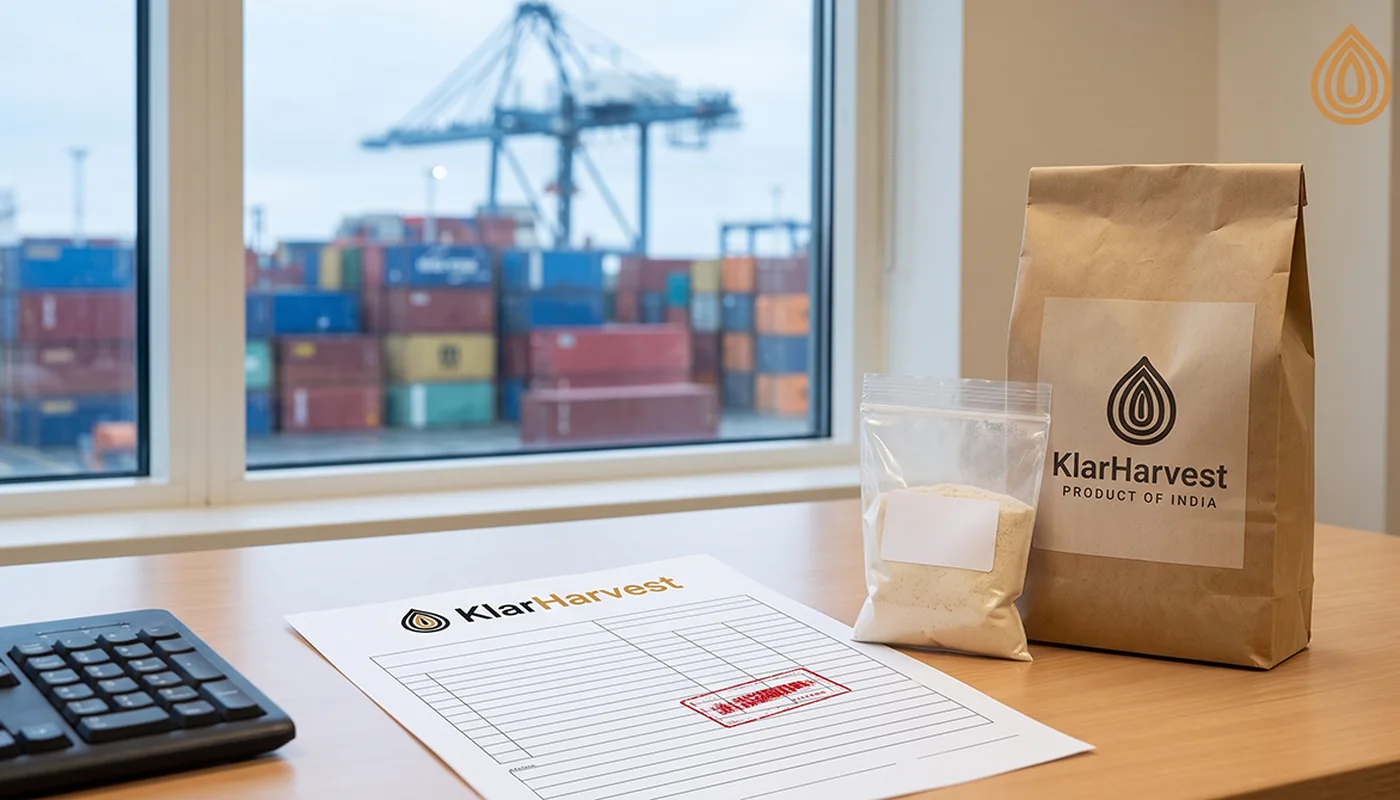
A preferential duty rate lower than the standard one applies only where a trade arrangement between the importing country and India covers the product and the shipment carries the proof of origin that arrangement requires. For the EU, India has been a beneficiary of the Generalised Scheme of Preferences, but the EU graduates product sections in which a beneficiary is highly competitive, and a buyer should check in TARIC on the date of entry whether 0712 20 00 from India carries a preferential rate or the standard 6.4 percent; when a preference exists it needs a statement on origin from an exporter registered in the REX system. The EU and India have been negotiating a free trade agreement for years; if and when it enters into force, dried onion may move to a reduced or zero rate with its own rules of origin, and it will be the largest change in this table. The UK's Developing Countries Trading Scheme grants reduced rates on many products of Indian origin with an origin declaration. The United States has no preference for India on this heading. There are no tariff quotas on dried onion in any of these markets, and no anti-dumping or safeguard measures as of February 2026.
The practical rule: ask your customs broker to check the preference on the exact date, ask the exporter whether it is registered for REX or can issue the origin declaration the scheme requires, and never cost a shipment on a preferential rate until both answers are yes. A certificate of origin from an Indian chamber of commerce proves origin for commercial and traceability purposes but is not, by itself, the preferential origin proof most schemes require.
Customs value, duty and import VAT: the calculation
Duty is charged on the customs value, which in the EU and most countries is the transaction value delivered to the border: the price paid for the goods plus the freight and insurance to the port of entry, which is the CIF value whether or not the goods were bought CIF. A shipment bought FOB has its freight and insurance added for customs purposes; one bought CIF is valued at the CIF price; one bought DAP has the inland leg after the border deducted. Import VAT is then charged on the customs value plus the duty, at the country's rate for food, and a VAT-registered business reclaims it in its return.
A worked example for one 20 foot container of white onion flakes into Germany, February 2026. Goods 10,000 kilograms at 1.65 euros FOB is 16,500 euros; freight and insurance to Hamburg 1,550 euros; customs value 18,050 euros. Duty at 6.4 percent is 1,155 euros. Import VAT at Germany's reduced food rate of 7 percent on 19,205 euros is 1,344 euros, reclaimable. Landed at the port before handling and delivery: 19,205 euros, or 1.92 euros per kilogram, of which duty is 0.12. The same container into the Netherlands pays the same duty and 9 percent VAT; into the UK, 6 percent duty on the sterling customs value and zero VAT on food. The full landed-cost method is in Landed Cost of Dehydrated Onion in Europe.
Classification traps: powder with additives, toasted onion, blends
Four products generate questions at the border, and a buyer who knows the answer in advance saves a week.
Onion powder with an anti-caking agent
Silicon dioxide or similar at up to 1 or 2 percent, added to keep powder flowing, does not change the classification; the chapter allows additives that do not alter the product's essential character. Declare it on the specification and the invoice description, "onion powder with anti-caking agent E551", so that a laboratory result showing silica does not look like undeclared adulteration.
Toasted or roasted onion
Dried onion that has been dried at a higher temperature until it browns, without oil, remains 0712.20 in the practice of most EU customs administrations, because heating is part of drying. Onion fried in oil is 2005.99. The invoice description should say "toasted dried onion, no oil added" and the specification should show no fat; a product that lists oil is a prepared vegetable and pays that heading's duty. Where a customs office has ruled otherwise, a binding tariff information decision, obtainable in advance in the EU and the UK, settles it for three years.
Blends and kits
A bag of onion and garlic mixed is 0712.90; a bag of onion mixed with salt or other seasonings is 2103.90; a carton containing separate bags of onion and garlic is two products. Keep products in separate bags, invoice them on separate lines, and the classification is never in doubt.
Sulphite-treated onion
Sulphur dioxide as a preservative treatment does not affect the code. It does affect labelling, and a customs officer who sees "contains sulphites" on a bag will not reclassify, but a food inspector will check the level. That is a food-law question, covered in Sulphites in Dehydrated Onion, not a tariff one.
Binding tariff information: settling the code in advance
Where a product sits near a boundary, toasted onion, powder with an additive, a novel cut, an importer does not have to wait for an officer's view at the border. The EU issues binding tariff information decisions on application to the customs authority of the importer's member state: the applicant describes the product, attaches a specification and usually a sample, and receives a written classification that binds every EU customs office for three years. The UK issues advance tariff rulings on the same basis, and the United States issues binding rulings through Customs and Border Protection, published in a searchable database that already contains rulings on dried onion products. A ruling takes a few weeks to a few months and costs nothing but the time; for a buyer planning containers of a borderline product it is the difference between a known duty and an argument at every entry. The application should quote the proposed code, describe the process (dried with hot air, no oil, anti-caking agent at 1 percent) and cite the chapter and heading notes; a customs broker will draft it. Rulings are public, and searching the EU's EBTI database or the US CROSS database for "dried onion" before applying shows how the same products have been classified before.
Who declares: importer of record, EORI and the broker
The code lives on the import declaration, and someone has to file it. In the EU the declarant is normally the importer of record, the company that owns the goods at the border and pays the duty, acting through a customs broker under direct or indirect representation; the importer needs an Economic Operators Registration and Identification number, obtained once from its national customs authority and valid across the EU, before the first shipment. Under DAP and CIF the exporter's forwarder arranges transport but the importer still declares and pays duty; only under DDP does the seller act as importer, which for an Indian exporter means appointing a fiscal representative in the EU and is rarely done. The broker files the declaration electronically with the CN code, the customs value, the origin and the documents, pays the duty and VAT from the importer's deferment account or its own, and releases the goods; its fee for a straightforward dried-vegetable entry is 80 to 150 euros. The UK works the same way with a UK EORI; the United States uses a licensed customs broker filing on the importer's behalf with a customs bond. The importer's obligations, and the questions the broker will ask on the first shipment, are set out in Customs Clearance for Dehydrated Onion in the EU.
Codes for the products that ship alongside onion
A distributor's mixed container from Mahuva rarely holds onion alone, and each product on it carries its own code and duty. Dried garlic in any cut is 0712.90 and, in the EU, 0712 90 90 with the same 6.4 percent duty; garlic powder pays the same in the EU but in the United States has its own line at a lower rate than onion powder. Other dehydrated vegetables from the same plants, carrot, cabbage, tomato, spinach, sit in 0712.90 with their own EU subdivisions and rates between 6.4 and 12.8 percent. Fresh onion, if a buyer combines a dried order with a fresh one, is 0703.10 with its own EU duty and, in season, an entry-price system, and it needs a phytosanitary certificate without exception. Dehydrated vegetable mixtures made up in India, soup vegetables in one bag, are 0712 90 mixtures. The rule for a mixed container is one invoice line per product with its own code, its own net weight and its own lot codes, and a packing list that maps each pallet to a line; a broker can then declare the container in one entry with several items. The mixed-container arithmetic is in Mixed Containers: Combining Onion Cuts, Garlic and Vegetables.
The code on the Indian export side
India uses the same first six digits in its ITC-HS nomenclature, and dried onion exports are filed under 0712 20 00 on the shipping bill. The code carries three things an exporter deals with. There is no export duty on dried onion, unlike fresh onion, which has been subject to export duties and bans in years of high domestic prices; dehydrated onion has stayed outside those measures. The Remission of Duties and Taxes on Exported Products scheme refunds a small percentage of the FOB value, around 1 to 1.5 percent for this line, to the exporter, which is part of why Indian exporters can price where they do. And APEDA, the agricultural export authority, registers exporters of the products under its schedule, which includes dried vegetables, and issues the registration-cum-membership certificate that the shipping bill references. The registrations behind a legitimate exporter are explained in FSSAI, APEDA and IEC.
Where the code must appear on the documents
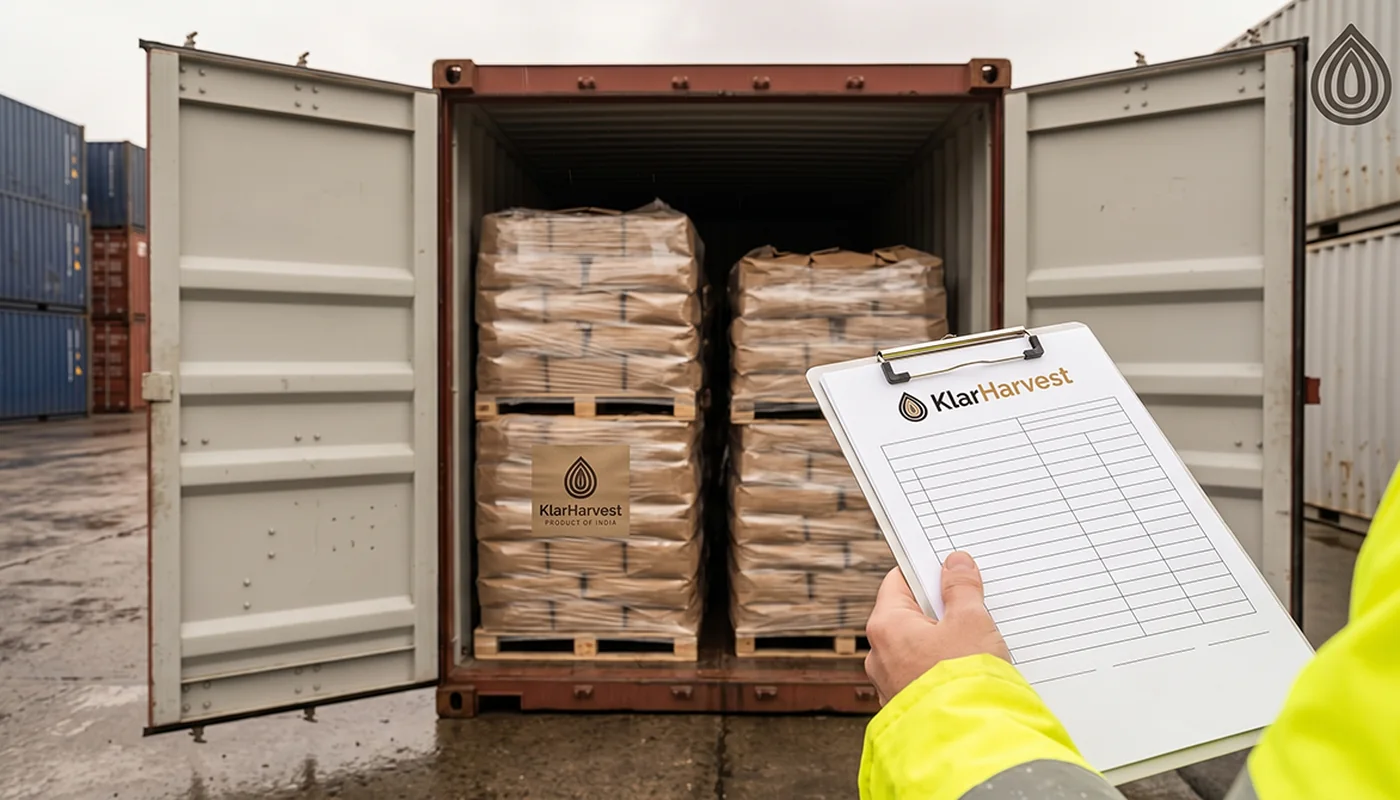
The HS code appears on the commercial invoice and the packing list, one line per product with the six-digit code and, ideally, the eight or ten-digit code of the importing country; on the certificate of origin; on the shipping bill in India and the import declaration at destination; and usually on the bill of lading as part of the cargo description. The description next to the code should match the product exactly: "Dehydrated white onion flakes 8-20 mm, HS 0712.20, 500 bags x 20 kg net, lot codes KH-2026-...". A mismatch between the description, the code and the certificate of analysis, for instance an invoice that says "onion powder" against a certificate for flakes, is the kind of small inconsistency that customs software flags, and it costs days. Ask the exporter for draft documents before the originals are issued and read the code and the description on each; the document set and the checks are in Export Documents for Dehydrated Onion from India.
Reading trade statistics by HS code
A worked reading, for the way the numbers are used. Suppose India's monthly export figures show 11,000 tonnes under 0712 20 00 in a given month with a value of 1,850 million rupees; the average unit value is 168 rupees per kilogram FOB across every grade and destination. Suppose Eurostat shows Germany importing 1,100 tonnes from India that month at a CIF value of 2.05 million euros, a unit value of 1.86 euros per kilogram. Convert the Indian figure at 90 rupees per euro and the FOB average is 1.87 euros, which after freight of about 0.15 should have arrived at roughly 2.00 CIF; the German figure is lower, which tells you that German importers bought below the all-market average that month, plausibly because they buy standard white flakes in containers while the average includes dearer red and treated grades and smaller lots. That kind of reading, done quarterly, is worth more than any price list.
Because every country files trade under the same six digits, the code is also the key to public data that tells a buyer what the market pays. India's Directorate General of Commercial Intelligence and Statistics publishes monthly export quantities and values by ITC-HS code and destination; dividing value by quantity for 0712 20 00 gives the average FOB unit value that Indian exporters achieved to Germany, the Netherlands or the United States in a given month, and in recent years that figure has run around 160 to 170 rupees per kilogram across all grades, softer in the second half of the year and firmer around February and May. Eurostat's Comext database shows EU imports under 0712 20 00 by partner country with values and quantities, which gives the CIF unit value at the European border; the difference between the two is freight and margin. The UN Comtrade database does the same for the world. A buyer who checks the unit value for the month before negotiating knows the range the exporter is working in. How to use the monthly figures is part of Dehydrated Onion Price per kg, and the year's pattern is in Dehydrated Onion Price History 2020-2026.
How KlarHarvest documents the classification
KlarHarvest invoices every product on its own line with the description, the cut, the six-digit code 0712.20 and the importing country's extension, and the same wording appears on the packing list, the certificate of origin and the shipping bill, so that the four documents agree. Blends are not made: onion and garlic ship in separate bags with separate codes, and powders with an anti-caking agent are described as such. Draft documents go to the buyer for a check before the originals are issued, and a customs broker's questions about classification are answered with the specification and the certificate of analysis on the same day. The document routine is described on the our process page.
Frequently asked questions
What is the HS code for dehydrated onion?
0712.20 worldwide. The EU and UK use 0712 20 00, India 0712 20 00, and the United States splits it into 0712.20.20 for powder and flour and 0712.20.40 for other cuts.
Is onion powder the same HS code as onion flakes?
Yes in every territory except the United States, where powder and flour have their own tariff line with a higher duty. The cut is a description, not a code, elsewhere.
What is the EU import duty on dried onion from India?
The standard rate is 6.4 percent of the customs value, which is the CIF value at the EU border, plus import VAT at the food rate, which is reclaimable. Whether a preferential rate applies to Indian origin on a given date should be checked in TARIC, with the origin proof the scheme requires.
Why is the US duty on dried onion so high?
The US tariff lines for dried onion carry 21.3 percent for cuts and 29.8 percent for powder, long-standing rates that protect domestic producers, and India has no preferential arrangement that reduces them.
Does a mix of onion and garlic in one bag have the same code?
No. A mixture of dried vegetables is classified under 0712.90 as a mixture. Separate bags of onion and garlic on one pallet keep their own codes and their own invoice lines.
Is dried onion subject to import licences or quotas?
No, in the EU, the UK and the US there are no licences, quotas, anti-dumping duties or safeguards on dried onion as of February 2026. The product must meet food law, which is a separate matter from the tariff.
Where do I find the duty rate for my country?
In the national tariff database: TARIC for the EU, the Trade Tariff for the UK, the HTS for the US, Tares for Switzerland. Enter 071220 and read the third-country rate and any preference for India, then ask your customs broker to confirm on the date of entry.
Next step
If you are costing a first import, request a quote and say which country you import into; the quote comes with the product described exactly as it will appear on the invoice, the code for your territory and the freight shown separately, so that the customs value and the duty can be calculated before you decide.