- The loads: tonnes per container by cut
- Why volume runs out before weight
- The 12.5-tonne myth
- Pallet patterns and heights
- Floor-loading: why Europe does not want it
- Where stuffing happens: plant, godown or depot
- Inspecting the empty container
- Lining, dunnage and desiccant
- Stuffing sequence and weight distribution
- Top sheets and container rain
- Sealing: the customs e-seal and self-sealing
- The loading video: what it should show
- The packing list and the verified gross mass
- Mixed loads of several cuts
- Unloading at the buyer's end
- Common loading faults and their consequences
- LCL: how a pallet travels when there is no container
- Planning an order from the container backwards
- What the freight per kilo looks like once the load is right
- How KlarHarvest loads
- Frequently asked questions
Judge the product, not the words
200-500 g from a current lot, dispatched by courier with the lot lab report.
Request a sampleDehydrated onion container loading is where a buyer's paper order meets physics, and the physics surprise first-time importers every season: a 20-foot container of white onion flakes holds about ten tonnes, not the twelve and a half that a stale figure in the trade still quotes, because the flakes fill the box's volume long before they reach its weight limit. Get that number wrong and the invoice, the freight per kilo and the year's supply plan are all wrong with it. This guide gives the real loads for every cut and both box sizes, explains the pallet patterns that produce them, and walks through the loading itself, from the empty container's inspection at the depot to the e-seal on the closed doors, including the dunnage, desiccant and top sheets that keep a moisture-sensitive cargo dry through a tropical-to-North-Sea voyage, and what a loading video should show so that a buyer can see it was done.
It is written for buyers, their forwarders and their goods-in teams, with the practice of the certified Mahuva plants and of KlarHarvest's Bhavnagar godown in 2026. The freight arithmetic that the loads feed is in Landed Cost of Dehydrated Onion in Europe, and the packaging the loads are built from in Dehydrated Onion Packaging.
What this guide covers
- The loads: tonnes per container by cut
- Why volume runs out before weight
- The 12.5-tonne myth
- Pallet patterns and heights
- Floor-loading: why Europe does not want it
- Where stuffing happens: plant, godown or depot
- Inspecting the empty container
- Lining, dunnage and desiccant
- Stuffing sequence and weight distribution
- Top sheets and container rain
- Sealing: the customs e-seal and self-sealing
- The loading video: what it should show
- The packing list and the verified gross mass
- Mixed loads of several cuts
- Unloading at the buyer's end
- Common loading faults and their consequences
- LCL: how a pallet travels when there is no container
- Planning an order from the container backwards
- What the freight per kilo looks like once the load is right
- How KlarHarvest loads
- Frequently asked questions
The loads: tonnes per container by cut
| Cut | Loose bulk density | Net kg per 20 kg bag's volume | Bags per Europallet | Pallets per 20 ft | Net tonnes, 20 ft | Net tonnes, 40 ft | Net tonnes, 40 ft high cube |
|---|---|---|---|---|---|---|---|
| Flakes 8-20 mm | 180-230 g/l | ~100 l | 30-35 | 10 | 9-10.5 | 19-21 | 21-23 |
| Chopped 3-5 mm | 280-350 g/l | ~65 l | 40 | 10-11 | 12-13 | 24-26 | 26-28 |
| Minced 1-3 mm | 350-450 g/l | ~50 l | 40-45 | 11 | 14-15 | 28-30 | 30-32 |
| Granules 16-40 mesh | 450-550 g/l | ~40 l | 45-50 | 11 | 16-18 | 32-36 | 34-38 |
| Powder 80 mesh | 500-650 g/l | ~35 l | 45-50 | 11 | 18-20 | 36-40 | 38-42 |
| Mixed cuts, typical | 10-11 | 12-15 | 24-30 | 26-32 |
The weight limit of a 20-foot container is about 21 to 28 tonnes of cargo depending on the box and the road rules at both ends, and only powder in a 40-foot approaches it; every other cut is volume-limited. The figures are for palletised 20 kilogram bags; 25 kilogram bags and floor-loading add 10 to 20 percent, and 10 or 12.5 kilogram flake bags subtract a few percent. The densities behind the table are in Bulk Density and Flowability of Onion Powder and Granules.
Why volume runs out before weight
A 20-foot dry container has an internal volume of about 33 cubic metres, of which 26 to 28 are usable once pallets, the gaps between them and the space above the top layer are counted; a Europallet of flakes stacked six layers high is 1.8 metres tall and occupies 1.0 square metre of the 13.9 square metre floor with a cubic metre and a half of air in and around the bags. Flakes at 200 grams per litre make 600 to 700 kilograms on such a pallet, and ten pallets on the floor make 6 to 7 tonnes, which is why flake loaders stack seven or eight layers and accept a taller pallet to reach 9 to 10; there is simply no more room. Granules at 500 grams per litre put 900 to 1,000 kilograms on the same pallet footprint and reach 17 tonnes with room to spare. The cargo's density decides the load, and onion's densities are what they are; a buyer who wants more kilos per container buys a denser cut, a bigger box, or accepts the floor-loaded alternative that European warehouses will not take.
The 12.5-tonne myth
The figure of 12.5 tonnes per 20-foot container of dehydrated onion appears in older trade literature, in some exporters' quotes and in more than one buyer's supply plan, and it is a granule or mixed-cut load applied to flakes. A container order for 12.5 tonnes of flakes ends one of three ways: a short shipment of ten tonnes with the invoice corrected, a second partial container at a ruinous freight per kilo, or a floor-loaded box that arrives with crushed bags at the bottom. The safe planning figures are ten tonnes for flakes, thirteen for chopped, fifteen for minced, seventeen for granules and nineteen for powder, and a quote that promises more of flakes should be questioned before the advance is paid. The habit of checking the weight against the cut is one of the points in 25-Point Checklist Before You Choose a Dehydrated Onion Supplier.
Pallet patterns and heights
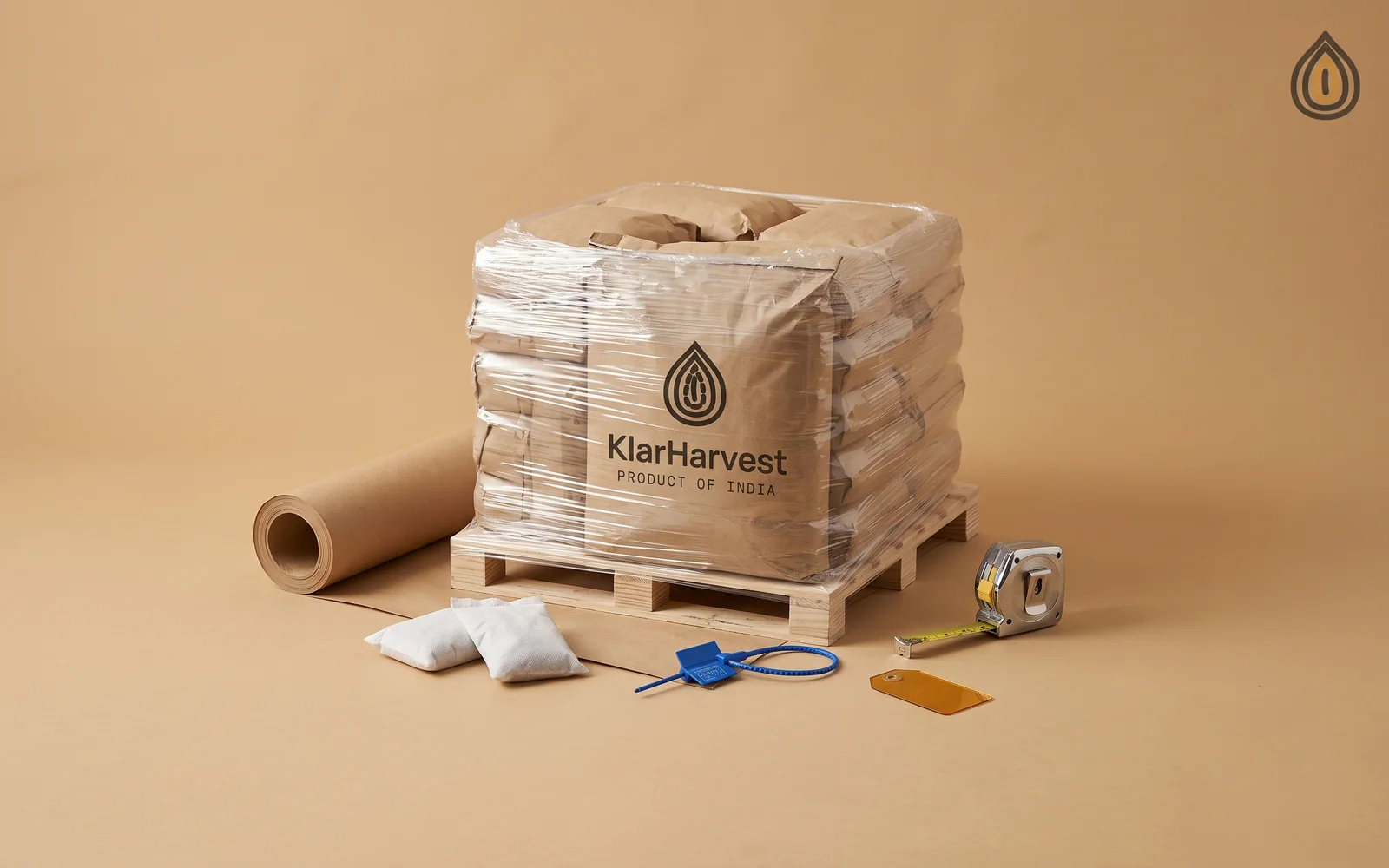
Europallets, 800 by 1,200 millimetres, are the European standard and the Mahuva export plants stock them, ISPM 15 heat-treated and stamped; the 1,000 by 1,200 industrial pallet fits the same container in a different pattern and the 1,016 by 1,219 pallet serves the American trade. Twenty kilogram sacks are laid five to a layer on a Europallet in an interlocking pattern that alternates between layers so that the stack binds itself, six to eight layers depending on the cut, with a top sheet of kraft or corrugated board, corner boards on the better-packed pallets, and five or six turns of stretch film. Pallet heights run 1.6 to 2.0 metres, kept under the container's 2.39 metre door height with room for the top sheet, and are never double-stacked in the box, because the bottom pallet's bags split. Ten Europallets fill a 20-foot floor in a single row of pinwheeled pairs, eleven with a tight pattern; twenty-three to twenty-five fill a 40-foot. The detailed patterns per pallet type and cut are in Pallet Configurations for Dehydrated Onion.
Floor-loading: why Europe does not want it
Floor-loading, bags stacked loose from floor to roof without pallets, puts 15 to 20 percent more weight in the box and is standard for some destinations where labour is cheap and warehouses are floor-stacked; for Europe it is a mistake. The bags at the bottom of a two-metre stack are crushed, flakes break to fines, the bags are handled one by one at unloading by a crew that a European warehouse does not have, the unloading takes a day rather than an hour, and the demurrage and the labour cost more than the freight saved. Any European buyer should specify palletised loading, and a supplier that proposes floor-loading to reach a tonnage is solving the wrong problem.
Where stuffing happens: plant, godown or depot
Three places stuff a dried-onion container. The plant, at its own loading bay, which is the simplest chain and the norm for a single-plant full container. An exporter's godown, where lots from several plants are consolidated, labelled and loaded; KlarHarvest's Bhavnagar godown works this way, under the rule that sealed bags are never opened there, as explained in Private Label Dehydrated Onion. Or a container freight station at the port, for LCL cargo and for exporters without a self-sealing registration, where the goods are trucked loose or on pallets and stuffed by the station's crew under customs supervision. Stuffing at the plant or the godown is under cover, on a dry floor, with the exporter's own people and camera; stuffing at a depot is faster to customs and less controlled, and a buyer who wants a loading video wants the first two.
Inspecting the empty container
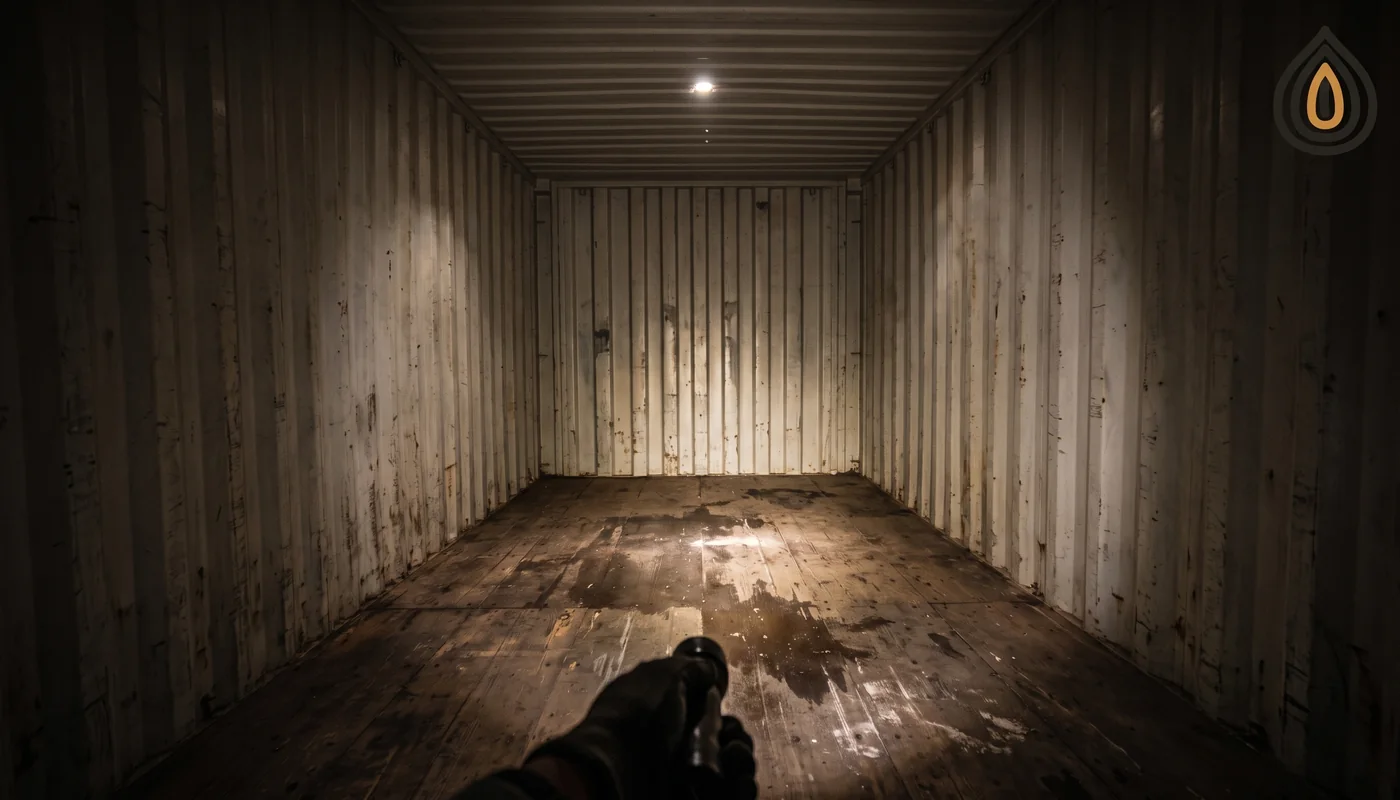
The forwarder's driver or the exporter's staff inspect the empty box at the depot before it is accepted, and the check takes ten minutes. From inside with the doors closed: any point of daylight through the roof, walls or floor is a hole, and a box with one is refused. The floor: dry, sound, no soft or broken boards, no oil stains or residues. The walls and roof: no rust flaking, no dents that bow inward, no old nails or fasteners protruding. The doors: seals intact and pliable, doors closing tight, locking bars working. The smell: a box that carried chemicals, hides, fish or anything pungent is refused, since dried onion takes up odours. The previous cargo, where the depot can say: food-grade preferred, and never a box that held fumigated goods within the last weeks. The box's number, its condition and the inspection are photographed, and the photographs go into the lot record; a container claim at the destination turns on them. A box that passes is swept clean and dry.
Lining, dunnage and desiccant
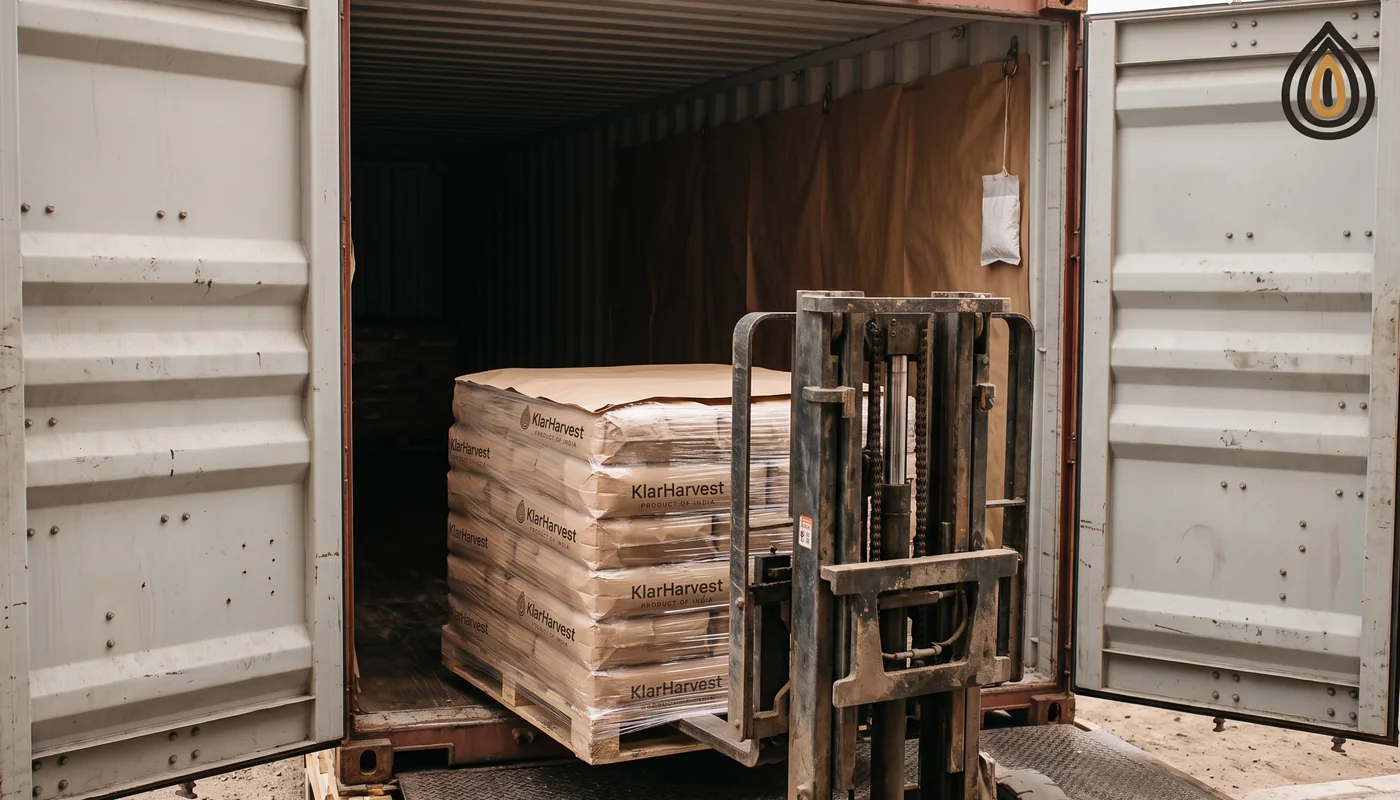
Three materials go in before the cargo. Kraft paper or corrugated sheets are hung or stood against the side walls and the front wall, so that the pallets do not touch the steel, which is where condensation forms; some exporters use a full plastic liner bag for the box, which is more protection and more cost, and which is standard for the wettest routings. Desiccant bags, calcium chloride or clay, of one to two kilograms each, are hung from the lashing rings along the walls at a rate of one per pallet row or 8 to 12 per 20-foot box, to take up the water that the air and the cargo release as the box cools; they are hung, never laid on the cargo, and they are removed at the destination before unloading. Dunnage, timber or cardboard, fills any gap between the last pallets and the doors so that the load cannot shift, and air bags do the same job at the larger exporters. The materials cost a few thousand rupees a container and they are the difference between a dry arrival and a claim; the moisture science they defend against is in Dehydrated Onion Shelf Life.
Stuffing sequence and weight distribution
Pallets go in with a forklift, front wall first, heaviest pallets over the container's axles rather than at one end, the pattern tight so that nothing moves, and the load's weight distributed so that the box's centre of gravity sits within the limits the carriers and the road rules set; a container with all its weight at the doors tips a chassis. For a mixed load the lots are loaded in the order they will be unloaded, the buyer's first need at the doors, and each pallet's lot number is checked off the packing list as it goes in, with the pallet label facing the aisle so that the loading video can read it. The last pallets are dunnaged against the doors and the doors are closed and sealed the same day; a container left open overnight in monsoon air has taken in the humidity of the night. The whole stuffing of a 20-foot box takes an hour with a good crew.
Top sheets and container rain
Container rain is the condensation that forms on the cold roof and walls of a box as it moves from the warm Arabian Sea into cooler northern air, and drips onto the cargo; it is the single largest cause of moisture damage to dried onion in transit, and it is prevented by keeping the water off the bags rather than by keeping it out of the box, which is impossible. Every pallet carries a top sheet of kraft paper or corrugated board, extending over the edges, so that drips land on the sheet and run off; the wall dunnage keeps the side bags off the wet steel; the desiccant reduces the water available. A pallet nearest the doors, where the roof and door gaps concentrate the drip, gets a double sheet. Buyers who receive a container with wet top sheets and dry bags have seen the system work; those who receive caked top bags on a pallet with no sheet have seen it omitted. The monsoon months, when the cargo leaves India in 85 percent humidity, are the worst case, as Monsoon and Dehydrated Onion explains.
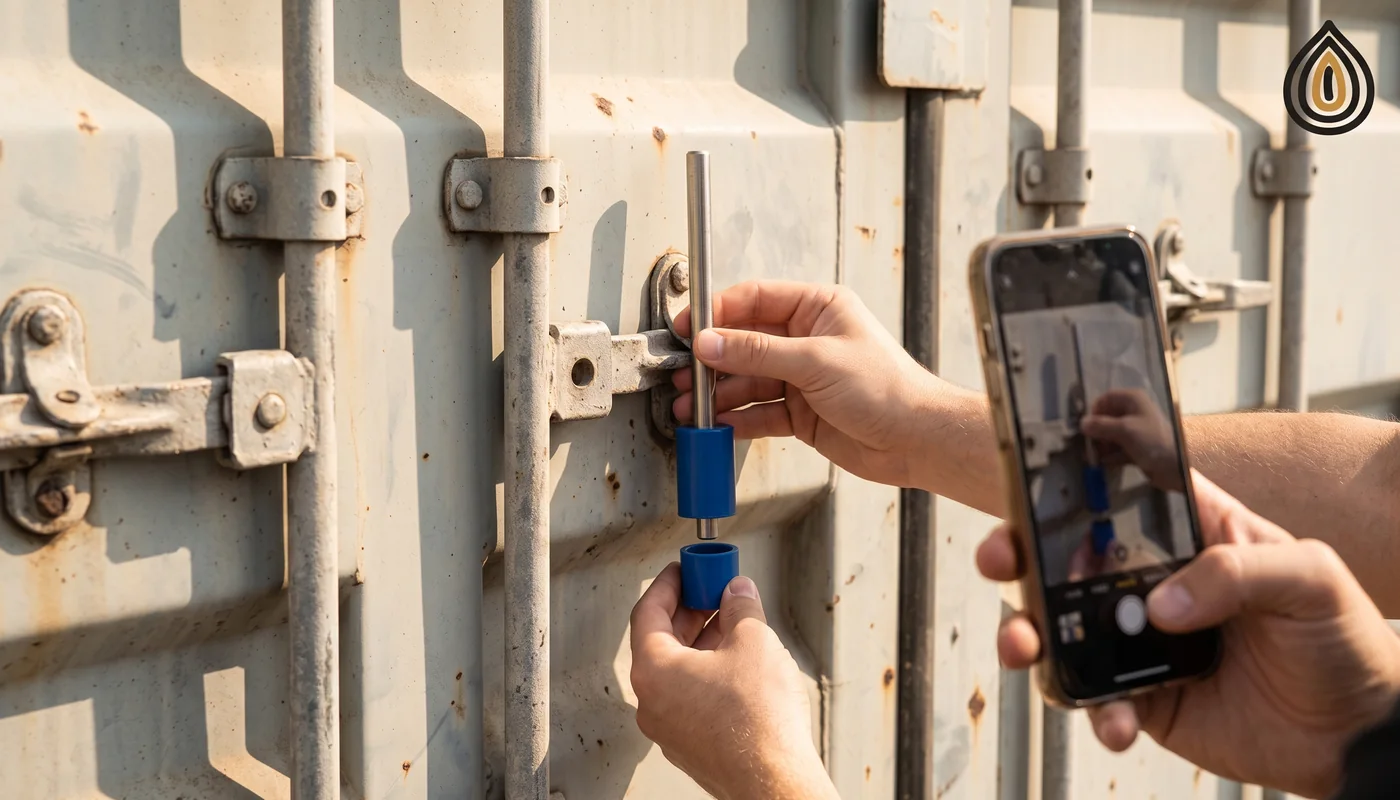
Sealing: the customs e-seal and self-sealing
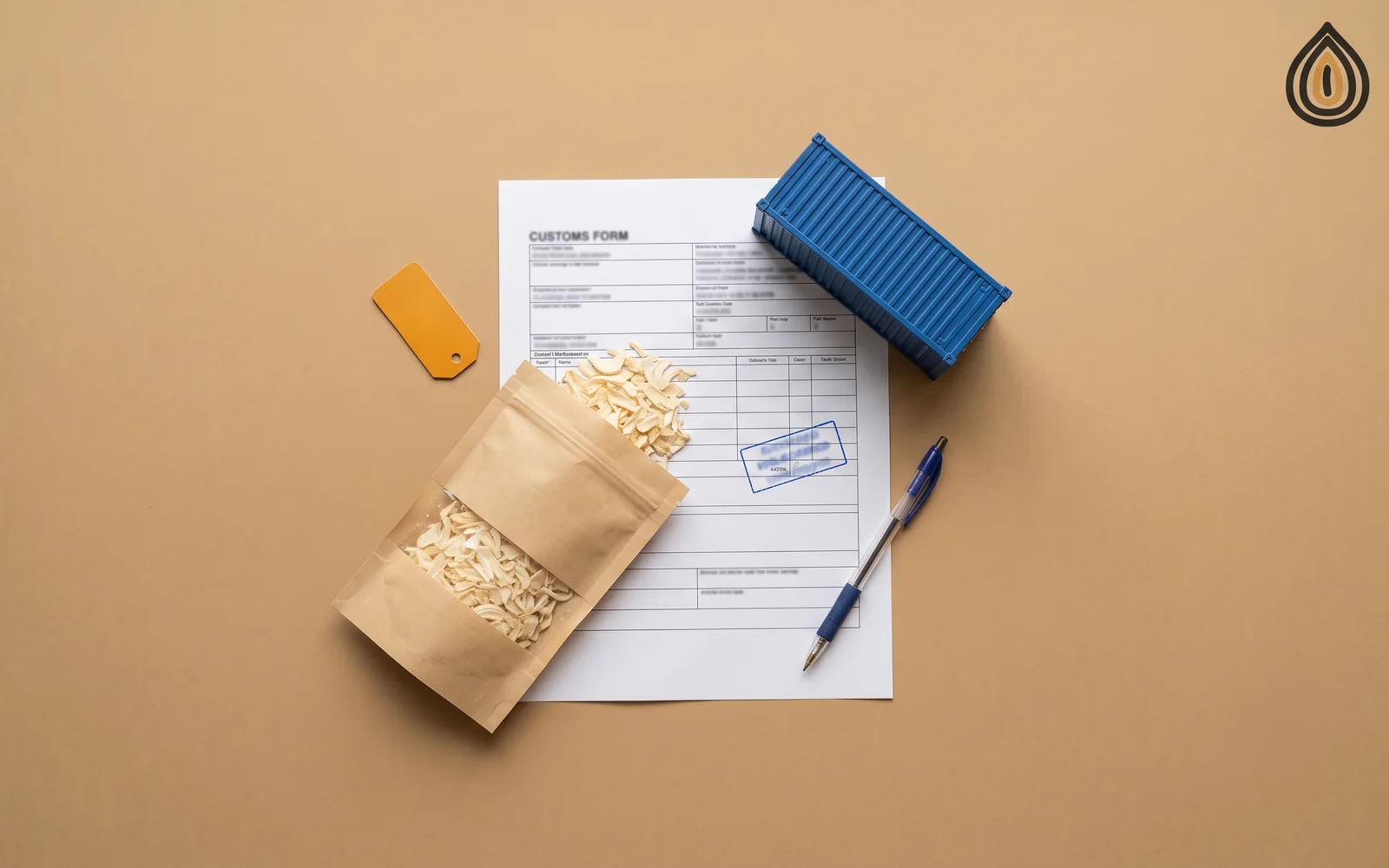
Indian customs allow registered exporters to stuff and seal export containers at their own premises without a customs officer present, under the self-sealing procedure, using an electronic bolt seal, the e-seal, bought from an approved vendor and registered against the shipping bill; the seal's number is read by RFID at the port gate and the container passes without examination in most cases. An exporter without the registration stuffs at a customs-supervised depot with a customs seal. The e-seal is fitted to the right-hand door's locking bar after the doors are closed, its number is photographed and filmed, written on the packing list and matched on the bill of lading, and it is cut at the destination by the consignee, with the cutting photographed; a seal number that does not match the documents at the destination is a customs hold and, in the worst case, a tampering investigation. The registrations behind self-sealing are among those in FSSAI, APEDA and IEC: The Indian Registrations Behind a Legitimate Exporter, and the document that carries the seal number in Export Documents for Dehydrated Onion from India.
The loading video: what it should show
A loading video is a phone or a fixed camera recording the stuffing from the empty box to the seal, and it is the buyer's evidence that the container was loaded as the packing list says and in the condition claimed. A useful one shows, in order: the container number on the doors and the empty interior, floor and roof, with the inspection; the lining and the desiccant going in; each pallet as it enters, with its label legible and the bag marking visible, so that the lot numbers can be read; the top sheets and the dunnage; the closed doors; and the seal being fitted with its number readable. It is ten to twenty minutes long, dated, and kept with the lot record; a buyer facing a claim, a customs query or a short-shipment dispute pulls it up before it calls anyone. A supplier that offers the video as routine has nothing to hide at the loading bay; one that will not is telling the buyer something. KlarHarvest's videos sit in the lot record described on the our process page.
The packing list and the verified gross mass
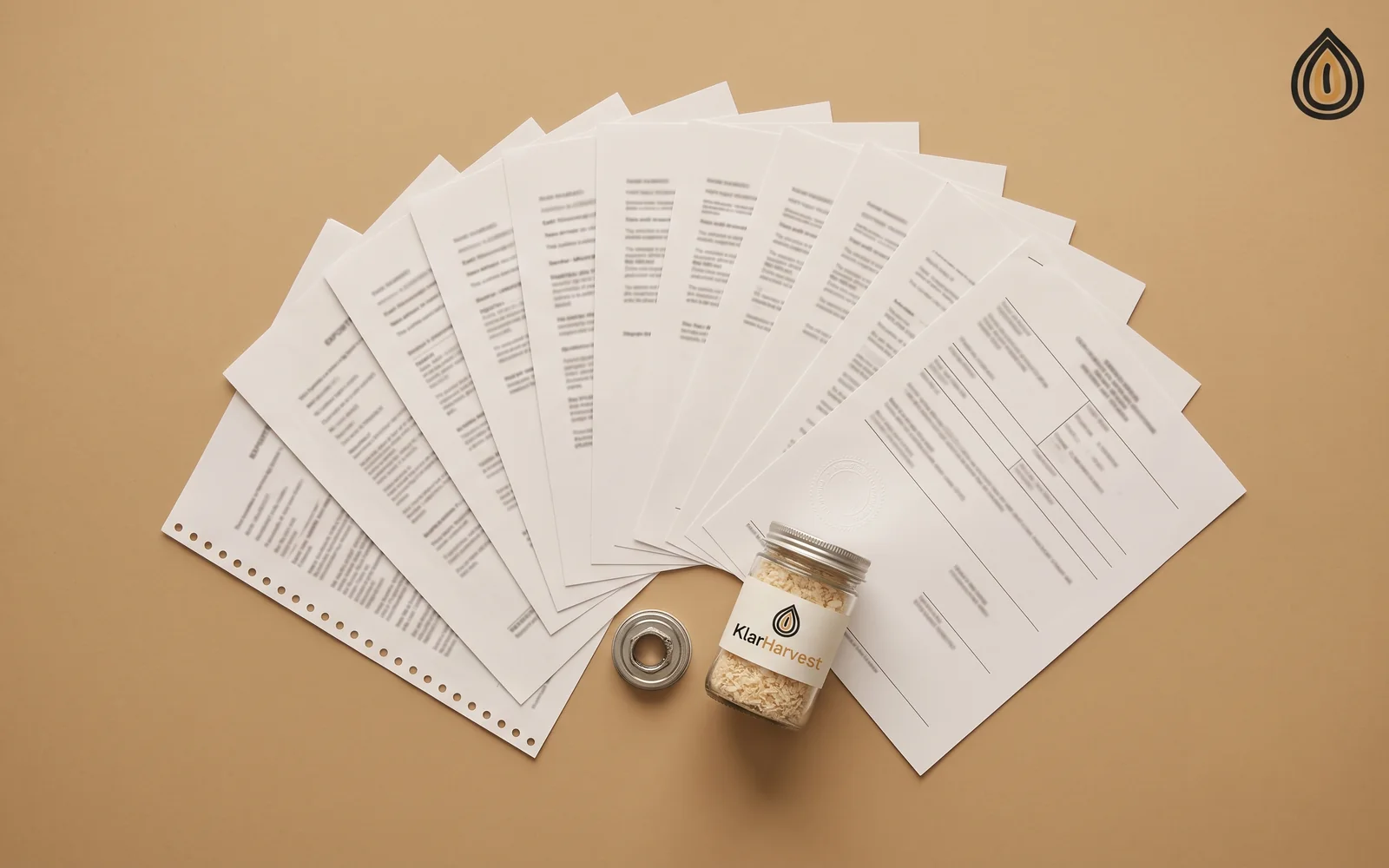
The packing list written at stuffing gives the pallets, the bags per pallet, the net and gross weights, the lot per pallet, and the container and seal numbers, and it must agree with the invoice and the bill of lading; the loading video is its evidence. The verified gross mass, VGM, is the container's total weight including the box's tare, declared to the carrier before loading under the international safety rules, by weighing the loaded box on a weighbridge or by summing the cargo, packaging and tare; an exporter without a weighbridge sums, and a discrepancy of more than a few percent against the port's scale is a delay. For a ten-tonne flake load in a 2.2-tonne box with 500 kilograms of pallets and packaging, the VGM is about 12.7 tonnes. The document set as a whole is in the export documents guide linked above.
Mixed loads of several cuts
A container of several cuts, or of onion with garlic or other dehydrated vegetables, is loaded by pallet with each pallet a single lot, the lots listed per pallet on the packing list, the heavier cuts low and central for weight distribution, and the flakes, which crush, never under anything. The load is by volume with the mix's average density, so a half-flakes half-granules box carries about thirteen tonnes; a blender ordering five cuts should build the pallet count with the supplier before the order rather than assume a tonnage. The planning and the commercial side of mixed loads is in Mixed Containers: Combining Onion Cuts, Garlic and Vegetables.
Unloading at the buyer's end
The container arrives at the buyer's dock with the seal intact; the seal number is checked against the documents and photographed before it is cut; the doors are opened and the first look is at the top sheets, the wall dunnage and the desiccant bags, for water marks and saturation, which are photographed if found; the desiccant is removed and disposed of, since a saturated bag left in a warehouse leaks; the pallets come out with a forklift in the reverse order of loading, each checked against the packing list, and the load is on the floor in an hour. Damaged pallets are set aside and photographed with their position in the box noted, since a claim needs to say where the damage was. The empty container is swept and returned within the carrier's free days. The arrival inspection of the product itself is in Common Quality Defects in Dehydrated Onion, and the claim route for transit damage in Marine Insurance and Claims for Dehydrated Onion Shipments.
Common loading faults and their consequences
| Fault | Consequence at arrival | Prevention |
|---|---|---|
| Box not inspected; pinhole in the roof | One or two pallets wetted and caked | Daylight check inside the closed box |
| No top sheets | Top bags of every pallet caked by container rain | Top sheet on every pallet, double at the doors |
| No wall dunnage | Wall-side bags damp and caked | Kraft or board against the walls |
| No desiccant | Widespread surface moisture in a cold-weather arrival | 8-12 bags per 20 ft, hung |
| Double-stacked pallets | Bottom pallet's bags split; flakes crushed to fines | Single height, never stacked |
| Floor-loaded for Europe | Crushed bags, a day's unloading, demurrage | Palletised |
| Flakes planned at 12.5 t | Short shipment or a second container | Plan at 10 t |
| Weight at one end | Chassis tipping risk; carrier refusal | Heavy pallets central |
| Loaded on a wet day or wet pallets | Moisture sealed in with the cargo | Stuff under cover; dry pallets |
| Doors left open overnight | Monsoon air sealed in | Close and seal the same day |
| Seal number not matching documents | Customs hold at destination | Film the seal; check the packing list |
| No loading video | Every dispute is one side's word | Ten minutes of phone footage |
LCL: how a pallet travels when there is no container
A buyer of one to five pallets does not get a container; its pallets go to a consolidator's container freight station in Mumbai or Ahmedabad by truck, are stuffed with other shippers' cargo into a shared box by the station's crew, travel to a European station, are unstuffed there and delivered by truck. Every protection in this guide is then out of the exporter's hands: the box is the consolidator's, the neighbours in it are unknown, the top sheets and desiccant are whatever the exporter put on the pallet itself, and the handling at both stations is a second and third forklift pass. An LCL pallet of dried onion therefore travels with its own defences on the pallet: a full stretch wrap of six turns, a corrugated top cap, corner boards, a plastic pallet hood or shrink bag where the route is humid, and a desiccant bag inside the hood; flakes go in 10 or 12.5 kilogram bags and the pallet is kept to six layers. The exporter photographs the pallet at its own door, which is where its video ends, and the consolidator's receipt notes its condition. The costs and the timings of the LCL route are in LCL or Full Container?, and the pallet build in Pallet Configurations for Dehydrated Onion.
Planning an order from the container backwards
A buyer who plans from the box rather than from the tonnage avoids the short-shipment conversation. Start with the cut and the box size, read the load from the table, and order that tonnage or a multiple of it: ten tonnes of flakes, seventeen of granules, or for a mixed order the pallet count, ten or eleven Europallets, allocated across cuts with the supplier's help. For a buyer whose annual need is fifteen tonnes of flakes, the choice is one 20-foot at ten tonnes plus five tonnes by LCL, at a high per-kilo freight on the LCL part, or a 40-foot at twenty tonnes with five tonnes carried into the next year, which at a two-year shelf life is usually the cheaper answer; for a need of thirty tonnes of granules, two 20-foot boxes or one 40-foot at thirty-four with a small surplus. The freight per kilo for each option comes from the container guide and the landed-cost guide, and a supplier that quotes tonnages that are not container multiples should be asked how the balance travels. The planning links to the order calendar in Q4 Demand Planning.
What the freight per kilo looks like once the load is right
The reason the load matters to the price is that freight, terminal handling, brokerage and trucking are charged per box and divided by whatever is in it.
| Cut | Net kg, 20 ft | Freight + destination costs per box (typical, 2026) | Per kg |
|---|---|---|---|
| Flakes | 10,000 | €2,200 | €0.22 |
| Chopped | 12,500 | €2,200 | €0.18 |
| Minced | 14,500 | €2,200 | €0.15 |
| Granules | 17,000 | €2,200 | €0.13 |
| Powder | 19,000 | €2,200 | €0.12 |
| Flakes, 40 ft high cube | 22,000 | €3,600 | €0.16 |
A buyer using granules where flakes would do saves nine cents a kilogram on freight alone; a buyer of flakes who moves to a 40-foot high cube saves six. Neither appears on a supplier's FOB quote, which is why the landed comparison in Landed Cost of Dehydrated Onion in Europe is the one to run, and why the cut choice in Flakes, Chopped, Minced, Granules or Powder is partly a logistics decision.
How KlarHarvest loads
KlarHarvest stuffs full containers at its Bhavnagar godown under customs self-sealing, with the empty box inspected and photographed at the depot, kraft wall lining, a desiccant bag per pallet row, a top sheet on every pallet and a double sheet at the doors, palletised on ISPM 15 Europallets at the loads in the table above, never double-stacked, never floor-loaded, and the whole stuffing filmed from the empty box to the e-seal with every pallet label readable; the video, the container photographs, the packing list with lots per pallet and the VGM are in the lot record before the vessel sails. The loads quoted for each cut are the ones in this guide, and a quote is never built on more flakes than a box will hold; the loads and the freight per kilo they produce are shown on every quote from the contact page.
Frequently asked questions
How many tonnes of dehydrated onion fit a 20-foot container?
About 10 tonnes of flakes, 12 to 13 of chopped, 14 to 15 of minced, 16 to 18 of granules and 18 to 20 of powder, palletised in 20 kg bags. A 40-foot carries roughly double. Flakes fill the volume long before the weight limit.
Is 12.5 tonnes of flakes per 20-foot container realistic?
No. That figure is a granule or mixed-cut load. Planning flakes at 12.5 tonnes ends in a short shipment or a second container; plan at 10.
Why not floor-load to fit more?
Floor-loading crushes the bottom bags, breaks flakes to fines and needs a crew to unload bag by bag, which European warehouses do not have. The demurrage and labour cost more than the freight saved.
What stops the cargo getting wet at sea?
Top sheets on every pallet against container rain, dunnage keeping the bags off the walls, desiccant bags hung along the walls, and a box inspected for holes and stuffed under cover on a dry day.
What is an e-seal?
An electronic bolt seal a registered Indian exporter fits at its own premises under the self-sealing procedure; its number is read at the port gate and must match the packing list and the bill of lading. It is cut at the destination.
What should a loading video show?
The container number and the inspected empty interior, the lining and desiccant, every pallet entering with its label readable, the top sheets and dunnage, the closed doors and the seal with its number. Ten to twenty minutes, dated.
How is a mixed container of several cuts loaded?
One lot per pallet, listed per pallet on the packing list, heavy cuts low and central, flakes never underneath anything. The load is by volume at the mix's average density, so plan the pallet count with the supplier.
Next step
Request a quote with your cut and volume and it comes with the real container load, the pallet count and the freight per kilo that follows; or request a sample and ask for a recent loading video with it, to see the practice before the first order.