- What private label means in this trade
- Three levels: bulk bag, foodservice pack, retail-ready
- Who does what: plant, exporter, European packer
- Level one: the branded bulk bag
- Level two: foodservice and wholesale packs
- Level three: retail-ready packs
- Costs and minimums at each level
- Artwork, mandatory marking and proofs
- Regulatory sign-off and claims
- The certification chain and the no-repack rule
- Protecting the brand owner: confidentiality and exclusivity
- Quality assurance for a product with your name on it
- Contract points
- From first sample to first branded delivery
- Private label and the lot record: what your customer's auditor will follow
- How KlarHarvest does private label
- Frequently asked questions
Judge the product, not the words
200-500 g from a current lot, dispatched by courier with the lot lab report.
Request a samplePrivate label dehydrated onion is how most of the product reaches its final customer: the brand on the jar in a German supermarket, the sack in a Dutch trader's warehouse and the pouch in a British wholesaler's catalogue were all filled with onion that a plant in Mahuva dried, and the plant's name is on none of them. The arrangement is old and works well, and it fails in the same few ways every time: a brand owner who thinks the plant will handle the label's regulatory content, a plant that opens sealed bags to repack them and breaks its own certification, an artwork with a claim the product cannot support, a minimum run that the buyer cannot use before the best-before date. This guide sets out how private-label sourcing actually works, at each of its three levels, so that a brand owner, a trader or a manufacturer can decide what to have done where and at what cost.
It covers the three levels and who does what at each, the plant's side and the exporter's side, the bulk bag as the foundation, foodservice and retail packs, costs and minimums, artwork and mandatory marking, regulatory sign-off and claims, the certification chain and the no-repack rule, protecting the brand owner's data and the buyer's list, quality assurance for a product sold under your name, the contract points, and the sequence from first sample to first branded delivery. Figures are March 2026 values.
What this guide covers
- What private label means in this trade
- Three levels: bulk bag, foodservice pack, retail-ready
- Who does what: plant, exporter, European packer
- Level one: the branded bulk bag
- Level two: foodservice and wholesale packs
- Level three: retail-ready packs
- Costs and minimums at each level
- Artwork, mandatory marking and proofs
- Regulatory sign-off and claims
- The certification chain and the no-repack rule
- Protecting the brand owner: confidentiality and exclusivity
- Quality assurance for a product with your name on it
- Contract points
- From first sample to first branded delivery
- Private label and the lot record: what your customer's auditor will follow
- How KlarHarvest does private label
- Frequently asked questions
What private label means in this trade
Private label, white label and own brand mean the same thing here: product made by one party and sold under another party's name. In dehydrated onion the maker is nearly always a plant in Mahuva, Gujarat, where most of India's onion dehydration happens, and the brand owner is a European trader, a wholesaler, a foodservice distributor, a spice or seasoning company, a retailer or, for bulk bags, an exporter like KlarHarvest that puts its own name on product from named plants. The plant's business is drying; it does not want to market, and it is content for its product to carry other names, as long as the arrangement respects its certification and it is paid. The brand owner's business is the customer; it wants a consistent product under its name without owning a dryer. The trade between them is what this guide describes, and the geography behind it is in Mahuva, Gujarat: Inside India's Onion Dehydration Hub.
Three levels: bulk bag, foodservice pack, retail-ready
| Level | Pack | Filled where | Labelled where | Typical brand owner | Minimum practical order |
|---|---|---|---|---|---|
| 1. Branded bulk bag | 20-25 kg lined kraft sack | Plant | Plant (printed sack) or exporter's godown (label on sealed bag) | Exporter, trader, manufacturer | One pallet for labels; one print run (~2,000-5,000 bags) for printed sacks |
| 2. Foodservice / wholesale pack | 1-5 kg pouch, tub or shaker; 10 kg carton | Plant with a small-pack line, or European packer | Same | Foodservice distributor, wholesaler, spice company | One pallet from Europe; one container of one item from India |
| 3. Retail-ready pack | 25-500 g jar, pouch, shaker, brick | European packer in nearly all cases; a few plants | Same | Retailer, retail brand | One pallet from Europe; one container of one item from India |
The level decides everything else: the cost, the minimum, where the regulatory burden sits and how much of the supply chain the brand owner must manage. Most brand owners in Europe operate at level 1 or buy level-1 product and pack levels 2 and 3 themselves or through a co-packer; filling small packs in India is the exception, chosen for a full container of a single item where the packaging labour saving exceeds the freight on air and packaging.
Who does what: plant, exporter, European packer
The plant dries, sorts, mills, tests, fills and seals the bag, and prints the bag if a printed sack is ordered; it holds the manufacturing licence and the BRCGS certificate, and its name and address appear on the bag as the packer unless the exporter's licence covers packing. It does not design labels, check European regulations, hold a buyer's retail artwork or, at most plants, fill small packs. The exporter sources from one or more plants, holds the export registrations, applies its own or the buyer's brand to the sealed bag at its godown, consolidates mixed loads, handles documents and shipping, and manages the relationship; a good exporter also checks the mandatory marking, keeps the artwork files and supplies the declarations a brand owner's quality system needs. The European packer or co-packer buys level-1 product, fills and labels levels 2 and 3 under its own European licence and certification, and carries the retail label's regulatory content and the packer's address; it is the operator responsible for the retail product under EU food law. A brand owner should know which of the three is doing each job for its product, and should not assume that the plant is doing something the exporter has not confirmed. The choice between buying from a plant, an exporter or a trader is in Exporter, Trader or Manufacturer: Who Should You Buy Dehydrated Onion From?
Level one: the branded bulk bag
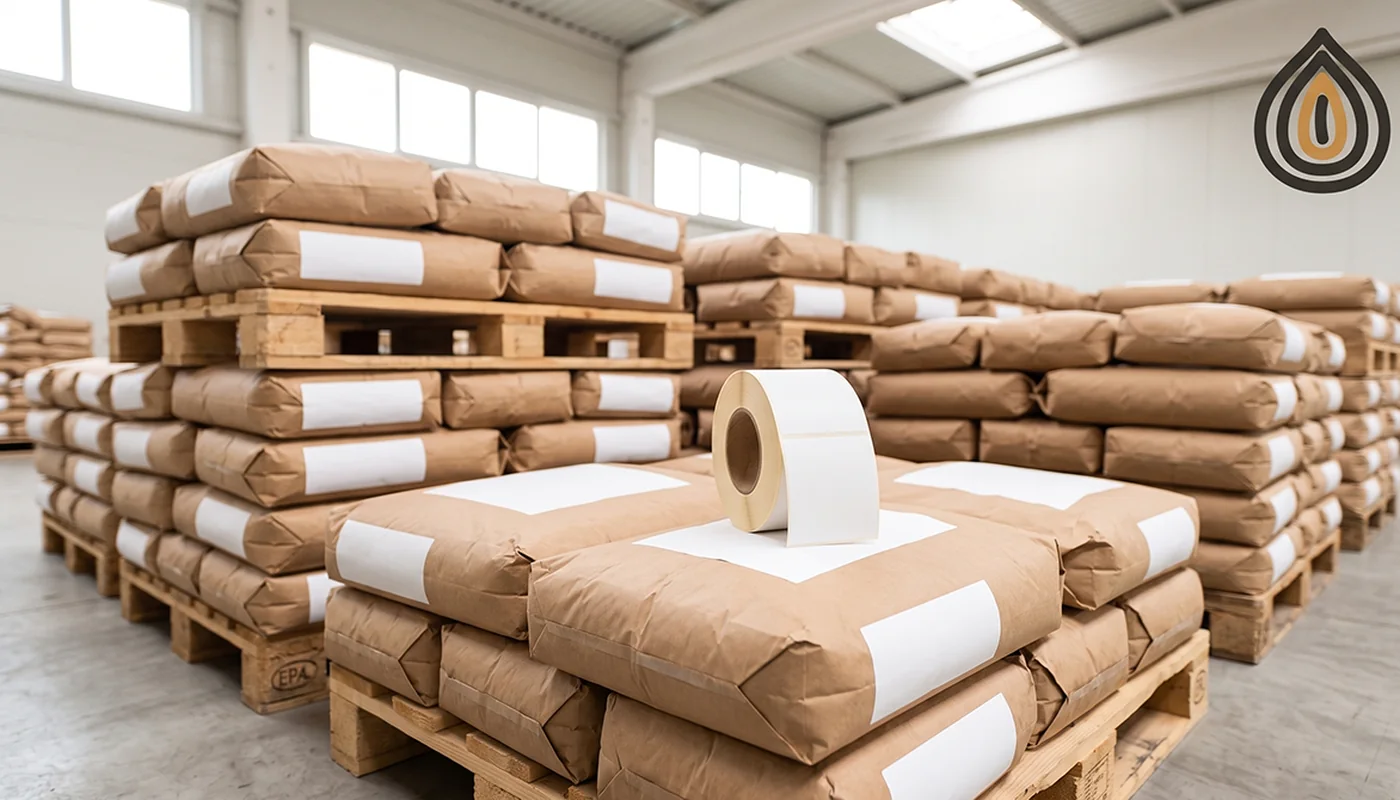
The bulk bag is the foundation of all private label and the level at which most of it happens. Two ways exist. Printed sacks: the brand owner supplies artwork, a printing plate is made for 5,000 to 15,000 rupees, the plant orders a run of sacks, usually 2,000 to 5,000 minimum from the sack maker, and fills them; the brand owner's sacks are kept as a dedicated stock at the plant and used only for that buyer's lots. The bag then carries the brand as printed and the variable data, lot, dates, weight, inkjetted at filling. Labelled sacks: the plant fills and seals a plain sack printed with the mandatory marking only, and the brand is applied as a printed adhesive label at the exporter's premises or the buyer's; the seal is never broken, the plant's certification covers the contents, and one plain sack stock serves every plant and every buyer. The labelled route is the one an exporter sourcing from several plants uses, and it is the one that keeps the plant's name off the outside of the bag when the buyer prefers that, since the label can carry the exporter's or the buyer's name as the responsible operator with the plant identified in the lot record rather than on the sack. Either way the bag's contents, the liner, the pallet and the shipping are exactly as for an unbranded lot, and the packaging options are those in Dehydrated Onion Packaging.
Level two: foodservice and wholesale packs
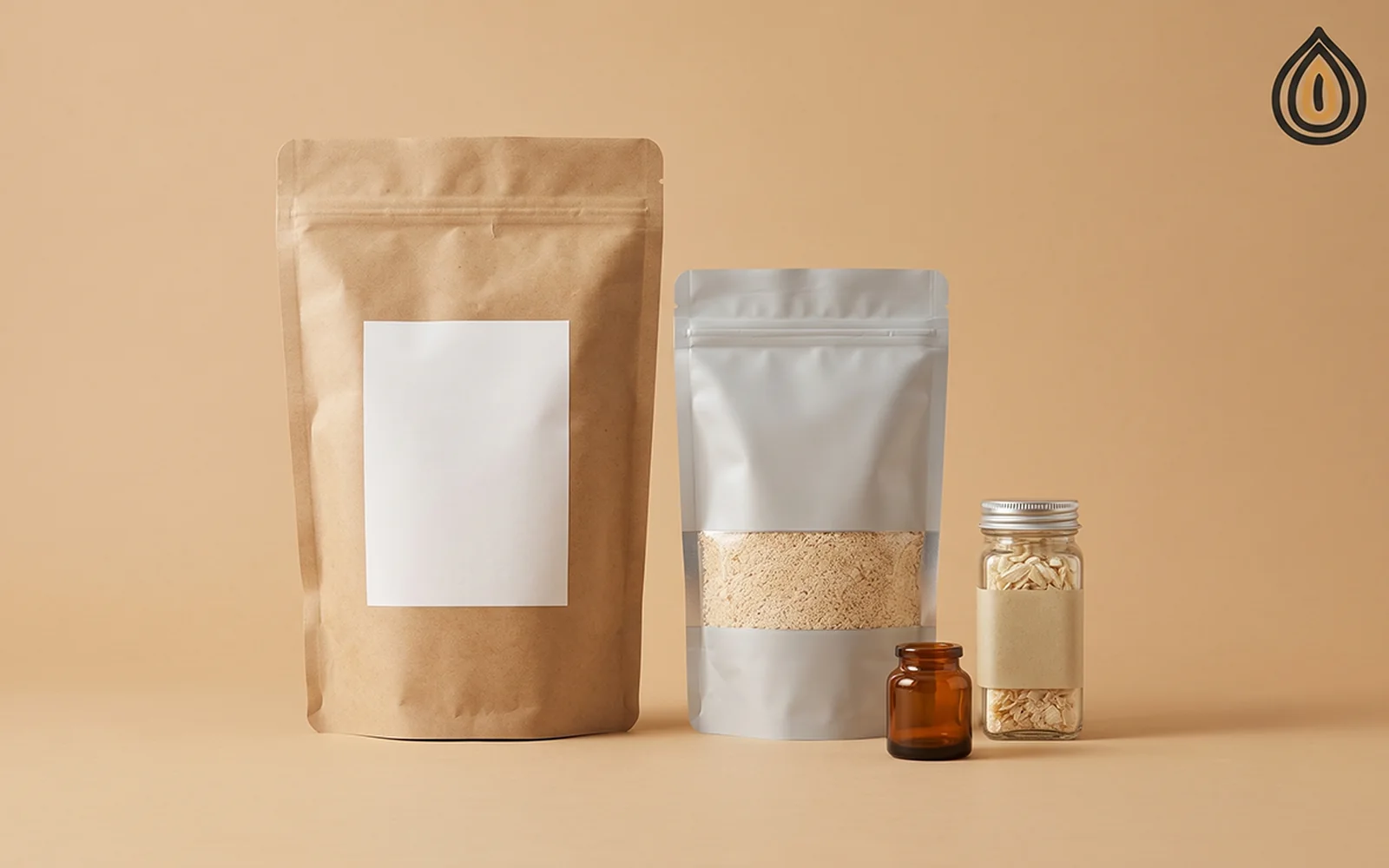
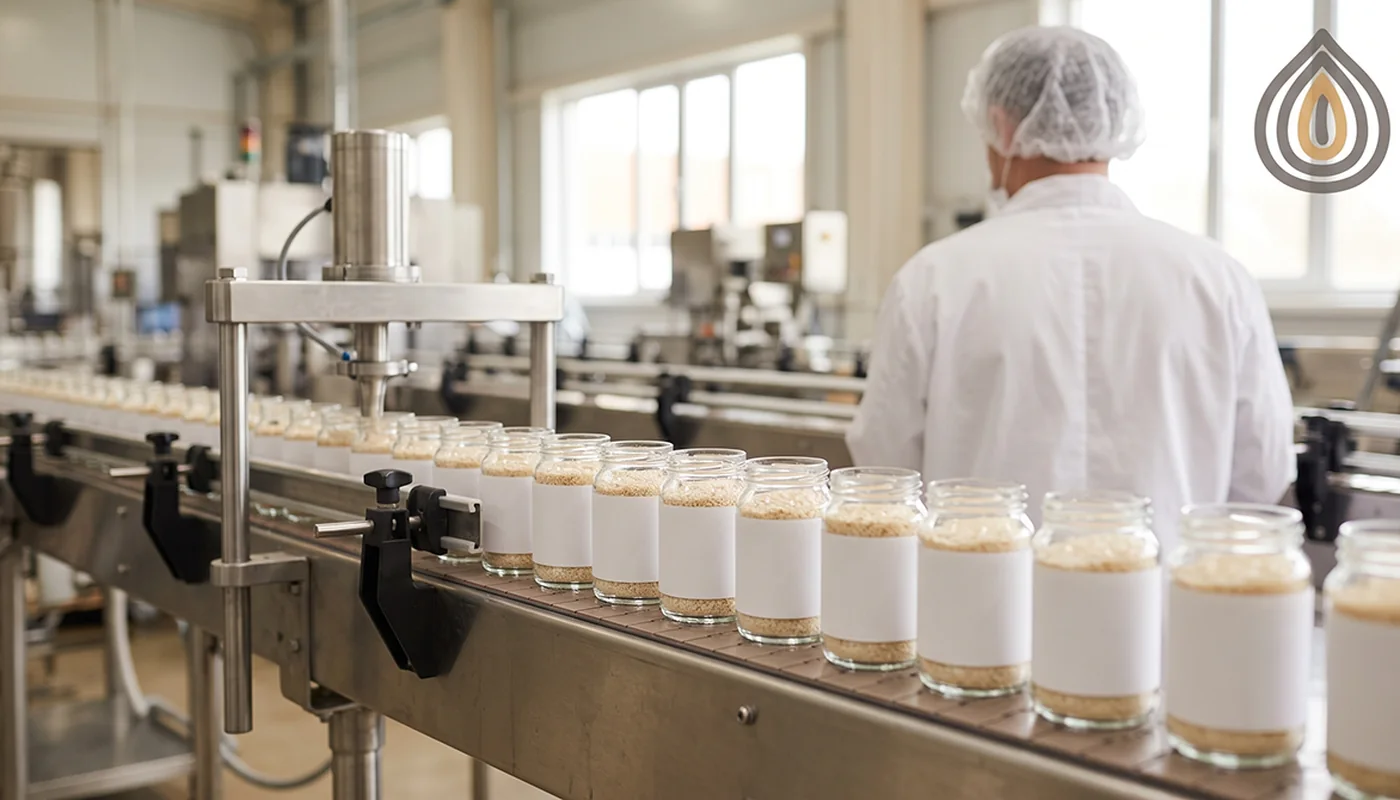
Foodservice packs, the 1 to 5 kilogram re-closable pouches, tubs and shakers that kitchens and small manufacturers buy, and the 10 kilogram cartons that wholesalers stock, are mostly filled in Europe from bulk bags, by the brand owner if it has a packing line or by a co-packer, because the runs are short, the formats change and the label content is European. A few of the larger Mahuva plants have pouch lines and fill 1 to 5 kilogram laminated zip pouches for private-label customers, mostly in the Gulf and the domestic market, and will do so for a European buyer at a full container of one item, where the labour cost of packing in India and the sea freight on the finished packs beat European co-packing. The pouch itself must have a better barrier than a bulk liner, since a kitchen opens it and uses it over weeks; a metallised or foil laminate with a zip is the standard, and a nitrogen flush is available. Labels at this level carry the same content as retail packs for the mandatory particulars, though the language and layout are simpler for trade customers. The foodservice economics are in Dehydrated Onion for Foodservice and HoReCa.
Level three: retail-ready packs
Retail private label, the supermarket's own-brand onion granules in a 50 gram jar, is filled in Europe almost without exception: the retailer's specification, the label in the local language, the packer's address, the nutrition declaration, the barcode registration, the tamper-evidence and the retailer's own audit of the packer all sit on the European side, and a co-packer that already fills a hundred spices adds onion as one more line. A retail pack filled in India carries sea freight on glass and air, needs the brand owner's full regulatory sign-off of the artwork before filling, needs the plant's retail line to be audited by the retailer, and needs a full container of one item; it is done for a few large private-label programmes and for the Gulf and Asian markets, and for a European retailer it is worth considering only above a container per item per year. The label rules that the packer carries are in Labelling Dehydrated Onion for the EU, and the nutrition declaration in Dehydrated Onion Nutrition Facts per 100 g.

Costs and minimums at each level
| Item | Level 1, printed sack | Level 1, labelled sack | Level 2, pouch filled in India | Level 3, retail jar filled in India |
|---|---|---|---|---|
| One-off: plate, artwork adaptation, proofing | ₹5,000-15,000 | ₹2,000-5,000 (label design) | ₹20,000-60,000 (pouch print cylinders) | ₹50,000-1,50,000 (labels, jar tooling if any) |
| Per kg premium over plain bulk | ₹2-4 | ₹1-2 | ₹25-60 depending on pouch size | ₹80-200 depending on pack size |
| Minimum first run | 2,000-5,000 sacks (40-100 t) | One pallet | One container of one item (~10-17 t) | One container of one item |
| Lead time for the first branded lot | 4-6 weeks (sack print) | 2-3 weeks | 8-12 weeks | 10-16 weeks |
| Regulatory content responsibility | Brand owner, checked by exporter | Brand owner, checked by exporter | Brand owner, signed off in writing | Brand owner, signed off in writing; retailer audit |
The per-kilogram premiums at level 1 are small against the product's price of 140 to 170 rupees per kilogram FOB; at levels 2 and 3 the packaging and labour become a large share of the cost and the comparison with European co-packing, at 0.15 to 0.40 euros per pack for a spice jar, decides where to fill. A sack print run of 2,000 sacks is 40 tonnes of product at 20 kilograms a bag, which is four containers of flakes, and a buyer who will not ship that much within a year should use labels; sacks age too, and a printed sack stock older than eighteen months yellows and its glue fails.
Artwork, mandatory marking and proofs
The brand owner supplies artwork; the exporter or the plant checks it against the mandatory marking for the destination; a proof is signed off; the plate or label is made. The mandatory content on a bulk bag, whichever name is on it, is the product name and cut, the net weight, the lot number, the production and best-before dates, the country of origin, the name and address of the packer or the responsible operator, and the storage instructions; the buyer's item code and a GS1 barcode with lot and date are the useful additions. The brand owner's artwork carries its name, its logo, its colours and any claims; it should leave a clear panel for the variable data that the plant inkjets at filling, and should not pre-print anything that changes by lot. Common errors at proof stage: the plant's FSSAI number missing where it is required; a best-before printed as a fixed date; a net weight in pounds for a European bag; a claim, "premium", "finest", "BRC certified", that the plant's certificate does not support on the buyer's bag; and a barcode that does not scan because the sack's paper absorbs the ink. Two proofs, one from the artwork and one from the first printed sack, catch all of them. The lot code structure that the label must accommodate is in Lot Codes and Traceability in Dehydrated Onion.
Regulatory sign-off and claims
The brand owner is responsible for what its label says, in every market, and the plant will print what it is given. The claims that appear on private-label onion and the evidence each needs: "Product of India" is simply true. "Sulphite-free" needs the plant's declaration and a test result. "Non-GMO" is true of all onion and can be stated. "Gluten-free" is true of pure onion and may be stated where the plant's cross-contact control supports it. "Organic" needs certification of the plant, the exporter and the brand owner, and a certificate of inspection per consignment; it cannot be claimed on conventional product. "Halal" and "kosher" need the plant's certificate and, usually, the certifying body's mark under licence. "BRC certified" on a buyer's bag is a claim about the plant that the brand owner's own certificate does not cover, and BRCGS's rules on use of its logo apply; the phrase "produced in a BRCGS-certified facility" with the plant identified in the lot record is the safe form. "Natural" and "no additives" are supportable for plain onion and not for powder with an anti-caking agent. Nutrition and allergen statements follow the destination's rules. A brand owner should have the artwork reviewed by its own regulatory adviser before the proof, and should treat the exporter's check as a second pair of eyes rather than a sign-off. The EU rules that govern the content are in EU Import Requirements for Dehydrated Onion.
The certification chain and the no-repack rule
The plant's BRCGS certificate covers product it dries, tests, fills and seals; it stops at the seal. Any operation that opens a sealed bag to repack, re-label the inside, blend or re-weigh it is a manufacturing step that the plant's certificate does not cover and that needs its own certification, a food-manufacturing licence and a hygiene environment; done in an uncertified godown it breaks the chain that the buyer's own auditor will follow, exposes the product to moisture and contamination, and is the most common way a private-label arrangement goes wrong. The rule for a brand owner is therefore: the bag is filled and sealed at the certified plant and is never opened until the customer opens it; branding is by printed sack or by a label on the sealed bag; blending or repacking, if wanted, is done at a certified facility, in India or in Europe, that is named in the specification and audited. An exporter's godown that applies labels, consolidates pallets and stuffs containers needs a storage licence and a hygiene standard, not a manufacturing certificate, and a buyer should ask which the exporter holds and what happens there. The certificate's meaning and limits are in What BRC Certification Means for a Dehydrated Onion Supplier; the approval process that a brand owner's customers will run is in IFS and BRC Supplier Approval.
Protecting the brand owner: confidentiality and exclusivity
A brand owner's exposure in private label is information: which plant makes its product, what it pays, who its customers are and where the goods go. In the plant-direct model the plant knows all of it; in the exporter model the plant knows only that it filled plain bags for an exporter, and the exporter holds the buyer's name, the destination and the price, which is one of the reasons the labelled-sack route exists. A confidentiality clause in the contract, a rule that the plant's name appears in the lot record available to the brand owner and its auditor and not on the bag, and documents that show the exporter as shipper are the practical protections. Exclusivity, a promise that the plant or the exporter will not supply the same product under another brand in the buyer's market, is asked for and rarely granted at the plant level, since plants sell to everyone, and is negotiable with an exporter for a defined product, territory and volume commitment. Recipe exclusivity for a blend or a custom band is normal and should be written down.
Quality assurance for a product with your name on it
A product sold under your name carries your reputation, and the quality assurance for private label is the same as for any purchase, done more carefully: a specification signed by both parties, samples from a named lot, a certificate of analysis per lot from an accredited laboratory, the supplier's declarations, a retained sample from every lot held for the shelf life, a verification testing plan, a sensory check per lot against a reference, and a complaints procedure that traces from the customer's jar back through the packer's lot to the plant's drying date. The lot code is the thread through all of it, and a brand owner should make sure that the code printed on its bag or jar resolves, through its own records or the exporter's portal, to the plant and the certificate. The supplier vetting is in 25-Point Checklist Before You Choose a Dehydrated Onion Supplier, and the specification in How to Read a Dehydrated Onion Specification Sheet.
Contract points
- Specification as the annex, with the cut, colour, tier and packaging, and the sensory reference.
- Branding: who supplies artwork, who checks it, who signs off the proof, who owns the plate and the sack or label stock, and what happens to that stock if the relationship ends.
- Marking: the mandatory particulars listed, and the party responsible for their correctness for the destination.
- Claims: the brand owner responsible for claims on its artwork; the supplier responsible for the declarations it provides.
- No repack: bags filled and sealed at the certified plant, never opened before the customer; any blending or repacking only at a named certified facility.
- Confidentiality: the buyer's identity, prices and destinations not disclosed to the plant beyond what shipping requires; the plant's identity available to the buyer and its auditors in the lot record.
- Exclusivity, if any, defined by product, territory, volume and term.
- Minimum runs and stock: who pays for printed sacks or labels not used within the term.
- Quality and claims procedure: notice period, referee laboratory, remedies, and the retained-sample rule.
- Recall: cooperation and cost-sharing in a withdrawal, and the traceability records each side keeps.
The general contract terms these sit within are in B2B Contract Terms for Dehydrated Onion.
From first sample to first branded delivery
- Samples of the cuts from a named lot, with certificates; kitchen or line trial; specification agreed. Weeks 1 to 3.
- Supplier approval: certificates, declarations, plant identity, the exporter's premises and process. Weeks 2 to 4.
- Branding decided: printed sack or label; artwork supplied; mandatory marking checked; proof signed. Weeks 3 to 6.
- Plate or labels made; sack stock ordered if printed. Weeks 5 to 8.
- First order confirmed, advance paid; plant production slot booked. Week 6 to 8.
- Lot dried, tested, filled and sealed in the branded or plain sack; labels applied at the godown if that route; loading filmed. Weeks 8 to 11.
- Shipment; documents checked before sailing. Weeks 11 to 12.
- Arrival, verification test, retained sample, release to the brand owner's stock. Weeks 16 to 19.
Twelve to twenty weeks from first contact to branded product in a European warehouse is the realistic span for level 1, longer for the small-pack levels; the unbranded version of the same sequence is in From Sample to First Container.
Private label and the lot record: what your customer's auditor will follow
A brand owner's customer, a retailer or a manufacturer, audits the brand owner and follows the product back through the chain, and private label is where the trail most often breaks. The auditor starts at the finished pack's lot code, expects the brand owner's records to resolve it to the bulk lot received, expects the bulk lot's certificate and the supplier's identity, and expects the supplier's records to resolve the bulk lot to the plant, the drying date and the raw-material lot. A brand owner buying through an exporter therefore needs the exporter's lot record to carry the plant's identity and the plant's own lot, even though the bag does not show them; an exporter that refuses to name the plant to the brand owner's auditor, as opposed to on the bag, has broken the chain, and a brand owner should not accept that. The practical arrangement is a lot record per shipment, held by the exporter and accessible to the brand owner, that names the plant, the plant's lot, the drying date, the certificate and the loading, with a confidentiality undertaking covering the auditor; the mock recall that every certification scheme requires is run against it, in both directions, at least once a year. The traceability system that makes this routine is in Lot Codes and Traceability in Dehydrated Onion.
How KlarHarvest does private label
KlarHarvest's own brand is a private label on product from named BRCGS-certified plants in Mahuva, and the same route is open to buyers: plant-filled, plant-sealed plain bags, with the buyer's brand applied as a label or printed on a dedicated sack, and the plant identified in the lot record that the bag's QR code opens rather than on the bag itself, so that the plant never sees the buyer's name or destination and the buyer's auditor sees the whole chain. Bags are never opened at the godown; blending and custom bands are done at the plant to the buyer's recipe under a recipe-exclusivity clause. Artwork is checked against the destination's mandatory marking before proofing, and the declarations a brand owner's quality system needs are supplied at approval. Foodservice pouches and retail packs are arranged through a plant line or a European co-packer at the buyer's choice, with the economics of each shown on the quote. The process is described on the our process page and the options on the products page.
Frequently asked questions
What is private label dehydrated onion?
Product dried and packed by a plant, usually in Mahuva, and sold under another company's brand: an exporter's, a trader's, a foodservice distributor's or a retailer's. Most dehydrated onion in Europe reaches its customer this way.
Can a Mahuva plant print my brand on the bags?
Yes, from a plate you pay for once and a minimum sack run of a few thousand bags, at 2 to 4 rupees per kilogram over plain bulk. For smaller volumes, a label applied to the sealed plain bag does the same job for less.
Can the plant fill retail jars under my brand?
A few plants can, for a full container of a single item, with your regulatory sign-off on the artwork and the retailer's audit of the line. For most European retail programmes, filling from bulk bags at a European co-packer is cheaper and simpler.
Who is responsible for what the label says?
The brand owner, in every market. The plant prints what it is given; a good exporter checks the mandatory marking; your own regulatory adviser should review claims before the proof.
Does re-labelling break the plant's BRC certification?
Applying a label to a sealed bag does not. Opening the bag to repack, blend or re-weigh does, unless it happens at a certified facility. Write a no-repack rule into the contract.
Can I keep the plant's name off my packaging?
Yes, through an exporter: the label carries the exporter's or your name as the responsible operator, and the plant is identified in the lot record available to you and your auditors.
What is the minimum for a private-label order?
One pallet for a labelled bulk bag; a print run of a few thousand sacks, 40 to 100 tonnes over time, for printed sacks; one container of one item for pouches or jars filled in India.
Next step
Request a sample of the cut you would brand, from a named lot with its certificate, and say which level of private label you have in mind; the quote that follows shows the branding options, the one-off costs and the per-kilogram premium side by side. To price a specific programme, request a quote with the annual volume, the pack format and the destination.