- The twelve flags at a glance
- 1. A certificate in another company's name
- 2. A price the arithmetic cannot support
- 3. Bank details that change by e-mail
- 4. A plant you cannot see
- 5. Photographs that belong to someone else
- 6. Registrations that do not check out
- 7. A specification without numbers
- 8. Samples without a lot, reports without a laboratory
- 9. Everything available, always, immediately
- 10. Payment terms that only protect one side
- 11. Pressure, urgency and the disappearing discount
- 12. Answers that change
- Flags that are not flags
- How the frauds actually run
- A verification routine that takes an afternoon
- What to do when a flag is confirmed
- Where each flag shows: website, e-mail, call, documents, delivery
- The flags a plant sees in a buyer
- Three cases from the trade
- How KlarHarvest answers the twelve
- Frequently asked questions
Judge the product, not the words
200-500 g from a current lot, dispatched by courier with the lot lab report.
Request a sampleThe dehydrated onion exporter red flags worth knowing are the ones that have actually cost buyers money, and they are few and they repeat. The trade is not unusually dishonest; most of the hundred-odd exporters in Mahuva and the rest of Gujarat are what they say they are, and the plants behind them are certified and competent. But a first-time buyer searching online meets the whole range at once, from the plant with thirty years of European customers to the trading company with a borrowed certificate and a website of stock photographs, and cannot tell them apart from the home page. The signs that separate them are visible in the first few exchanges to a buyer who looks for them, and this guide lists the twelve that matter, with the check that confirms each, the innocent explanation where one exists, and what to do when the flag is real.
It is written for the European or other overseas buyer vetting an Indian supplier, and it pairs with the positive version of the same exercise in 25-Point Checklist Before You Choose a Dehydrated Onion Supplier. Nothing here is an accusation against any company; the patterns are the trade's, not any one exporter's.

What this guide covers
- The twelve flags at a glance
- 1. A certificate in another company's name
- 2. A price the arithmetic cannot support
- 3. Bank details that change by e-mail
- 4. A plant you cannot see
- 5. Photographs that belong to someone else
- 6. Registrations that do not check out
- 7. A specification without numbers
- 8. Samples without a lot, reports without a laboratory
- 9. Everything available, always, immediately
- 10. Payment terms that only protect one side
- 11. Pressure, urgency and the disappearing discount
- 12. Answers that change
- Flags that are not flags
- How the frauds actually run
- A verification routine that takes an afternoon
- What to do when a flag is confirmed
- Where each flag shows: website, e-mail, call, documents, delivery
- The flags a plant sees in a buyer
- Three cases from the trade
- How KlarHarvest answers the twelve
- Frequently asked questions
The twelve flags at a glance
| Flag | Check | Innocent explanation? | Weight |
|---|---|---|---|
| 1. Certificate in another name | BRCGS directory; ask whose plant | Exporter sourcing from a named plant, openly | Gate if hidden |
| 2. Impossible price | Yard price × 8.5 + conversion | None | Gate |
| 3. Bank details changed by e-mail | Phone call to an independently found number | Almost never | Gate |
| 4. Plant not visitable, video stays in the office | Ask for a live walk-through | Off-season closure, briefly | Gate if persistent |
| 5. Borrowed photographs | Reverse image search | Stock images on a new site, if admitted | Serious |
| 6. Registrations that fail the lookup | DGFT, APEDA, FSSAI, MCA portals | Typo; recent renewal | Gate if unresolved |
| 7. Specification of adjectives | Ask for numbers | Inexperience | Serious |
| 8. Samples without lot, reports without accreditation | Ask for the lot number and the NABL number | Small plant's in-house report, if labelled as such | Serious |
| 9. Everything available immediately | Ask which plant, which lot, which drying date | Large plant with stock | Moderate |
| 10. One-sided terms | Compare with the trade norm | First order, small buyer | Moderate |
| 11. Pressure and urgency | Wait a week | None | Serious |
| 12. Answers that change | Compare the thread | Language; different people | Serious |
1. A certificate in another company's name
The BRCGS or FSSC certificate an exporter sends should be in the name of the plant that will dry your goods, and the exporter should say so; the flag is a certificate in a third name with no explanation, or a plant's certificate presented as the exporter's own, or a certificate whose site address does not match the address the exporter gives for its factory. The check is the BRCGS Directory, where the certificate number, the site name, the address, the scope and the expiry are public, and a question: "Is this your plant, or a plant you source from, and may I contact them?" The innocent explanation is an exporter that sources from a named plant and says so, which is a legitimate model that most of the trade uses; the flag is the concealment, not the sourcing. When it is confirmed, the exporter has misrepresented the origin of the goods, and everything else it has said needs re-checking. The certificate's meaning is in What BRC Certification Means for a Dehydrated Onion Supplier.
2. A price the arithmetic cannot support
A kilogram of white flakes costs the plant the yard price times about 8.5 in raw onion plus 45 to 55 rupees in conversion, and a quote that falls below that sum is one of four things: old or off-grade stock, a plant with no margin that will not be there next year, a quote that will be revised upward when the advance arrives, or bait. The check takes a minute with the ground reports' yard price and the ratio, and is set out in 8 to 1: The Fresh-to-Dry Yield Ratio; in the 2026 season a white flake quote below about 135 rupees FOB does not add up. There is no innocent explanation for a price below cost from a stranger, and the right response is not to negotiate but to ask which plant, which lot and which drying date, and to expect the answer to be vague. A trader's price well above the range is a different matter, a margin to negotiate rather than a flag.
3. Bank details that change by e-mail
The single most expensive fraud in the trade is the substituted bank account: an e-mail in the existing thread, from the exporter's address or one letter away from it, saying that the bank details have changed and the balance should go to the new account. It works because one side's mailbox has been compromised and the message arrives where a real one would. The check is absolute: bank details are received once on signed letterhead, confirmed by a phone call to a number found independently, on the company's registration or a directory rather than in the e-mail, and any change is confirmed the same way before a rupee moves; the contract says so. There is almost no innocent explanation for a mid-transaction change, and an exporter that changes banks tells the buyer by phone before the e-mail, not after. When it is confirmed, the buyer has caught a fraud and should tell the exporter, whose mailbox may be the one compromised. The payment mechanics and the rule are in Payment Terms for Dehydrated Onion Imports.
4. A plant you cannot see
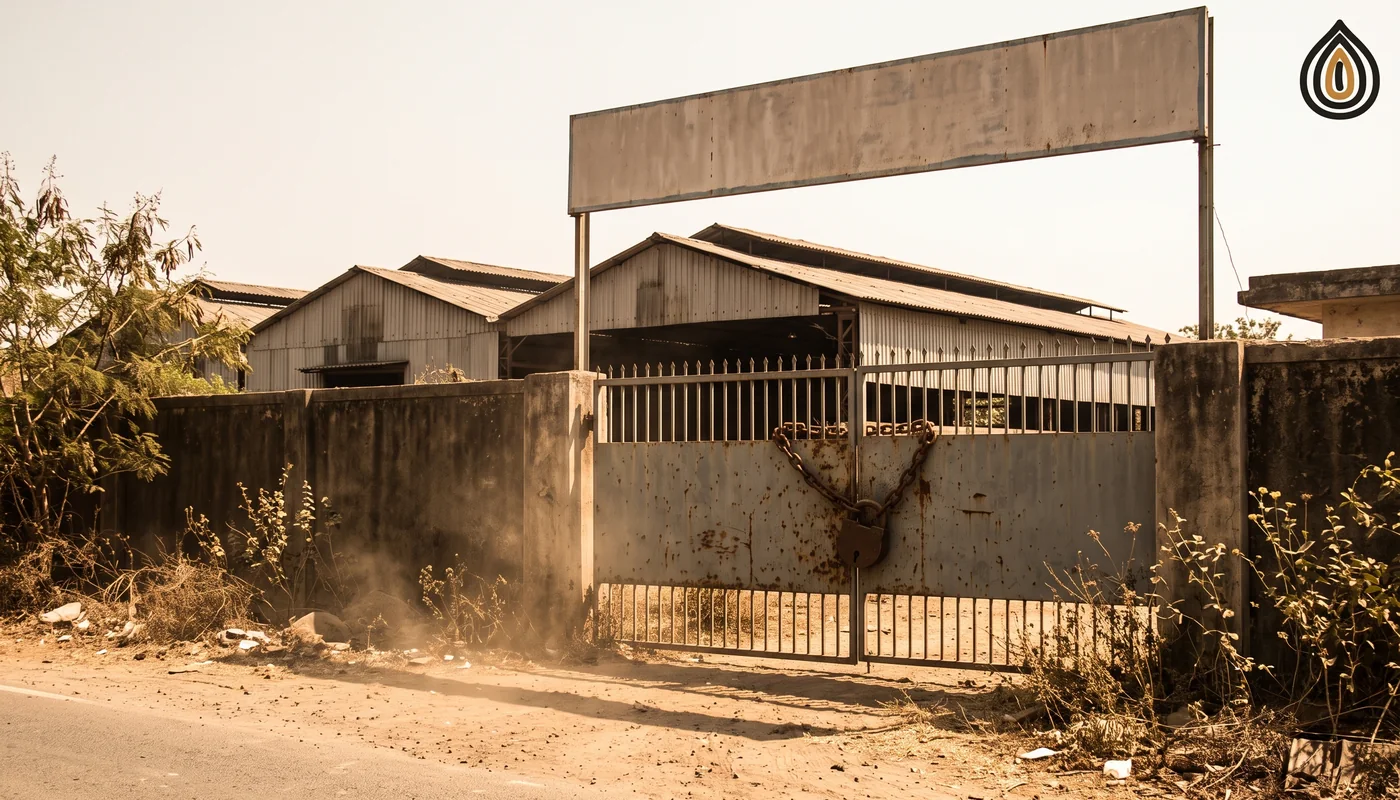
A plant has a gate, a receiving yard, dryers, a packing room and a laboratory, and a plant that is proud of them shows them: a standing invitation to visit, and a live video walk-through on a phone that goes from the gate to the dryer to the bags with the lot numbers on them. The flag is a visit that is always next month, a video that stays in the office or shows a plant without the exporter's people in it, or a refusal dressed as confidentiality. The innocent explanation is a plant closed for maintenance in June or between seasons, which lasts weeks and is explained in advance. When the flag persists, the exporter does not control the plant it claims, and the product will come from wherever it can be bought when the order arrives. The remote audit that replaces a visit is in How to Audit a Dehydrated Onion Supplier Remotely.
5. Photographs that belong to someone else
Websites and brochures built on stock photographs of dryers and bags, or on another plant's photographs, are common among trading companies, and a reverse image search on three or four of the pictures finds their owners in a minute. The innocent explanation is a new company that used stock images while it built its own and admits it when asked; the flag is a "our factory" caption on someone else's factory. It is a serious flag rather than a gate, because it is a misrepresentation of the same kind as the borrowed certificate, and it should prompt the plant question and the video walk-through. An exporter with its own photographs of its own godown and its named plants, with the plants' permission, is the pattern of an honest one.
6. Registrations that do not check out
The Importer-Exporter Code, the APEDA registration, the FSSAI licence and the company registration are all on public portals, and an exporter's numbers should resolve to the exporter's name and address in a few minutes. The flag is a number that does not exist, that belongs to another company, that has lapsed, or that the exporter will not give. The innocent explanations are a typo and a renewal in progress, both resolved in a day. When a number belongs to another company "that we export through", the exporter is not the exporter; the goods will be shipped in a third party's name and the buyer's contract is with someone who cannot fulfil it. The registrations and their lookups are in FSSAI, APEDA and IEC: The Indian Registrations Behind a Legitimate Exporter.

7. A specification without numbers
A specification is moisture, sieve band, colour grade, counts, defects and packaging, all as numbers; a sheet that says "premium quality, natural white colour, best flavour, as per international standards" is a sheet from someone who has not made or measured the product. The check is to ask for the numbers and the methods and see whether they arrive and whether they are the plant's own or copied from a competitor's datasheet, which a plant cannot meet. The innocent explanation is inexperience at an otherwise genuine exporter, which the answer to the request reveals. When numbers cannot be produced, there is no product behind the sheet. What a specification should contain is in How to Read a Dehydrated Onion Specification Sheet.
8. Samples without a lot, reports without a laboratory
A sample should come from a named lot with that lot's certificate from an accredited laboratory; the flag is a sample with no lot number, a "certificate" on the exporter's own letterhead with no laboratory named, a report dated before the lot could have existed, or a report whose NABL number does not resolve. The innocent explanation is a small plant's in-house report, honestly labelled as such, which is a production record rather than evidence and should be followed by a third-party test. When a report is borrowed or invented, the sample is not evidence of anything, and a buyer who then orders a container on the strength of it has ordered from the sample, not the supplier. The reading and verification of a certificate is in How to Read a Dehydrated Onion Lab Report.
9. Everything available, always, immediately
Onion is seasonal, red is scarce from August, custom bands take a fortnight, low bacterial takes a treatment run, and a plant that has everything in every cut and colour and tier in stock for immediate shipment is either very large or is describing the market rather than its warehouse. The check is to ask which plant, which lot and which drying date for a specific product, and to ask for that lot's certificate; a genuine stockholder answers in an hour. The innocent explanation is a large plant with a big godown, which does exist. The flag becomes serious when the answers are vague, because it means the goods will be bought from the market to fill the order, with the certificate and the chain that implies. The seasonality that makes "always available" implausible is in The Indian Onion Harvest Calendar.
10. Payment terms that only protect one side
The trade's norm for a first container is 30 percent advance and 70 percent against documents, or a letter of credit; 100 percent in advance from a stranger for a container is a flag, and so is a refusal to accept a letter of credit, and so, from the other side, is an offer of open account to a first-time buyer, which no genuine exporter makes. The innocent explanation is a small order, where two transfers cost more than the exposure, or a buyer with no track record and a very small exporter. When a container's worth of advance is demanded before any relationship exists, the buyer is being asked to finance the exporter's whole operation and to trust a stranger with it, and the answer is 30/70 or a letter of credit, which any genuine exporter accepts. The fraud that flag 3 and flag 10 together enable, the non-existent exporter paid in full, is the one that leaves buyers with nothing.
11. Pressure, urgency and the disappearing discount
"Only two containers left at this price", "the price goes up on Monday", "confirm today and I include free samples": urgency is a sales technique everywhere and in this trade it has a particular unreality, because the price does move week to week with the yard and a genuine exporter's quote carries a stated validity rather than a deadline. The check is to wait a week and see whether the offer is still there, which it always is. There is no innocent explanation for pressure to pay an advance faster than the buyer's own process allows; a genuine exporter says "the quote is valid seven days, after which I requote from the market", and means it. The validity logic is in Why Dehydrated Onion Quotes Are Valid for 7 Days.
12. Answers that change
The plant was "ours" in the first e-mail and "our partner's" in the third; the moisture was 5 percent on the sheet and 6 on the certificate; the MOQ was one pallet on the website and one container on the quote; the contact's name changed and the new one does not know the thread. The check is the thread itself, read from the start. The innocent explanations are language, a different person answering, and a genuinely changed situation explained as such. The flag is a pattern of answers that shift toward whatever the buyer seems to want, which means the answers are not descriptions of anything. An exporter whose story is the same in the first e-mail, the video call, the certificate and the contract is the one to deal with.
Flags that are not flags
Some things alarm first-time buyers and should not. An exporter that sources from plants rather than owning one is the trade's main model and is fine when it names the plants. A Gmail address alongside a company domain is common in India and means nothing by itself; the registrations mean something. A plant closed in June is on maintenance. A quote that rises after a fortnight followed the yard. English that is imperfect is not evidence of anything; numbers that are absent are. A refusal to ship a container on open account to a first-time buyer is prudence, not a flag. And a supplier that asks the buyer questions, about the use, the tier, the destination and the volume, is a supplier that intends to make the right product; the flag is the one that asks nothing and quotes everything.
How the frauds actually run
Three patterns account for nearly all the money lost. The ghost exporter: a website, a borrowed certificate, stock photographs, a price 15 percent under the market, a demand for full payment in advance, and then nothing; the buyer's money is gone and the domain lapses. Flags 1, 2, 5, 10 and 11 together, and the defence is the registration lookup and the refusal to pay in full. The substituted account: a genuine exporter, a genuine order, and a compromised mailbox that redirects the balance; flag 3 alone, and the defence is the phone call. The switched goods: a genuine exporter that quotes a certified plant's product and ships market product with a borrowed certificate when the plant's price rises; flags 1, 8 and 9 in combination, and the defence is the lot certificate matched to the bags, the third-party pre-shipment inspection and the retained sample. A fourth, rarer, is the advance-fee trap in reverse, where a "buyer" sends an Indian exporter forged proof of payment to obtain a telex release; it is the exporter's problem and is why documents are released on cleared funds only.
A verification routine that takes an afternoon
- Look up the IEC, APEDA, FSSAI and company registrations; note the names and addresses and check they match each other and the letterhead.
- Look up the BRCGS or other certificate in the scheme's directory; note whose plant it is and whether the exporter has said so.
- Reverse-image-search four photographs from the website.
- Run the price arithmetic against the current yard price.
- Ask three questions by e-mail: which plant, which lot and drying date for a named product, and may I contact the plant; time the reply.
- Request samples from a named lot with its accredited certificate, and check the certificate's laboratory and ULR number.
- Ask for a live video walk-through and note whether it reaches the dryer and the bags.
- Receive bank details on signed letterhead and call the number found in step 1 to confirm them.
- Compare the terms offered with the trade norm.
- Read the whole thread again for consistency before signing anything.
A supplier that passes all ten is a supplier; one that fails two is not, whatever the price. The full positive checklist is the companion guide linked above, and the first-order sequence that the routine sits inside is in From Sample to First Container.
What to do when a flag is confirmed
Stop, in writing, without accusation: "We are unable to proceed at this time." Do not send money, do not send a signed contract, do not argue. If money has been sent to a substituted account, tell the bank at once, since a fast recall sometimes succeeds, tell the genuine exporter, and report it to the police in both countries; if a ghost exporter has taken an advance, report it to the Indian police's cyber-crime portal and to APEDA, and accept that recovery is unlikely. If goods have arrived that do not match the certificate, hold them, sample them with a third party, and claim under the contract with the evidence; the claims route is in B2B Contract Terms for Dehydrated Onion. And in every case, note the pattern in the supplier file, because the same names come round again under new domains.
Where each flag shows: website, e-mail, call, documents, delivery
The flags surface at different stages, and a buyer who knows which to look for where does not need to look for all twelve at once.
| Stage | Flags that show here | What to do at this stage |
|---|---|---|
| Website and first search | 5 (photographs), 9 (everything available), 2 (price list below cost) | Reverse image search; price arithmetic; note claims to test later |
| First e-mails | 1 (certificate), 6 (registrations), 7 (specification), 11 (urgency), 12 (consistency begins) | Directory and portal lookups; ask the three questions; time the reply |
| Video call | 4 (plant), 12 (story matches the e-mails?) | Insist on the walk to the dryer and the bags; record with permission |
| Samples and certificates | 8 (lot and laboratory), 7 (numbers on the certificate) | Match lot to certificate; verify the laboratory and ULR |
| Quote and contract | 2 (price), 10 (terms), 11 (deadline pressure) | Compare with the arithmetic and the norm; wait a week |
| Payment | 3 (bank details) | Letterhead plus phone call; contract clause |
| Delivery | 9 and 8 again (goods match the certificate?), 12 (documents match the story?) | Arrival inspection; retained sample; third-party test on any doubt |
Most fraudulent suppliers fail at the first two stages and cost the buyer an afternoon; the substituted account fails at the payment stage and costs the buyer everything, which is why flag 3 has its own rule.
The flags a plant sees in a buyer
The trade runs both ways, and an exporter's own red flags are worth knowing because a buyer who trips them gets worse service from the honest suppliers. A buyer that requests samples of ten cuts from six suppliers with no stated use or volume is a sample collector, and the plants have learned to charge such buyers for courier. A buyer that will not name its company, its address or its registration is treated as a possible fraud, since the mirror of the ghost exporter is the ghost importer that takes documents on D/A and disappears. A buyer that opens with "your best price" and nothing else gets a list price, not a quote. A buyer that pushes for open account on a first order, or that sends a screenshot of a transfer instead of letting the funds clear, is refused by every exporter that has been caught once. And a buyer whose questions all concern price and none concern the plant, the tier, the specification or the destination is, in the plant's experience, the buyer who will claim on the first lot. The honest buyer's opening message, with the cut, the tier, the volume, the destination, the company's details and a question about the plant, gets the honest exporter's full attention, and the relationship that follows is the subject of How to Import Dehydrated Onion from India.
Three cases from the trade
The certificate that belonged to a neighbour. A Belgian trader received a BRCGS certificate from a new exporter, checked the directory, found the site name and address were a plant two kilometres from the exporter's stated factory, and asked. The exporter explained it sourced from that plant, which was true and had never been said; the trader asked for the plant's permission to verify, got it in a day, and placed the order with the plant named on the contract. Flag 1, innocent explanation, resolved by the question.
The price that was fifteen percent under. A German seasoning maker, new to direct import, received a quote for white powder at 118 rupees FOB in a season when the yard price put the plant cost above 130, from a company with a two-month-old domain and stock photographs. It asked for the plant, the lot and the drying date, received a general reply about "our modern facilities", asked once more and received a request for the advance "to secure the price". It stopped. The domain was gone within the year. Flags 2, 5, 9 and 11 together.
The bank details in the thread. A Dutch importer with a three-year relationship with a Mahuva exporter received, in the exporter's own thread and from the exporter's address, a note that the company had moved banks and the balance for a container should go to a new account at a different bank. The importer's rule was a phone call to the exporter's owner on the number in its file; the owner had sent no such note, and his mailbox had been compromised for weeks. The balance went to the right account, the exporter changed its passwords, and both companies wrote the phone-confirmation rule into their contract. Flag 3, caught by the only defence that works.
How KlarHarvest answers the twelve
KlarHarvest sources from named BRCGS-certified plants in Mahuva and says so, with the plant identified in every lot record; its IEC, APEDA and FSSAI registrations and their status are on the quality page; its photographs are its own; its quotes carry the basis, the validity and FOB and CIF side by side; samples come from a named lot with a NABL certificate; a live walk-through of the godown and the plant is offered on request; bank details are on the signed proforma and never change by e-mail; and terms for a first container are 30/70 or a letter of credit. The people who answer are named on the about page, and the reply to any inquiry comes within one business day from one of them.
Frequently asked questions
What is the most common fraud in the dried-onion trade?
The substituted bank account: an e-mail in a genuine thread, from a compromised mailbox, redirecting the balance. Confirm bank details by phone on an independently found number, once at the start and again on any change.
How can I verify an Indian exporter?
Look up its IEC, APEDA registration, FSSAI licence and company registration on the public portals, check its certificate in the BRCGS directory, ask which plant makes the product and whether you may contact it, and request a live video walk-through.
Is an exporter that does not own a plant a red flag?
No, if it names the plant and shows the plant's certificate as the plant's. The flag is concealment: a certificate presented as its own, or a plant it cannot show you.
What price is too low to be genuine?
Below the yard price times 8.5 plus about 50 rupees of conversion. In the 2026 season a white flake quote under about 135 rupees FOB does not add up and will not be honoured or will not be what was quoted.
Should I ever pay 100 percent in advance?
Only for a very small order to a supplier that has passed verification. For a container from a stranger, never; 30 percent advance and 70 percent against documents, or a letter of credit, is the norm and any genuine exporter accepts it.
What if I have already paid a fraudulent supplier?
Tell your bank immediately, since a recall within hours sometimes succeeds; report to the police in your country and to India's cyber-crime portal and APEDA; and record the names and domains, which reappear.
Are these flags specific to India?
No; the same patterns run in every commodity trade. What is specific is where to check: the Indian registration portals and the BRCGS directory settle most of them in an afternoon.
Next step
Run the afternoon routine on KlarHarvest and on any other supplier you are considering; request a sample from a named lot with its certificate, or request a quote and check its basis against the arithmetic in this guide.