- Step 1: Decide whether direct import makes sense for your volume
- Step 2: Write a one-page specification
- Step 3: Find and vet suppliers
- Step 4: Sample and test in your own process
- Step 5: Get quotes you can compare, and choose an Incoterm
- Step 6: Agree price lock, payment terms and the order
- Step 7: Production, packing and pre-shipment checks
- Step 8: Shipping from Pipavav: LCL or a container
- Step 9: Documents, customs and duty at destination
- Step 10: Receiving, incoming inspection and the second order
- Choosing a forwarder and a customs broker
- Insurance and what happens when something is wrong
- The whole timeline and a landed-cost example
- How KlarHarvest handles first-time importers
- Frequently asked questions
Judge the product, not the words
200-500 g from a current lot, dispatched by courier with the lot lab report.
Request a sampleTo import dehydrated onion from India for the first time you need ten decisions in the right order, not a trading background. Most first shipments that go wrong go wrong at a decision that was skipped, usually the specification or the payment terms, and not on the water. This guide walks through the ten steps a European or North American food business takes from "we want to buy direct" to a pallet or a container on its own warehouse floor, with the costs, timings and documents at each step.
It is written from the Indian side of the transaction, in Bhavnagar, an hour from the Mahuva plants that dry most of the onion India exports. That means it can tell you what a plant needs from you, what a serious exporter will do without being asked, and where the usual friction sits. It assumes you buy for a food business: a manufacturer, a distributor, an importer or a large kitchen operation. Consumers and very small buyers are better served by a European stockist, and the guide says where that line is.
Prices, transit times and duty rates below are as of January 2026. They change; the sequence does not.
What this guide covers
- Step 1: Decide whether direct import makes sense for your volume
- Step 2: Write a one-page specification
- Step 3: Find and vet suppliers
- Step 4: Sample and test in your own process
- Step 5: Get quotes you can compare, and choose an Incoterm
- Step 6: Agree price lock, payment terms and the order
- Step 7: Production, packing and pre-shipment checks
- Step 8: Shipping from Pipavav: LCL or a container
- Step 9: Documents, customs and duty at destination
- Step 10: Receiving, incoming inspection and the second order
- Choosing a forwarder and a customs broker
- Insurance and what happens when something is wrong
- The whole timeline and a landed-cost example
- How KlarHarvest handles first-time importers
- Frequently asked questions
Step 1: Decide whether direct import makes sense for your volume
The case for buying direct is price and control. Dehydrated white onion flakes leave an Indian port at roughly 1.50 to 1.75 euros per kilogram in January 2026. The same product from a European stockist is typically 3 to 4 euros per kilogram delivered. The difference pays for stock held in Europe, delivery in days, one invoice in your currency and someone else carrying the exchange-rate and crop-price risk. It also includes a margin that the stockist earns for being convenient.
Direct import wins when three conditions hold. Your annual volume is at least a few pallets, so that freight, clearance and your own time are spread over enough kilograms. You can plan six to eight weeks ahead, because that is the lead time from order to your door by sea. And someone in your business is willing to own the process: read a specification, check documents, and talk to a forwarder or customs broker. If any of these is missing, a stockist is the better answer, and a good Indian exporter will tell you so.
A useful threshold: one pallet of about 600 kilograms of flakes, shipped LCL, lands in a German warehouse at roughly 2.20 to 2.50 euros per kilogram all in, against 3 to 4 euros from stock. Below a pallet, freight and fixed costs eat the saving. Above five pallets a year, direct import is clearly cheaper, and from a full container the saving is large enough to change a product's margin. The full arithmetic is in Dehydrated Onion Price per kg.
Step 2: Write a one-page specification
Every later step depends on this page. A specification does not need to be long; it needs to be exact, because "onion flakes" alone can be met by a product with 25 percent dust and 7 percent moisture. The minimum content:
- Colour of onion: white, red or pink. White is the default in Europe; state it anyway.
- Cut and size band: flakes 8-20 mm, chopped 3-5 mm, minced 1-3 mm, granules 0.5-1 mm, or powder 80-100 mesh, with a minimum share inside the band (usually 90 percent).
- Moisture: maximum 6 percent; write 5 percent if your process is sensitive to caking.
- Microbiology tier: standard, low bacterial or extra low bacterial, with the total plate count limit, and pathogens absent (Salmonella in 25 g, E. coli in 1 g).
- Additives: sulphite-free, or sulphites permitted within the EU limit; no anti-caking agent unless you want one.
- Foreign matter and defects: maximum black and brown specks, no stones, metal detection on the line.
- Packaging: 20 kg liner-in-kraft or woven bag, on pallets, plain or printed.
- Documents you require with each lot: certificate of analysis from an accredited laboratory, certificate of origin, phytosanitary certificate.
Copy the parameter table from How to Read a Dehydrated Onion Specification Sheet and fill in your limits. If you are not sure which cut you need, decide first whether onion must be visible in the finished food; the cuts guide takes you through it. Send the specification with every enquiry, and insist that the quote refers to it.
Step 3: Find and vet suppliers
Search results, trade portals and exhibition lists mix three kinds of companies: plants that dry onion, exporters who own or contract plants and sell their output, and traders who buy from whoever is cheapest that week. All three can deliver a good product; only the first two can deliver the same product twice. The vetting questions are short.
- Which plant will process my product? Ask for the name and the certificate. A BRC or FSSC 22000 certificate carries the plant's name and address and can be verified in the certification body's directory. An exporter who cannot name the plant is a trader.
- Show me a certificate of analysis for a recent lot of this cut. A real one has a laboratory name, an accreditation number, a lot code, a date and measured values. A sheet of "conforms" is a specification, not a test result.
- What are your registrations? An Indian exporter needs an Import Export Code from the Directorate General of Foreign Trade, an APEDA registration for agricultural exports, and an FSSAI licence if it stores or handles food. Ask for the numbers; they can be checked online. A new company may have some in process, which is fine if it says so.
- Who are your existing buyers in my market? Names are often confidential, but the answer tells you whether the exporter has shipped to your region and knows its documents.
- How do you handle a claim? The right answer names a process: retained samples, a third-party re-test, replacement or credit.
Two or three candidate suppliers are enough. More than that turns the sampling step into a project. The warning signs that should end a conversation early are collected in 12 Red Flags When Dealing with a Dehydrated Onion Exporter.
Step 4: Sample and test in your own process
Ask each candidate for a 500 gram to 1 kilogram sample of the exact cut and colour, from a current lot, with the lot's certificate of analysis. Serious exporters send samples by courier within a week; some charge the courier cost for larger quantities and deduct it from the first order. When the samples arrive, test them twice.
In the laboratory, check the two or three parameters that matter most to you: moisture, particle size and, if you buy a treated grade, total plate count. A single external test costs 100 to 200 euros and tells you whether the certificate of analysis is honest. Then test in the process: rehydrate flakes in your soup base at your temperature and time; run granules through your blender and store the blend for two weeks; bake powder into your coating. This is where flakes that looked fine turn out to be too thick for a 5 minute cook, or a powder cakes in a blend with salt. Send the supplier what you found, including the negative results. The way they respond is the last vetting question.
Keep a labelled retained sample of the lot you approve. It becomes the reference for every later delivery and the basis of any claim.
Step 5: Get quotes you can compare, and choose an Incoterm
A quote for dehydrated onion should carry the specification it refers to, a price per kilogram with the Incoterm and port, the packaging, the quantity, the validity, the payment terms and the lead time. If freight is included, it should be a separate line so you can compare it with your own forwarder's rate. Ask for FOB and CIF, or FOB and DAP if you want the exporter to handle transport to your door.
| Incoterm | Exporter pays and arranges | You pay and arrange | When to use it |
|---|---|---|---|
| FOB Pipavav | Product, packing, export clearance, delivery on board | Sea freight, insurance, import clearance, duty, delivery | You have a forwarder and want control of freight; the cleanest price to compare |
| CIF Hamburg | Above plus sea freight and minimum insurance to the port | Import clearance, duty, port charges, delivery | You want one price to the port and will clear yourself |
| DAP your warehouse | Above plus transport to your door, not duty and taxes | Import duty, VAT, unloading | First orders where you do not want to manage logistics; expect a margin on the freight |
| DDP | Everything including duty and VAT | Unloading | Rare for Indian exporters; VAT handling makes it impractical |
For a first order most buyers choose CIF or DAP, then move to FOB once they have a forwarder relationship. Whichever you choose, keep the FOB price visible; it is the number that tracks the market. The Incoterm details are in FOB, CIF or DAP? Incoterms for Dehydrated Onion Shipments.
Step 6: Agree price lock, payment terms and the order
Dehydrated onion prices follow raw onion prices with a multiplier of 8 to 9, which is why quotes are valid for 7 to 10 days. What you want is simple: the price is locked when you confirm the order and does not change afterwards, whatever the raw onion market does. An exporter who buys the raw material or the finished product at confirmation can promise that. One who waits to buy until your deposit clears cannot, and will come back with "the market has moved". Ask directly: is this price locked at confirmation?
Payment terms in this trade are conservative because the exporter ships across the world to a buyer it has never met. Normal for a first order is a 30 percent advance by bank transfer at confirmation and the remaining 70 percent against a copy of the bill of lading, which the exporter sends when the container is loaded and before the original documents are released. A letter of credit at sight is common for larger buyers and costs bank fees on both sides. After two or three orders, terms often move to a smaller advance or open account for part of the value. Do not pay 100 percent in advance to a new supplier, and be wary of one who insists. The reasoning and alternatives are in Payment Terms for Dehydrated Onion Imports.
The order itself is a purchase order or a pro forma invoice signed by both sides, carrying the specification, quantity, price, Incoterm, packaging, documents, shipment window and payment terms. One page is enough; what matters is that both sides sign the same page.
Step 7: Production, packing and pre-shipment checks
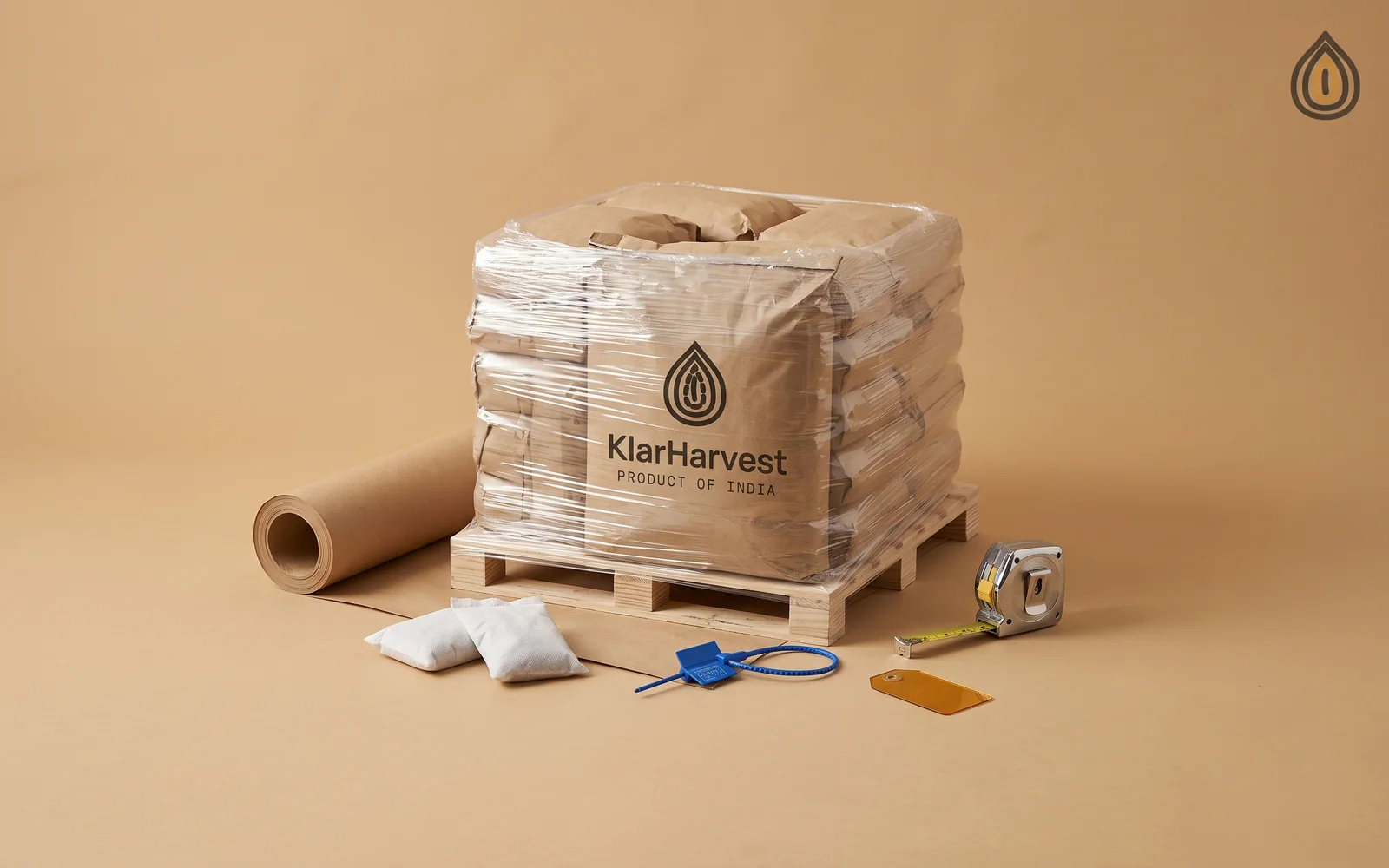
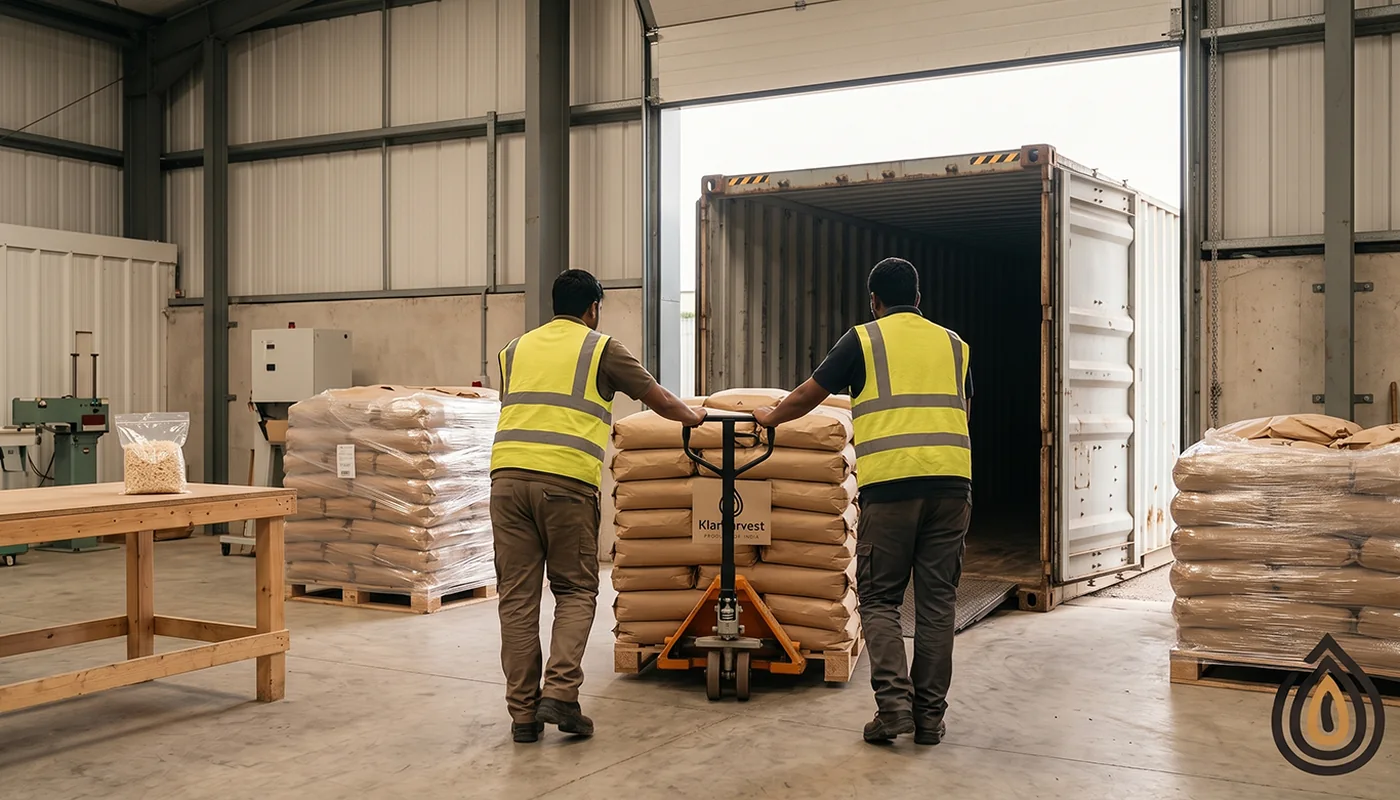
Once the advance is received, the exporter books the cut with the plant or draws it from stock. In season, from March to June, a fresh production run is normal and takes a few days; in the off-season the product usually comes from the plant's warehouse and should be from the last crop, which the lot code will show. The product is packed at the plant into sealed liner bags, palletised and, in a clean chain, moved to the exporter's godown for labelling and container stuffing without the bags being opened.
Before shipment you should receive three things: the certificate of analysis for the actual lots being shipped, from an accredited laboratory; photographs or a short video of the loading, showing the bags, the lot labels and the container number; and the draft documents for you to check names, addresses and HS code before the originals are issued. A third-party pre-shipment inspection by SGS, Bureau Veritas or Intertek is an option for large first orders and costs a few hundred euros; for a pallet it is not proportionate, and the loading video plus the certificate of analysis does the job.
Step 8: Shipping from Pipavav: LCL or a container
Most Mahuva product ships from Pipavav, an APM Terminals port 60 to 70 kilometres from the plants, with direct and one-transshipment services to north Europe. Mundra and Nhava Sheva are the alternatives when a service or a rate is better. Transit time from Pipavav to Hamburg, Rotterdam or Antwerp is 25 to 30 days port to port on the direct services and up to 35 with a transshipment.
| Shipment | Typical quantity | Freight, January 2026, indicative | Comment |
|---|---|---|---|
| LCL, 1 pallet | 600 kg flakes | 250-350 EUR to a German port, plus 80-150 EUR destination charges | 0.55-0.80 EUR/kg; consolidation adds about a week |
| LCL, 4 pallets | 2,400 kg | 600-900 EUR plus destination charges | 0.30-0.45 EUR/kg |
| 20 ft FCL | ~10 t flakes or ~18 t powder | 1,200-1,800 EUR ocean freight plus port charges | 0.12-0.20 EUR/kg flakes; the box is full before it is heavy |
| 40 ft HC FCL | ~20 t flakes | 1,600-2,400 EUR | Best rate per kg for flakes |
Freight rates move with the shipping market and the season; the table is a scale, not a quote. For LCL, the exporter delivers the pallets to a consolidator in Mundra or Pipavav; for FCL the container is stuffed at the exporter's premises under customs supervision, sealed with a customs e-seal, and trucked to the port. Marine insurance for the product value plus 10 percent costs a fraction of a percent and is worth buying on every shipment; how to choose between LCL and a container is in LCL or Full Container?
Step 9: Documents, customs and duty at destination
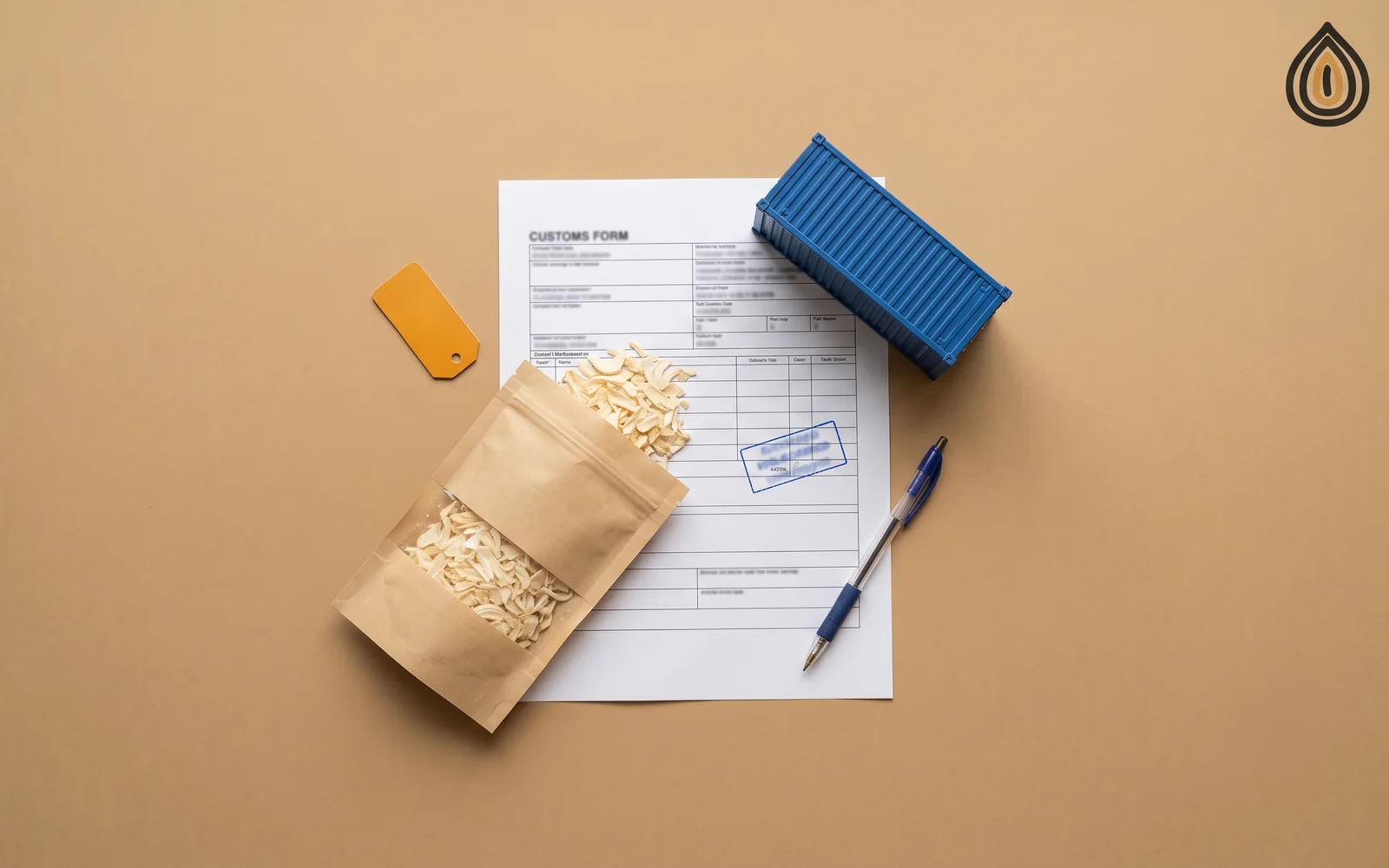
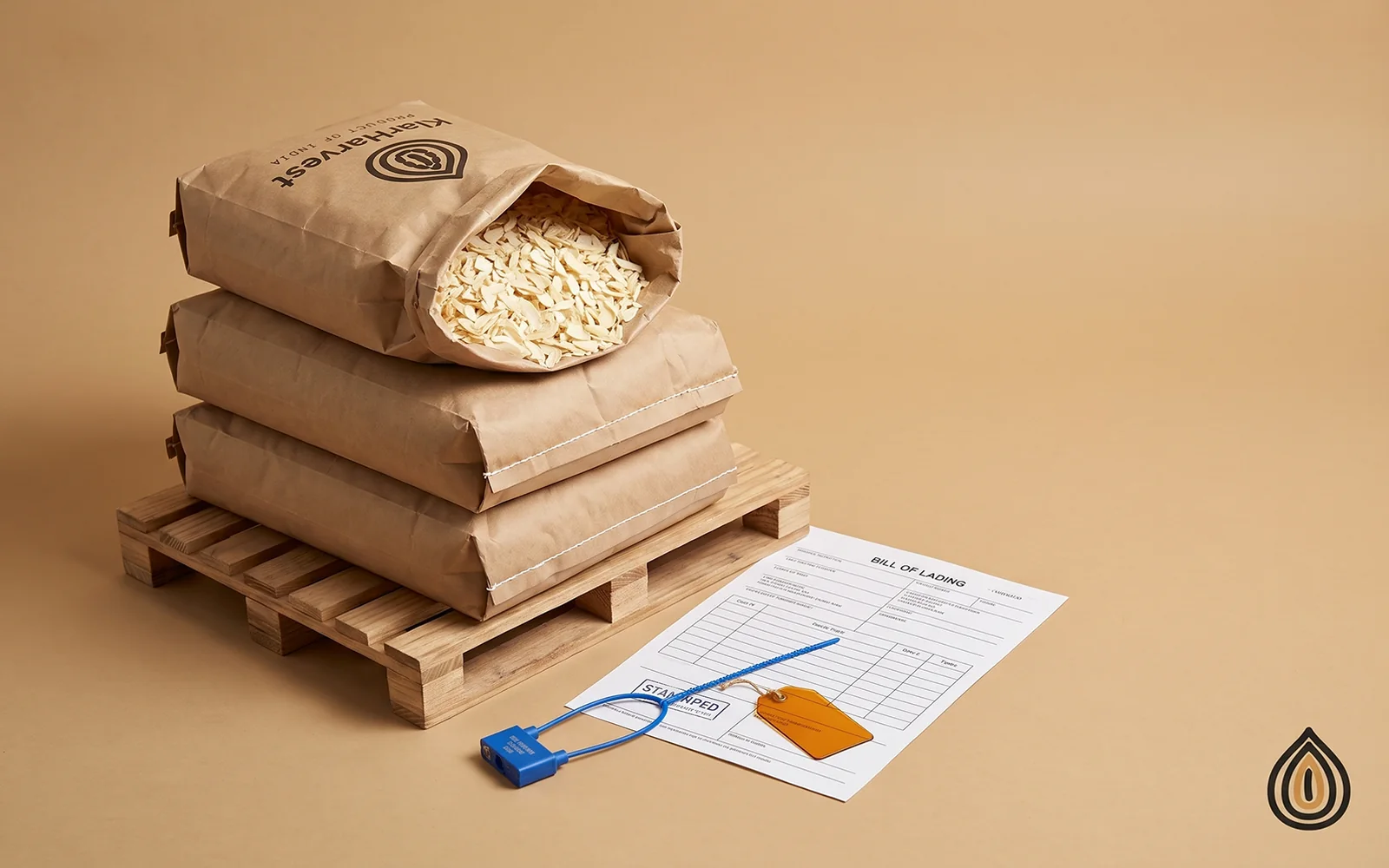
The exporter's forwarder or customs house agent files the shipping bill in India and the exporter sends you the document set: commercial invoice, packing list, bill of lading, certificate of origin from an Indian chamber of commerce, phytosanitary certificate from the plant quarantine authority, the certificate of analysis, and a health certificate where your country asks for one. Check the draft documents before they are issued: your company name and address, the HS code 0712.20, net and gross weights, lot numbers, and the Incoterm. A mistake on an original bill of lading costs days to correct.
At an EU port your customs broker files the import declaration. Dried onion under 0712 20 00 carries the EU conventional duty rate of 6.4 percent of the customs value; whether a preferential rate applies to Indian origin depends on the trade arrangements in force on the date of entry, so ask your broker to check TARIC rather than assume. Import VAT applies at your country's rate for food and is normally reclaimable. Your broker will also need your EORI number and the commercial documents above. Dried onion is a processed plant product; whether the phytosanitary certificate is demanded at the border varies, and having it avoids the question. The UK and the USA follow different procedures, covered in their own guides later in the year. The EU rules on residues, contaminants and labelling that the product must meet are in EU Import Requirements for Dehydrated Onion.
Step 10: Receiving, incoming inspection and the second order
When the pallets arrive, check them before signing the delivery note: number of bags against the packing list, torn or wet bags, and the lot numbers against the certificate of analysis. Open one bag per lot and compare it with your retained sample for colour, size and smell. If you have a laboratory routine, send a sample for moisture and, for treated grades, total plate count. Photograph anything that looks wrong on the day; claims are decided on that evidence.
Then close the loop with the supplier. Tell them what arrived, what the tests said, and what you will order next. The second order is where the relationship is made: terms improve, the supplier learns your seasonality, and you can start planning containers instead of pallets. A supplier who was easy to reach during the first order and disappears afterwards has told you what to expect.
Choosing a forwarder and a customs broker
Two service providers make the difference between a smooth first import and a stressful one, and neither is the exporter. The freight forwarder books the sea freight, arranges consolidation for LCL, issues the house bill of lading and tracks the shipment. The customs broker files your import declaration, pays duty and VAT on your behalf and releases the goods from the port. Many companies do both, and for a first import one company doing both is simpler.
If you buy CIF or DAP, the exporter's forwarder handles the origin side and you only need a broker at destination; ask the exporter for the name of the destination agent early, because that agent will contact you with the arrival notice and the destination charges. If you buy FOB, you need your own forwarder with an office or partner in Mundra or Pipavav. Three questions sort candidates quickly: do they ship food products from Indian west-coast ports every month, what are their destination charges for one pallet and for a container (ask for the full list, because "free" ocean freight is often paid for in handling fees), and will they pre-check the documents before the shipment sails. A forwarder who quotes an all-in rate to your door, in writing, with the charges itemised, is the one to use.
Give your broker the draft documents as soon as you have them. Brokers catch the mistakes that cost time at the border: a missing EORI number, a description that does not match the HS code, a weight that differs between packing list and bill of lading. For the first shipment ask the broker to walk you through the declaration once; after that it is routine.
Insurance and what happens when something is wrong
Marine cargo insurance covers loss or damage between the exporter's warehouse and yours. It costs a fraction of a percent of the insured value, which is normally the invoice value plus 10 percent, and it is cheap because dehydrated onion rarely gets damaged: it is dry, light and packed in sealed liners. What does happen is water ingress from a damaged container, crushed bags at the bottom of a badly stacked pallet, or a lost LCL pallet. Under CIF the exporter buys minimum cover to the port; under FOB you insure from the ship's rail. Either way, insure to your door.
Quality claims are different from transport claims and are settled between you and the exporter. The basis is the certificate of analysis and the retained sample on both sides. If your incoming test shows moisture at 7.5 percent against a specification of 6, send the supplier your result and the lot number the same day; a serious exporter will re-test the retained sample at an independent laboratory and, if the result stands, offer a price adjustment, a replacement in the next shipment or a credit note. Write the claim procedure into the order: the laboratory that arbitrates, the time window for claims (usually 14 to 30 days after arrival), and the remedy. A supplier who agrees to that clause in writing is telling you it does not expect to need it. Marine insurance in detail, and how claims are documented, are covered in Marine Insurance and Claims for Dehydrated Onion Shipments.
The whole timeline and a landed-cost example
From first enquiry to product on your floor, a realistic first import takes ten to twelve weeks, most of it sampling and sea transit. A repeat order takes six to eight.
| Stage | First order | Repeat order |
|---|---|---|
| Specification and supplier shortlist | 1 week | - |
| Samples by courier and testing | 2-3 weeks | - |
| Quote, terms, order confirmation, advance payment | 1 week | 2-3 days |
| Production or stock draw, packing, certificate of analysis | 1-2 weeks | 1-2 weeks |
| Export clearance, trucking, sailing | 1 week | 1 week |
| Sea transit Pipavav to north Europe | 4-5 weeks | 4-5 weeks |
| Import clearance and delivery | 3-5 days | 3-5 days |
| Total | 10-12 weeks | 6-8 weeks |
A worked landed cost for one 20 foot container of white onion flakes to a warehouse near Hamburg, at January 2026 numbers. Ten tonnes at 1.60 euros per kilogram FOB is 16,000 euros. Ocean freight and origin charges 1,500 euros, marine insurance 40 euros, destination port and handling charges 350 euros, customs broker 120 euros, duty at 6.4 percent on the customs value of about 17,850 euros is 1,140 euros, trucking to the warehouse 400 euros. Total 19,550 euros, or 1.96 euros per kilogram before VAT, which is reclaimable. Against 3 to 4 euros from stock, the container saves 10,000 to 20,000 euros. The same calculation for one LCL pallet lands at about 2.30 to 2.50 euros per kilogram because freight and fixed charges are spread over 600 kilograms instead of 10,000.
How KlarHarvest handles first-time importers
KlarHarvest was set up for exactly this buyer: the food business that wants Indian prices without becoming a trading company. We are a merchant exporter in Bhavnagar; product comes from BRC-certified plants in Mahuva in sealed bags, is labelled and stuffed at our own godown, and ships from Pipavav. First orders of one pallet by LCL are normal, and mixed shipments of several cuts and colours are packed together. A quote with the specification attached goes out within one business day and is locked at confirmation. Every lot ships with a certificate of analysis from an NABL-accredited laboratory, a loading video, and the full document set drafted for your check before the originals are issued. If you would rather buy DAP for the first shipment and FOB later, both are quoted. The sequence from enquiry to delivery is on our process page, and the answers to the usual questions on the FAQ.
Frequently asked questions
Do I need an import licence to bring dehydrated onion into the EU?
No. Dried onion under HS 0712 20 is not subject to import licensing or quotas in the EU. You need an EORI number, a customs broker or your own declaration, the commercial documents, and the product must comply with EU food law. The same applies in the UK with its own registration numbers.
How much does it cost to import a pallet of dehydrated onion from India?
In January 2026 one pallet of about 600 kilograms of white onion flakes costs roughly 950 to 1,050 euros FOB, plus 350 to 500 euros of LCL freight and destination charges, plus duty and clearance of about 100 to 150 euros. Landed in Germany that is 2.30 to 2.50 euros per kilogram before VAT.
What is the minimum order for direct import?
It depends on the exporter. Plants prefer full containers; exporters serving smaller buyers accept one pallet by LCL. Below one pallet the freight per kilogram becomes larger than the saving over a European stockist.
How long does shipping take from India to Germany?
Port to port, 25 to 30 days from Pipavav to Hamburg on a direct service, up to 35 days with transshipment. Add one to two weeks for production and export clearance before sailing and a few days for clearance and delivery after arrival.
What payment terms are normal with an Indian exporter?
For a first order, 30 percent advance and 70 percent against the bill of lading copy, or a letter of credit at sight. After a few orders terms usually loosen. Full advance payment to a new supplier is not normal and should be declined.
Can I combine onion with garlic or other dehydrated vegetables in one shipment?
Yes. Mixed pallets and mixed containers are routine for exporters who serve smaller buyers, and they are the usual way a distributor fills a container. Each product needs its own line on the invoice, its own lot and its own certificate of analysis.
Is a phytosanitary certificate required for dried onion?
Dried onion is a processed product and many EU entry points do not demand it, but practice varies by member state and customs office. Experienced exporters issue one with every shipment because a refusal at the border costs more than the certificate.
Next step
If you want to try the direct route, start at step two: send us your draft specification, or describe the product and let us draft it. Request a sample of the cut you have in mind, and you will have it with its lab report within days, followed by a quote for one pallet and one container so you can see both numbers side by side.