- The defect catalogue at a glance
- Colour defects: browning, tan lots, uneven colour
- Scorched and burnt pieces
- Black specks in powder and granules
- Skin, root, top and sprout fragments
- Pink and red admixture in white product
- Foreign matter: stones, metal, plastic, insects
- Fines, dust and off-size
- Caking, lumps and high moisture
- Off-odour and off-flavour
- Microbiological and chemical failures
- Packaging and weight defects
- Where defects come from: a step-by-step map
- The arrival inspection in ten minutes
- Accept, downgrade or reject: the decision
- Making a claim that gets a result
- How KlarHarvest controls defects
- Frequently asked questions
Judge the product, not the words
200-500 g from a current lot, dispatched by courier with the lot lab report.
Request a sampleBuyers who know dehydrated onion quality defects by sight and by cause receive better product, because they specify against the defects that matter, inspect for them in ten minutes on arrival, and tell a supplier what went wrong in a language the plant understands. Dried onion is a simple product with a short list of ways to be wrong, and each way traces to a step: browning to the dryer or the store, scorched pieces to a hot spot on the belt, skin to the peeler, black specks in powder to the mill, caking to the liner, off-odour to the raw onion or to storage, pink admixture to the field, high counts to the water or the treatment, short weight to the packing line. This guide catalogues them all, with the cause, the limit the trade uses, the inspection method and the decision, accept, downgrade or reject, for each.
It is written for the quality staff and buyers who open the bags and for the product developers who see the defects in the finished food. Limits are those in common use for export product in 2026 and vary by specification; the tables give the ranges.
What this guide covers
- The defect catalogue at a glance
- Colour defects: browning, tan lots, uneven colour
- Scorched and burnt pieces
- Black specks in powder and granules
- Skin, root, top and sprout fragments
- Pink and red admixture in white product
- Foreign matter: stones, metal, plastic, insects
- Fines, dust and off-size
- Caking, lumps and high moisture
- Off-odour and off-flavour
- Microbiological and chemical failures
- Packaging and weight defects
- Where defects come from: a step-by-step map
- The arrival inspection in ten minutes
- Accept, downgrade or reject: the decision
- Making a claim that gets a result
- How KlarHarvest controls defects
- Frequently asked questions
The defect catalogue at a glance
| Defect | What it looks like | Usual cause | Typical limit | Decision |
|---|---|---|---|---|
| Browning, tan colour | Whole lot cream to tan | Hot dryer finish, old or low-solids onion, age | Colour grade or L* minimum | Downgrade to cooked uses or reject |
| Scorched pieces | Dark brown to black flakes | Dryer hot spot, belt carry-over | 5-20 per 100 g flakes | Accept within limit; reject above |
| Black specks in powder | Dark points in a pale powder | Scorched pieces or skin milled | 10-30 per 100 g, or a count per 10 g spread | Accept within limit |
| Skin fragments | Papery brown flakes | Peeler set shallow, poor sorting | 2-5 per 100 g | Accept within limit |
| Root and top pieces | Fibrous or green pieces | Topping incomplete | 1-3 per 100 g | Accept within limit |
| Pink or red admixture | Pink-edged pieces in white | Pink-skinned bulbs in the raw lot; red run before white | 0.5 % by weight or a count | Reject for pale uses |
| Stones, grit | Hard mineral pieces | Poor washing; field soil | None; or acid-insoluble ash ≤0.5 % | Reject |
| Metal | Fragments | Line wear; no detector | None; detector test record | Reject |
| Plastic, string, hair | Fragments | Packaging, bags, people | None | Reject the bag; investigate |
| Insects, webbing | Live or dead insects, webs | Infested raw onion or storage | None | Reject |
| Fines, dust | Small pieces below the band | Breakage, transit, over-milling | 5-8 % at arrival | Accept within limit; adjust use |
| Off-size | Pieces above or below the band | Screen worn or wrong | 90 % inside the band | Accept within limit |
| Caking, lumps | Product solid or in clumps | Moisture uptake through a failed liner | Moisture ≤6 % | Reject if moisture high; use if within and aroma clean |
| High moisture | Soft, rubbery pieces | Under-dried or moisture uptake | ≤6 % | Reject above limit |
| Off-odour | Musty, sour, scorched, hay-like | Fermented raw onion, mould, over-drying, age, contamination | None | Reject |
| Weak flavour | Flat, sweet only | Over-dried, old, low-pungency variety | Sensory reference | Downgrade or reject |
| High counts | Laboratory only | Water, treatment failure, storage | Tier limits | Reject or re-treat |
| Residues or contaminants | Laboratory only | Field or fumigation | MRLs, contaminant limits | Reject |
| Short weight | Bags under net | Filler drift; moisture loss | Net weight per bag, tolerance | Claim for the shortfall |
| Wrong marking | Lot, date or item code wrong | Inkjet or plate error | None | Relabel or reject |
Colour defects: browning, tan lots, uneven colour
The most common complaint and the least often a rejection. A lot that is cream rather than white has usually been dried with a hot finishing zone, made from low-solids or stored onion, or aged in a warm store; a lot that is uneven, pale pieces and tan pieces together, has come from a dryer with uneven air flow or from two lots blended. The defect matters where the dry product is seen and hardly at all where it is cooked into a coloured product, so the decision depends on the use: a tan lot is a downgrade for a topping and an acceptable lot for a brown gravy, and a specification that names the colour grade and the age at which it applies decides the question before it arises. Inspection is against a retained reference under daylight, or by meter on the ground product; the grades, the browning chemistry and the specification wording are in Dehydrated Onion Colour.
Scorched and burnt pieces
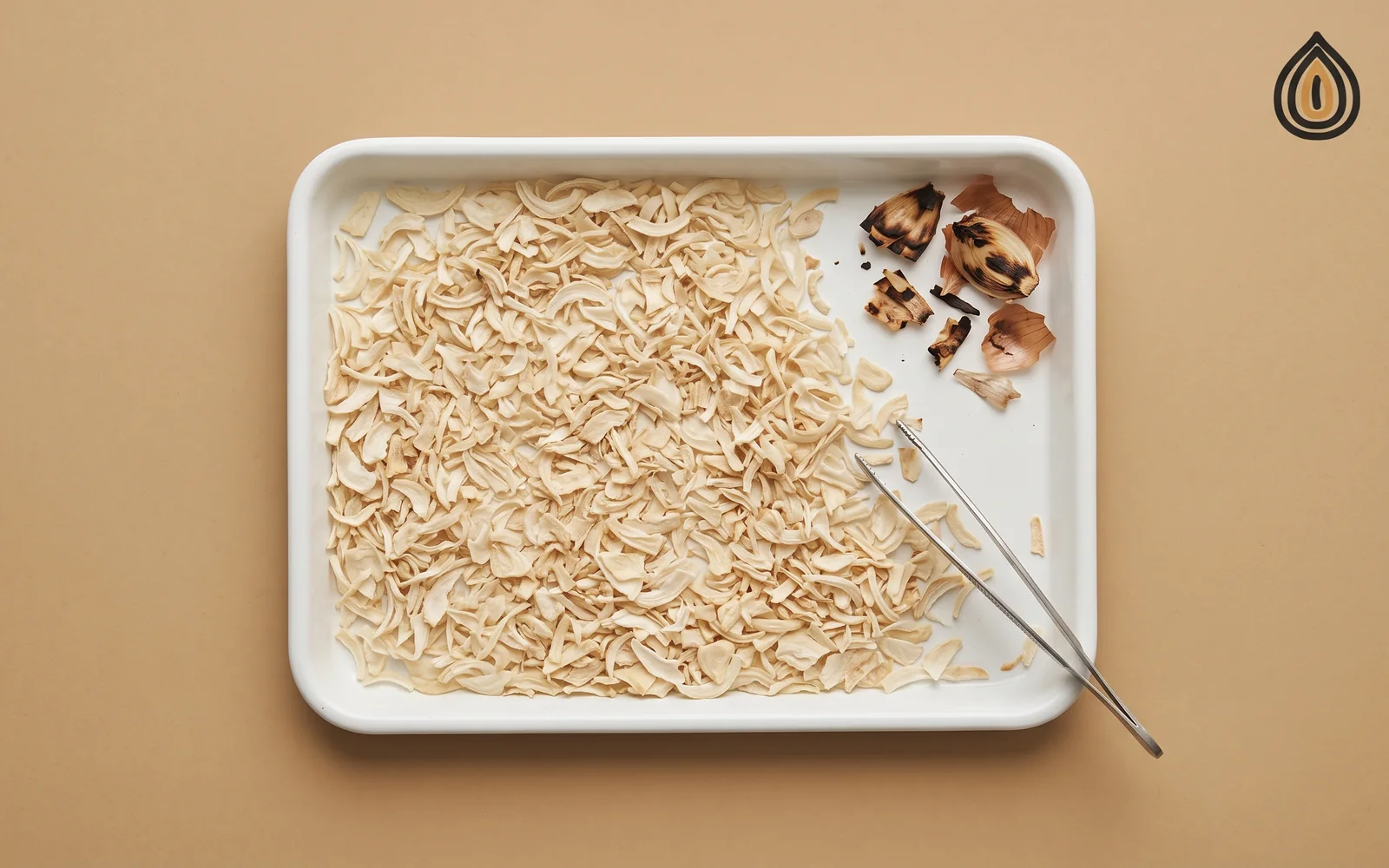
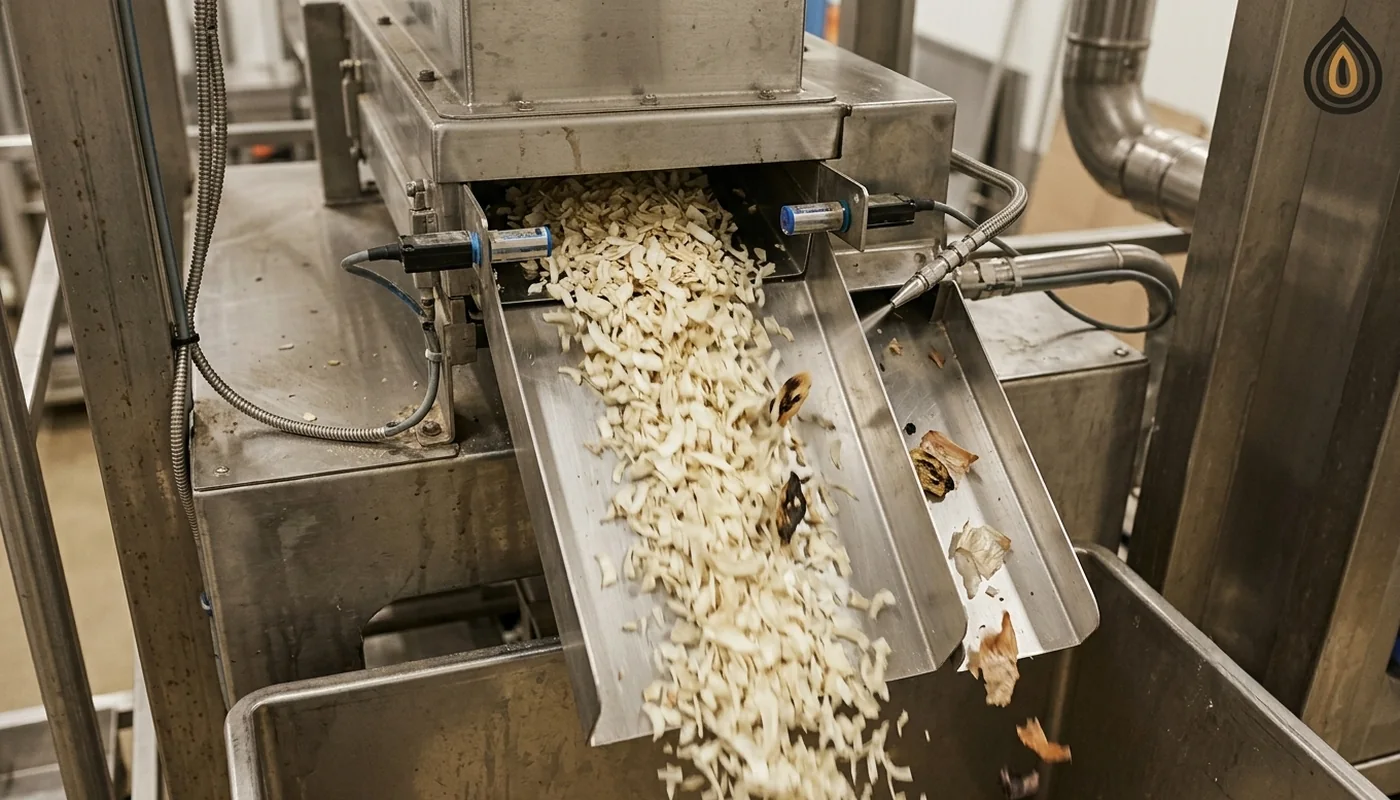
Dark brown or black flakes among pale ones come from three places: a hot spot on the dryer belt where a blocked air channel or uneven loading let the product overheat; pieces that stuck to the belt and went round a second time; and pieces from the edge of the belt, where the air is hottest at some dryer designs. They are counted, not measured, by spreading 100 grams on a white tray and picking out every piece darker than the reference, and the limit for export flakes is 5 to 20 per 100 grams depending on the buyer, tighter for pale uses. A lot above the limit is not dangerous and can be re-sorted at the plant, which is what a plant will offer; a buyer with a colour sorter of its own can do the same. The plant's control is the sorter, optical for the larger plants and a hand-sorting belt for the smaller, and a lot with many scorched pieces has passed a sorter that was not working or was not there. The dryer step is in How Dehydrated Onion Is Made.
Black specks in powder and granules
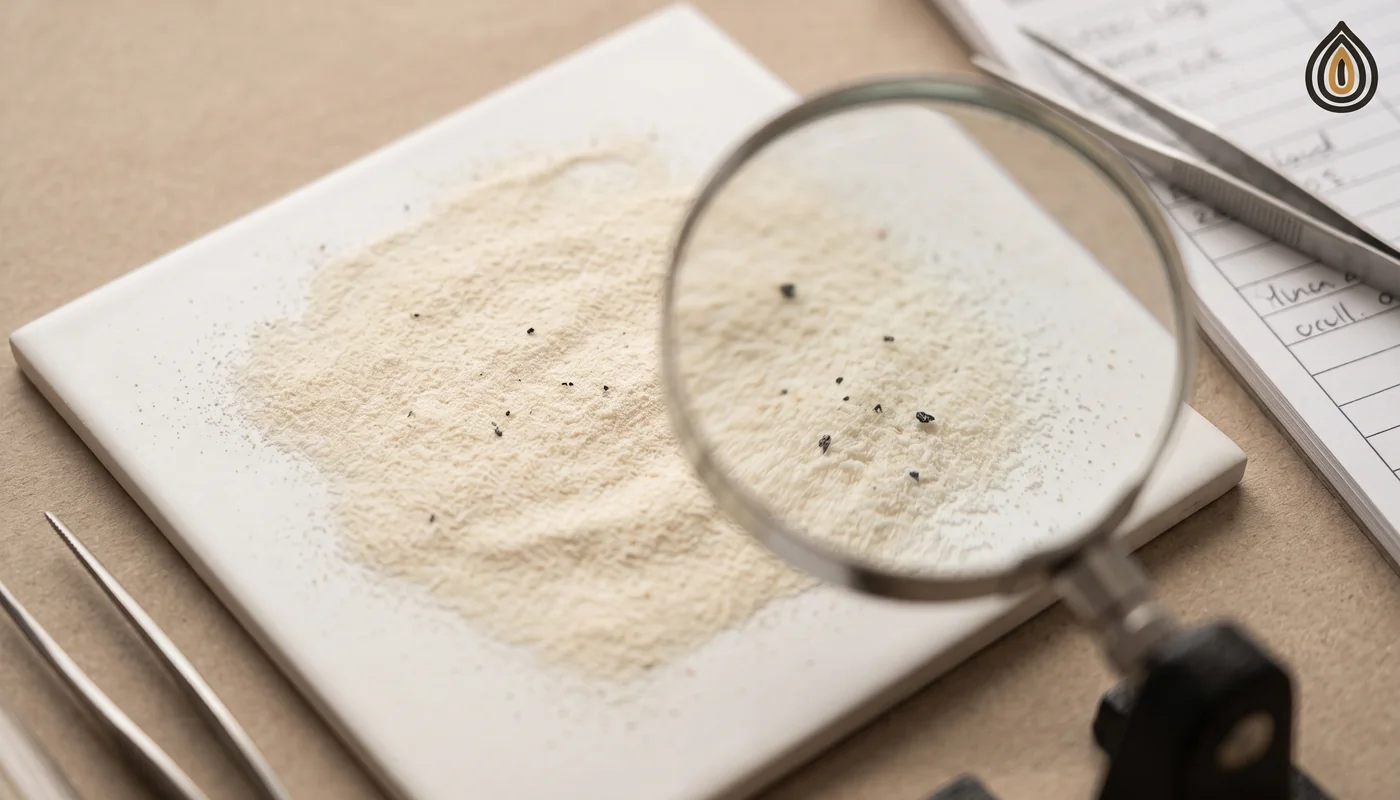
The complaint that reaches a supplier most often from seasoning and sauce makers is black specks in onion powder: dark points in a pale powder that show in a white sauce or a light seasoning. They are the scorched pieces and the skin fragments above, milled with the product, and a powder with many specks came from kibble that was not sorted before milling. The count is done by spreading 10 grams thinly on a white tile under a lamp and counting the dark points, or by dispersing 5 grams in water and counting what settles dark; the limit is set per specification, 10 to 30 per 100 grams being common and much tighter for pale retail products. A plant reduces specks by sorting the kibble before the mill, by sieving the powder to remove the coarse dark fraction, and by keeping the mill cool so that it does not make its own scorch; a plant that mills unsorted screenings makes specked powder and prices it accordingly. The powder product and its specification are on the powder page.
Skin, root, top and sprout fragments
Papery brown skin, fibrous root plate, green top and, from stored onion, sprout fragments are the peeler's and the topper's defects: a peeler set shallow to protect yield leaves skin on the shoulders of the bulb, a topper set high leaves root, and stored onion that has sprouted brings green tissue that the trimmers miss. They are counted per 100 grams like scorched pieces, with limits of 2 to 5 for skin and 1 to 3 for root and top, and they are more visible in flakes than in granules and invisible in powder except as specks. Skin is the defect that shows a plant's trade-off between yield and quality most directly, since a deeper peel costs a percent of yield and removes the skin entirely; the plants that serve retail and pale-use buyers peel deeper. The sorter removes most of it; what reaches the bag is what the sorter missed. The yield side of the trade-off is in 8 to 1: The Fresh-to-Dry Yield Ratio.
Pink and red admixture in white product
Pink-edged pieces in a white lot come from pink-skinned bulbs in the raw onion, which the Saurashtra fields produce in small numbers among the white varieties and which the yard's grading does not always separate, or from a red run that preceded the white on the line without a full clean. In a soup or a sausage a few pink pieces are harmless; in a pale sauce or a retail jar they are the most complained-of defect after specks, because a consumer reads a pink fleck as a foreign onion. The limit is by weight, 0.5 percent of coloured pieces, or by count, and the inspection is the same tray spread. The plant's control is at the yard and the intake, where pink lots are diverted to the red or pink lines, and at the line, where a white run follows a clean. Pink onion as a product in its own right is in Pink Onion, Dehydrated, and the colour comparison in White vs Red Dehydrated Onion.
Foreign matter: stones, metal, plastic, insects
Foreign matter is the defect class with no limit, since none is acceptable, and it is the one where the plant's controls are the story. Stones and grit come from field soil that the washing did not remove, and show in the acid-insoluble ash result on the certificate as well as in the tray; a lot with grit has been washed too briefly or has come from a plant without a stone trap. Metal comes from line wear, a screen wire, a belt fastener, and is caught by the in-line metal detector that every certified plant runs and tests with standard pieces each shift; the test record is what an auditor asks for. Plastic, string and hair come from packaging, bags and people, and are a hygiene and a packing-room question. Insects, live or dead, and the webbing of storage moths come from infested raw onion or from a warehouse without pest control, and are the defect most likely to lead to a rejection of a whole consignment, since where there is one there are more. Any foreign matter found on arrival is photographed, retained, reported with the lot and bag numbers, and treated as a rejection of that bag and an investigation of the lot; the plant's own foreign-body controls are part of the audit described in What BRC Certification Means for a Dehydrated Onion Supplier.
Fines, dust and off-size
Fines below the band come from breakage in handling and transit and from over-milling; off-size pieces above the band come from a worn or wrong screen. Both are measured by sieve analysis against the specification's band and its fines maximum, and both are accept-within-limit defects: a lot of flakes with 8 percent fines on arrival is within a specification that allows 8, and its fines are usable minced-sized pieces, though a topping buyer may downgrade it. Dust in powder, the fraction below 200 mesh, is a separate limit where handling and dispersion matter. Fines rise between packing and arrival, most for flakes and least for granules, and a specification that allows for the rise avoids a dispute; the bands and the transit effect are in Mesh Size in Dehydrated Onion.
Caking, lumps and high moisture
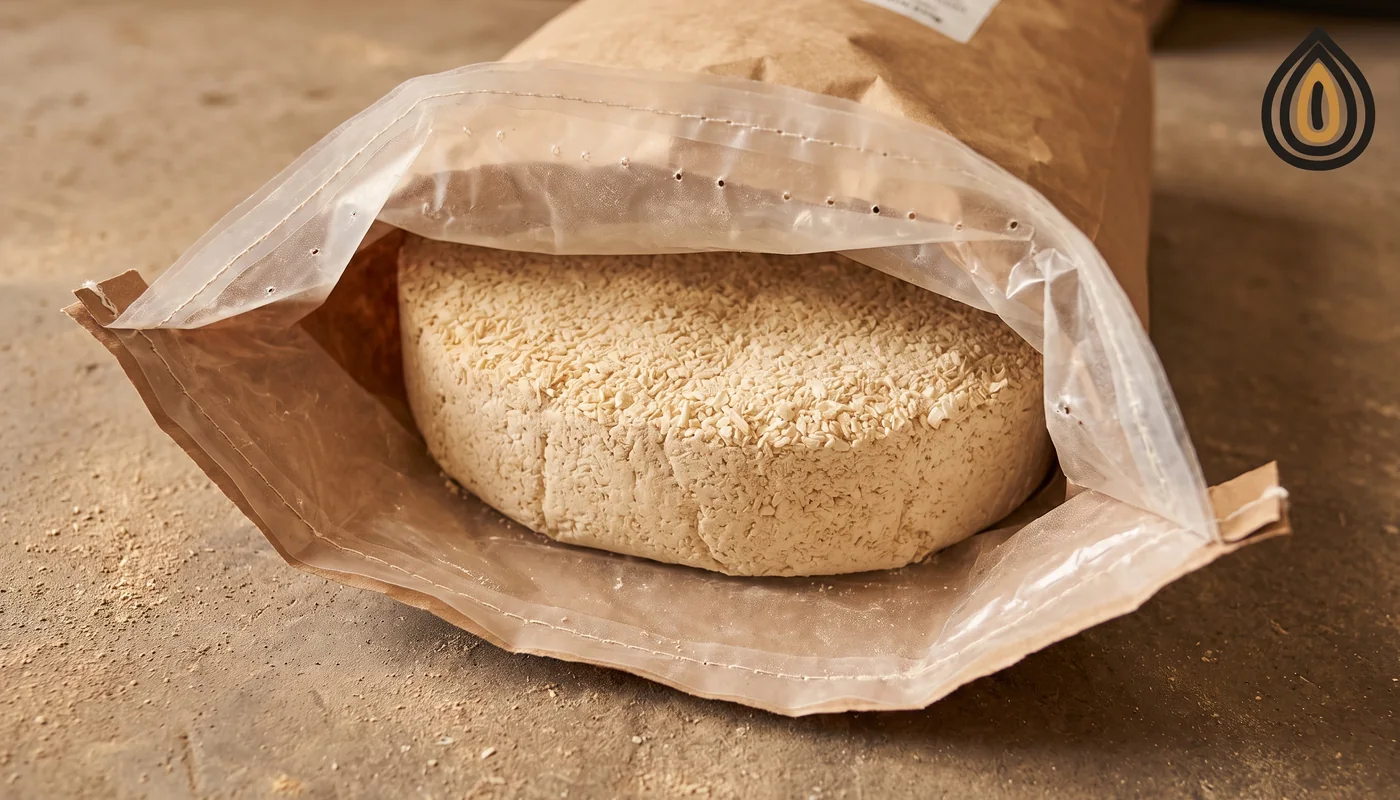
Product that arrives as a block, in clumps or as soft, rubbery pieces has taken up moisture, and the inspection is two readings: the moisture, by halogen analyser or oven, against the 6 percent limit, and the aroma, for the mustiness that says mould has started. The cause is nearly always the liner, punctured at the stitch line or tied rather than sealed, or a container that let condensation onto the pallets, and the evidence is in the bag itself: a hole in the liner, a wet top sheet, a caked side of the pallet facing the container wall. Under-drying at the plant, product packed at 7 or 8 percent, is the other cause and shows as a whole lot uniformly soft with the certificate reading 5. A caked lot within the moisture limit with a clean aroma is usable after breaking up, at a discount, for cooked applications; a lot above the limit or with a musty note is rejected, since it will not keep and may carry mould. Powder cakes first, then granules, then flakes. The mechanism and the storage rules are in Dehydrated Onion Shelf Life, and the liner question in Dehydrated Onion Packaging.
Off-odour and off-flavour
A dry lot should smell clean, sweet and sharply of onion, and cooked it should taste of cooked onion with no other note. The off-notes and their sources: sour or fermented, from raw onion that sat in heaps before processing and started to ferment, or from a wet lot in storage; musty or mouldy, from moisture and mould in storage; scorched, caramel or bitter, from over-drying; hay-like, flat or cardboard, from age, oxidation or a lot dried too hot and stored too warm; and foreign, fuel, smoke, chemical, from a dryer that leaked combustion gases onto the product, a container that carried something else, or a warehouse with a contaminant. Weak flavour, sweet and nothing else, is a low-pungency variety, an old lot or an over-dried one. All of these are sensory findings, none appears on a certificate, and all are grounds for rejection when they are clear; the check is a smell of the dry product and a taste of the rehydrated product in plain water against a retained reference, and the method for doing it consistently is in Sensory Evaluation of Dehydrated Onion.
Microbiological and chemical failures
These are laboratory defects, invisible in the bag, and they are found by the certificate and by the buyer's own verification. A total plate count above the tier, or a yeast and mould count that says the lot was wet somewhere, comes from the plant's water, from a treatment that did not reach its temperature, or from storage; Salmonella or E. coli present is a plant hygiene failure and a rejection under any specification; a pesticide residue above the limit is a field failure that the plant's sourcing did not catch; a heavy metal above the limit is a soil or water question; sulphite in a sulphite-free lot is a cross-contact at the plant; ethylene oxide at any level is a fumigation the plant did not declare. The decision for each is reject, or, for a count failure on standard product, re-treatment by steam at the plant where the buyer accepts it. The tiers and their meaning are in Microbiology in Dehydrated Onion, the residues in Pesticide Residues in Dehydrated Onion, and the reading of the certificate that shows them in How to Read a Dehydrated Onion Lab Report.
Packaging and weight defects
Short weight, bags a few hundred grams under the declared net, comes from a filler that drifted or from moisture loss in transit from a lot packed at the top of its moisture range; it is checked by weighing ten bags from different pallets and comparing the average with the net, within the tolerance the specification sets, usually 1 percent, and it is claimed as a shortfall rather than a rejection. Wrong marking, a lot number that does not match the certificate, a best-before date that was mis-set on the inkjet, an item code from another buyer, is a traceability defect and is corrected by relabelling under the buyer's control with the supplier's written confirmation of the correct data, or rejected where the buyer's system cannot accept relabelled goods. Damaged bags, torn sacks, split liners, wet pallets, are handling defects and are the insurer's or the carrier's question as much as the supplier's; the loading video and the packing list decide where the damage happened. The claims route for transit damage is in Marine Insurance and Claims for Dehydrated Onion Shipments.
Where defects come from: a step-by-step map
| Step | Defects made here | Plant control |
|---|---|---|
| Field and yard | Pink admixture, low solids, residues, soil and stones, infested onion | Variety, contracted growers, intake inspection and rejection |
| Intake and storage of raw onion | Fermented raw onion (sour note), rot, sprouts | First-in first-out, no heaps, quick processing |
| Topping and peeling | Skin, root, top fragments; yield loss | Peeler setting, trimmer training, sorting |
| Washing | Grit, stones; soluble-solids loss | Stone trap, flume, brief wash |
| Slicing | Uneven pieces | Sharp blades, set thickness |
| Drying | Browning, scorched pieces, over- or under-drying, smoke taint | Zone temperatures, belt loading, air distribution, burner maintenance, outlet moisture control |
| Sorting | Scorched, skin and dark pieces that get through | Optical sorter, hand belt, lighting |
| Screening and milling | Fines, dust, off-size, black specks, mill heat | Screen maintenance, pre-mill sorting, cooled mills, sieving after milling |
| Steam treatment | Count failure, caking from steam moisture, colour loss | Validated time and temperature, re-drying |
| Metal detection | Metal | Detector with shift tests |
| Packing | Short weight, wrong marking, liner puncture, foreign matter from the room | Checkweigher, proof approval, liner handling, hygiene |
| Storage at the plant or exporter | Moisture uptake, insects, odour pick-up | Dehumidified store, pest control, segregation |
| Container and transit | Condensation, breakage, contamination, wet pallets | Container inspection, dunnage, desiccant, loading practice |
| Buyer's warehouse | Moisture uptake from open bags, insects, odour | Re-sealing, rotation, pest control |
A defect's step is what the plant needs to know to fix it, and a claim that says "scorched pieces, 34 per 100 grams, bags 12 to 40 of lot X" tells the plant which dryer, which day and which shift; a claim that says "quality not good" tells it nothing. The process with each control in place is in How Dehydrated Onion Is Made.
The arrival inspection in ten minutes
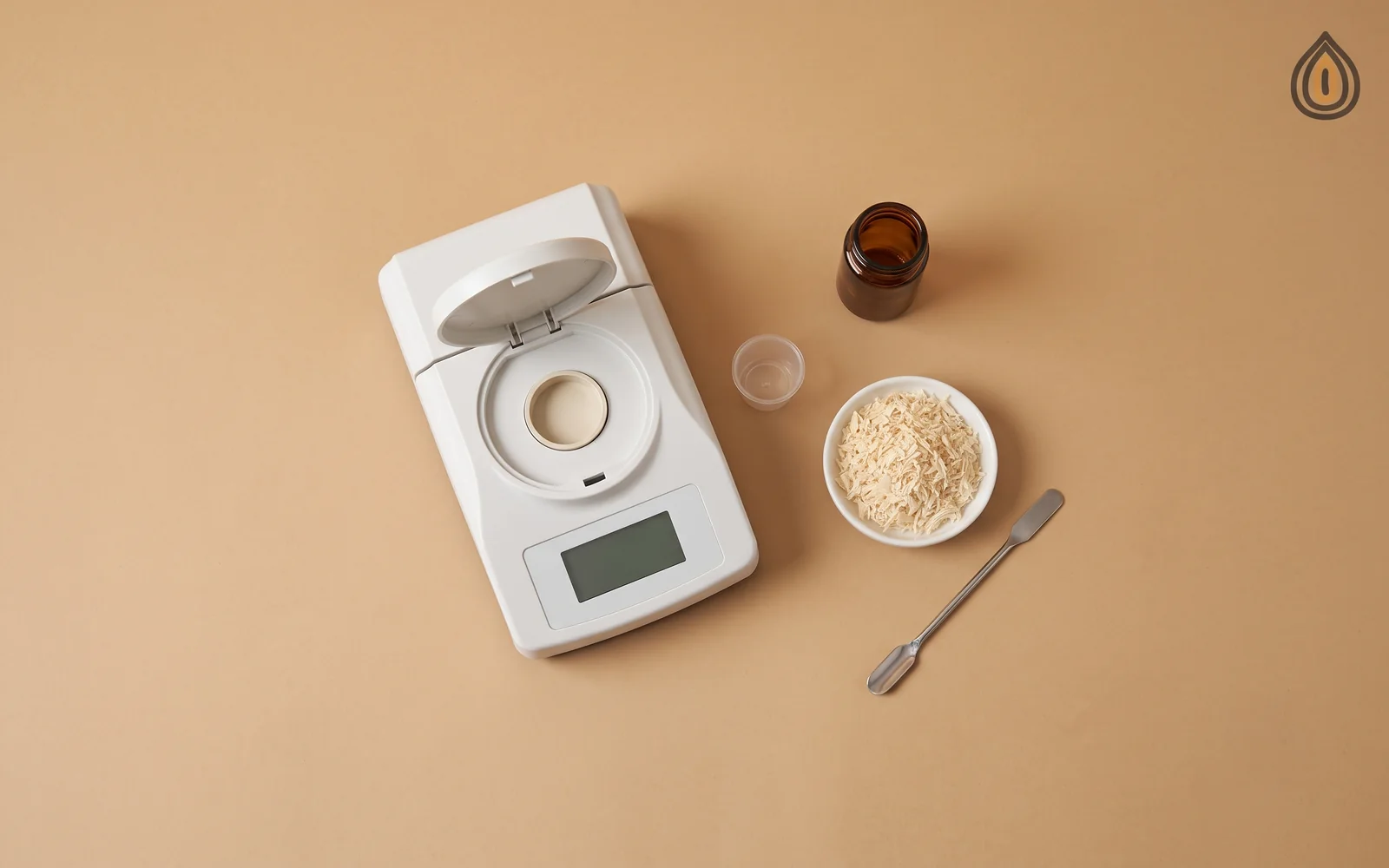
- Pallets and bags: look for wet, torn or crushed bags, condensation on top sheets, insects or webbing; photograph anything found with the pallet and bag number.
- Weight: weigh ten bags from different pallets; compare with the net and the tolerance.
- Open three bags from different pallets, middle of the stack; check the liner for holes at the seam and the seal.
- Aroma: smell the product on opening; clean and sharp, or note the off-note.
- Tray spread: 100 grams on a white tray under a lamp; count scorched, skin, root and pink pieces; look for foreign matter; compare colour with the retained reference.
- Sieve check: 100 grams on two kitchen sieves at the band limits; weigh oversize and fines.
- Moisture: halogen analyser on 5 grams from each of the three bags; compare with the certificate and the limit.
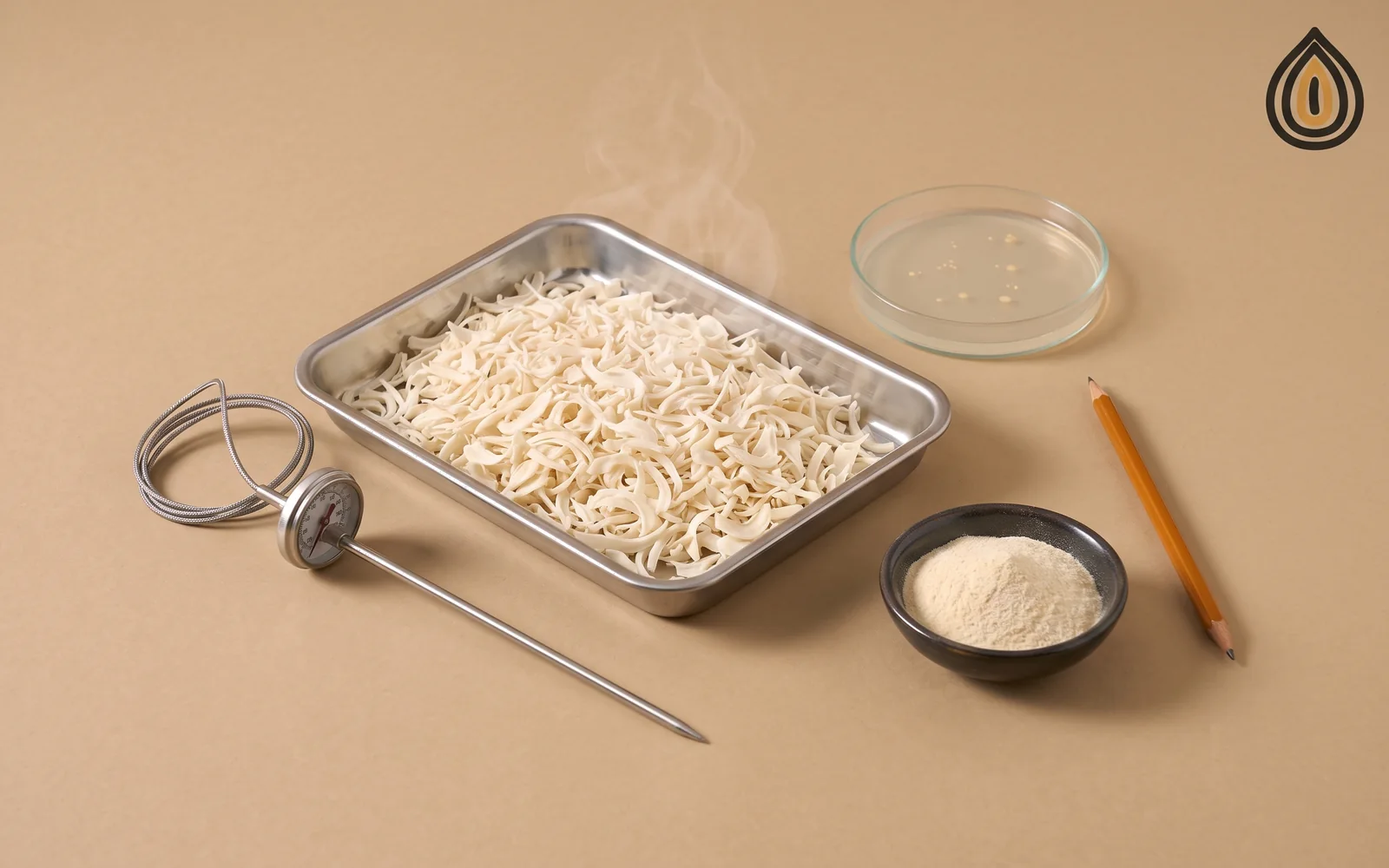
- Rehydrate and taste: 10 grams in 100 millilitres at 90 degrees for the cut's time; texture, colour of the water, flavour against the reference.
- Record the lot number, the bag numbers opened, the counts, the moisture and the sensory notes; draw and seal a 500 gram retained sample from each bag opened.
- Release, hold or reject by the decision rules below; send the verification sample to the laboratory per the plan.
The routine takes ten minutes for a conforming lot and is the whole of the buyer's incoming control for a certified supplier; the verification testing plan that sits behind it is in the laboratory report guide linked above, and the specification that sets each limit in How to Read a Dehydrated Onion Specification Sheet.
Accept, downgrade or reject: the decision
The decision follows the defect's class. Safety defects, foreign matter, pathogens, residues above the limit, contaminants, undeclared sulphite above the threshold, mould or a musty aroma, are rejections without discussion, and the supplier is told at once with the evidence. Specification defects within the limit, a scorched count of 12 against a limit of 20, fines at 6 against 8, colour a grade below the top for a cooked use, are accepted and noted; a run of them across deliveries is raised as a trend. Specification defects outside the limit but not safety, a scorched count of 34, colour a grade below the specification for a visible use, fines at 12, pink admixture at 1 percent, are held for a decision: accept at a negotiated discount for a use that tolerates the defect, re-sort at the supplier's cost where the plant offers it, or reject and replace. Sensory defects, weak or off flavour, are held and confirmed by a second taster and, if the contract names one, the referee laboratory's panel, then rejected if confirmed. Packaging and weight defects are claimed as a shortfall or corrected by relabelling. The contract should say all of this in advance, with the notice period, the sampling method, the referee and the remedies; the clauses are in B2B Contract Terms for Dehydrated Onion.
Making a claim that gets a result
A claim is a document, and the ones that resolve quickly share a form. The lot number, the container, the bags opened and their positions on the pallets. The defect named in the specification's own terms, with the count, the measurement or the sensory note, and the limit it is compared with. Photographs of the tray spread, the liner, the bag marking and any foreign matter, with a scale in the frame. The buyer's moisture and sieve results beside the certificate's. The retained sample sealed and available. What the buyer proposes: rejection and replacement, re-sort, discount, or a referee analysis. Sent within the contract's notice period, usually 14 to 30 days of arrival, to the named contact, before the goods are used or moved. A supplier receiving that document can identify the dryer and the shift, check its own retained sample, and answer in a day; one receiving "the onion is not good, please advise" cannot. Repeat claims of the same defect are a supplier problem rather than a lot problem, and the supplier checklist in 25-Point Checklist Before You Choose a Dehydrated Onion Supplier is the place to reassess.
How KlarHarvest controls defects
Every KlarHarvest lot is dried at a BRCGS-certified plant with optical sorting, in-line metal detection with shift tests and a checkweigher on the packing line, and every certificate carries the defect counts per 100 grams, the sieve analysis, the moisture and the colour reading beside the laboratory results. Bags are sealed at the plant and never opened; containers are inspected and loaded on film; a 500 gram retained sample from every lot is held for the shelf life; and claims are answered within one business day with the plant's own records for the lot. A claim in the form above, with the lot number and the counts, goes to the contact page and is matched to the lot record described on the our process page.
Frequently asked questions
What are the most common defects in dehydrated onion?
Colour below grade, scorched pieces in flakes and black specks in powder, skin fragments, fines above the band, and caking from moisture uptake. Foreign matter and off-odour are rarer and are rejections.
What causes black specks in onion powder?
Scorched pieces and skin fragments milled with the product, from kibble that was not sorted before the mill, or a mill that ran hot. They are counted per 100 grams against a limit; a plant reduces them by sorting before milling and sieving after.
Is caked dehydrated onion still usable?
If the moisture is within the limit and the aroma is clean, yes, for cooked uses after breaking up, usually at a discount. If the moisture is above 6 percent or the product smells musty, reject it.
How many scorched pieces are acceptable?
Typical export limits are 5 to 20 per 100 grams of flakes, tighter for pale and retail uses, set in the specification and counted on a 100 gram tray spread.
What should I do if I find foreign matter?
Photograph it with the bag and lot numbers, retain it and the bag, reject that bag, notify the supplier at once and hold the lot pending the investigation. Insects or webbing usually mean the consignment is rejected.
Why does the product have more fines than the certificate says?
Breakage in handling and transit, most for flakes. Specify a fines maximum at packing and a higher one on arrival, and sample from the middle of several bags rather than the top of one.
How do I inspect a delivery quickly?
Weigh ten bags, open three, check the liners, smell, spread 100 grams on a tray and count the defects, sieve, read the moisture, rehydrate and taste against the reference, record and retain. Ten minutes for a conforming lot.
Next step
Request a sample and it comes with the defect counts for its lot on the certificate, so that the tray spread on arrival can be compared with the plant's; to set defect limits for a contract, request a quote with the use and the counts you need, and the plant confirms them before the first lot.