- What colour tells you about a lot
- The grades: bright white to cream, and what the trade calls them
- Where browning happens: field, line, dryer, mill, warehouse
- The two chemistries: enzymatic and Maillard browning
- How colour is measured: eye, reference, meter
- Why visual and instrumental grades disagree
- Red and pink onion: colour is the product
- Colour in storage: the shift toward cream
- Colour in cooking: what the customer actually sees
- Defects that read as colour: scorched, skin, pink admixture
- Sulphite and the flat white it gives
- Specification wording
- Colour by cut: why powder reads darker than flakes
- A colour dispute, worked through
- Setting up instrumental colour control with a supplier
- How KlarHarvest grades and reports colour
- Frequently asked questions
Judge the product, not the words
200-500 g from a current lot, dispatched by courier with the lot lab report.
Request a sampleDehydrated onion colour is the first thing a buyer sees when a sample bag is opened and the parameter that causes more disputes than any other, because "white" is not a number and everyone who uses the word means something different. A plant means the colour of a good lot from its own dryer; a buyer means the colour of the last lot it approved, or of a competitor's sample; a colour meter means a set of coordinates that depend on how the sample was prepared. This guide replaces the word with the facts: the grades the trade uses and what each looks like, the five places where onion browns and what a plant does about each, how colour is measured and why the methods disagree, what red and pink onion do differently, how colour changes in the bag and in the pot, and the wording that lets a buyer specify colour so that a lot either conforms or does not.
It is written for buyers, quality staff and product developers, with figures as used in Mahuva and by European receiving laboratories in March 2026.
What this guide covers
- What colour tells you about a lot
- The grades: bright white to cream, and what the trade calls them
- Where browning happens: field, line, dryer, mill, warehouse
- The two chemistries: enzymatic and Maillard browning
- How colour is measured: eye, reference, meter
- Why visual and instrumental grades disagree
- Red and pink onion: colour is the product
- Colour in storage: the shift toward cream
- Colour in cooking: what the customer actually sees
- Defects that read as colour: scorched, skin, pink admixture
- Sulphite and the flat white it gives
- Specification wording
- Colour by cut: why powder reads darker than flakes
- A colour dispute, worked through
- Setting up instrumental colour control with a supplier
- How KlarHarvest grades and reports colour
- Frequently asked questions
What colour tells you about a lot
Colour is a summary of the lot's history. A bright white lot of flakes came from high-dry-matter onion, was sliced and on the dryer within the hour, dried on a well-set belt with a cool finishing zone, cooled and packed promptly, and stored dry and cool since. A cream lot missed one of those steps; a tan lot missed several or is old. Colour therefore correlates with things that matter more than appearance: a browned lot has lost flavour volatiles to the same heat that browned it, has a higher share of scorched particles, and is further along the storage clock. It is also, for many uses, the thing the end customer sees: a topping, a visible inclusion, a pale sauce or a cream soup show the onion's colour, while a dark sauce, a sausage or a seasoning hide it. A buyer should therefore specify colour as tightly as the use requires and no tighter, since the top grade costs the plant yield and fuel and is wasted in a brown gravy.
The grades: bright white to cream, and what the trade calls them
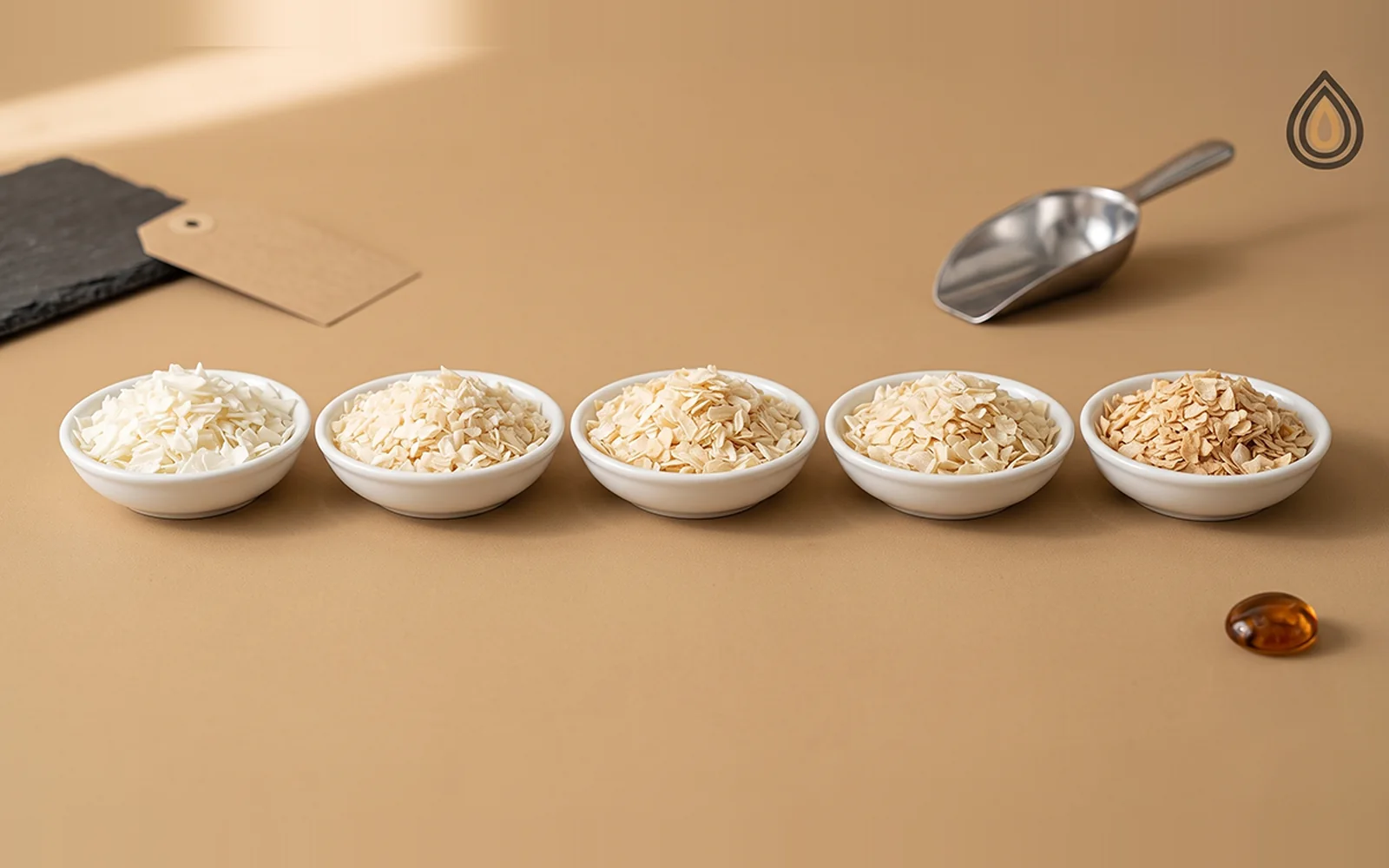
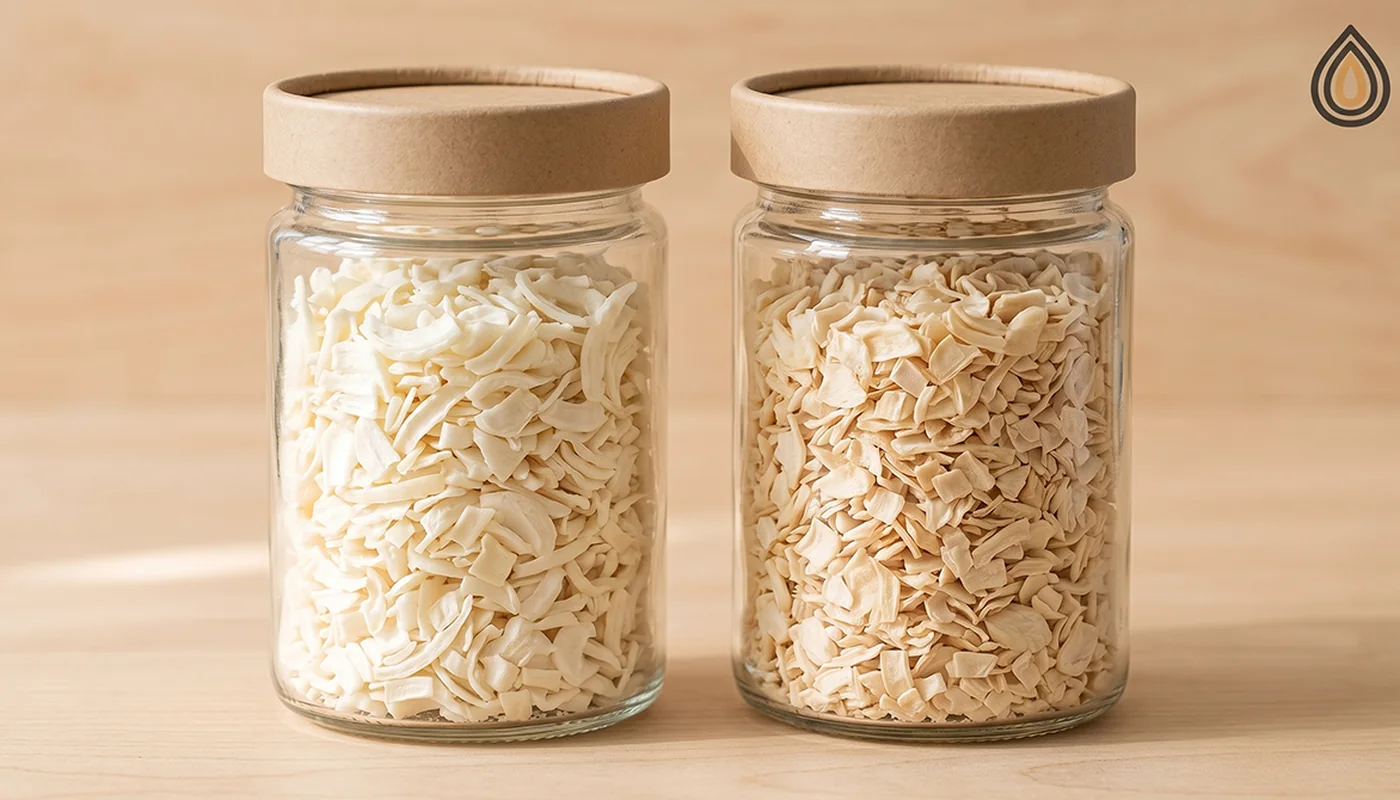
The trade has no standard grading scale, and each plant and each buyer uses its own words; the descriptions below map the words in common use onto what a buyer sees and onto approximate instrumental values for flakes measured as described later.
| Grade, trade term | Appearance of white flakes | Approx. L* (CIE Lab) | Whiteness index (approx.) | Typical of |
|---|---|---|---|---|
| Bright white, "extra white", "A grade" | Ivory white, slightly translucent, no visible tint | 88-92 | 75-85 | Fresh-crop lots from the best dryers, high dry matter, April-May drying |
| White, "standard white" | White with a faint warm tone, uniform | 84-88 | 65-75 | Most export lots in season; the usual specification |
| Off-white, "cream" | Noticeable cream tone, a few darker pieces | 80-84 | 55-65 | Late-season or stored-onion lots; lots 12+ months old |
| Light tan, "yellowish" | Tan overall, browned edges common | 75-80 | 40-55 | Over-dried lots, old stock; domestic grade |
| Brown | Brown or scorched | below 75 | below 40 | Rejected for export; used in toasted or animal-feed grades |
Granules and powder from the same kibble read a few L* units lower than the flakes, because milling exposes browned edges and generates heat; a specification for powder should carry its own values rather than the flake values. "Toasted" onion, deliberately roasted to a golden-brown, is a separate product with its own colour range and is discussed in Toasted Onion vs Natural Dehydrated Onion.
Where browning happens: field, line, dryer, mill, warehouse
In the field and the yard. Onion that is sunburned, bruised, sprouted or old browns more readily in the dryer, because damaged tissue has already started the enzymatic reaction and stored onion has converted starch to reducing sugars, which feed the Maillard reaction. Low dry-matter onion, from wet seasons or from table varieties diverted to the plants, spends longer in the dryer and browns more. The plant's control is variety, buying fresh, sound onion, and refusing lots that have sat.
On the line. Cut onion browns enzymatically on contact with air, visibly within an hour and strongly within three. A plant whose slicer runs ahead of its dryer, or that holds sliced onion in bins during a stoppage, makes cream product. The control is line balance and a rule that nothing waits.
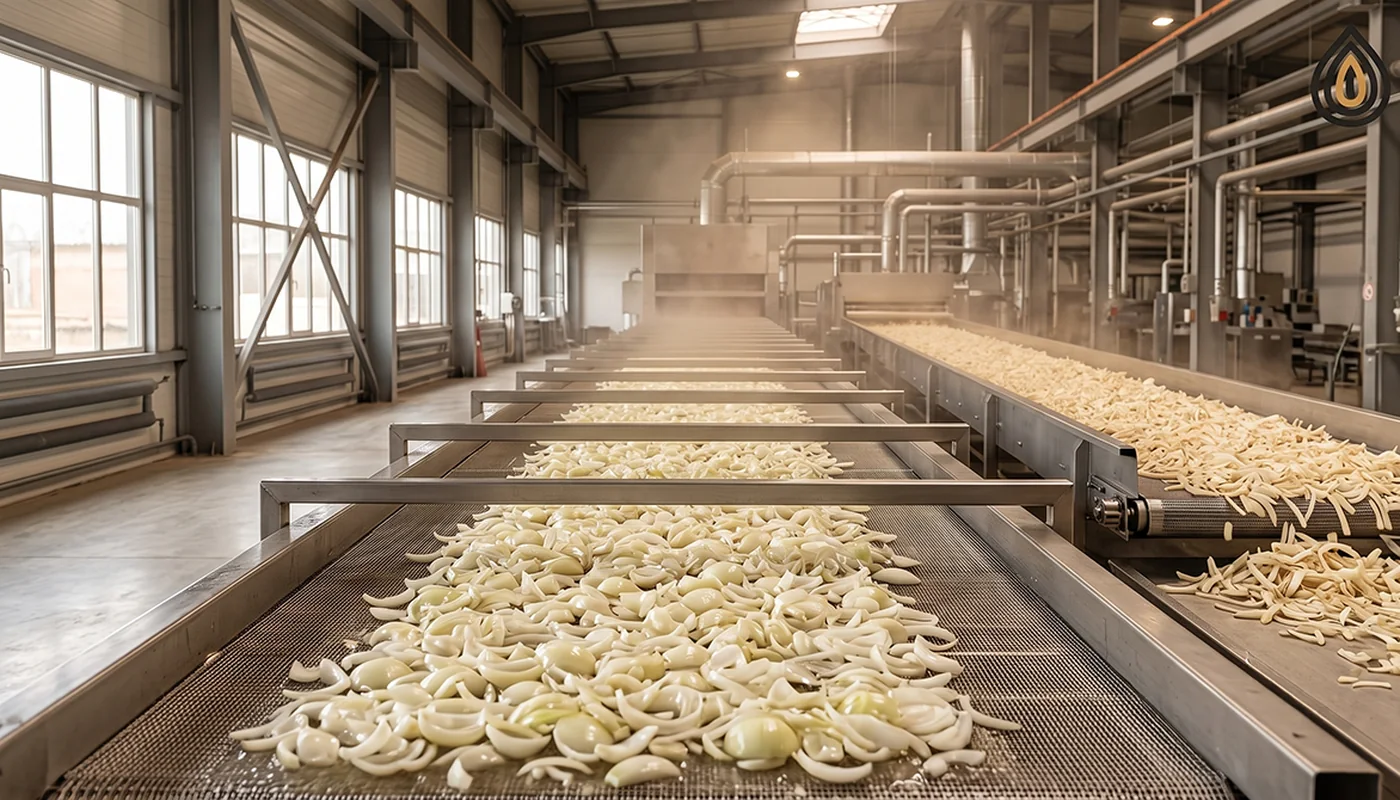
In the dryer. Most browning is made here, and at the dry end: in the wet zone the evaporating water keeps the tissue near the wet-bulb temperature and it does not brown, but once the moisture falls below about 15 percent the tissue heats to the air temperature and the Maillard reaction runs quickly above 60 degrees. A dryer set hot at the finish to shorten the cycle makes tan product; one with a finishing zone at 55 to 60 degrees makes white. Hot spots on a belt, from uneven loading or blocked air, make scorched pieces in an otherwise white lot. The drying steps are in How Dehydrated Onion Is Made.
In the mill. Milling generates heat and exposes surfaces, and a mill run too fast or without cooling darkens powder by two or three L* units; the fine fraction is darkest. The control is mill speed, feed rate and air cooling.
In the warehouse. Non-enzymatic browning continues slowly at 5 percent moisture and faster at 7 or 8, and faster again above 25 degrees and in light. The control is the liner, the warehouse and the rotation.
The two chemistries: enzymatic and Maillard browning
Two reactions turn onion brown and they are controlled differently. Enzymatic browning is the work of polyphenol oxidase, present in the tissue and released when cells are cut; it oxidises phenolic compounds to brown pigments in the presence of air, runs fastest at room temperature and stops when the enzyme is denatured by heat or when the tissue is too dry for it to work. It is the browning of a cut apple, and in onion it is slower than in apple but real; it is why sliced onion must not wait, and it is what blanching, which a few plants use, stops at the cost of flavour. Maillard browning is non-enzymatic, a reaction between the onion's reducing sugars and its amino acids that makes brown pigments and roasted flavours; it needs heat or time, runs quickly above 60 degrees and slowly at 20, is faster at intermediate moisture than at very low or very high, and never stops entirely. It is the browning of toast, and in dried onion it is the dryer's finishing zone and the warehouse clock. Sulphite blocks both, which is why it was used; without it, the plant controls the first by speed and the second by temperature and moisture. Reducing sugar content is why old and stored onion browns more: as an onion ages its sucrose converts to glucose and fructose, which are the sugars the Maillard reaction uses.
How colour is measured: eye, reference, meter
Three methods are in use. Visual grading against a reference is what every plant does at the dryer outlet and the packing line: a trained grader compares the lot with a retained reference sample under a standard light, north daylight or a daylight lamp, and assigns the grade. It is fast, it catches scorched pieces and pink admixture that a meter averages away, and it depends on the grader, the light and the reference sample, which itself yellows over the months it sits in the laboratory. Visual grading against a colour chart, a printed or ceramic set of tiles, is more stable than a retained sample and is used by some buyers; it still depends on the eye.
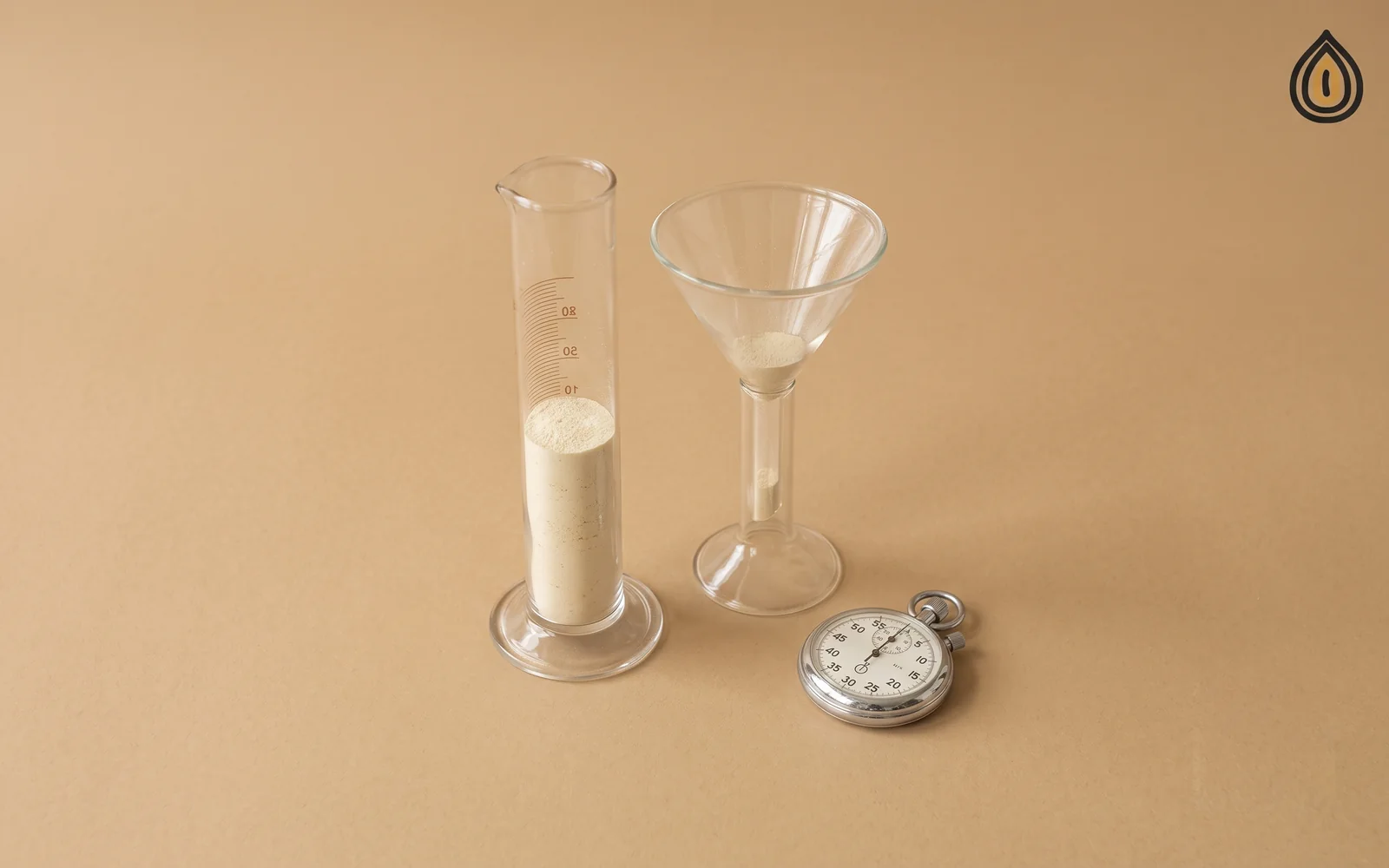
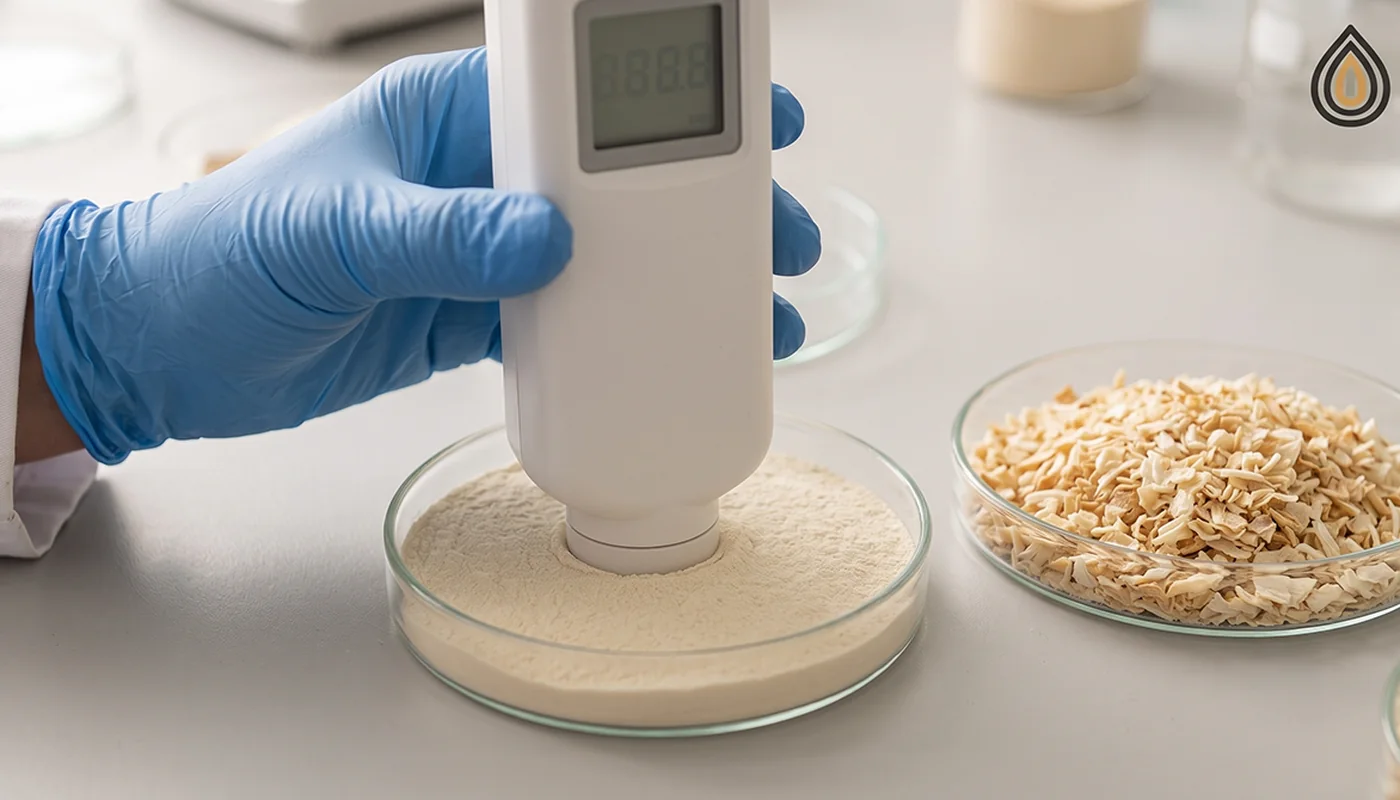
Instrumental measurement uses a reflectance colorimeter or spectrophotometer to read the sample's colour as three coordinates in the CIE L*a*b* system: L* for lightness from black at 0 to white at 100, a* for red to green, b* for yellow to blue. For white onion the useful numbers are L*, which falls as the product browns, and b*, which rises as it yellows; some buyers combine them into a whiteness index, and the older Hunter Lab system is still on some specifications. A reading takes a minute and is repeatable to a fraction of a unit on the same sample, which is why buyers want it, and it depends entirely on sample preparation: flakes must be measured as a level layer in a cell of stated depth, ideally after grinding to a standard powder so that particle size does not scatter the light differently between lots, and the instrument's illuminant, observer angle and aperture must be fixed. A specification that says "L* minimum 85" without saying how the sample was prepared and on what instrument is a number without a method.
Why visual and instrumental grades disagree
A plant's grader calls a lot "white" and the buyer's meter reads L* 83 and calls it cream, and both are right about what they measured. The meter reads an average over its aperture and is blind to a scatter of dark pieces that the eye sees at once; the eye is drawn to those pieces and grades the lot down for a defect rate of one percent that hardly moves the average. Flakes read differently from the same flakes ground, because their curved surfaces scatter light; a lot with more fines reads lighter or darker depending on the instrument geometry. The reference sample the grader used has yellowed since it was set aside; the buyer's instrument was calibrated against a white tile the plant does not own. And the specification said "white" rather than a number. The way out is to agree, once, a method: the sample ground and levelled in a stated cell, one named instrument model and setting at each end, the plant's and the buyer's instruments cross-checked on the same sample, an L* and b* range for the grade, and a separate defect count for scorched and dark pieces per 100 grams. Then the meter settles the average and the count settles the scatter, and the word "white" stops being used.
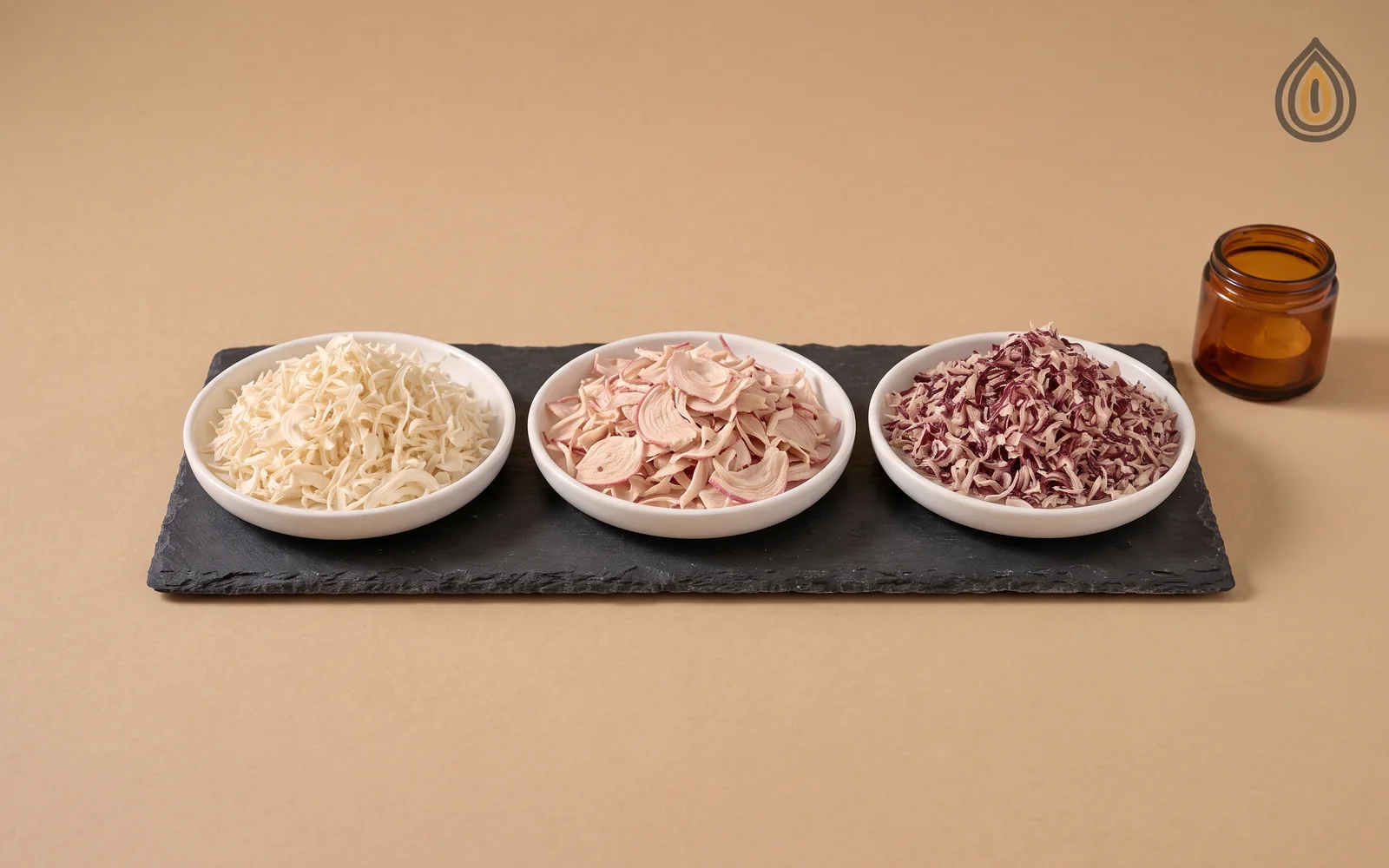
Red and pink onion: colour is the product
In red onion colour is the reason for buying it, and it behaves differently. The pigment is anthocyanin, concentrated in the outer layers of each ring; it is water-soluble, sensitive to pH, redder in acid and bluer toward neutral, and it fades with heat and light. A red lot's colour is judged on the intensity and evenness of the red-purple in the dry product, which depends on the variety, the share of outer to inner layers in the cut, and the dryer temperature; instrumental grading uses a* for redness and L* for depth, and a good red flake reads a* of 15 to 25 against near zero for white. Red kibble browns as white does, and browning in red reads as a dulling of the purple toward brown rather than as yellowing; over-dried red is easy to see. In powder the pigment is spread through the mass and gives an even pink-brown, and in cooking it leaches into the sauce as a pink tint that dark products absorb and pale ones show. Pink onion, the intermediate type, carries a lighter pigment load and grades between the two. The comparison, and where each colour is used, is in White vs Red Dehydrated Onion, and the pink type in Pink Onion, Dehydrated.
Colour in storage: the shift toward cream
A sulphite-free white lot packed at L* 88 reads about 86 after six months, 84 after twelve and 81 to 82 after twenty-four in a sound liner at 20 degrees, which is the shift from bright white to cream over the shelf life; the same lot at 30 degrees, or at 7 percent moisture, moves twice as fast, and a lot in a clear bag under warehouse lights faster still. The shift is even across the lot and does not affect safety or, until the last months, flavour; it matters for products where the dry colour is seen. A buyer who needs bright white on the shelf should buy fresh-crop lots, use them within a year, and store them cool; a specification for colour should say at what age it applies, since a lot that conformed at packing will not conform at eighteen months. Red fades in the same way, more visibly. The whole storage picture is in Dehydrated Onion Shelf Life.
Colour in cooking: what the customer actually sees
Rehydrated and cooked, white onion at any export grade turns translucent pale gold, and the difference between bright white and cream flakes disappears in a soup or a sauce within minutes of simmering; retorting darkens all grades to a light tan through the Maillard reaction with the product's sugars. What survives cooking is not the base colour but the scatter: scorched or dark-brown pieces stay dark and show as specks, which is why the defect count matters more than the L* value for a cooked application, and why a pale product made with a cream-grade lot at a low defect count looks better than one made with a bright-white lot that carries scorched pieces. Dry-eaten and topping uses, where the onion is not cooked further, are where the base colour shows. The application notes for soups and sauces, where this trade-off is worked through, are in Dehydrated Onion in Soups, Sauces and Gravies.
Defects that read as colour: scorched, skin, pink admixture
Three defects present as colour problems and are counted, not measured. Scorched or dark-brown pieces, from dryer hot spots or from pieces that stuck to the belt and went round twice, are counted per 100 grams by hand sorting; a good lot has fewer than 5 per 100 grams of flakes and a specification usually allows 10 to 20. Skin and root fragments, papery brown skin or fibrous root pieces from incomplete topping and peeling, are counted the same way and allowed at a few per 100 grams. Pink or red admixture in a white lot, from a share of pink-skinned bulbs in the raw material or from a red run that preceded the white on the line, shows as pink-edged pieces and is the most complained-of defect in pale applications; it is limited by count or by "not more than 0.5 percent by weight of coloured pieces". All three are graded out at the sorting belt and the optical sorter at the better plants, and all three are in the defect catalogue in Common Quality Defects in Dehydrated Onion.
Sulphite and the flat white it gives
Sulphited onion is whiter and stays whiter, a flat, uniform white with a faint grey cast that reads two to four L* units above a sulphite-free lot from the same onion and does not shift in storage. Buyers who compare a sulphite-free sample with a sulphited competitor's sample and find the sulphite-free one "not white enough" are seeing the additive, and a specification that asks for the sulphited colour and sulphite-free status together cannot be met. The colour a buyer can have without sulphite is the bright-white grade above, from good onion, a good dryer and a fresh lot, and it is white enough for every application that does not display the dry product against a sulphited reference. The additive, its rules and its testing are in Sulphites in Dehydrated Onion.
Specification wording
- Grade by reference: "Colour: white, conforming to the retained reference sample [reference number] agreed between buyer and seller, judged under daylight illumination by trained personnel; reference sample renewed annually."
- Grade by instrument: "Colour, instrumental: L* minimum 85 and b* maximum 12 (CIE L*a*b*, illuminant D65, 10° observer), measured on the product ground to pass a 40 mesh sieve and levelled in a 10 mm cell, on [instrument model] or an instrument cross-checked against it. Values apply at packing and for 12 months from the drying date when stored below 25 °C."
- For powder: own values, typically L* minimum 82.
- For red: "a* minimum 15, L* between 35 and 50, on the ground product as above; pieces to show uniform red-purple colour, no brown dulling."
- Defects: "Scorched or dark-brown pieces maximum 10 per 100 g; skin and root fragments maximum 5 per 100 g; pink or red admixture in white product maximum 0.5 percent by weight."
- Age: "Colour conformity is assessed on lots not more than 90 days from drying date at shipment unless otherwise agreed."
- Sulphite: "Sulphite-free; the colour values above are those of untreated product."
The specification sheet as a whole is in How to Read a Dehydrated Onion Specification Sheet.
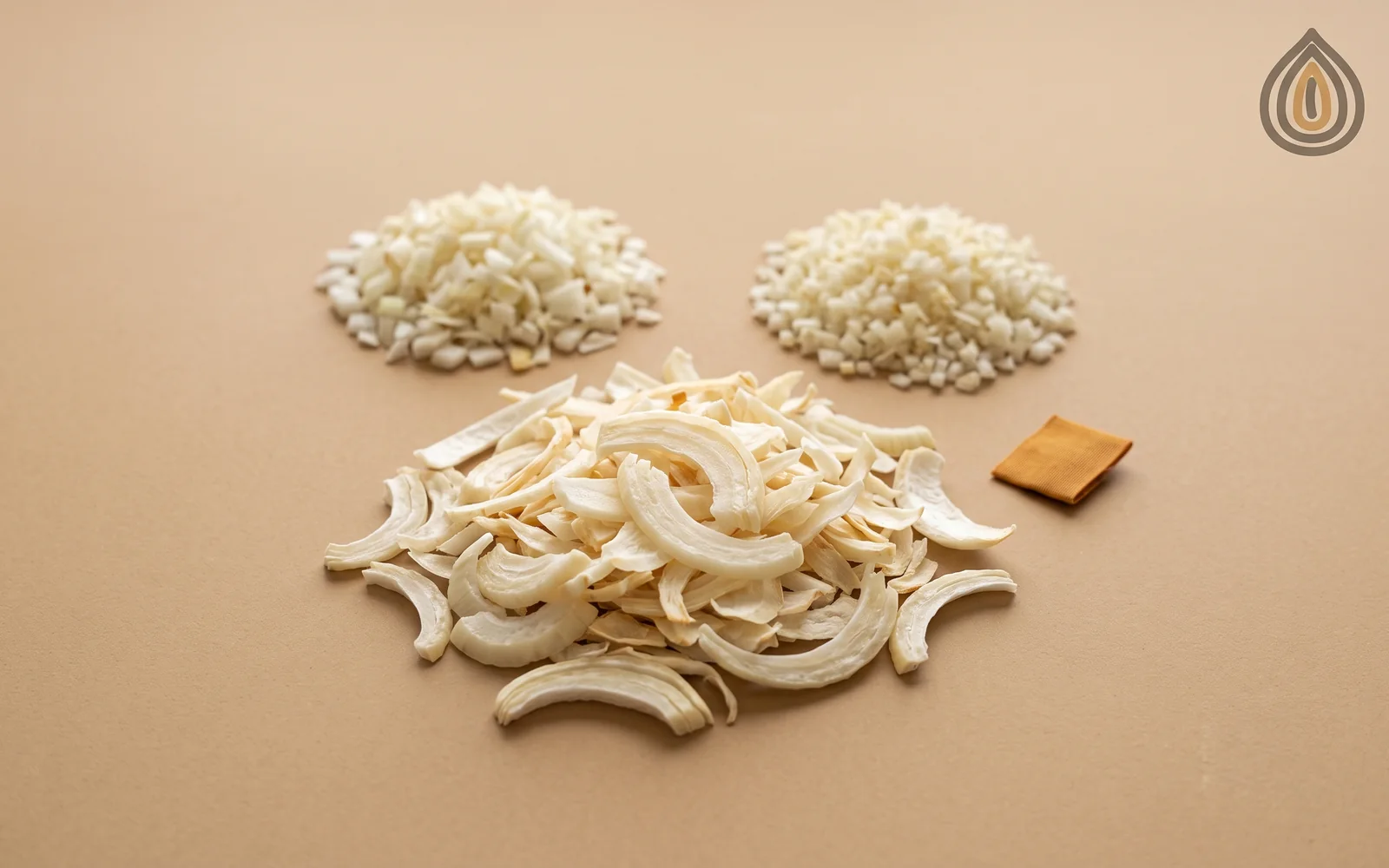
Colour by cut: why powder reads darker than flakes
The same kibble gives a different colour reading in each cut, and a buyer who applies a flake specification to powder will reject good powder. Three effects stack. Milling exposes the browned edges that were hidden inside a flake and spreads them through the mass, so the average darkens; milling heats the product, which browns it a little further, most in the finest fraction; and a fine powder scatters light differently from a flake, reading lower in L* for the same pigment because there is less translucency and more surface. The table gives the typical shift from the flake value for a lot at the standard white grade.
| Cut | Typical L* (ground for measurement) | Shift from flakes | Visual impression, dry |
|---|---|---|---|
| Flakes 8-20 mm | 86-90 | Baseline | Ivory white, translucent pieces |
| Chopped 3-5 mm | 85-89 | -1 | White, slightly more matte |
| Minced 1-3 mm | 84-88 | -2 | White, matte |
| Granules 16-40 mesh | 83-87 | -3 | Cream-white |
| Powder 80 mesh | 82-86 | -4 | Cream, uniform |
| Powder 100 mesh | 81-85 | -5 | Cream, a shade warmer |
| Toasted onion, any cut | 45-65 | Different product | Golden to deep brown |
The shift is why each cut needs its own value in a specification and why a plant asked for "the same colour as the flakes" in a powder will fail; the ranges above are a starting point, and the plant's own measured values on its standard lots are the right ones to write down. The cuts themselves are in Flakes, Chopped, Minced, Granules or Powder.
A colour dispute, worked through
A German seasoning maker receives a container of white onion powder in October, opens a bag against its retained sample from the April approval, and finds the new lot visibly warmer. Its laboratory reads L* 82.4 on the new lot and L* 85.1 on the retained sample, against a specification that says "white, L* minimum 84". The supplier's certificate for the new lot reads L* 85.8 at packing. Who is right? All three numbers are, and the dispute dissolves once the facts are laid out. The retained sample is six months old and has lost a unit since April, so it read about 86 when it was approved; the new lot was packed in September from stored onion and read 85.8 at the plant on the plant's instrument; the buyer's instrument, cross-checked on the same sample in the approval, reads 0.8 lower than the plant's; and the lot has spent five weeks in a hot container, which costs half a unit. The plant's 85.8 is the buyer's 85.0 at packing and about 84.5 on arrival, which conforms, and the buyer's 82.4 is a reading of a lot that has been opened, spread and read in a different cell depth than the method specifies. The resolution is a joint reading of the retained portion of the lot's own sample on the agreed method, which comes out at 84.6, a conformance, and a note that the specification's age clause should say "at packing, verified on arrival within the transit allowance of 1 L* unit". The lesson is the one every colour clause needs: a method, an instrument cross-check, an age and an allowance, and a retained sample of the lot itself rather than of an older approval. The claims procedure that carries such a dispute is in B2B Contract Terms for Dehydrated Onion.
Setting up instrumental colour control with a supplier
A buyer who wants to control colour by number rather than by eye sets it up once, in five steps, with the supplier. Agree the instrument class, a reflectance spectrophotometer or colorimeter with a 45/0 or sphere geometry, D65 illuminant and 10 degree observer, and name the models at each end. Agree the sample preparation: the product ground to pass a 40 mesh sieve, levelled in a cell of stated depth against the instrument's aperture, three readings averaged. Exchange a physical standard, a sealed sample of an approved lot, and read it on both instruments; the difference becomes the offset applied to the plant's readings, and it is re-checked each season with a fresh standard. Set the limits from the plant's real distribution: the plant reads twenty lots from a season, the buyer picks the value at which the product still meets its need, and the limit sits a unit above the poorest acceptable lot so that ordinary variation does not fail conforming product. And write the age clause, since a limit at packing is not a limit at eighteen months. The whole arrangement fits on a page of the specification, and once it exists the word "white" never appears in a claim again. The wider specification sheet is in How to Read a Dehydrated Onion Specification Sheet.
How KlarHarvest grades and reports colour
KlarHarvest grades every lot visually at the plant against a reference sample and reports L*, a* and b* on the ground product, with the instrument and settings named, on the certificate for buyers who specify instrumentally; the defect counts per 100 grams are on the same certificate. The drying date is on every bag and in the lot record, so a buyer knows the colour age of what it is receiving, and season lots are offered with April and May drying dates for buyers who want the year's whitest product. Samples for colour approval are sent from the lot that will ship, not from a reference bag, and the retained sample is kept for the shelf life. The products and their standard colour grades are on the white onion and red onion pages.
Frequently asked questions
What colour should dehydrated white onion be?
Ivory to bright white for a fresh-crop lot from a good plant, reading L* about 85 to 92 on the ground product; a warm cream tone develops over a year or two of storage. Tan or brown indicates over-drying or age.
What causes browning in dehydrated onion?
Enzymatic browning when sliced onion waits before drying, and Maillard browning at the hot dry end of the dryer, in the mill, and slowly in storage. Old or low-dry-matter raw onion browns more in all of them.
How is onion colour measured?
Visually against a reference sample or chart, or with a colorimeter reading CIE L*a*b* values on a ground, levelled sample. The instrumental method needs the sample preparation and instrument fixed in the specification to be comparable.
Why does the plant's "white" read as cream on my meter?
Different samples, preparation and references. Agree one method, cross-check instruments on the same sample, and use a separate defect count for dark pieces, which the meter averages away.
Does colour matter after cooking?
The base colour disappears in a cooked product within minutes; scorched pieces do not. For cooked uses specify the defect count tightly and the L* value loosely; for toppings and visible uses, the reverse.
Is sulphite-free onion less white?
Slightly, and it shifts toward cream in storage while sulphited product does not. The bright-white grade from a good plant is white enough for every use that does not display it against a sulphited reference.
How long does the colour last?
A bright-white lot reads roughly two L* units lower after six months and four after a year at 20 degrees in a sound liner, faster when warm, damp or in light. Specify the age at which the colour values apply.
Next step
Request a sample from the lot that would ship, with its drying date and its L*a*b* reading, and compare it against your own reference; to specify colour instrumentally for a contract, request a quote with the values and the method and the plant's instrument is cross-checked against yours before the first lot.