- What pink onion is
- The variety and where it grows
- Colour: skin, flesh and what the dryer keeps
- Flavour and pungency against white and red
- Pink onion by cut
- How it behaves in cooking and processing
- Who uses pink onion, and why
- Season, volumes and availability
- Price: the premium between white and red
- Drying pink onion: what the plant does differently
- Colour stability in storage
- Specifying pink onion
- Pink as a substitute: when it works and when it does not
- Quality points particular to pink
- Pink onion in three products, worked
- Sampling and approving a pink lot
- Pink against the other coloured ingredients
- How KlarHarvest supplies pink onion
- Frequently asked questions
Judge the product, not the words
200-500 g from a current lot, dispatched by courier with the lot lab report.
Request a sampleDehydrated pink onion is the product buyers ask about after they have understood white and red, and the trade's answer is usually vague, because pink is a small, seasonal, regional product that most plants run for a few weeks and most exporters describe in a sentence. It deserves more than that. Pink onion is a real variety group grown in the Saurashtra belt around Mahuva, with a rose-tinted skin and a pale flesh that carries a blush in its outer layers; dried, it gives a product whose colour, flavour and price sit between the white and the red, and which does a job neither of the others does well: it warms a pale product without colouring it purple, and it gives a coloured piece at a smaller premium than red. This guide sets out where it comes from, what it looks like cut by cut, how it behaves in the kitchen and on the line, who buys it and why, when it is available and in what quantity, what it costs, and how to write it into a specification so that what arrives is what was meant.
It is written for buyers, product developers and seasoning makers, with figures for the 2026 season. The comparison it rests on, white against red, is in White vs Red Dehydrated Onion.
What this guide covers
- What pink onion is
- The variety and where it grows
- Colour: skin, flesh and what the dryer keeps
- Flavour and pungency against white and red
- Pink onion by cut
- How it behaves in cooking and processing
- Who uses pink onion, and why
- Season, volumes and availability
- Price: the premium between white and red
- Drying pink onion: what the plant does differently
- Colour stability in storage
- Specifying pink onion
- Pink as a substitute: when it works and when it does not
- Quality points particular to pink
- Pink onion in three products, worked
- Sampling and approving a pink lot
- Pink against the other coloured ingredients
- How KlarHarvest supplies pink onion
- Frequently asked questions
What pink onion is
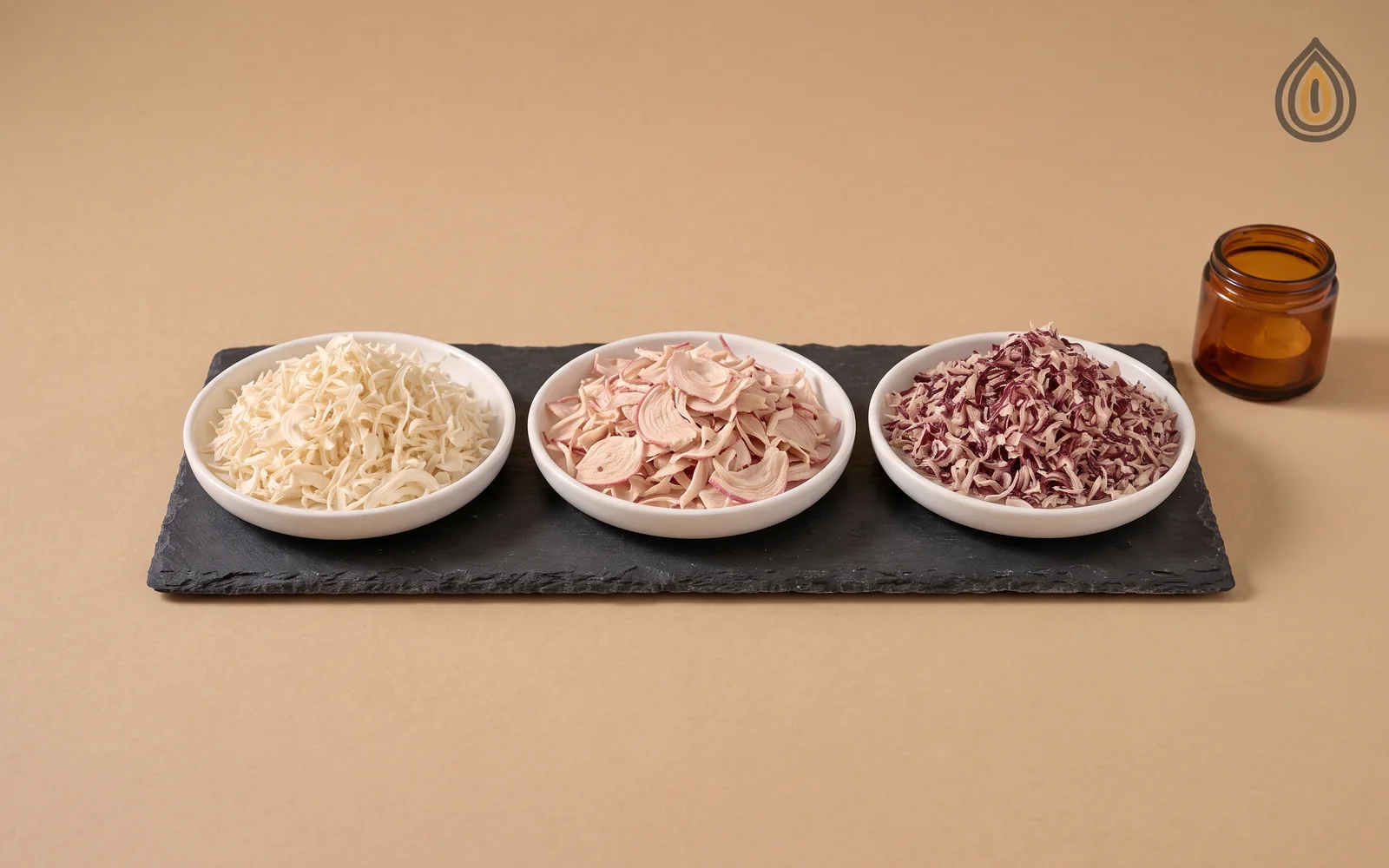
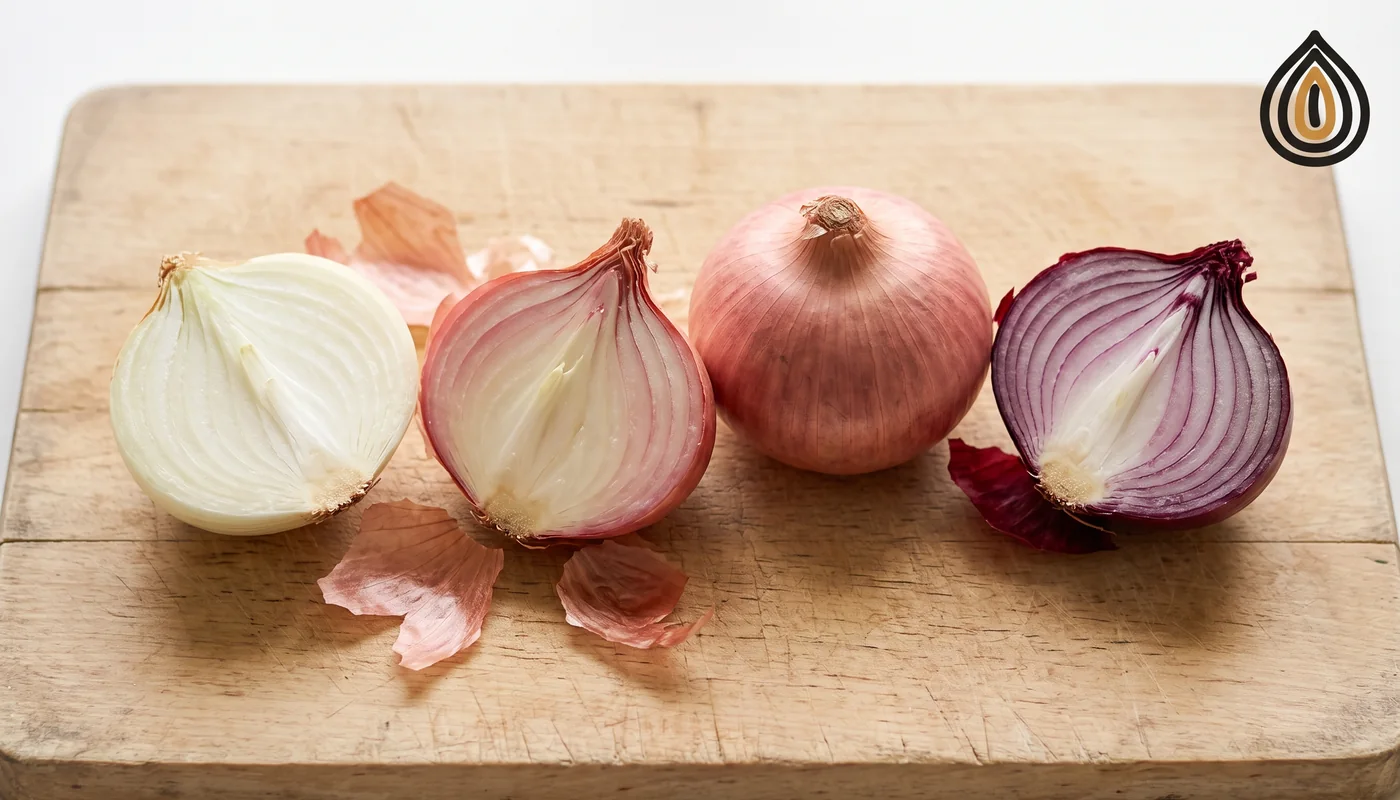
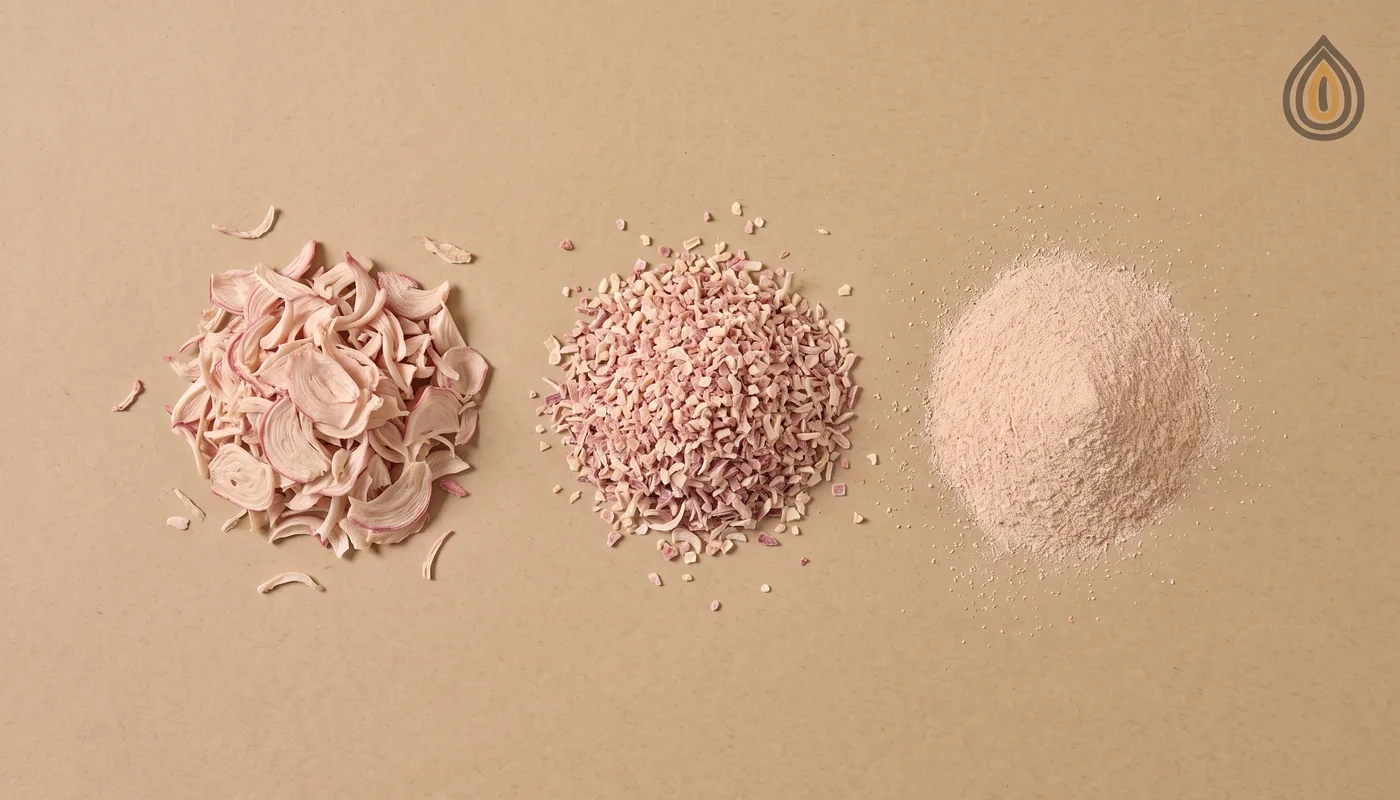
The trade's three colours are botanical categories loosely applied. White onion is the high-solids white-fleshed dehydrator type bred for the plants; red onion is the purple-skinned, purple-ringed type that most of India eats fresh; and pink onion is a group of local varieties, grown mainly in Saurashtra and parts of Maharashtra, whose skin is a light rose to salmon and whose flesh is pale cream with a pink blush in the outer two or three layers and sometimes a faint pink line along the ring edges. It is not a hybrid of white and red in any botanical sense, and it is not red onion picked early, though both misunderstandings circulate; it is its own thing, with a dry-matter content between the two, a milder pungency than red and a colour that is diluted rather than concentrated by drying. Dried, the product is a pale rose-beige flake with pink edges, a mottled granule and an even pale pink-tan powder. It is sold as "pink onion", occasionally as "rose onion" or "light red", and a buyer should not assume that two suppliers' "pink" is the same shade.
The variety and where it grows
The pink onions the plants dry come from the same coastal belt as the white, the Mahuva, Talaja and Amreli districts of Saurashtra, where farmers grow them as a rabi crop on the same calendar and often in the same fields in rotation; the varieties are local selections and a few released cultivars with pink or light-red skins, chosen by the farmer for the fresh market's preference in parts of Gujarat and Rajasthan, where a pink onion is the household onion. They are a minority crop, a few percent of the district's onion acreage, and the plants buy them opportunistically when a farmer group offers a clean lot in volume, or contract a small area for a customer who wants pink product. The dry matter runs 15 to 17 percent, below the white dehydrator varieties' 17 to 20 and above the red's 12 to 14, which puts the yield ratio at 9 to 10 to 1, as explained in 8 to 1: The Fresh-to-Dry Yield Ratio. Maharashtra's pink types are grown for the fresh market and rarely reach the dryers.
Colour: skin, flesh and what the dryer keeps
Colour in onion sits in the outer layers, and the three types differ in how deep it goes. Red onion carries anthocyanin through most of its rings, so every slice is purple-edged and the dried product is red throughout. Pink onion carries a lighter anthocyanin load in the skin and the outer two or three layers only, with a faint pigment line along the ring edges further in; the inner rings are pale cream. When the bulb is peeled, the skin and the first layer go, and what reaches the dryer is mostly pale flesh with pink-edged outer rings; drying concentrates the pigment slightly but also browns the tissue a shade, so the finished flake is a pale rose-beige with a distinct pink edge on perhaps a third of the pieces. Milling spreads the pigment, so granules mottle and powder is an even pale rose-tan, warmer than white powder and far paler than red. On a colour meter, a pink flake reads an a* of 4 to 8 against near zero for white and 15 to 25 for red; the measurement method and the grades are in Dehydrated Onion Colour.
| White | Pink | Red | |
|---|---|---|---|
| Skin colour | Papery white to straw | Light rose to salmon | Deep purple-red |
| Flesh colour | White | Pale cream, pink blush in outer layers | Purple rings throughout |
| Dried flake | Ivory white | Rose-beige, pink edges on a share of pieces | Red-purple |
| Dried powder | Cream | Pale rose-tan | Pink-brown to purple-brown |
| a* on the ground product (approx.) | 0-2 | 4-8 | 15-25 |
| Colour leaching in a sauce | None | Faint warm tint | Pink-brown tint |
Flavour and pungency against white and red
The pink types are milder than red and a little sharper than the white dehydrator varieties, which is the reverse of what a buyer might guess from the colour. Pyruvate, the trade's measure of pungency, runs 5 to 7 micromoles per gram on the fresh pink bulb against 4 to 6 for the white dehydrator types and 7 to 10 for the reds; dried, the difference narrows as the volatile sulphur compounds are lost in the dryer and the sweet, cooked note dominates every type. In a rehydrated tasting the pink is noticeably sweeter than red, with a rounder, less tannic finish, since it carries less of the astringency that the red's pigment brings, and it is fractionally more assertive than white; seasoning makers describe it as a "warm white". The sugar content is similar to white, so it browns similarly in the dryer and on a grill. The sensory comparison method, and how to run it between two lots or two colours, is in Sensory Evaluation of Dehydrated Onion.
Pink onion by cut
| Cut | What pink looks like | Where it is used | Note |
|---|---|---|---|
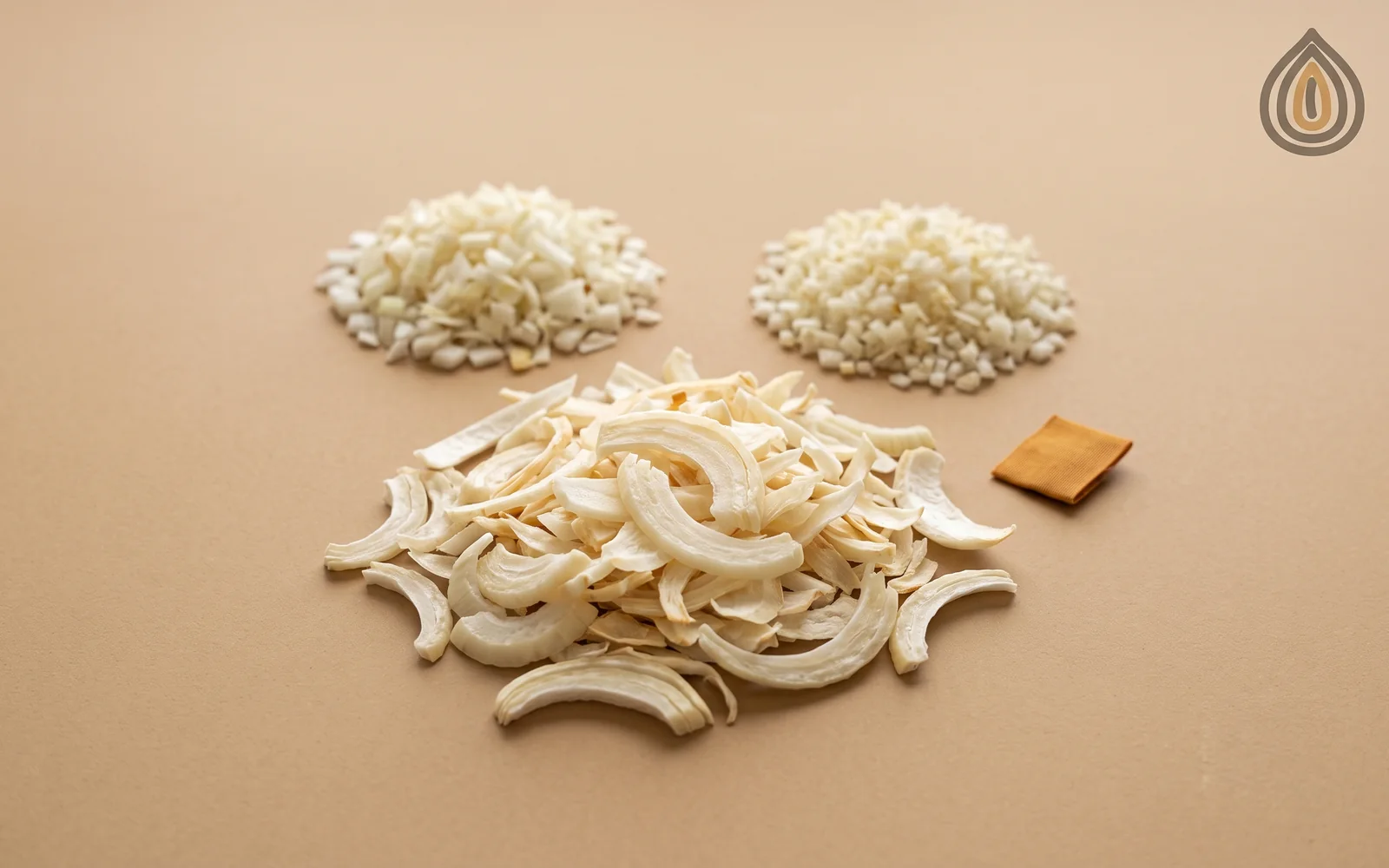
| Flakes 8-20 mm | Rose-beige pieces, a third with a pink edge; the most "pink" of the cuts | Toppings, chutneys, visible garnish, retail jars | The visible use; the colour is the point |
| Chopped 3-5 mm | Pink-edged pieces, mottled in the mass | Curry sauces, pickles, relishes | Holds colour through a cook |
| Minced 1-3 mm | Mottled pink and cream | Sauces, fillings, kebab mixes | Colour reads as warmth rather than pink |
| Granules 16-40 and finer | Even mottle, pale | Seasonings, snack coatings | Blends with a warm tone |
| Powder 80 mesh | Even pale rose-tan | Seasonings, sauce bases, masalas | Cheapest way to a warm note; little colour |
| Toasted pink | Golden-rose | Speciality blends | Rare |
The five cuts as products are in Flakes, Chopped, Minced, Granules or Powder; the finer the cut, the less the pink shows, which decides how a buyer uses it.
How it behaves in cooking and processing
Pink rehydrates like white, 3.5 to 4.5 times its weight in water for flakes, in the same times, since the tissue is similar; the pigment leaches gently into the water, a faint warm tint rather than the pink-brown wash that red gives, which is why pink is usable in pale products where red is not. Under heat the anthocyanin behaves as red's does, redder in acid and bluer toward neutral, but at a fraction of the concentration, so a pink flake in a tomato sauce keeps a clear rose edge and in a cream sauce reads as a warm fleck with no purple. Through a retort the pink dulls toward beige, more than white browns and less than red dulls, and pieces come out warm-toned rather than coloured. In a dry blend the pink powder gives a warm background tone that white does not and that red would overpower; blenders use it at the same rates as white powder. Frozen, hydrated pink holds its colour well. The applications where these behaviours matter are in Dehydrated Onion in Soups, Sauces and Gravies and Dehydrated Onion in Spice Blends and Seasonings.
Who uses pink onion, and why
The buyers fall into four groups. Seasoning and snack makers who want a warm tone in a coating or a shaker without the purple of red, at a smaller premium; they take granules and powder. Chutney, relish and pickle manufacturers, especially those making Indian and Middle Eastern styles, who want a visibly coloured piece that does not bleed purple into the product; they take flakes and chopped. Sauce and curry makers with pale products, korma and cream-based sauces, where a red piece would show as a purple fleck and a white piece shows as nothing; pink gives a visible warm piece. And a small number of retail brands that sell "pink onion flakes" as a distinct line, mostly in Britain and the Gulf, for the colour on the shelf. The product is rarely used where white does the job, because it costs more, and rarely where red does the job, because it is paler; its market is the gap between the two, and it is a small one, which is why the volumes are what they are.
Season, volumes and availability
Pink onion follows the white rabi calendar: lifted from March, dried in April and May in blocks at the two or three plants that run it each year, and stock-only from June. The district's dried pink output is a few hundred tonnes a season at most, against tens of thousands of white and a few thousand of red, and it is usually contracted before it is dried; a buyer who wants pink for the year contracts by April and takes delivery from the spring run, and a buyer who asks in September gets what is left, which may be nothing in flakes and a little in powder. Some years no plant runs pink at all, when the fresh market's price for the pink types is high enough that no farmer sells to the dryers; 2026 is a year with a modest run at three plants, as the May ground report noted. The seasonal pattern that governs it is in The Indian Onion Harvest Calendar, and the ground reports carry each season's pink availability.
| Month | Pink availability |
|---|---|
| March | First bulbs at the yard; plants deciding whether to run pink |
| April-May | Drying blocks at two or three plants; contract by April |
| June | Last blocks from field stores; small |
| July-February | Stock only: powder and granules usually; flakes scarce by autumn |
Price: the premium between white and red
Pink prices at 8 to 15 rupees per kilogram over white FOB, against 15 to 30 for red, and the premium has three components: the raw onion, which trades at the yard a rupee or so above dehydration-grade white because the fresh market wants it; the yield ratio, worse than white's by half a point to a point on the lower dry matter; and the short, small runs, which cost a plant clean-downs and scheduling. In the 2026 season white flakes at 148 to 165 rupees FOB put pink flakes at 156 to 180 and red at 163 to 195; powder and granules carry the same premiums. Pink is therefore the cheaper route to a coloured product where its paler colour serves, and the dearer route to a mild product where white would serve, which is the whole commercial logic of it. The cost build behind these figures is in What Does Dehydrated Onion Cost per Kilogram?
Drying pink onion: what the plant does differently
A plant drying pink runs it as a block between white runs, after a clean-down, because pink pigment carried into a white run shows as pink admixture, the defect white buyers complain of most. The line settings are the white settings with a cooler finishing zone, since the pink tissue browns slightly faster than the white dehydrator types at the same temperature and the browning dulls the pink to beige; the better plants run the last zone five degrees cooler and accept the longer cycle. Peeling is set shallow, because the colour is in the outer layers and a deep peel removes the pink with the skin; a plant that peels pink onion as it peels white makes a product that is barely pink at all. Sorting is by colour against a pink reference rather than a white one, so that pale pieces are not rejected. The rest of the process, the eight steps from intake to packing, is unchanged and is in How Dehydrated Onion Is Made.
Colour stability in storage
Pink fades faster than white yellows and slower than red dulls: a pink flake at a* 6 at packing reads about 4 after a year at 20 degrees in a sound liner and 3 after two, the pink edge softening toward beige while the base tone warms; in light or above 25 degrees it fades in months. Powder holds its tone better than flakes because the pigment is dispersed. A buyer whose product shows the pink piece dry should buy spring stock, specify a drying-date window and use it within a year; a buyer using pink powder for a warm tone in a blend can hold it for the full shelf life. The storage rules and the liner question are in Dehydrated Onion Shelf Life.
Specifying pink onion
- Name and colour: "Dehydrated pink onion (light-red Saurashtra type), flakes 8-20 mm; colour: rose-beige with pink-edged pieces, conforming to retained reference sample [ref]; a* 4-8 on the ground product by the agreed method."
- Share of coloured pieces: for flakes, "minimum 30 percent of pieces showing a visible pink edge", since a pink lot that is all pale flesh is a white lot at a premium.
- Drying-date window and the age at which the colour applies, since the colour fades.
- Moisture maximum 6 percent; 5 for retail jars.
- Microbiology tier as for white; steam treatment is available on pink at the same premiums.
- Sulphite-free, declared, and no colour additive: a pink lot must not be a white lot tinted, which has been seen.
- Plant and block: the plant named, and the lot drawn from a single pink block, so that the colour is uniform.
- Sample from the lot that will ship, since pink varies between plants and seasons more than white does.
The specification sheet as a whole is in How to Read a Dehydrated Onion Specification Sheet.
Pink as a substitute: when it works and when it does not
Pink substitutes for red where the product is pale and a red piece would show as purple, and where the buyer wants a coloured piece at a smaller premium and can accept a lighter colour; it does not substitute for red where the red colour is the point, in a dark chutney or a red seasoning, since it is too pale. It substitutes for white where a warm tone is wanted in a blend or a sauce; it does not substitute for white where the product must be white, since even pink powder warms a pale sauce. In a shortage of red, which happens in years when the red crop is short or the fresh-market price pulls it away from the dryers, pink is the usual fallback for chutney and pickle makers, at a colour cost they accept for a season; in a shortage of pink, which is most years, white with a small share of red is the fallback for a warm-toned product. The red shortage pattern is discussed in the ground reports and in White vs Red Dehydrated Onion.
Quality points particular to pink
Three defects are specific to pink lots. Under-coloured lots, mostly pale flesh with few pink edges, come from a deep peel or a variety with little pigment, and are caught by the coloured-piece share in the specification. Dulled or browned lots, beige rather than rose, come from a hot dryer finish or from age, and are caught by the a* value and the drying date. Red admixture, pieces that are clearly red-purple in a pink lot, comes from a red run before the pink on the same line or from red bulbs in the raw lot, and shows as a two-tone product; it is limited by count as pink admixture is limited in white. The general defect catalogue, with the inspection routine, is in Common Quality Defects in Dehydrated Onion.
Pink onion in three products, worked
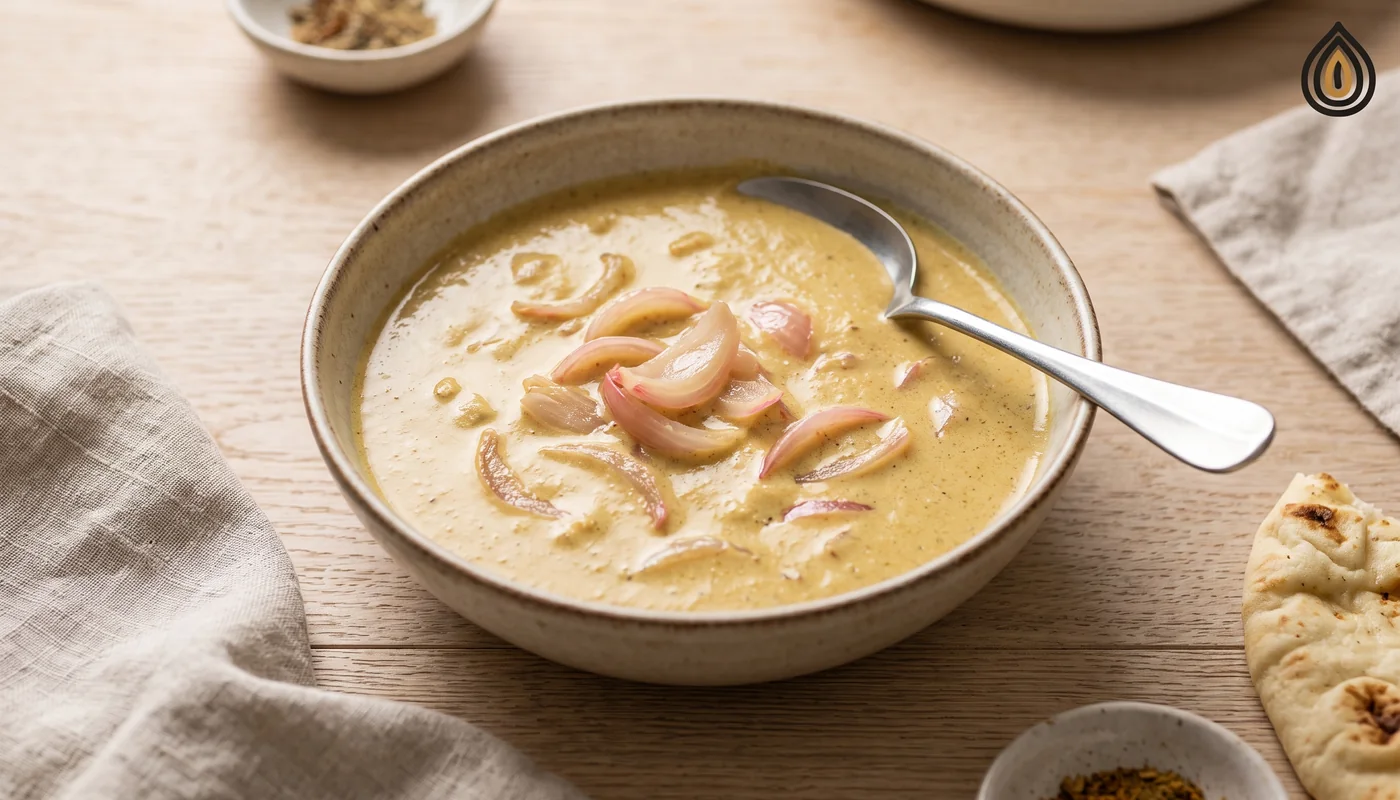
A mango chutney for the British retail market. The manufacturer wants a visible onion piece in a golden product; red flakes at 2 percent turned the chutney's edges purple-brown in the jar after a month, and white flakes disappeared. Pink flakes at 2 percent, chopped to 3 to 5 millimetres, gave a rose-edged piece that stayed distinct through the hot fill and the six-month shelf test, with a warm tint in the syrup that the buyer read as "natural"; the premium over white was about 0.10 euros per kilogram of onion, or a tenth of a cent per jar. A korma-style cooking sauce. A cream-based sauce for a supermarket own label needed a piece the consumer could see without a purple fleck; pink chopped at 1.5 percent, hydrated with the water before the cream, gave soft rose-edged pieces that read as onion and did not tint the sauce, and the developer noted the slightly fuller flavour than white at the same dose. A barbecue rub with a warm tone. A seasoning blender wanted the rub to look warmer without paprika's colour or red onion's purple; pink onion powder at 12 percent of the blend replaced white powder at the same rate, warmed the blend's tone by a visible shade, cost 1.5 cents more per 100 grams, and needed no change to the flow or the moisture specification. In each case the choice was the gap between white and red rather than a preference for pink as such, which is how the product is best understood.
Sampling and approving a pink lot
Because pink varies between plants, blocks and seasons more than white does, approval is done on the lot that will ship rather than on a standing reference, and it takes an hour. Spread 100 grams of flakes on a white tray under daylight and count the pieces with a visible pink edge; the specification's share, usually 30 percent minimum, is the pass line, and a lot at 15 percent is a white lot at a pink price. Check the a* reading on the certificate, taken on the ground product, against the 4 to 8 range, and compare the lot's colour with the previous approved lot's retained sample, allowing for the previous sample's fade. Look for red admixture, pieces that are clearly purple, and count them. Smell the dry product and taste the rehydrated one against white and red from the same plant, since the pink's value is in tasting between them. Note the drying date and the plant, since a September pink lot is a spring lot from stock and its colour has already moved. The general arrival inspection, and the defect counts that apply to every colour, are in Common Quality Defects in Dehydrated Onion, and the reading of the certificate in How to Read a Dehydrated Onion Lab Report.
Pink against the other coloured ingredients
A developer wanting a warm or coloured piece has more than onion to choose from, and pink onion's place among the alternatives is worth setting out.
| Ingredient | Colour it gives | Flavour | Cost per kg landed (2026, approx.) | Where it beats pink | Where pink beats it |
|---|---|---|---|---|---|
| Pink onion, flakes or chopped | Rose-edged piece, faint warm tint | Onion, mild-sweet | €2.00-2.10 | Pale sauces and chutneys needing an onion piece | |
| Red onion, flakes or chopped | Red-purple piece, pink-brown tint | Onion, sharper | €2.10-2.25 | Dark products where red is the point | Pale products, where red bleeds |
| White onion + paprika | White piece, orange-red tint | Onion + paprika | €2.00 + paprika | Rubs and coatings wanting red-orange | Products where paprika's flavour is wrong |
| Dried red bell pepper | Bright red piece | Sweet pepper | €4-6 | Visual red without onion flavour | Products that need onion flavour |
| Beetroot powder or flakes | Deep magenta | Earthy | €3-5 | Strong colour at low dose | Anything savoury-onion |
| Toasted onion | Golden-brown piece | Roasted onion | €2.40-2.60 | Brown rubs and breads | Pale products |
The table is why pink is a niche and a real one: nothing else gives an onion-flavoured piece with a gentle warm tint that survives a pale product. The toasted alternative is in Toasted Onion vs Natural Dehydrated Onion.
How KlarHarvest supplies pink onion
KlarHarvest contracts a pink block each spring at a plant that runs it after a documented clean-down, and offers flakes, chopped, granules and powder from that block while it lasts, with the coloured-piece share and the a* reading on the certificate, the drying date on the bag, and a sample from the shipping lot rather than from a reference bag. Pink is quoted beside white and red so that a buyer sees the three premiums together and can choose the colour the product needs; buyers who need pink through the year are told in April how much the block holds. The three colours are on the products page, and the pink block's availability for the season comes through the contact page.
Frequently asked questions
What is dehydrated pink onion?
The dried product of the pink-skinned onion varieties grown around Mahuva, with pale flesh and a pink blush in the outer layers. Dried, it is a rose-beige flake with pink edges, a mottled granule and a pale rose-tan powder, between white and red in colour, flavour and price.
Is pink onion a mix of white and red?
No. It is its own variety group, grown for the fresh market in Gujarat and Rajasthan. Its colour is a lighter pigment in the outer layers only, which is why it dries paler than red and warmer than white.
How does pink onion taste?
Milder than red and slightly sharper than the white dehydrator types when fresh; dried and rehydrated, sweeter and rounder than red with less astringency, and a touch more assertive than white. Seasoning makers call it a warm white.
When is pink onion available?
Dried in April and May in small blocks at two or three plants, then stock only. Contract by April for the year; flakes are often gone by autumn, powder lasts longer. Some seasons no plant runs pink at all.
How much does pink onion cost?
About 8 to 15 rupees per kilogram over white FOB, against 15 to 30 for red; in 2026, roughly 156 to 180 rupees for flakes. The premium is the raw onion, the lower yield and the short runs.
Can pink onion replace red?
Where the product is pale and red would show purple, yes, with a lighter colour. Where the red colour itself is the point, no. It is the usual fallback for chutney and pickle makers in a red shortage.
Does the pink colour last?
It fades toward beige over a year or two, faster in light and heat; powder holds better than flakes. Specify a drying-date window and use flakes within a year where the dry colour shows.
Next step
Request a sample of pink flakes and pink powder beside the white and red equivalents from the same season, with the a* readings on the certificates, and compare the three in your own product; to reserve pink from the spring block, request a quote by April with the cut and the volume.