- The word: where "kibbled" comes from
- What kibbled means in each market
- Kibble, kibbled, flakes, chopped, minced: the family
- How kibbled onion is made
- Kibbled vs chopped: the practical differences
- Sizes and the sieve analysis
- Where kibbled onion is used
- Rehydration, dosing and cooking behaviour
- Colour, breakage and the fines problem
- White and red kibbled
- Specifying kibbled onion
- Price and availability
- Kibbled onion in the bakery: the topping in detail
- Kibbled onion in retail jars
- Kibbled garlic and the other kibbled vegetables
- Handling and storage of a fragile cut
- Ordering kibbled onion: a checklist
- How KlarHarvest supplies kibbled onion
- Frequently asked questions
Judge the product, not the words
200-500 g from a current lot, dispatched by courier with the lot lab report.
Request a sampleKibbled onion is the oldest term in the dried-onion trade and the one most often misunderstood, because it means different things in different markets and the specification sheets do not always say which. In Britain and much of the Commonwealth it is the standard word for the large dried flake, 8 to 20 millimetres, the product a Mahuva plant calls "flakes" and a German buyer "Zwiebelflocken"; in the United States "kibbled" or "kibbled onion" is more often a coarse chop between the flake and the minced cut; and in India a plant's "kibbled" is whatever its coarsest screen retains, which varies. A buyer who orders "kibbled onion" from a new supplier without a size band can receive any of the three. This guide explains the word, its origin, the sizes it covers, how kibbled onion is made and how it relates to the other cuts, where it is used, how it rehydrates and doses, how to specify it so that the ambiguity disappears, and what it costs.
Values are for Mahuva product in March 2026.
What this guide covers
- The word: where "kibbled" comes from
- What kibbled means in each market
- Kibble, kibbled, flakes, chopped, minced: the family
- How kibbled onion is made
- Kibbled vs chopped: the practical differences
- Sizes and the sieve analysis
- Where kibbled onion is used
- Rehydration, dosing and cooking behaviour
- Colour, breakage and the fines problem
- White and red kibbled
- Specifying kibbled onion
- Price and availability
- Kibbled onion in the bakery: the topping in detail
- Kibbled onion in retail jars
- Kibbled garlic and the other kibbled vegetables
- Handling and storage of a fragile cut
- Ordering kibbled onion: a checklist
- How KlarHarvest supplies kibbled onion
- Frequently asked questions
The word: where "kibbled" comes from
To kibble, in English since the eighteenth century, is to grind or break coarsely: kibbled wheat is cracked grain, kibbled biscuit is dog food in pieces, and a kibbling mill is the machine that does it. The dried-vegetable trade of the early twentieth century, in Britain and then in the Commonwealth, applied it to onion that had been dried in rings and broken into coarse pieces, and "kibbled onion" became the trade name for the product that came off the dryer and through the coarse screen, as opposed to the powder that was milled from it. When the American industry standardised its cuts in the mid-twentieth century it used "flakes", "chopped", "minced", "granulated" and "powder" for the sizes, and "kibbled" survived there as a looser word for a coarse piece; the Indian industry, built from the 1970s on American and British buyers, inherited both vocabularies and uses them inconsistently. The result is that "kibbled" is a word with a history rather than a size, and the size has to be stated.
What kibbled means in each market
| Market | "Kibbled onion" usually means | Size | Equivalent Mahuva term |
|---|---|---|---|
| UK, Ireland | The large dried flake | 8-20 mm, sometimes 6-15 mm | Flakes |
| Australia, New Zealand, South Africa | The large flake | 8-20 mm | Flakes |
| USA, Canada | A coarse chop, or loosely any coarse piece | 3-8 mm ("kibbled" or "large chopped") | Chopped, or a 3-8 mm custom band |
| Germany, Netherlands | Term rarely used; "Flocken" for flakes, "gehackt" or "gewürfelt" for chopped | Flakes / chopped | |
| India, plants | The coarsest screen fraction; varies by plant | 5-20 mm depending on the plant | Flakes or chopped |
| Middle East, trading language | Often the flake | 8-20 mm | Flakes |
The UK meaning is the dominant one in the export trade because British buyers were the industry's first large customers and the word travelled with them; a Mahuva plant quoting "kibbled" to a British buyer means flakes, and quoting it to an American buyer should ask which. The safe reading of an unqualified "kibbled" from an unknown source is the flake, and the safe response to an order for it is a request for the millimetre band.
Kibble, kibbled, flakes, chopped, minced: the family
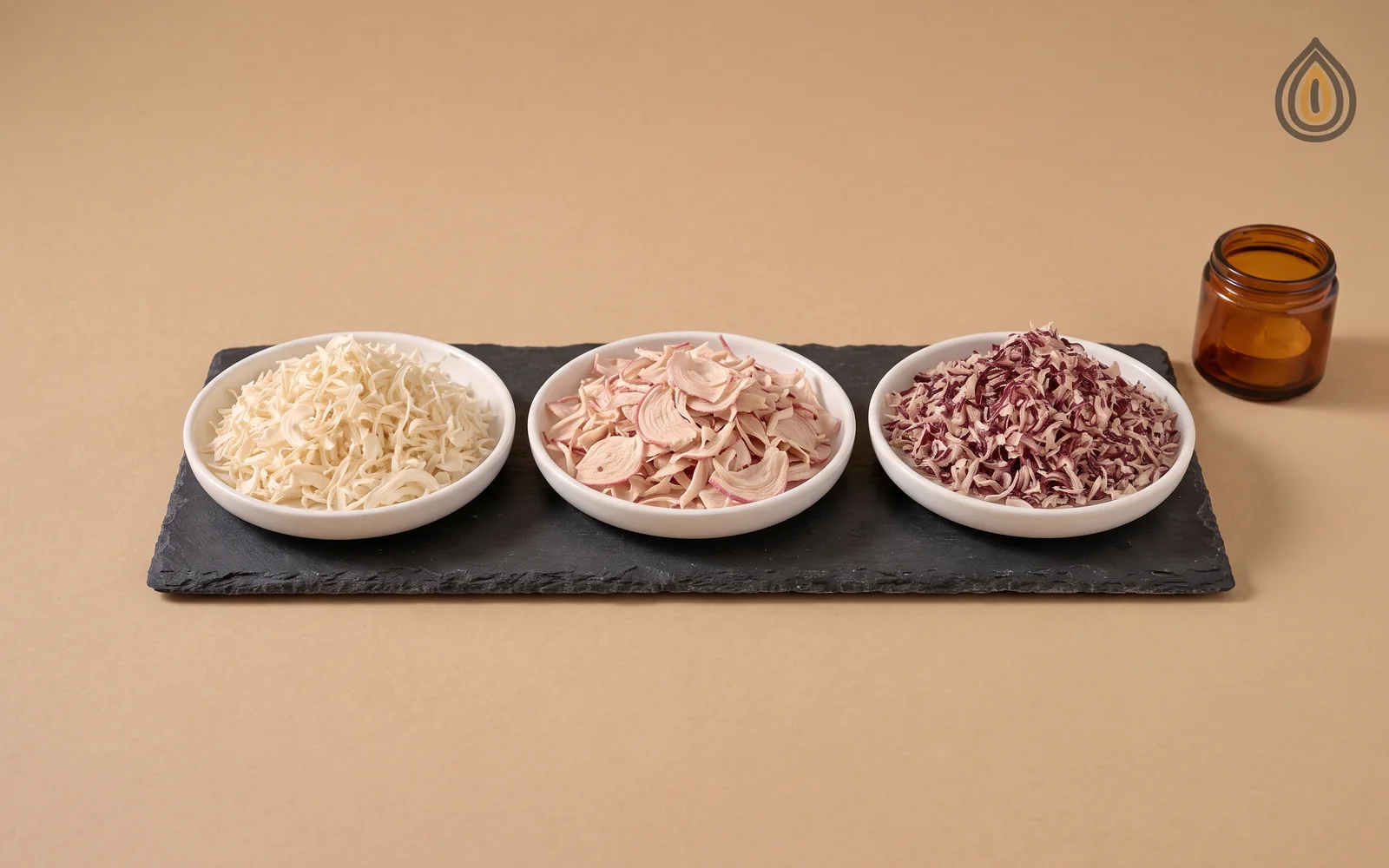
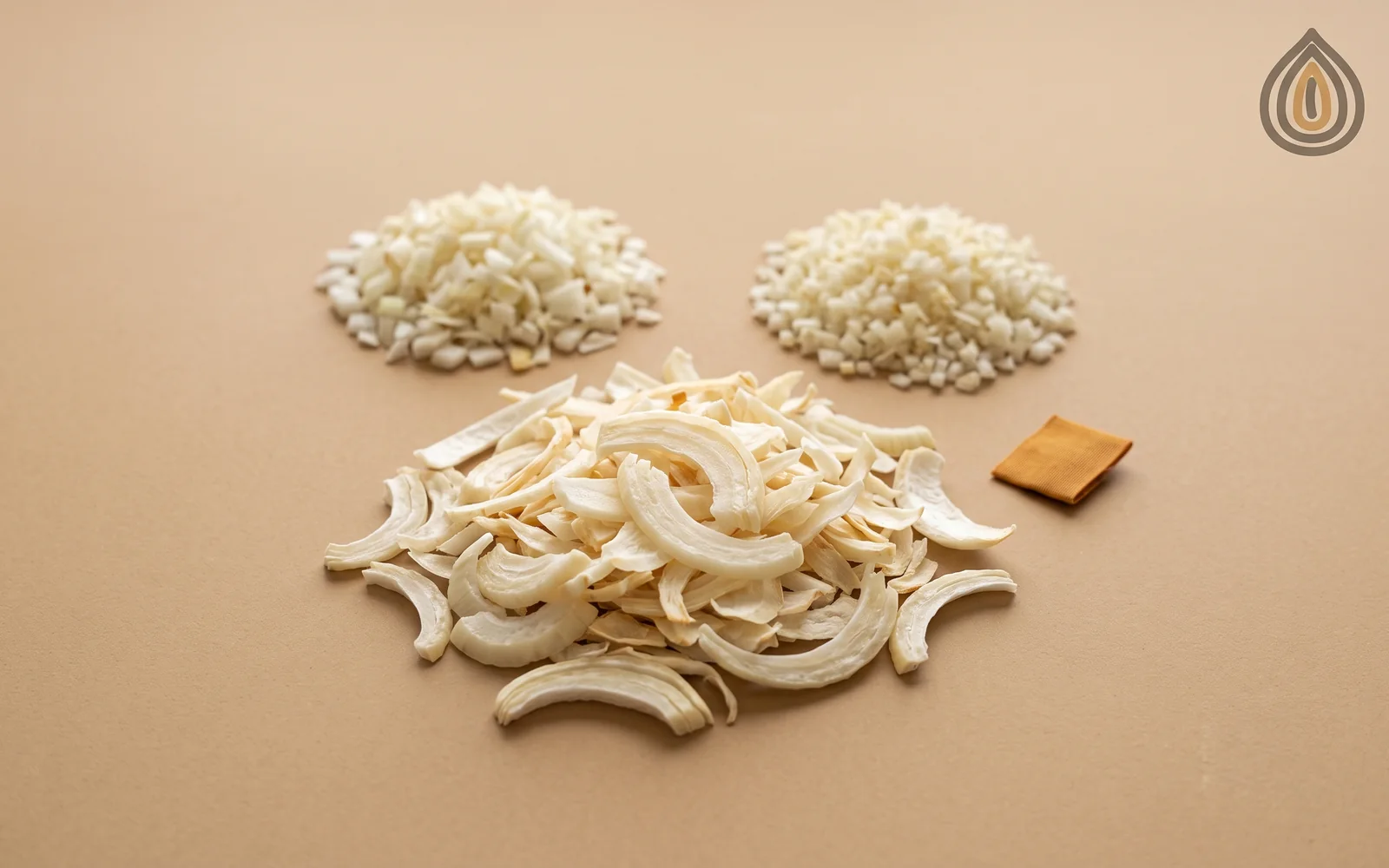
Inside a plant, "kibble" is also a process word: it is the dried onion as it leaves the dryer, rings and part-rings at 5 percent moisture broken into pieces of every size by the belt transfers, before any screening. The kibble goes to the screens, and the screens sort it: what stays on the 8 millimetre screen is flakes, or UK kibbled; what passes 8 and stays on 3 is chopped, or US kibbled; what passes 3 and stays on 1 is minced; what passes 1 goes to the mills for granules and powder. So "kibbled onion" as a product is one or two fractions of the "kibble" as a material, and the two uses of the word cause confusion even inside the trade. The five product cuts, their sizes and their uses are set out in Flakes, Chopped, Minced, Granules or Powder, and the whole process from field to screens in How Dehydrated Onion Is Made.
How kibbled onion is made
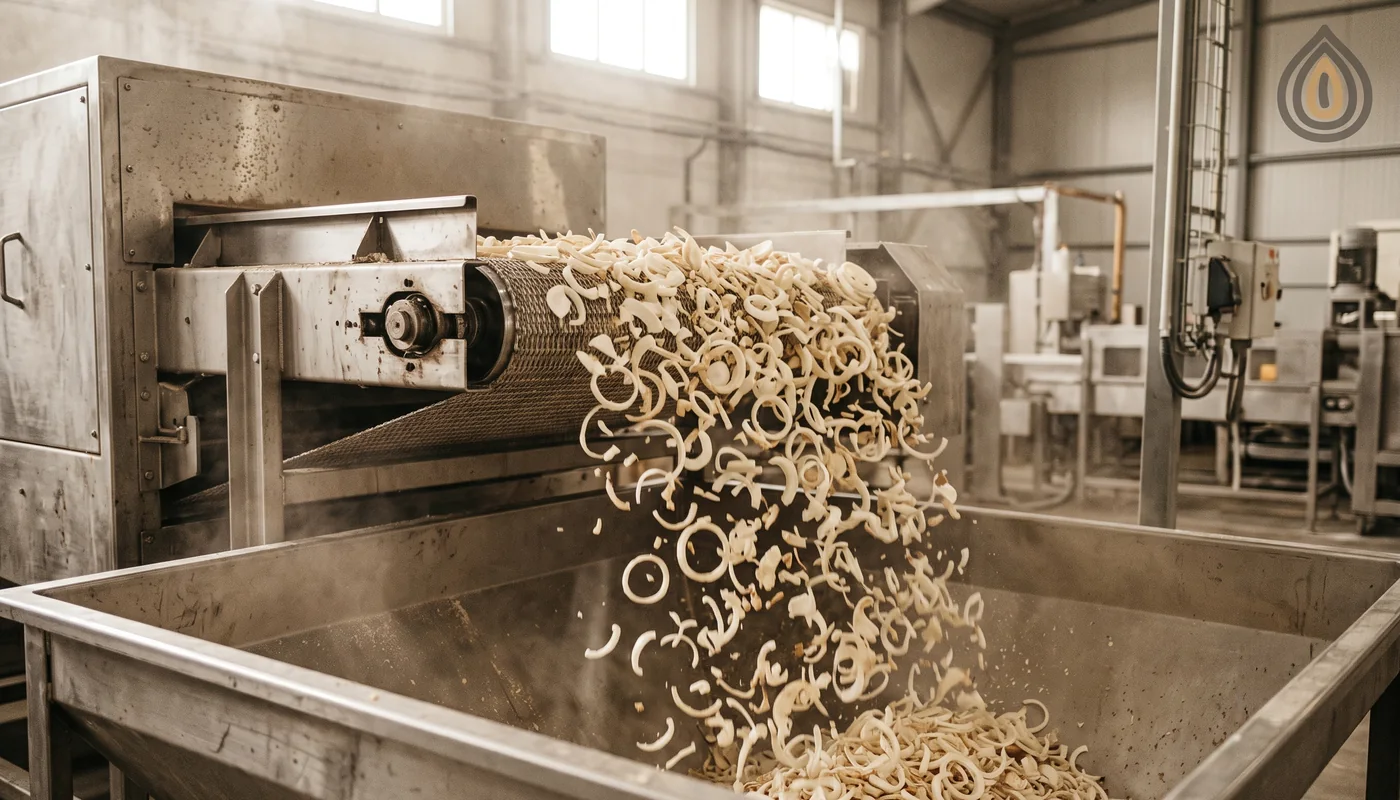
Onion is topped, peeled, washed and sliced across the bulb into rings 3 to 5 millimetres thick, and the rings are spread on the dryer belt and dried in stages from 90 percent moisture to 5 over six to eight hours, with the temperature falling as the product dries so that the last stage is cool enough not to brown it. Dried rings are brittle, and the transfers between belt stages and the drop into the cooling conveyor break them into arcs and pieces; the plant does not deliberately cut the kibble, it screens what the breakage produces, and the share that comes out as large flake depends on the slice thickness, the belt loading and how gently the product is handled. A plant that wants more flakes slices thicker and handles gently; one that wants more minced and granules handles roughly and mills. The kibbled fraction is then metal-detected, sorted optically for dark pieces and skin, and packed. Because flakes are the most fragile cut, they are packed in lower pallets and lighter bags, and they break further in transit, which is the fines question below. The screening step and the sieve bands are in Mesh Size in Dehydrated Onion.
Kibbled vs chopped: the practical differences
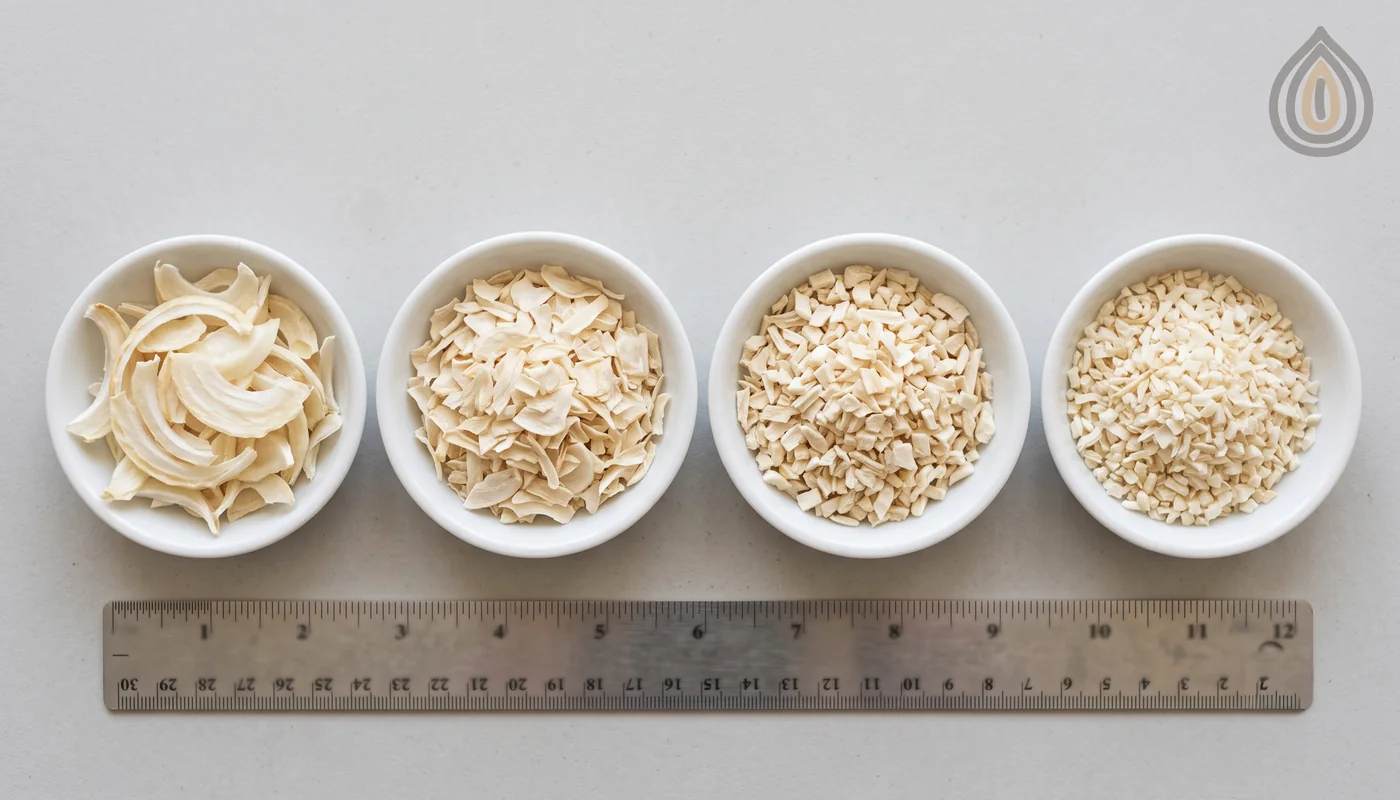
Where "kibbled" means the flake, the comparison with chopped is the comparison between the 8-20 and the 3-5 millimetre cuts, and the differences are practical.
| Kibbled (flakes, 8-20 mm) | Chopped (3-5 mm) | |
|---|---|---|
| Appearance in the product | Large visible pieces of onion | Small distinct pieces |
| Rehydration in boiling water | 8-12 minutes | 5-8 minutes |
| Rehydration in cold water | 25-40 minutes | 20-30 minutes |
| Bulk density | 180-230 g/l | 280-350 g/l |
| Container load, 20 ft | ~10 t | ~12-13 t |
| Breakage in transit | High; fines rise 3-5 points | Moderate |
| Typical uses | Bread toppings, stews, casseroles, pickles, visible garnish, retail jars | Soups, sauces, sausages, ready meals, stuffing mixes |
| Price, FOB | Base | Same or slightly higher |
| Freight per kg | Highest of all cuts | Lower |
The freight difference is the one buyers miss: a container of flakes carries ten tonnes and a container of chopped thirteen, so the same ocean rate lands on fewer kilograms and flakes cost 3 to 4 cents per kilogram more to ship. A buyer who does not need the large piece for appearance is usually better served by chopped or minced; a buyer who does, the baker and the pickle maker, has no substitute.
Sizes and the sieve analysis
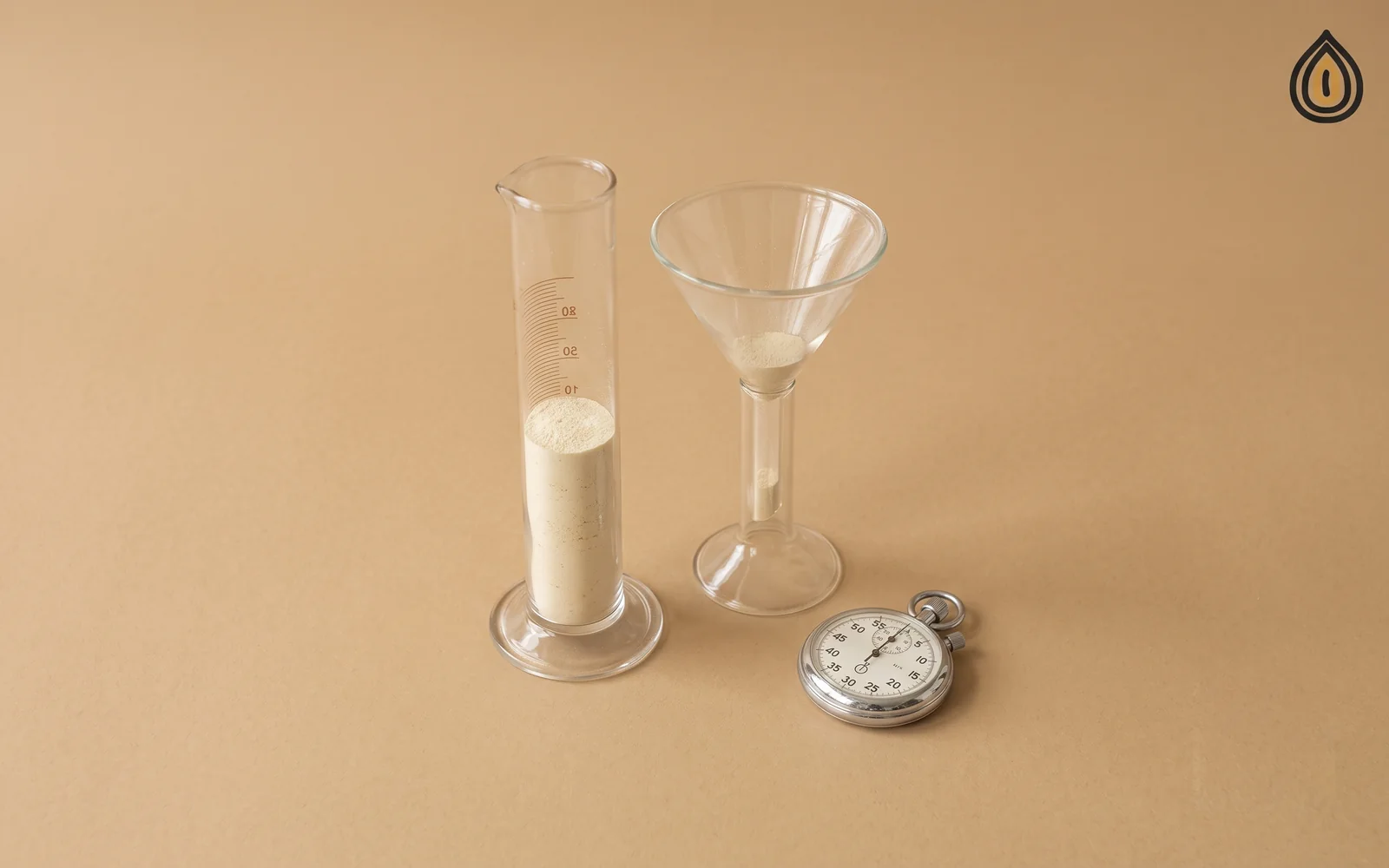
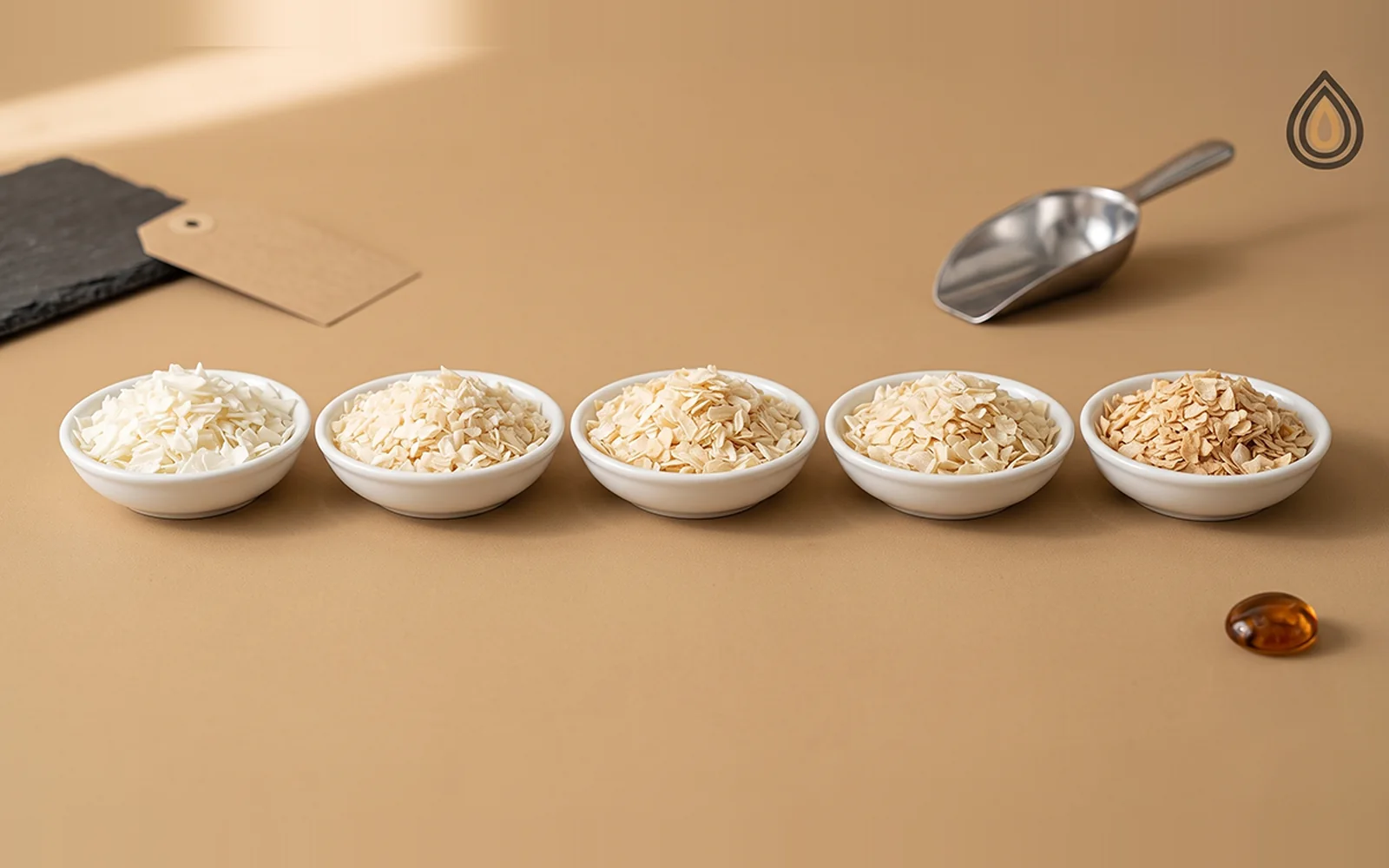
Kibbled onion in the UK sense is specified as a band, most often 8 to 20 millimetres, sometimes 6 to 15 or 10 to 25 for a particular topping, and the specification asks for a minimum share inside the band, 85 to 90 percent, and a fines maximum below 3 millimetres, 5 percent at packing and up to 8 on arrival. A sieve analysis on the certificate gives the fractions above 20, 8 to 20, 3 to 8 and below 3. A US-style kibbled, the coarse chop, is a custom band of 3 to 8 or 4 to 10 millimetres, and a plant can screen to it on request. Because the pieces are curved arcs rather than cubes, a piece 20 millimetres long can pass a 15 millimetre screen end-on, and the sieve analysis describes what a screen does rather than the piece's longest dimension; a buyer whose appearance target is "large" should keep a retained reference sample rather than rely on the band alone, and the shape question is discussed in the mesh-size guide linked above.
Where kibbled onion is used
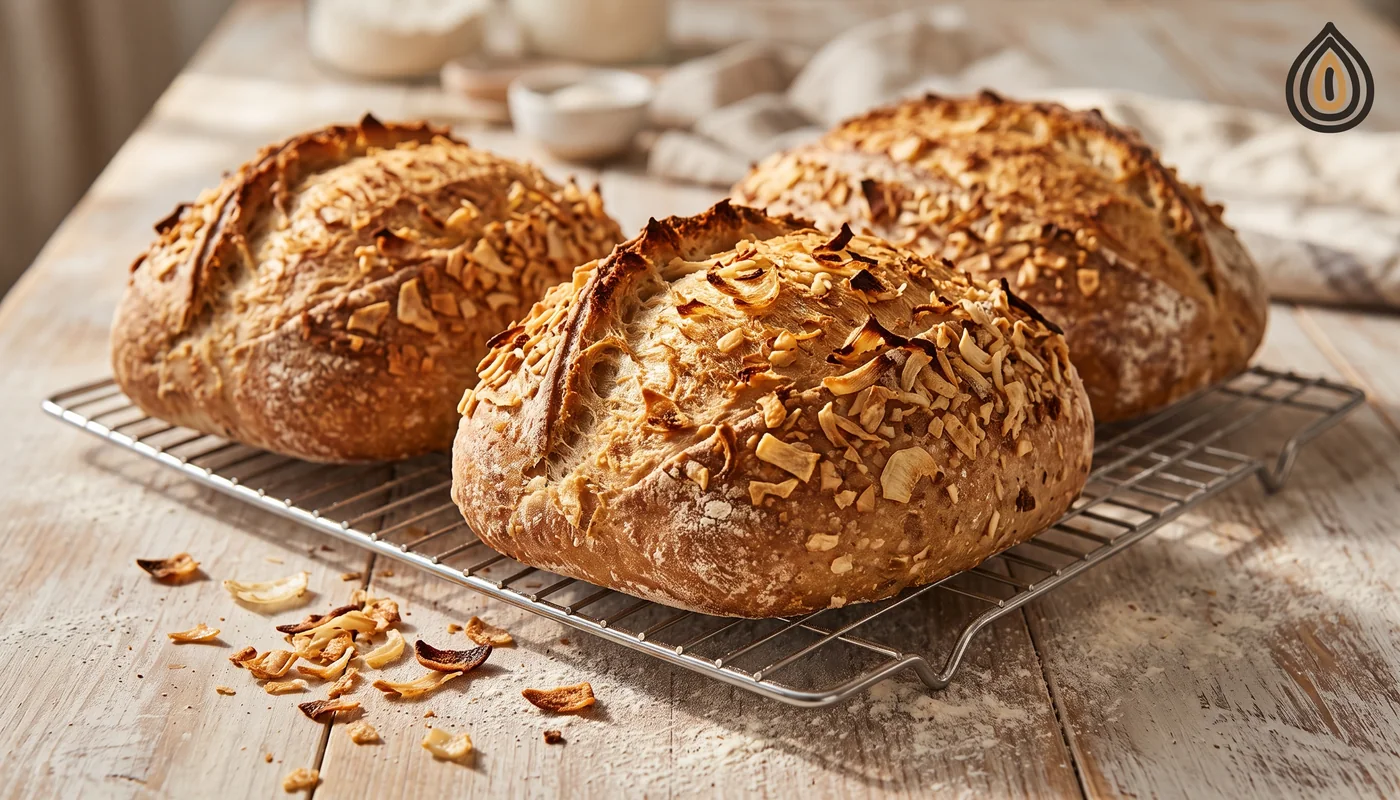
The signature use is the bakery topping: kibbled onion scattered on bread, rolls, bagels, focaccia and crackers before baking, where the large pieces stay visible and toast golden in the oven, and where nothing finer would show; the bakery applications, including the oil-and-onion topping mixes, are in Dehydrated Onion in Bakery. Next are the slow-cooked products, stews, casseroles, hotpots and retorted meals with a visible vegetable component, where the flake rehydrates over the long cook and holds its shape; and the pickles, relishes and chutneys where a visible onion piece is wanted and fresh onion's water is not, covered in Dehydrated Onion in Pickles, Relishes and Condiments. Retail jars of "dried onion" for home cooks are usually kibbled, because the piece looks like onion in the jar. Foodservice kitchens use it as a garnish and in stuffing. It is the least used cut in soups and sauces, where chopped and minced rehydrate faster, and it is not used in blends, where it segregates.
Rehydration, dosing and cooking behaviour
A kibbled flake at 5 percent moisture takes up 3.5 to 4.5 times its weight in water, in 8 to 12 minutes in boiling water and 25 to 40 in cold, becoming a soft, translucent piece close to a cooked fresh onion ring; the uptake and time are the slowest of all cuts because the piece is the largest. In a topping it is not rehydrated but toasted, sometimes after a brief soak or a coating of oil to stop it scorching in a hot oven; in a stew it goes in dry and takes its water from the pot, which must be allowed for at 3 to 4 parts water per part of flake. One kilogram replaces 8 to 9 kilograms of fresh onion in flavour and about 4 to 5 in rehydrated bulk. Dosing in a topping is by appearance, 1 to 3 percent of the dough weight scattered on top; in a stew or casserole, 0.8 to 2 percent of the finished weight. The flavour is the sweet, cooked note of all dried onion, and the flake's slow release makes it the mildest cut at a given dose. The rehydration method is in Rehydrating Dehydrated Onion.
Colour, breakage and the fines problem
Kibbled onion shows its colour more than any other cut because the pieces are large and are often seen dry, on a topping or in a jar, so buyers of kibbled specify the top colour grade and a recent drying date, and count the scorched and skin pieces per 100 grams; the grades are in Dehydrated Onion Colour. Breakage is the cut's weakness: brittle at 5 percent moisture, the flake fractures when bags are dropped, stacked high or forklifted, and a lot that leaves the plant with 3 percent fines can arrive with 6 or 8 after an LCL journey with several handling steps; a specification allows for it with a fines maximum at packing and a higher one on arrival, and palletised full-container shipments break less than LCL. Fines are not waste, since they are minced-sized pieces that cook the same, but in a topping they scorch and in a jar they look like dust. The transit question is in LCL or Full Container?
White and red kibbled
White kibbled is the standard and the bakery product; red kibbled, the same cut from red onion, is used where a coloured piece is wanted, on some breads and in chutneys and relishes, and its pieces carry the red pigment on their outer surface and a paler interior, which gives a two-tone look that some products want. Red kibbled is softer and breaks less in transit than white, fades toward brown-purple if over-dried, and costs 10 to 25 percent more; it is available in the spring and early summer runs and from stock thereafter. Pink kibbled sits between. The comparison is in White vs Red Dehydrated Onion.
Specifying kibbled onion
- Name the size, not the word: "Dehydrated white onion, kibbled (flakes), 8-20 mm" or "kibbled, coarse chop, 3-8 mm"; never "kibbled onion" alone.
- Band and fines: "Minimum 90 percent retained between 8 mm and 20 mm test sieves; fines passing 3 mm maximum 5 percent at packing and 8 percent on arrival; sieve analysis on the certificate."
- Colour: top grade for toppings and jars, with an L* value and a defect count; drying-date window.
- Moisture: maximum 6 percent, 5 for retail jars.
- Rehydration ratio: minimum 3.5:1 in boiling water in 12 minutes.
- Microbiology tier: standard for baked and cooked uses; low bacterial for retail jars and toppings applied after baking.
- Packaging: 10 or 12.5 kg lined bags, or 20 kg with a lower pallet stack, to limit breakage; never floor-loaded.
- Sensory clause against a retained reference sample, since appearance is the point.
The specification sheet as a whole is in How to Read a Dehydrated Onion Specification Sheet.
Price and availability
Kibbled onion in the flake sense is the base cut of the trade and is priced at or just below chopped at the plant, 145 to 165 rupees per kilogram FOB Pipavav for white standard tier in the spring of 2026, with the freight penalty of the lighter container load on top; a coarse-chop kibbled at 3 to 8 millimetres is a custom band at a small premium. Flakes are made in every season and every run, since they are the dryer's primary product, and stock is available year-round; red kibbled follows the red runs. Prices and their drivers are in What Does Dehydrated Onion Cost per Kilogram?
Two pricing habits of the kibbled trade are worth knowing. British and Commonwealth buyers, who use the word most, often buy on a delivered basis from importers who hold stock, and the delivered price of kibbled onion in the UK runs 2.40 to 3.20 pounds per kilogram in small lots, against a landed cost from India of 1.70 to 2.00 for a pallet buyer and 1.55 to 1.75 for a container; the gap is the stockholder's margin and the breakage it absorbs. And because flakes fill a container by volume long before they reach the weight limit, the freight per kilogram on kibbled is the highest of all cuts, which is why a buyer comparing an FOB quote for flakes with one for granules should add the freight per kilogram to each before comparing; a 20-foot container at 1,400 euros is 14 cents a kilogram on ten tonnes of flakes and 8 cents on seventeen tonnes of granules. The way freight sits inside the landed price is in Landed Cost of Dehydrated Onion in Europe.
Kibbled onion in the bakery: the topping in detail
The bakery topping is where kibbled onion earns its name, and it has its own technique. Dry flakes scattered on a dough and baked at 220 to 250 degrees scorch before the bread is done, because the flake has no water to protect it; bakers therefore either soak the flakes for five to ten minutes and drain them, so that they steam rather than burn, or coat them in oil, which slows the browning and gives the golden finish that an onion roll is known for, or use a prepared topping mix in which the kibbled onion is blended with oil, salt and sometimes poppy or sesame seed. Application rates run 1 to 3 percent of the dough weight on rolls and bagels and 3 to 6 on focaccia and flatbreads, applied after the egg or water wash so that the pieces adhere. Toasted kibbled onion, already browned at the plant, can go on dry for a short bake where a soak is impractical and gives a deeper flavour. Inside the dough, kibbled onion at 2 to 4 percent of the flour weight, soaked first, gives an onion bread with visible pieces; unsoaked flakes in a dough draw water from it and leave hard pieces. Crackers and breadsticks use a smaller kibbled or a chopped cut at 1 to 2 percent in the dough and on the surface. The bakery's own microbiology tier is standard, since the oven is a kill step, but toppings applied after baking, on a cooled focaccia or a topped flatbread, take low bacterial. The complete bakery picture, including the interaction with the dough's water and the shelf life of topped products, is in Dehydrated Onion in Bakery.
Kibbled onion in retail jars
The jar of "dried onion" or "onion flakes" in a supermarket spice rack is kibbled onion, and its packer has a set of concerns that the bulk trade does not. Appearance in the jar is the product: the flakes must be the top colour grade, the fines minimal so that the jar does not show dust at the bottom, and the pieces large and whole so that the jar looks like onion rather than crumbs; packers specify a tighter band, 10 to 20 millimetres, and a fines maximum of 3 percent at packing for this reason, and they accept the freight and breakage cost of the flake. Colour life matters more than anywhere else, because the jar sits in the light on a shelf for a year or more, and the packer specifies a recent drying date and, often, a tinted or opaque pack. The microbiology tier is extra low bacterial in most retailers' codes, since the consumer may sprinkle the product on a finished dish. The packer's fill is by weight into a jar sized for the flake's low density, 25 to 40 grams in a jar that would hold 80 grams of granules, and the label carries the rehydration instruction, one part flakes to three or four of water, and the fresh equivalence, since a home cook needs both. The retail private-label arrangements that put a retailer's name on the jar are in Private Label Dehydrated Onion, and the label rules in Labelling Dehydrated Onion for the EU.
Kibbled garlic and the other kibbled vegetables
The word travels: kibbled garlic is the dried garlic flake, 3 to 8 millimetres, made in the same plants from the same screens, and it is more often called "garlic flakes" in the trade; kibbled carrot, kibbled cabbage and kibbled beetroot are the coarse cuts of the other dehydrated vegetables, sized 5 to 10 millimetres for soup mixes and stews. Buyers who take onion and garlic from one supplier find that the same specification discipline applies, that garlic flakes are denser and break less than onion, and that garlic's bands are smaller because the clove is smaller. What changes between onion and garlic in sourcing, specification and price is in Dehydrated Garlic and Onion from the Same Supplier, and the mixed loads that bring several dehydrated vegetables in one container are in Mixed Containers: Combining Onion Cuts, Garlic and Vegetables.
Handling and storage of a fragile cut
Kibbled onion is the cut most damaged by handling, and the handling rules are simple and often ignored. Bags of flakes should be stacked no more than five or six layers on a pallet and pallets never double-stacked; a bag dropped from a forklift loses a percentage point of flakes to fines each time. In the warehouse the pallet sits on racking or on the floor, one high, away from walls and out of light, at or below 25 degrees and 65 percent humidity. Opened bags are re-sealed at the liner within the shift, because flakes have the largest surface per kilogram of any cut except powder and take up moisture fast; a bag of flakes left open in a bakery overnight at 70 percent humidity is soft and rubbery by morning, and a soft flake does not toast. Flakes should be scooped from the bag rather than poured, since pouring breaks them; and a bag that has caked from moisture can be dried gently and used for a cooked application but not for a topping. Fines that accumulate at the bottom of the bag are minced-sized and cook the same, and a bakery that sieves them out can use them in a dough. The storage rules for all cuts are in Dehydrated Onion Shelf Life, and the warehouse side in Storing Dehydrated Onion in a European Warehouse.
Ordering kibbled onion: a checklist
- Say which kibbled you mean, in millimetres: 8-20 (flakes), 10-20 (jar grade), 3-8 or 4-10 (coarse chop).
- Give the share inside the band and the fines maximum at packing and on arrival.
- Specify the colour grade, the drying-date window and the defect count, since the cut is seen.
- State the tier: standard for baked and cooked uses, low or extra low for toppings after baking and for retail jars.
- Choose the bag: 10 or 12.5 kilograms for flakes where breakage matters, 20 with a low stack otherwise.
- Ask for the container load for the cut so that the freight per kilogram is on the quote: about 10 tonnes in a 20-foot box.
- Ask for the sieve analysis on the certificate and a retained sample for appearance disputes.
- For red kibbled, order by the end of May for the year, since it is stock-only from August.
- Request a sample of the two nearest bands from one lot and settle the size by eye against your product.
The specification sheet these lines sit in is explained in How to Read a Dehydrated Onion Specification Sheet, and the quote in What Does Dehydrated Onion Cost per Kilogram?
How KlarHarvest supplies kibbled onion
KlarHarvest lists the product as flakes, 8-20 mm, and quotes it as kibbled to buyers who use the word, with the band on the quote; a 3-8 or 4-10 millimetre coarse chop is screened to order for buyers who mean the American kibbled. Flakes ship in 10, 12.5 or 20 kilogram lined bags on low pallets with the sieve analysis at packing on the certificate, and a retained sample from every lot is kept for appearance disputes. White and red are both on the flakes and red onion pages.
Frequently asked questions
What is kibbled onion?
Dried onion in coarse pieces. In the UK and Commonwealth it means the large flake, 8 to 20 mm; in the US it usually means a coarse chop of 3 to 8 mm; in India it means whatever a plant's coarsest screen retains. Always specify the millimetre band.
Is kibbled onion the same as onion flakes?
In British usage, yes: kibbled onion and onion flakes are the same 8-20 mm cut. In American usage kibbled can mean a coarser chop than flakes. The size on the specification settles it.
What is the difference between kibbled and chopped onion?
Size and use: kibbled (flakes) at 8-20 mm is for toppings, stews and jars where a large visible piece matters; chopped at 3-5 mm rehydrates faster and suits soups, sauces and sausages. Chopped also ships 25 percent more per container.
How do you rehydrate kibbled onion?
3.5 to 4.5 parts water per part of onion, 8 to 12 minutes in boiling water or 25 to 40 in cold. In a stew it can go in dry with the water allowed for; on bread it is toasted rather than rehydrated.
Why does kibbled onion arrive with more fines than the certificate says?
The flake is brittle and breaks in handling and transit. Specify a fines maximum at packing and a higher one on arrival, ship palletised in full containers where possible, and use smaller bags.
What is kibbled onion used for?
Bread and bagel toppings above all; stews, casseroles and retorted meals with visible vegetable; pickles, relishes and chutneys; retail jars of dried onion; foodservice garnish and stuffing.
Is kibbled onion cheaper than other cuts?
At the plant it is the base cut, priced at or below chopped. Its light bulk density means fewer kilograms per container, so it costs a few cents more per kilogram to ship.
Next step
Request a sample of flakes and of a 3-8 mm coarse chop from one lot, so that "kibbled" can be settled by eye against your own product; then request a quote with the band, the bag size and the volume, and it comes back with the container load and the freight per kilogram shown.