- How LCL works, from the exporter's door to yours
- How FCL works: stuffing, sealing and the box
- Weight or measure: why onion is charged by volume
- Costs in February 2026 by shipment size
- The crossover point, and what moves it
- Transit times and schedules from Pipavav and Mundra
- Risks by mode for a dry, light, odour-sensitive product
- Container types and stuffing plans by cut
- Mixed loads and shared containers
- Documents: house and master bills of lading, telex release
- Free days, demurrage and detention
- Peak season: rates, space and the months to book early
- Briefing a forwarder for dried onion
- Tracking, delays and what to do when the cargo is late
- How the Incoterm interacts with the choice
- How KlarHarvest ships both ways
- Frequently asked questions
Judge the product, not the words
200-500 g from a current lot, dispatched by courier with the lot lab report.
Request a sampleThere are two ways to move dried onion from Gujarat to Europe, and the choice between them is the largest single lever on the landed cost after the FOB price itself. Dehydrated onion shipping as LCL, less than container load, means your pallets travel in a container shared with other shippers' cargo, consolidated at origin and split again at destination, and you pay by the cubic metre. Shipping FCL, full container load, means a 20 or 40 foot box is stuffed at the exporter's premises, sealed, and opened next at your warehouse, and you pay for the box. LCL costs two to four times more per kilogram and is the right answer for up to about six pallets; FCL is cheaper, cleaner and faster from about eight pallets and is the only sensible way to move ten tonnes.
This guide explains how each mode works step by step, what it costs in February 2026 for the volumes buyers actually ship, where the crossover lies and why it is not exactly where the freight arithmetic says, the transit times and sailing schedules from Pipavav and Mundra, the risks specific to each mode for a dry, light, odour-sensitive product, the documents, the container types and stuffing plans by cut, mixed loads, demurrage and detention, and how the Incoterm you buy on interacts with the choice. It is written for the buyer's desk, and it says what the forwarder decides and what the buyer should.
Rates move weekly with the shipping market; every figure below is dated and indicative.
What this guide covers
- How LCL works, from the exporter's door to yours
- How FCL works: stuffing, sealing and the box
- Weight or measure: why onion is charged by volume
- Costs in February 2026 by shipment size
- The crossover point, and what moves it
- Transit times and schedules from Pipavav and Mundra
- Risks by mode for a dry, light, odour-sensitive product
- Container types and stuffing plans by cut
- Mixed loads and shared containers
- Documents: house and master bills of lading, telex release
- Free days, demurrage and detention
- Peak season: rates, space and the months to book early
- Briefing a forwarder for dried onion
- Tracking, delays and what to do when the cargo is late
- How the Incoterm interacts with the choice
- How KlarHarvest ships both ways
- Frequently asked questions
How LCL works, from the exporter's door to yours
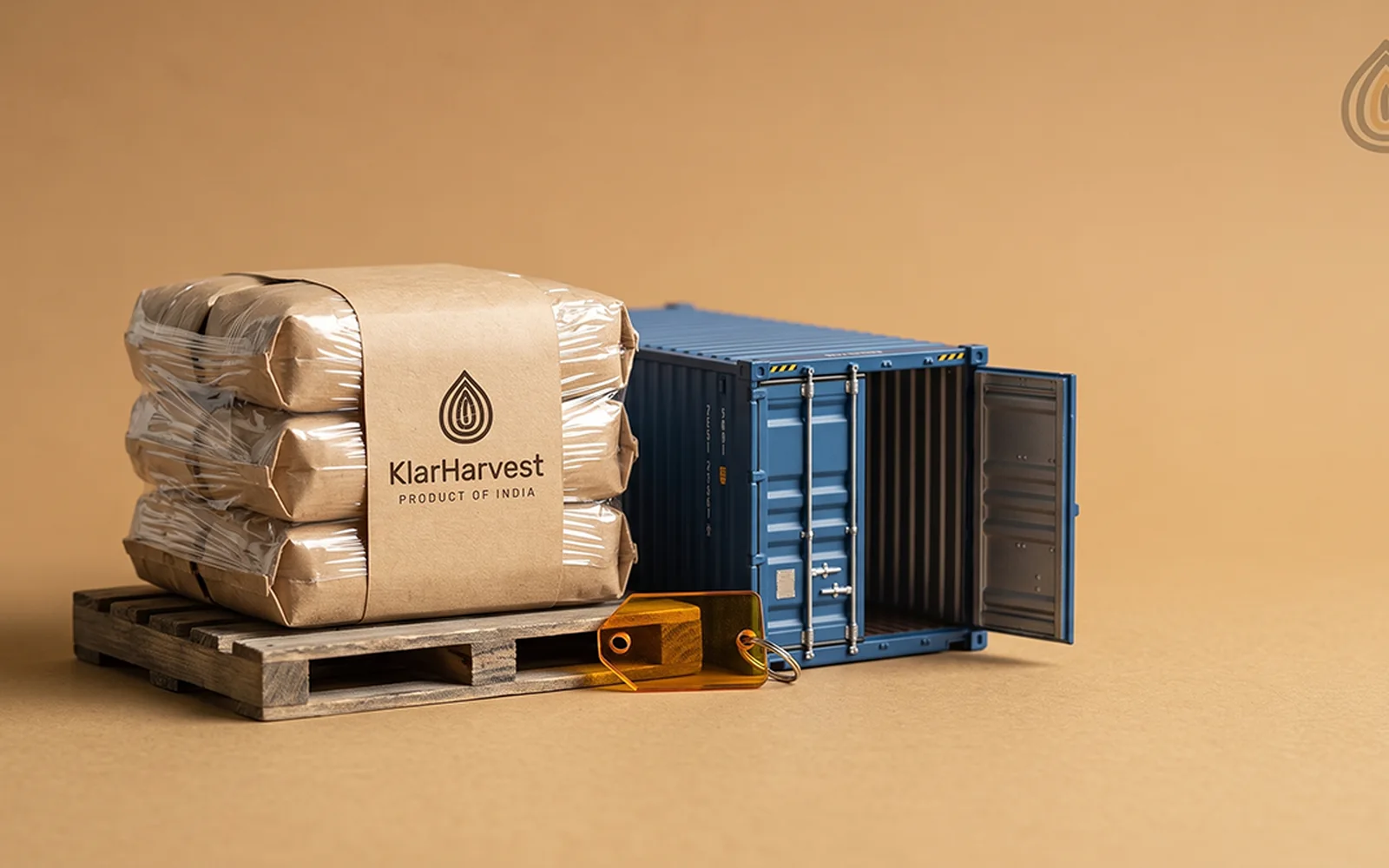
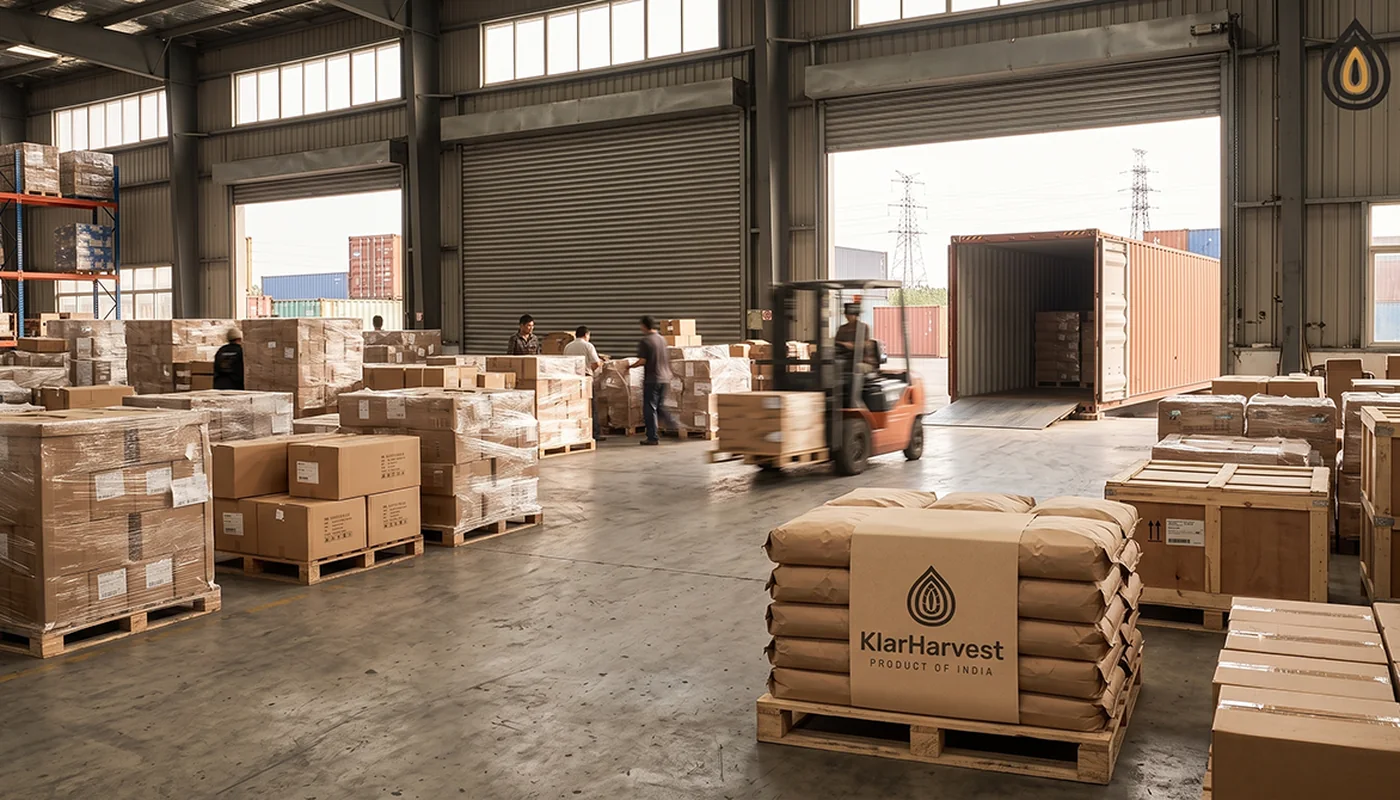
An LCL shipment starts with the exporter delivering palletised, shrink-wrapped bags to a container freight station, a consolidator's warehouse at or near the port, usually in Mundra or Pipavav for Mahuva cargo. The consolidator receives cargo from several shippers bound for the same destination port, stuffs it into one container in the order it will be unloaded, and books the container with a shipping line. The exporter's forwarder issues a house bill of lading for your pallets; the consolidator holds the line's master bill for the whole box. At the destination port, Hamburg, Rotterdam or Antwerp, the container goes to the consolidator's partner station, is unstuffed, and your pallets are held until your customs broker has cleared them and your haulier collects them or the forwarder delivers them.
The steps add time and touch the cargo. Weekly consolidation cut-offs mean pallets wait up to a week at origin for the next box; deconsolidation at destination adds two to four days; and the pallets are handled by forklift four to six times between the exporter and you, against once or twice for FCL. Charges follow the steps: origin handling at the station, ocean freight per cubic metre, destination handling and a delivery order fee at the destination station, then customs and delivery. Each charge is small; together they are why one pallet costs what it does.
How FCL works: stuffing, sealing and the box
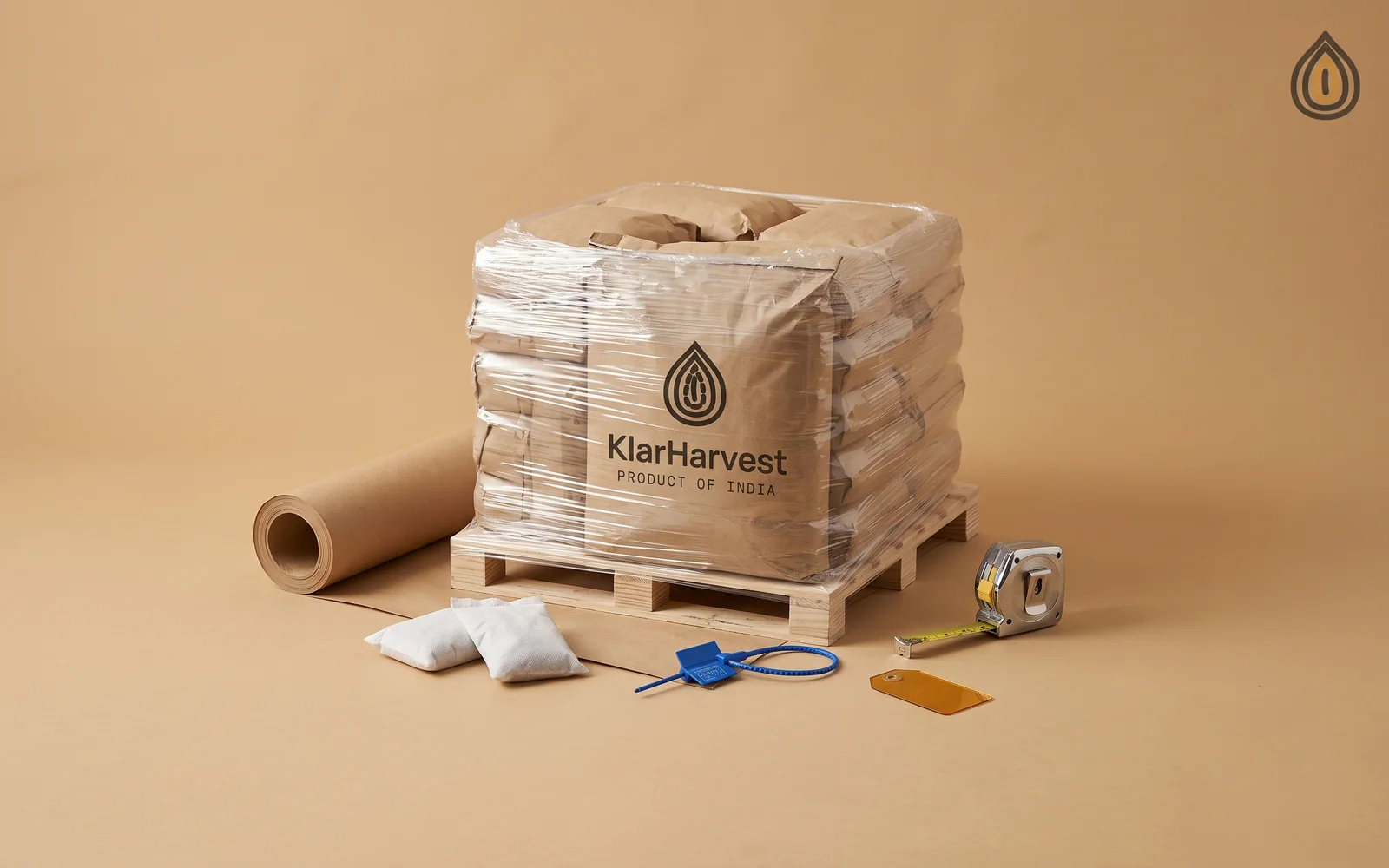
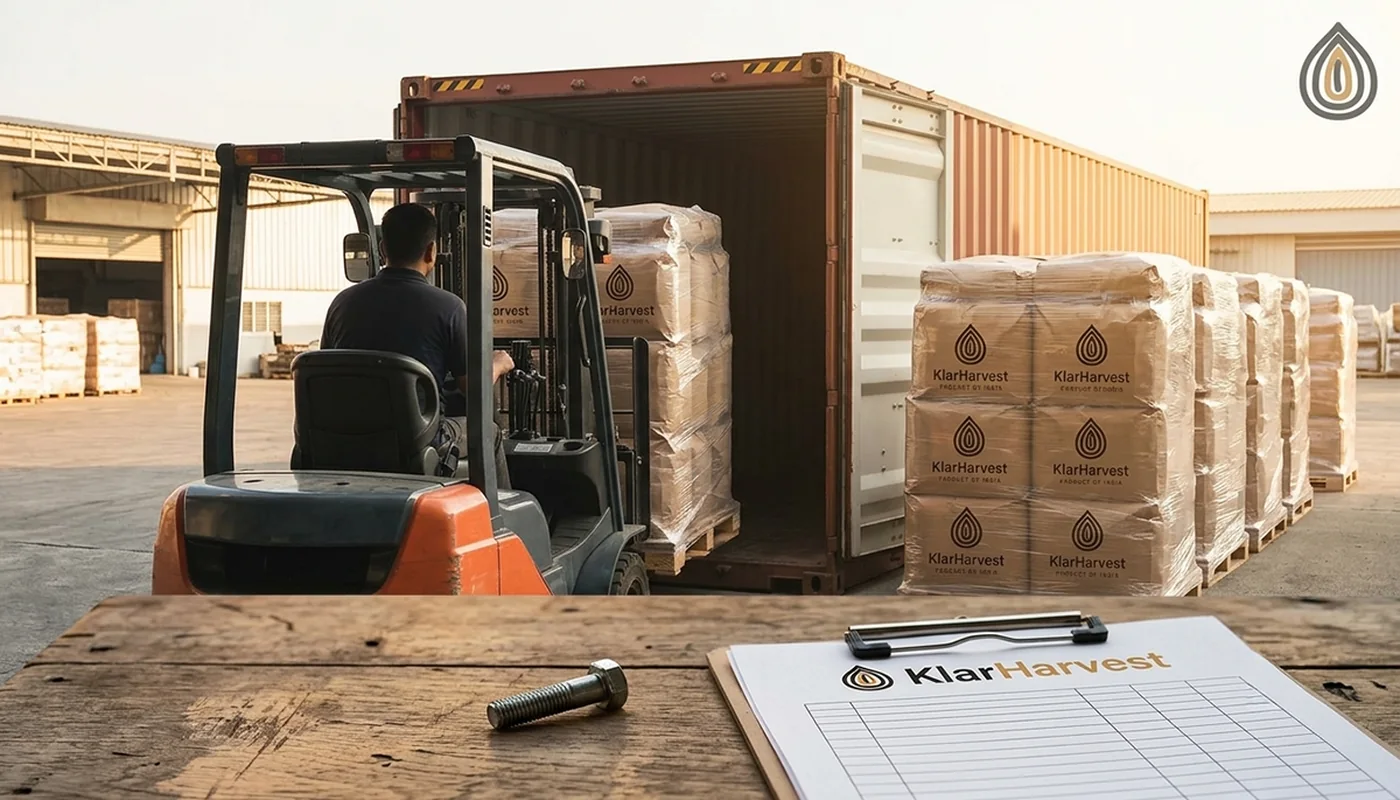
An FCL shipment starts with a booking on a named vessel and an empty container collected from the line's depot and trucked to the exporter's premises. The container is inspected, dry, clean and odour-free, lined if needed, and stuffed with the pallets according to a plan; Indian exporters registered for customs self-sealing stuff under their own supervision, apply a customs electronic seal and file the shipping bill, and the sealed box is trucked to the port gate, gated in against the booking and loaded. At destination the box is discharged, cleared on the documents and trucked to your warehouse, where you break the seal, unstuff and return the empty container to the line's depot within the free days. Nobody touches the cargo between the exporter's floor and yours.
Charges are simpler: the ocean freight for the box, origin terminal handling, documentation and the seal, destination terminal handling, delivery order, customs, trucking and the empty return. The cost is nearly flat whether the box holds six tonnes or ten, which is the whole economics of FCL: the more you put in, the less each kilogram costs, and the box is the unit of price.
Weight or measure: why onion is charged by volume
LCL freight is charged per "weight or measure", the greater of the cargo's weight in tonnes and its volume in cubic metres, and dried onion always loses that comparison. A pallet of flakes, 1.2 by 1.0 metres stacked to 1.6, is 1.9 cubic metres and weighs about 650 kilograms; the consolidator charges for 1.9 revenue tonnes, not 0.65. Powder, at nearly a tonne on the same pallet, is charged on the same 1.9 cubic metres and therefore costs half as much per kilogram to ship LCL as flakes. The same physics runs the FCL side: a 20 foot container is full by volume at about 10 tonnes of flakes and by weight at about 20 tonnes of powder, and the flat cost of the box spreads over more kilograms for the dense cuts. Whatever the mode, powder and granules are the cheapest cuts to move and flakes the dearest, and a buyer with a choice of cut on cost grounds should remember that the plant price difference runs the other way. The loads by cut are tabulated in Minimum Order Quantity for Dehydrated Onion.
Costs in February 2026 by shipment size
The table gives all-in transport costs from the exporter's premises near Mahuva to a warehouse within 100 kilometres of Hamburg, for white onion flakes on standard pallets, at February 2026 rates: ocean freight, origin and destination handling, documents, insurance at 0.3 percent of value, customs brokerage and delivery. Duty and VAT are excluded; they depend on value, not mode.
| Shipment | Weight (flakes) | Chargeable volume | All-in transport, indicative | Per kg |
|---|---|---|---|---|
| LCL, 1 pallet | 650 kg | 1.9 cbm | 520-620 EUR | 0.80-0.95 EUR |
| LCL, 3 pallets | 1,950 kg | 5.7 cbm | 900-1,100 EUR | 0.46-0.56 EUR |
| LCL, 6 pallets | 3,900 kg | 11.4 cbm | 1,500-1,800 EUR | 0.38-0.46 EUR |
| LCL, 9 pallets | 5,850 kg | 17 cbm | 2,100-2,500 EUR | 0.36-0.43 EUR |
| FCL 20 ft, 16 pallets | 10,000 kg | box | 2,300-2,900 EUR | 0.23-0.29 EUR |
| FCL 40 ft HC, 32 pallets | 20,000 kg | box | 3,000-3,700 EUR | 0.15-0.19 EUR |
Two readings. The first pallet carries about 400 euros of fixed charges that the second and third dilute, which is why three pallets cost less than double one pallet. And the nine-pallet LCL shipment costs about the same as a 20 foot container that would carry sixteen, which is the crossover. For powder, halve the per-kilogram figures in the LCL rows and reduce the FCL rows by about 40 percent, because the box carries 18 tonnes instead of 10. The cost stack from FOB to landed is in Landed Cost of Dehydrated Onion in Europe.
The crossover point, and what moves it
On freight alone, a 20 foot container becomes cheaper than LCL at about eight to nine pallets of flakes, or about six pallets of powder because the LCL volume charge bites harder on the light cut. But three things move the crossover downward, towards taking a container earlier than the arithmetic says. The container is sealed at the exporter's door and opened at yours, which removes four handling steps and the co-loading risk described below, and for a buyer whose quality system prefers an unbroken chain that is worth several hundred euros. The container ships direct on the next sailing rather than waiting for a consolidation cut-off, saving a week. And a container can be stuffed with a mixed load of cuts, colours and other dehydrated vegetables, so a distributor or a manufacturer with several products reaches sixteen pallets sooner than it thinks. One thing moves the crossover the other way: stock. A container of flakes is 10 tonnes of one product, and a manufacturer using 100 kilograms a week does not want two years of it. For that buyer, six pallets every quarter by LCL is right even though it costs more to ship, and the stock arithmetic in Dehydrated Onion Shelf Life is the reason.
Transit times and schedules from Pipavav and Mundra
Pipavav and Mundra, the two Gujarat ports that handle most Mahuva product, have weekly direct services to north Europe operated by the major alliances, with port-to-port transit of 25 to 30 days to Rotterdam and Hamburg and a day or two more to Antwerp and Felixstowe; services via a Middle East or Mediterranean hub add 5 to 10 days. Nhava Sheva, near Mumbai, offers more sailings and similar transits at slightly higher trucking cost from Mahuva. The route runs through the Suez Canal, and when the Red Sea is disrupted, as it was through much of 2024 and 2025, lines divert around the Cape and transits stretch to 35 to 45 days with rates rising accordingly; buyers should ask their forwarder for the current routing when planning a first shipment.
| Leg | FCL | LCL |
|---|---|---|
| Exporter's premises to port gate-in | 1-2 days | 2-8 days (station receipt, wait for cut-off) |
| Port to port, direct service | 25-30 days | 25-30 days |
| Destination port to cargo available | 2-4 days | 4-7 days (unstuffing at station) |
| Delivery to warehouse | 1-2 days | 1-3 days |
| Total, door to door | 4.5-6 weeks | 5.5-7 weeks |
The route, the ports and the seasonality of the schedules are covered in Pipavav to Hamburg.
Risks by mode for a dry, light, odour-sensitive product
Dried onion is robust cargo: it does not spoil, it does not need temperature control, and its bags are light. Its two vulnerabilities are moisture and odour, and the two modes expose them differently. In LCL your pallets share a box with strangers' cargo, and the consolidator decides what. Chemicals, detergents, wet-packed goods, leather, fresh produce and strongly scented products in the same container can taint onion through kraft and, over weeks, through polyethylene, and a leaking drum or a wet pallet can soak a bag. Good consolidators segregate foodstuffs and refuse incompatible cargo, and a forwarder who ships food regularly uses them; a buyer can ask for "food-grade consolidation" and for the pallets to be wrapped and top-sheeted. Handling damage, crushed corners and torn wrap, is also an LCL risk, because the pallets are moved by several forklifts in several warehouses.
In FCL the box is yours alone, and the risks are the box itself: a container with a damaged roof or floor, a container that carried something odorous before, and condensation when the box is stuffed in Indian heat and cools at sea, which drips onto the top layer. The exporter's inspection of the empty container before stuffing, kraft top sheets and desiccant bags, and stuffing in the cool of the morning handle all three, and the loading video shows whether they were done. Both modes carry the ordinary marine risks, and the insurance to cover them costs a few tenths of a percent of value; what it covers and how a claim is made is in Marine Insurance and Claims for Dehydrated Onion Shipments.
Container types and stuffing plans by cut
Dried onion ships in standard dry containers; reefers and ventilated boxes are not needed and cost more. A 20 foot standard container has 33 cubic metres and a payload of about 21.7 tonnes and takes 10 to 11 standard pallets on the floor or 16 to 20 with pallets double-stacked where the bags allow it; a 40 foot high-cube has 76 cubic metres and takes 20 to 21 pallets on the floor and up to 40 double-stacked. Stuffing plans by cut:
| Cut | 20 ft: pallets and weight | 40 ft HC: pallets and weight | Limit reached |
|---|---|---|---|
| Flakes | 16 pallets double-stacked, 9-10.5 t | 32 pallets, 19-21 t | Volume |
| Chopped, minced | 16 pallets, 13-15 t | 24-26 pallets, 21 t | Volume (20 ft), weight (40 ft) |
| Granules | 16 pallets, 16-17 t | 21 pallets, 21 t | Weight in the 40 ft |
| Powder | 18-20 t on 16-18 pallets | 21 t on 21 pallets | Weight |
| Floor-loaded bags, no pallets | +10-15 % over palletised | +10-15 % | Slow to unload in Europe |
Double-stacking pallets of flakes is normal because the bags are light and the lower pallet is not crushed; double-stacking powder is not, because a tonne on a tonne splits liners. Weight must also be distributed along the box within the road limits of the destination country, which for a 40 foot container of powder means leaving pallet positions empty rather than loading to the volume. Stuffing practice, with the video a buyer should ask for, is in How a Dehydrated Onion Container Is Loaded, and the pallet configurations in Pallet Configurations for Dehydrated Onion.
Mixed loads and shared containers
The way to get container economics below container volume is to fill the box with more than one product. Onion in several cuts and colours, dehydrated garlic, and other dehydrated vegetables from the same certified plants can share a box, each product on its own pallets with its own lot codes and invoice line; the container carries one bill of lading and one customs entry with several items. A distributor fills a 20 foot box this way from the first order. A manufacturer with two or three products, flakes for one line, powder for another, does the same at smaller volumes. The other route is a shared container with another importer, arranged by a forwarder that co-loads two customers' cargo into one FCL and splits the cost, which sits between LCL and FCL in cost and risk; it works between buyers who know each other or through a consolidator that specialises in food. The mixed-container arithmetic is in Mixed Containers: Combining Onion Cuts, Garlic and Vegetables.
Documents: house and master bills of lading, telex release
The document set is the same in both modes, invoice, packing list, certificate of origin, phytosanitary certificate, certificate of analysis, and the bill of lading, but the bill differs. In FCL the shipping line issues the bill of lading to the exporter, naming you or your bank as consignee, with the container and seal numbers; it is the document of title, and its originals, or a telex release instructing the line to release without them, are what your broker presents to collect the box. In LCL the forwarder issues a house bill for your pallets and holds the line's master bill for the whole container; you deal with the house bill and the forwarder's destination agent. Most shipments today use telex or express release rather than couriered originals, which saves days and courier cost, and is safe once the exporter has been paid; under a letter of credit the originals travel through the banks. How the payment terms tie to the release of the bill is in Payment Terms for Dehydrated Onion Imports.
Free days, demurrage and detention
An FCL buyer holds the line's container after discharge and pays for keeping it too long. Free time at north European ports is typically 3 to 7 days from discharge for the box to leave the terminal, after which demurrage of 50 to 150 euros a day applies, and a further period, often 5 to 10 days, for the empty to be returned to the depot, after which detention at a similar rate applies. A container that clears customs on arrival and is delivered and unstuffed within a week costs nothing extra; one that waits for a missing document or a warehouse slot costs a few hundred euros a week. LCL cargo has its own storage charges at the destination station after a few free days, usually smaller. The way to avoid both is to have the documents checked and the broker instructed before the vessel arrives, which is the purpose of the pre-arrival document check described in Customs Clearance for Dehydrated Onion in the EU.
Peak season: rates, space and the months to book early
Freight rates and container availability from west India move with the year. The months before Christmas and Chinese New Year, roughly September to December, are the peak on the Asia to Europe trade, when rates rise, lines apply peak-season surcharges and space on the direct services is booked two to three weeks ahead; a container that would sail on the next vessel in May waits for the one after in October. LCL is less exposed, because consolidators fill their boxes regardless, but the cut-offs tighten. The Indian side adds its own peak: the onion season from March to June is when exporters ship the most, and trucking and stuffing capacity in Mahuva is busiest. A buyer planning a container for Q4 delivery should book in August; one planning pallets can leave it to a month before. Rate levels themselves swing with events, the Red Sea disruption of 2024 and 2025 doubled Asia to Europe rates for months, and a season contract should either fix freight for a period or, more commonly, price FOB and let the freight line float at the forwarder's rate of the day. The freight share of landed cost and its history are in Freight Rates India to Europe 2026-2027.
Briefing a forwarder for dried onion
A forwarder who ships electronics does not know that onion is odour-sensitive, cubes out and needs a dry box, and the buyer who assumes otherwise finds out on the first claim. The brief takes five lines: the product is dried food in sealed liner bags on pallets, to be consolidated only with dry, odour-free, food-compatible cargo; the chargeable volume per pallet is about 1.9 cubic metres against 0.65 tonnes for flakes, so quote on volume; the exporter delivers to the station or stuffs at its own premises under customs self-sealing at Pipavav or Mundra; marine insurance to the warehouse door on invoice value plus 10 percent is required on every shipment; and all destination charges are to be listed in the quote, not discovered on the arrival notice. Ask for a rate valid for the month, a routing with the transit time and the number of transshipments, and the name of the destination agent. A forwarder that ships food from Indian west-coast ports weekly gives that in a day; one that does not is the wrong forwarder for onion. The selection questions are in How to Import Dehydrated Onion from India.
Tracking, delays and what to do when the cargo is late
Every container has a number and every line publishes tracking; a forwarder's portal shows the LCL house bill against the master container. The dates that matter are the gate-in at origin, the vessel departure, transshipment if any, arrival, discharge and the "cargo available" notice at destination. Delays come from three places: a missed cut-off at origin, usually because documents or the export clearance were late; a schedule change, blank sailing or rolled container at a transshipment hub; and a hold at destination, for a document mismatch, a customs inspection or a missing delivery order. The first is the exporter's to prevent; the second is the line's and can add a week without anyone being at fault; the third is the buyer's and its broker's to prevent by checking documents before arrival. When a shipment is late, ask the forwarder for the specific stage and the revised date rather than a general update, and if the delay threatens a production run, the answer is a small air shipment to bridge it, described in Air or Sea Freight for Dehydrated Onion, not a claim, because ordinary transit delay is not an insured event.
How the Incoterm interacts with the choice
The mode and the Incoterm are separate decisions that touch. Under FOB you book the freight, choose LCL or FCL, and pay the forwarder; the exporter delivers to the station or stuffs the box and clears exports. Under CIF or CFR the exporter books and pays the ocean leg, and its forwarder makes the LCL or FCL decision with you; the price should show the freight as a line so that you can see what mode is being charged. Under DAP the exporter delivers to your door and the mode is its business, though a buyer should still ask, because a DAP price for a single pallet built on FCL rates is a price that will not survive contact with the consolidator. For a first shipment most buyers take CIF or DAP and let the exporter's forwarder handle LCL; for containers most move to FOB and their own forwarder, because container rates are where a forwarder relationship pays. The terms are compared in FOB, CIF or DAP?
How KlarHarvest ships both ways
KlarHarvest quotes every order two ways, the requested quantity by LCL and the nearest full container, with freight shown as a separate line at the forwarder's rate of the day, so that the buyer sees the crossover for its own quantity. LCL pallets are wrapped, top-sheeted and delivered to food-grade consolidators in Mundra or Pipavav; containers are inspected, stuffed and sealed at our own godown in Bhavnagar under customs self-sealing with desiccants and pallet sheets in the hot months, and the stuffing is recorded on video with the seal number visible. Mixed containers of onion cuts, colours and other dehydrated vegetables are routine, each product with its own lot and certificate of analysis. The shipping step in the order process is on the our process page.
Frequently asked questions
Is it cheaper to ship dehydrated onion LCL or by full container?
Per kilogram, a full container is cheaper from about eight to nine pallets of flakes or six of powder; below that LCL costs less in total though more per kilogram. In February 2026 one LCL pallet of flakes costs about 0.80 to 0.95 euros per kilogram to move door to door, a 20 foot container about 0.23 to 0.29.
How many pallets of dehydrated onion fit in a 20 foot container?
Sixteen standard pallets double-stacked for flakes, about 10 tonnes; the box is full by volume before weight. Powder reaches the weight limit at 18 to 20 tonnes on 16 to 18 pallets.
Why is LCL charged by volume for onion?
LCL freight is charged on the greater of weight and volume. A pallet of flakes is 1.9 cubic metres and 0.65 tonnes, so it is charged on 1.9. Powder on the same pallet weighs nearly a tonne and costs about half as much per kilogram.
How long does LCL take compared with FCL?
About a week longer door to door: LCL waits for a weekly consolidation at origin and is unstuffed at a station at destination. Port to port the transit is the same, 25 to 30 days on direct services from Pipavav or Mundra to north Europe.
What are the risks of shipping onion LCL?
Sharing a container with odorous or wet cargo, and handling damage from several forklift moves. Ask for food-grade consolidation, wrapped and top-sheeted pallets, and insure to your door.
Do I need a special container for dried onion?
No. A standard dry container is right; reefers and ventilated boxes add cost without benefit. The container should be inspected for damage and odour before stuffing, and desiccants and pallet top sheets used in the hot months against condensation.
What are demurrage and detention?
Charges for holding a container beyond the free days: demurrage for leaving it at the terminal, detention for keeping the empty after unstuffing. A container cleared and unstuffed within a week of arrival pays neither.
Next step
Tell us the cuts and the quantity you have in mind and request a quote; it comes back with the LCL cost for that quantity and the cost of the nearest full container side by side, freight shown separately, within one business day.