- Why Pipavav
- The port: what it is and how it works
- Services to northern Europe: direct and transhipment
- Suez or the Cape: the routing decision
- Transit time: port to port and door to door
- The freight rate: base, surcharges and the all-in
- The schedule step by step: order to warehouse
- Delays: what happens and how often
- Mundra, Nhava Sheva and Hazira as alternatives
- Arriving at Hamburg: discharge, customs, delivery
- Container condition and the cargo
- Planning an arrival date that holds
- Tracking a container from Pipavav to the warehouse
- Seasonality on the lane: when space is tight
- Rotterdam, Antwerp and Felixstowe: the other northern gateways
- Forwarder or carrier direct: who to book with
- How KlarHarvest ships
- Frequently asked questions
Judge the product, not the words
200-500 g from a current lot, dispatched by courier with the lot lab report.
Request a samplePipavav to Hamburg shipping is the lane most of the dried onion sold in Germany travels, and it is a short one to plan if the pieces are known: a road port an hour from the plants, a handful of weekly services, one big routing decision that the carriers make and the shipper lives with, a freight rate built from a base and a list of surcharges, and three to five weeks of transit that becomes five to seven weeks from order to warehouse once cut-offs, customs and trucking are added. This guide sets out those pieces for a buyer of dehydrated onion: the port, the services, the routings, the rates, the schedule from plant to warehouse, the delays that occur and how often, the alternatives, and the way to plan an arrival date that holds.
Figures are March 2026 values and freight rates in particular move; a forwarder's quotation is the only current number. The lane described is Pipavav to Hamburg, and most of it applies to Rotterdam, Antwerp, Bremerhaven and Felixstowe, which sit on the same services.
What this guide covers
- Why Pipavav
- The port: what it is and how it works
- Services to northern Europe: direct and transhipment
- Suez or the Cape: the routing decision
- Transit time: port to port and door to door
- The freight rate: base, surcharges and the all-in
- The schedule step by step: order to warehouse
- Delays: what happens and how often
- Mundra, Nhava Sheva and Hazira as alternatives
- Arriving at Hamburg: discharge, customs, delivery
- Container condition and the cargo
- Planning an arrival date that holds
- Tracking a container from Pipavav to the warehouse
- Seasonality on the lane: when space is tight
- Rotterdam, Antwerp and Felixstowe: the other northern gateways
- Forwarder or carrier direct: who to book with
- How KlarHarvest ships
- Frequently asked questions
Why Pipavav
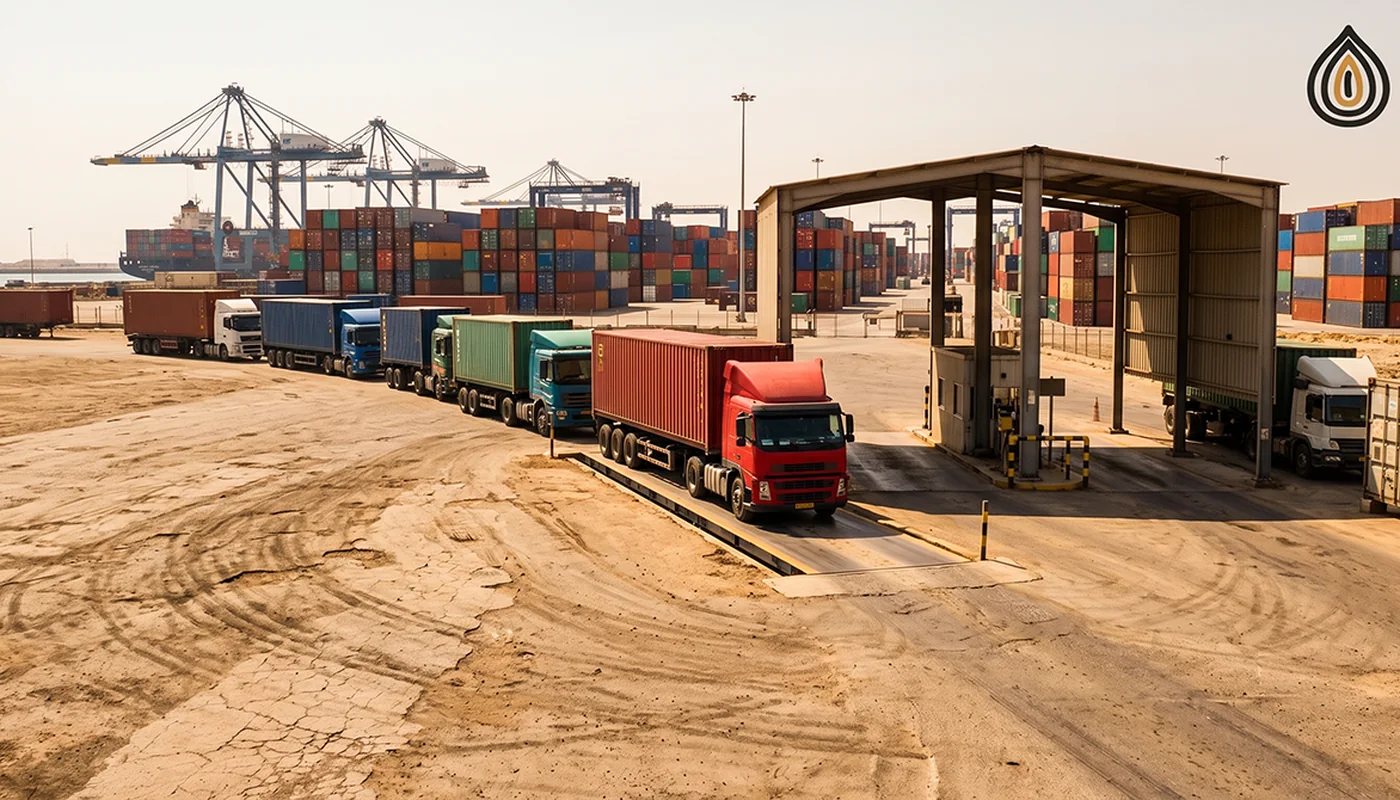
Pipavav, on the Saurashtra coast in Amreli district, is 60 to 70 kilometres by road from Mahuva and the dehydration belt, which makes it the natural port for the trade: a truck loaded at a plant in the morning is at the gate by early afternoon. It is a private port operated by APM Terminals, with a container terminal that handles about a million twenty-foot units a year, a rail link to the northern hinterland, and direct and feeder services to the Middle East, the Mediterranean and northern Europe. The customs data show its position: of the roughly 130,000 tonnes of dried onion India exported in the last fiscal year, some 45 percent, about 59,000 tonnes, cleared through Pipavav, more than any other port, with Mundra and Nhava Sheva taking most of the rest. A plant that ships through Mundra, 350 kilometres north, or Nhava Sheva, 500 kilometres south, does so for a specific service or a rate, not for convenience.
The port: what it is and how it works
For a shipper the port is a gate, a yard and a berth. The plant or the exporter's customs broker files the shipping bill in the Indian customs system before the container leaves the plant; the container, sealed at the plant under the self-sealing procedure that certified exporters use, or sealed at an inland depot, is trucked to the port and gated in against the shipping bill and the carrier's booking; customs releases it, with a physical check on a small share of consignments; the terminal stacks it and loads it onto the booked vessel. Cut-offs are the deadlines: the documentation cut-off, when the shipping instructions and the customs release must be complete, and the gate cut-off, when the container must be inside the terminal, typically two to three days before the vessel's arrival. Miss the gate cut-off and the container rolls to the next week's service. The port runs around the clock and handles the peak export months of March to May without the congestion that Nhava Sheva sees; gate-in to sailing is three to five days in a normal week. Rail from Pipavav serves the north and is not relevant to the onion trade, which is road all the way from the plant. The Indian export document set that the shipping bill sits within is in Export Documents for Dehydrated Onion from India.
Services to northern Europe: direct and transhipment
Pipavav has direct calls on a small number of India-to-northern-Europe services operated by the major alliances and carriers, on which a container loaded at Pipavav stays on the same vessel to Rotterdam, Hamburg or Antwerp; and it has many more feeder connections to the transhipment hubs, Colombo, Jebel Ali, Salalah and Port Said, from which mainline vessels carry the box onward. Direct is faster by a week and lower-risk, since a transhipment is a second handling and a chance of a missed connection; transhipment is more frequent and sometimes cheaper. Which a container gets depends on the carrier, the week and the booking, and a buyer who cares should ask the forwarder to book a direct service and to state the routing on the booking confirmation. The carriers that call Pipavav directly for northern Europe have changed as the alliances have reshuffled, and a forwarder's current schedule is the only reliable list; the northern European ports of call on the direct services are usually Rotterdam and Hamburg, sometimes Antwerp and Felixstowe, with Bremerhaven served by feeder from Hamburg or Rotterdam.
Suez or the Cape: the routing decision
The Pipavav to Hamburg voyage runs through the Arabian Sea, the Red Sea, the Suez Canal and the Mediterranean to the Atlantic and the North Sea, about 6,500 nautical miles, or around the Cape of Good Hope, about 10,500. Since late 2023 the security situation in the Red Sea has pushed most carriers onto the Cape routing for their Asia-to-Europe services, and through 2024 and 2025 the Cape was the norm, with a partial return to Suez by some carriers on some services during 2025 and 2026 as conditions allowed. The routing is the carrier's decision, made service by service, and it changes transit time by ten to fourteen days and freight by the surcharge the carriers levy for the longer voyage; a buyer cannot choose it but should know which it is, because a schedule built on 25 days when the service is on the Cape misses by two weeks. The forwarder's booking confirmation and the carrier's schedule both state the routing and the estimated arrival, and both should be checked at booking and again at sailing.
Transit time: port to port and door to door
| Leg | Suez routing, direct | Suez, transhipment | Cape routing, direct | Cape, transhipment |
|---|---|---|---|---|
| Plant to gate-in at Pipavav | 1 day | 1 day | 1 day | 1 day |
| Gate-in to sailing | 3-5 days | 3-5 days | 3-5 days | 3-5 days |
| Pipavav to Hamburg, port to port | 22-28 days | 28-35 days | 32-40 days | 38-48 days |
| Discharge, customs release, truck to warehouse | 3-7 days | 3-7 days | 3-7 days | 3-7 days |
| Door to door, typical | 30-40 days | 36-48 days | 40-52 days | 46-60 days |
Port-to-port times are the carriers' scheduled figures and real voyages run a few days over more often than under. The number to plan with in March 2026, on a direct service on whichever routing the carrier is using, is 35 to 45 days from the container leaving the plant to the pallets in a German warehouse, and 6 to 8 weeks from order confirmation to warehouse once production is added; the whole sequence is in From Sample to First Container.
The freight rate: base, surcharges and the all-in
A freight quote for a 20-foot container from Pipavav to Hamburg is a base ocean rate plus a list of surcharges, and the list is where quotes differ.
| Component | Typical range, March 2026, 20-foot | Notes |
|---|---|---|
| Base ocean freight | €600-1,100 | Set by the carrier's tariff or the forwarder's contract; moves weekly |
| Bunker or fuel surcharge (BAF, or built into the base) | €100-250 | Follows fuel prices; sometimes included |
| Cape or Red Sea contingency surcharge | €0-300 | Levied when the service is on the Cape; falls away on Suez |
| Peak season surcharge | €0-200 | Applied by carriers in strong demand periods |
| Origin terminal handling (THC), Pipavav | ₹9,000-14,000 (about €90-140) | Paid to the terminal via the carrier |
| Documentation, seal, bill of lading fees, origin | ₹4,000-8,000 | Forwarder and carrier fees |
| Destination THC, Hamburg | €200-320 | Paid via the carrier or the forwarder |
| Destination documentation, release fees | €50-120 | |
| ISPS, security, low-sulphur fuel surcharges | €20-60 | Small fixed items |
| All-in, port to port, 20-foot | €1,000-2,000 | Wide range; the Cape and peak surcharges make the difference |
| Per kg on 10 t of flakes | €0.10-0.20 | On 17 t of granules, €0.06-0.12 |
A 40-foot container costs 1.5 to 1.8 times the 20-foot rate and carries twice the cargo, which is why buyers who can fill one ship in 40-foot boxes. Forwarders with volume contracts on the lane quote below the carriers' spot tariffs in most weeks and above them in a falling market; a buyer with regular volume should hold a contract rate through its forwarder, and a buyer without should take a spot quote valid for the week of shipment. The rate history, and freight's share of the landed price, are in Freight Rates India to Europe 2026-2027; the way the rate sits inside FOB and CIF prices is in FOB, CIF or DAP?
The schedule step by step: order to warehouse
- Order confirmed, advance received. The exporter books the container with the forwarder for a vessel two to four weeks out, matching the plant's production slot. Day 0.
- Production. The plant dries, tests and packs the lot; the certificate of analysis comes back. Days 5 to 20 depending on season and cut.
- Booking confirmed, empty container released. The carrier confirms the vessel and the routing; the forwarder collects an empty container from the depot. Day 15 to 20.
- Shipping bill filed. The customs broker files against the invoice and packing list; the exporter's e-seal is assigned. Day 18 to 21.
- Stuffing at the plant or the exporter's godown. Pallets loaded, the loading filmed, the container sealed with the e-seal or a customs seal. Day 19 to 22.
- Gate-in at Pipavav. Before the gate cut-off, two to three days before the vessel. Day 20 to 23.
- Customs release, loading, sailing. Day 23 to 26.
- Bill of lading issued. Shipped-on-board bill two to four days after sailing; documents e-mailed; balance paid; originals or telex release sent. Day 25 to 30.
- Voyage. 22 to 40 days depending on routing and transhipment.
- Arrival Hamburg, discharge. Day 48 to 66.
- Import declaration, customs release, duty and VAT. One to three days if the documents are ready; the broker files against the arrival notice.
- Truck to warehouse. A slot at the terminal, a day's drive; the container is unloaded and returned empty within the free days. Day 52 to 72.
The interval between steps 1 and 7 is the part the exporter controls and the part a buyer should ask about at quotation; the voyage is the carrier's; the last steps are the buyer's broker's. Documents drafted and checked before step 7 prevent most of the delays in step 11.
Delays: what happens and how often
In a normal year most containers on this lane arrive within a week of the scheduled date, and the delays that push beyond that come from a short list. Rolling at Pipavav, the container missing its vessel and sailing a week later, from a late gate-in, a customs examination or an overbooked vessel: perhaps one container in ten in peak season. Transhipment misconnection at Colombo or Jebel Ali, a week's delay: one in ten of transhipped boxes. Routing change, a service moved from Suez to the Cape after booking, ten to fourteen days: it happened to most containers in the first half of 2024 and to some since; it is announced by the carrier and the forwarder should pass it on. Port congestion or strikes in Europe, a few days to two weeks: Hamburg and Rotterdam have had labour actions and yard congestion in recent years, and Antwerp and Felixstowe too. Weather, a few days in the North Sea winter. Customs examination at Hamburg, two to five days when a container is selected for a physical check or a laboratory sample, which for dried onion from India under the ordinary regime is uncommon. Document errors, a mismatched weight or a missing certificate of origin, which hold the release until corrected and are the most avoidable delay of all. The way the EU clearance runs, and how to keep it short, is in Customs Clearance for Dehydrated Onion in the EU.
Mundra, Nhava Sheva and Hazira as alternatives
Mundra, Adani's port in Kutch, is India's largest container port and has the widest range of direct services to Europe; it is 350 kilometres from Mahuva, a day's trucking and 15,000 to 25,000 rupees more per container, and it is used when a particular direct service or a better rate justifies the road. Nhava Sheva, Jawaharlal Nehru Port near Mumbai, is the traditional gateway and is 500 kilometres away; it has every service but suffers congestion and a longer, costlier road, and the onion trade uses it mostly for LCL consolidation, where the Mumbai consolidators have the volume. Hazira, near Surat, is 300 kilometres away and has grown its Europe services; it is a reasonable alternative for some carriers. Kandla is a bulk and breakbulk port and not relevant to containers. For a full container of dried onion, Pipavav is the default and the others are exceptions with a reason; for LCL, the consolidator's location decides, and that is often Nhava Sheva or Mundra, as explained in LCL or Full Container?
Arriving at Hamburg: discharge, customs, delivery
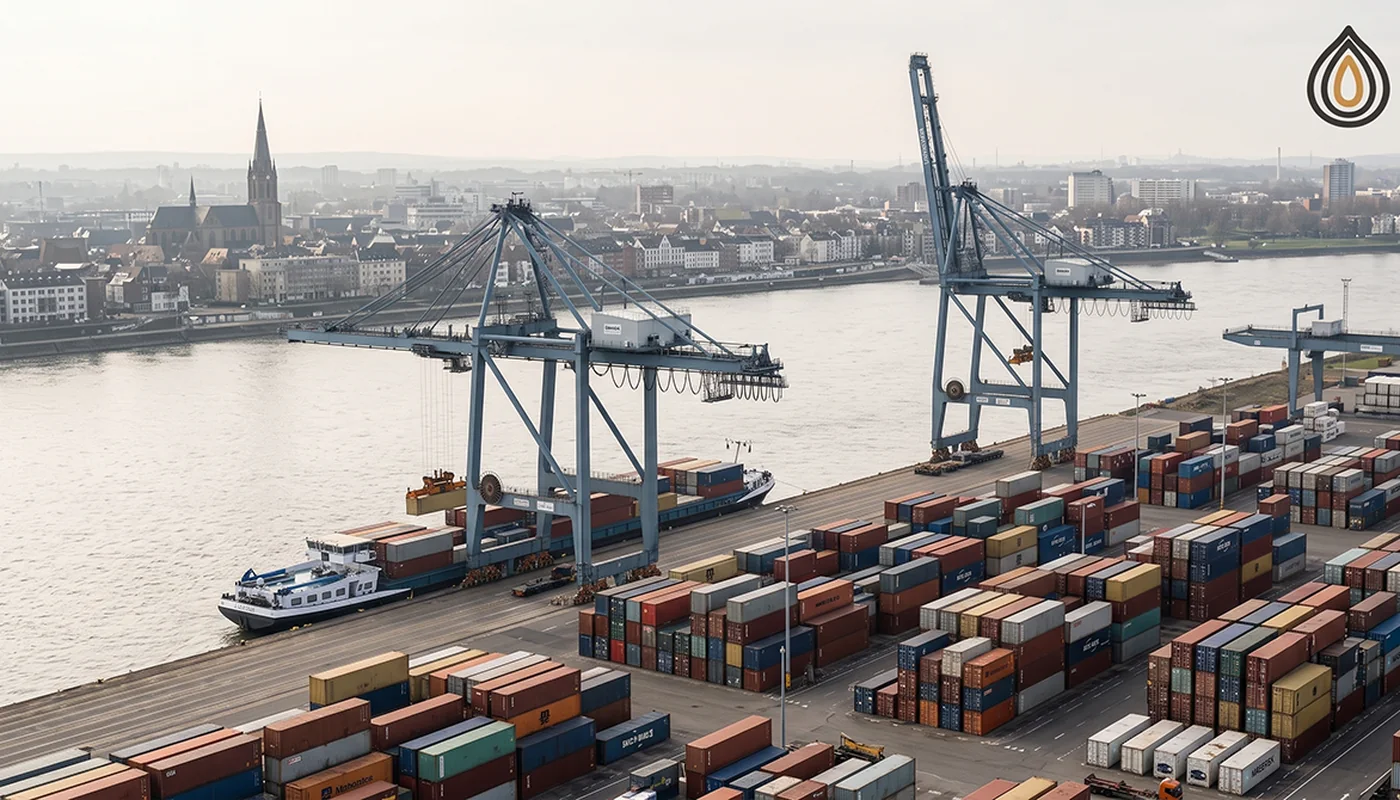
Hamburg's container terminals sit on the Elbe, 100 kilometres from the sea, and a vessel arriving at the river mouth takes most of a day to berth; discharge follows the vessel's schedule and a container is available for collection one to three days after arrival. The importer's broker files the import declaration in the German customs system, ATLAS, against the arrival notice, the invoice, the packing list and the certificate of origin, pays or defers the 6.4 percent duty and the import VAT, and receives the release; the carrier releases the container against the original bill of lading or the telex release and payment of destination charges; a trucker with a terminal slot collects the box and delivers it, and the empty goes back to the depot within the carrier's free days, usually five to seven, after which demurrage and detention run at 50 to 150 euros a day. A buyer whose documents were checked before sailing sees three to five days from arrival to warehouse; one whose broker is chasing a certificate sees ten. Rotterdam and Antwerp work the same way with their own customs systems; a German buyer importing through Rotterdam clears in the Netherlands and moves the goods under a transit document or pays Dutch VAT under a fiscal arrangement, which the broker advises on. The German market, its buyers and its entry points are in Importing Dehydrated Onion into Germany.
Container condition and the cargo
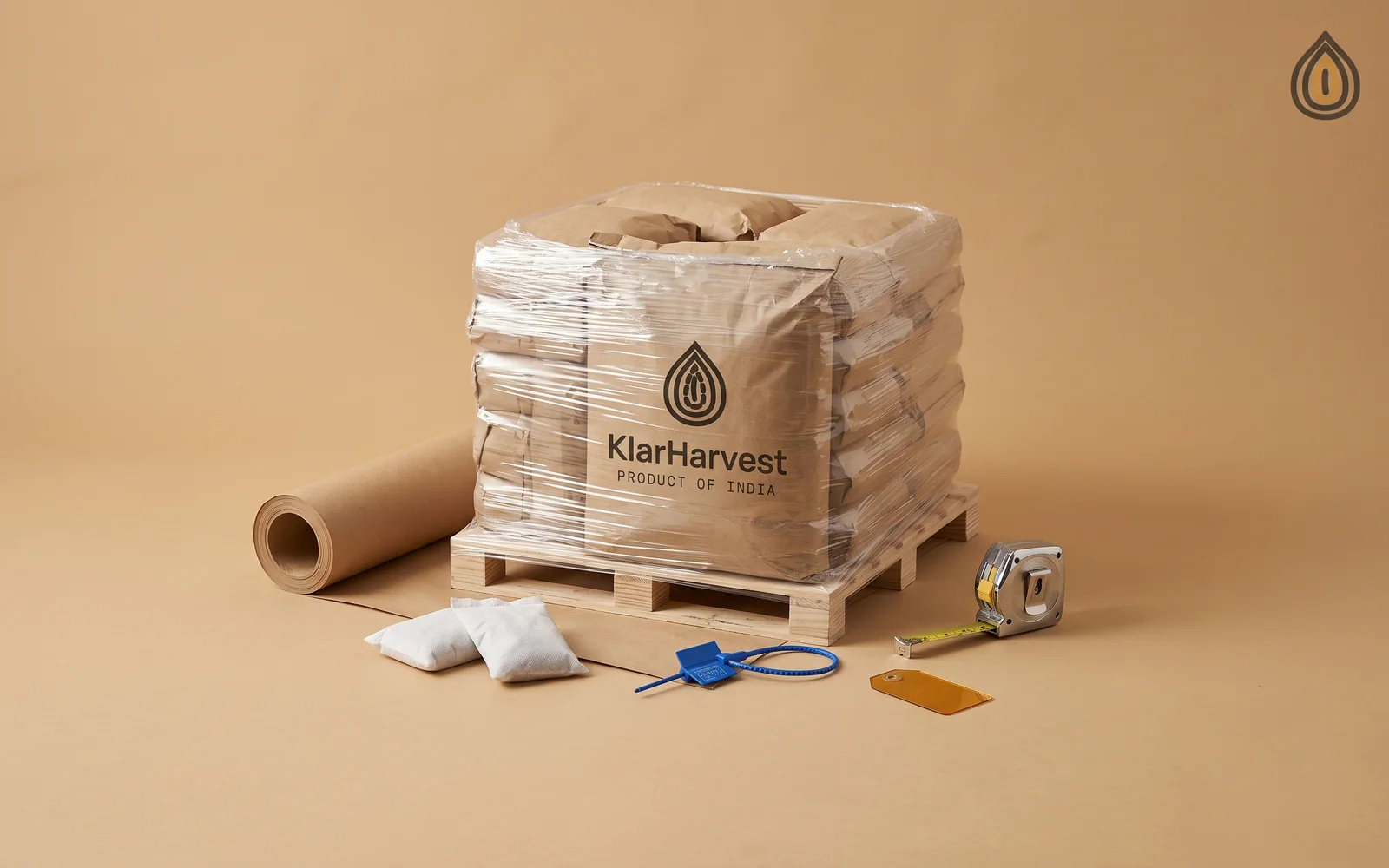
Dried onion is a dry, light, moisture-sensitive cargo, and the container matters as much as the ship. The exporter's forwarder should request a food-grade, clean, dry, odour-free box and inspect it at the depot for floor damage, rust holes, door-seal condition and the smell of a previous cargo; a container that carried chemicals, hides or wet cargo is refused. Pallets are loaded with dunnage against the walls, a moisture-absorbing desiccant bag hung in the box for the tropical leg, kraft paper or corrugated sheets over the pallets against condensation from the roof, and the doors sealed with the e-seal; the loading is filmed and the video sits in the lot record. Container rain, condensation forming on the cold roof as the box moves from the Arabian Sea heat into the North Sea winter, is the cargo's main transit risk, and the top sheets and the desiccant are what prevent it. A reefer is not used for dried onion, which needs no cold chain; that saving is quantified in Why Dehydrated Onion Needs No Cold Chain. The stuffing practice itself is in How a Dehydrated Onion Container Is Loaded, and the insurance for the voyage in Marine Insurance and Claims for Dehydrated Onion Shipments.
Planning an arrival date that holds
- Ask the exporter for the vessel and the routing at booking, not at sailing, and for the carrier's scheduled arrival date.
- Plan on the Cape transit unless the booking confirmation says Suez, and on a direct service if one is available; add a week to a transhipment.
- Add three to seven days at the destination for discharge, customs and trucking, and a week of contingency for a first shipment.
- Have the documents checked before the vessel sails, so that the import declaration can be pre-lodged.
- Track the container on the carrier's site by the bill of lading number from sailing to discharge, and ask the forwarder to flag any routing change.
- For a stock plan, carry a safety stock of four to six weeks on the lane's variability and order the next container when the previous one sails, not when it arrives.
- For time-critical volumes, split the order between two vessels a week apart rather than trusting one.
- If the arrival must be certain, air freight for the first pallet and sea for the rest; the case for that is in Air or Sea Freight for Dehydrated Onion.
Tracking a container from Pipavav to the warehouse
Every container on this lane can be followed at each step, and a buyer who follows it hears about a problem days before the forwarder calls. The booking confirmation gives the container number, the vessel and voyage, and the bill of lading number once issued; the carrier's website tracks the container by either number through gate-in, loading, departure, transhipment if any, arrival and discharge, and the larger forwarders mirror the same events in their own portals with e-mail alerts. The Indian customs system shows the shipping bill's status, filed, assessed and let-export, which the exporter's broker passes on. Vessel positions are public through the automatic identification system, and a buyer can see the ship itself on any of the free tracking sites, which is how a Cape diversion becomes visible a day after the vessel turns south rather than a week later on the carrier's schedule. At the destination, the terminal's own portal shows discharge and customs status, and the truck's arrival is a call from the warehouse. The events worth an alert: gate-in confirmed, departure confirmed, any change of vessel or routing, arrival at the transhipment port and departure from it, arrival at Hamburg, customs release. A buyer who sets those six alerts at booking has done all the tracking the lane needs.
Seasonality on the lane: when space is tight
Space and rates on the India-to-northern-Europe lane move with two calendars. The carriers' peak season for westbound cargo out of India runs from August to October, ahead of the European autumn and Christmas retail build, when general cargo fills the vessels and the lines apply peak surcharges and roll bookings; the dried-onion trade's own peak, March to June, when the plants ship the season's contracts, sits before it and usually finds space, though the two overlap in May and June at the busiest plants. Chinese New Year in late January or February empties the eastbound vessels and disturbs the westbound schedules for a fortnight; Diwali in October or November slows Indian gate-ins for a week. The monsoon, June to September, brings rough seas in the Arabian Sea that delay some sailings by a day or two and closes the smaller Indian ports occasionally, though Pipavav operates through it. A buyer planning shipments should expect the smoothest passage for April to June sailings, the tightest space and the highest surcharges for August to October, and a fortnight's disturbance around each of the two festivals; the way the freight rate itself moves through the year, and its share of the landed cost, is in Freight Rates India to Europe 2026-2027.
Rotterdam, Antwerp and Felixstowe: the other northern gateways
Hamburg is one of four northern European gateways the India services call, and the choice among them is the buyer's location and its customs preference rather than the sea leg, since the vessels call two or three of them in sequence a day or two apart. Rotterdam is the largest, the first call on most services, the fastest to clear, and the entry point for the Dutch and Belgian traders who supply much of Germany's onion; a German buyer in the west or south often clears there through a Dutch fiscal representative, as explained in Importing Dehydrated Onion into Germany. Antwerp serves Belgium, northern France and the German southwest, with a strong dried-vegetable trading community of its own. Felixstowe, with London Gateway and Southampton, serves the United Kingdom, whose post-Brexit clearance runs through its own systems described in Importing Dehydrated Onion into the UK. Bremerhaven serves northern Germany alongside Hamburg and is sometimes the German call on a service that skips Hamburg. Transit times from Pipavav to any of the four are within two or three days of each other; a buyer should name the port closest to its warehouse and, where the service calls it second or third, add the extra days to the plan.
Forwarder or carrier direct: who to book with
A container can be booked directly with the shipping line or through a freight forwarder, and for a dried-onion importer the forwarder is nearly always the better route. The line sells space and a container; the forwarder sells the door-to-door movement, and on this lane that includes the empty-container inspection at the Indian depot, the coordination with the exporter's customs broker, the choice between the direct and transhipment services in a given week, the destination clearance through its own or a partner broker, the truck and the empty return, and a single invoice for all of it. Forwarders with volume on the lane hold contract rates below the lines' spot tariffs in most weeks and negotiate extended free days; they also carry the relationship that gets a rolled container onto the next vessel rather than the one after. Booking direct with a line makes sense for a large importer shipping many containers a month with its own logistics staff, and for nobody else. For a first container the practical choice is between the exporter's forwarder under CIF, which is simplest, and the buyer's own forwarder under FOB, which becomes the norm once the buyer ships regularly; the trade-off is in FOB, CIF or DAP? A forwarder should be asked, before the first booking, which services it uses on the lane, whether they are direct, what its free days are at the destination, and how it handles a routing change.
How KlarHarvest ships
KlarHarvest ships full containers through Pipavav on direct services to Hamburg, Rotterdam and Antwerp where the schedule allows, states the vessel, the routing and the scheduled arrival on the booking confirmation sent to the buyer, and passes freight through at the forwarder's rate on CIF quotes. Containers are inspected at the depot, loaded and sealed at the exporter's Bhavnagar godown under customs self-sealing with the loading filmed, and the video, the packing list and the certificate are in the lot record before the vessel sails. Document drafts go to the buyer's broker for checking before sailing, and the container is tracked and the buyer told of any change in routing or arrival. Pallet and LCL buyers are served through weekly consolidations, as set out on the our process page.
Frequently asked questions
How long does shipping from Pipavav to Hamburg take?
Port to port, 22 to 28 days on a direct service via Suez and 32 to 40 via the Cape of Good Hope; add a week for transhipment. Door to door, from the plant to a German warehouse, plan on 35 to 45 days.
Why do carriers route via the Cape instead of Suez?
Security in the Red Sea since late 2023 has pushed most Asia-to-Europe services around the Cape; some have returned to Suez as conditions allowed. The carrier decides per service, and the routing changes transit by 10 to 14 days.
What does a 20-foot container cost from Pipavav to Hamburg?
All-in port to port, roughly 1,000 to 2,000 euros in March 2026 depending on the routing and surcharges, which is 0.10 to 0.20 euros per kilogram on ten tonnes of flakes and less on denser cuts.
Why Pipavav rather than Mundra or Nhava Sheva?
It is an hour from the plants and handles almost half of India's dried-onion exports. Mundra is used for specific services or rates at a day's extra trucking; Nhava Sheva mostly for LCL consolidation.
What delays a container on this lane?
Rolling at the origin, transhipment misconnections, a routing change to the Cape, European port congestion or strikes, and document errors at destination. Most containers arrive within a week of schedule; a first shipment should carry a week of contingency.
Does dehydrated onion need a refrigerated container?
No. It ships in a standard dry container with top sheets and a desiccant against condensation. The container should be food-grade, clean, dry and odour-free, and inspected at the depot.
How soon after arrival can I have the goods?
Three to five days with documents checked in advance: discharge, customs release and a truck slot. Ten or more if the broker is chasing a missing or wrong document.
Next step
Request a quote with your port and the cut, and it comes with FOB and CIF side by side, the service and routing named and a scheduled arrival date; or request a sample first and plan the first container when the product has passed your trial.