- What Incoterms are, and which edition applies
- The five terms used for dehydrated onion
- The cost split under each term
- Where the risk passes, and why it is not where the cost stops
- Customs and documents: who does what
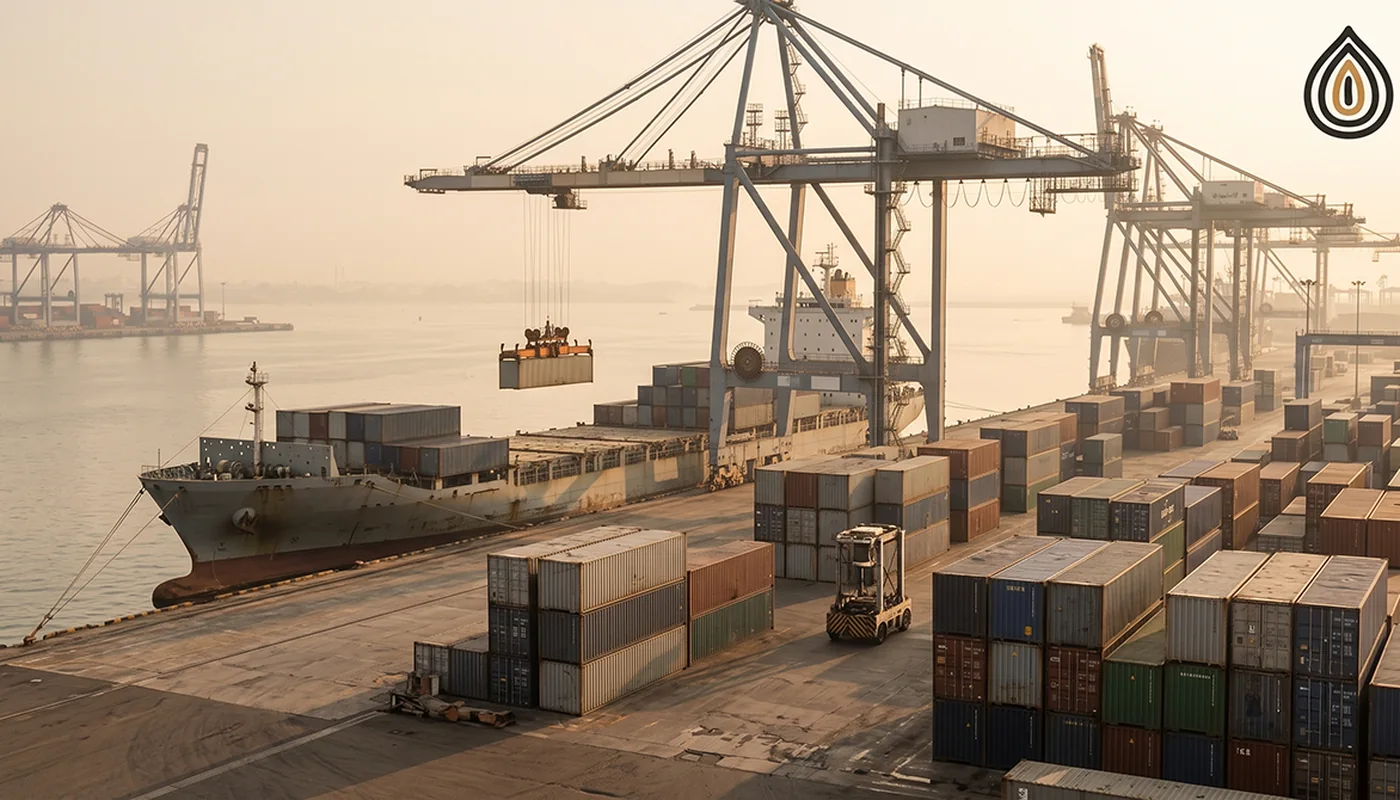
- A worked container: Pipavav to Hamburg under FOB, CIF and DAP
- LCL, pallets and air freight
- Insurance: who buys it, what it covers
- Reading a quote: FOB and CIF on the same page
- Mistakes seen in quotes and contracts
- Which term to choose, and when to change it
- Contract wording
- Who arranges what: a responsibility matrix
- Demurrage, detention and the free days
- Changing the term mid-relationship
- How KlarHarvest quotes
- Frequently asked questions
Judge the product, not the words
200-500 g from a current lot, dispatched by courier with the lot lab report.
Request a sampleIncoterms for dehydrated onion shipments are three letters on a quote, and they decide more than the price. They fix who pays the trucking to Pipavav, the port charges, the sea freight and the insurance; they fix the point at which the risk of loss passes from the Indian seller to the European buyer; and they fix who clears export customs in India and import customs in the Union. A buyer comparing an FOB quote from one supplier with a CIF quote from another is comparing two different things, and a buyer who accepts DAP without knowing what it excludes finds duty and VAT arriving as a surprise. The search most buyers arrive here from, Incoterms dehydrated onion, has a short answer and a long one, and this guide gives both: it explains the terms that are actually used in this trade, with the numbers for a container from Pipavav to Hamburg, and says which term to use when.
It covers what Incoterms are and which edition applies, the five terms that matter for dried onion, the cost split under each, the point of risk transfer and why it differs from the cost split, the documents and customs duties each term places on which party, worked figures on a 20-foot container, the special cases of LCL and air freight, the insurance question, the mistakes seen in quotes and contracts, and the term to choose at each stage of a buying relationship. Figures are March 2026 levels; freight rates move and should be checked against a forwarder's quote.
What this guide covers
- What Incoterms are, and which edition applies
- The five terms used for dehydrated onion
- The cost split under each term
- Where the risk passes, and why it is not where the cost stops
- Customs and documents: who does what
- A worked container: Pipavav to Hamburg under FOB, CIF and DAP
- LCL, pallets and air freight
- Insurance: who buys it, what it covers
- Reading a quote: FOB and CIF on the same page
- Mistakes seen in quotes and contracts
- Which term to choose, and when to change it
- Contract wording
- Who arranges what: a responsibility matrix
- Demurrage, detention and the free days
- Changing the term mid-relationship
- How KlarHarvest quotes
- Frequently asked questions
What Incoterms are, and which edition applies
Incoterms are the International Chamber of Commerce's standard trade terms, eleven three-letter rules that define, for a sale of goods, who arranges and pays for each stage of transport, where the risk of loss or damage passes from seller to buyer, and who handles export and import clearance. They do not fix the price, the payment terms, the transfer of ownership or the law of the contract; those belong in the contract itself. The current edition is Incoterms 2020, and a quote or contract should say so, "FOB Pipavav, Incoterms 2020", because the rules have changed between editions and a bare "FOB" invites argument about which version was meant. Of the eleven rules, seven apply to any mode of transport and four, FAS, FOB, CFR and CIF, are for sea and inland waterway only; dried onion moves by sea in containers, and the terms in use are FOB, CFR, CIF, DAP and, occasionally, EXW and FCA.
The five terms used for dehydrated onion
| Term | Full name | Seller delivers when | Seller pays up to | Buyer pays from |
|---|---|---|---|---|
| EXW | Ex Works | Goods are at the seller's premises, not loaded | Nothing beyond packing | Loading at the plant onward, including Indian export clearance |
| FCA | Free Carrier | Goods handed to the buyer's carrier at a named place, loaded on the truck | Loading at the plant, export clearance | Trucking, port, freight, insurance, import |
| FOB | Free On Board | Goods on board the vessel at the port of shipment | Trucking to port, port charges, export clearance, loading | Sea freight, insurance, import |
| CFR | Cost and Freight | Goods on board at the port of shipment | As FOB plus sea freight to the named destination port | Insurance, destination port charges, import |
| CIF | Cost, Insurance and Freight | Goods on board at the port of shipment | As CFR plus cargo insurance | Destination port charges, import |
| DAP | Delivered At Place | Goods at the named destination, on the truck, ready for unloading | Everything to the buyer's door except import duty and VAT | Import clearance, duty, VAT, unloading |
FOB and CIF carry almost all of this trade. EXW is quoted by plants that do not export themselves and want no part of the paperwork, and it is a poor term for an overseas buyer, who then has to arrange Indian export clearance from abroad; FCA is its proper replacement and is rarely used in practice. CFR is CIF without the insurance and appears where a buyer has its own open cover. DAP is offered by exporters with a forwarding partner in Europe and is the convenient term for smaller buyers who do not want to deal with a port. The remaining rules, DPU and DDP, are seen occasionally: DPU, delivered and unloaded, is DAP with unloading; DDP, with duty paid by the seller, is impractical from India because the seller would have to register for EU VAT, and an Indian exporter offering it is usually not understanding what it involves.
The cost split under each term
| Cost item, 20-foot container of flakes | EXW | FOB | CFR | CIF | DAP |
|---|---|---|---|---|---|
| Product, packed, at the plant | Seller | Seller | Seller | Seller | Seller |
| Loading onto truck at the plant | Buyer | Seller | Seller | Seller | Seller |
| Trucking Mahuva to Pipavav, ~₹18,000-25,000 | Buyer | Seller | Seller | Seller | Seller |
| Indian export clearance, CHA fees, ~₹8,000-15,000 | Buyer | Seller | Seller | Seller | Seller |
| Origin terminal handling, ~₹10,000-14,000 | Buyer | Seller | Seller | Seller | Seller |
| Sea freight Pipavav to Hamburg, ~€900-1,600 | Buyer | Buyer | Seller | Seller | Seller |
| Cargo insurance, ~0.15-0.3 % of value | Buyer | Buyer | Buyer | Seller | Seller |
| Destination terminal handling, ~€200-350 | Buyer | Buyer | Buyer | Buyer | Seller |
| Trucking Hamburg to the buyer's warehouse | Buyer | Buyer | Buyer | Buyer | Seller |
| EU import clearance, broker fee, ~€80-150 | Buyer | Buyer | Buyer | Buyer | Buyer |
| Import duty 6.4 % and import VAT | Buyer | Buyer | Buyer | Buyer | Buyer |
| Unloading at the warehouse | Buyer | Buyer | Buyer | Buyer | Buyer |
The origin costs between the plant and the ship, trucking, clearance and terminal handling, come to roughly 40,000 to 55,000 rupees on a container, 4 to 5.5 rupees per kilogram on ten tonnes of flakes; they are inside every price except EXW. The freight and insurance, which separate FOB from CIF, are the larger and more variable block; the way freight is built and where it has been is in Freight Rates India to Europe 2026-2027. The whole build from plant to landed cost is in Landed Cost of Dehydrated Onion in Europe.
Where the risk passes, and why it is not where the cost stops
The point that catches buyers is that under CFR and CIF the seller pays for the sea freight but does not carry the risk during it. Under FOB, CFR and CIF alike, the risk of loss or damage passes from seller to buyer when the goods are on board the vessel at Pipavav; from that moment a container lost overboard, wetted in a storm or delayed by a port closure is the buyer's problem, and under CIF the seller has merely bought an insurance policy in the buyer's favour to cover it. A CIF buyer who assumes the seller is responsible until Hamburg because the seller paid the freight is wrong, and a claim for wet cargo discovered at Hamburg goes to the insurer, not to the seller. Only under DAP does the seller carry the risk to the destination, which is why DAP costs more than the freight difference alone: the seller is pricing the risk of the voyage.
Under EXW the risk passes at the plant before the goods are even loaded, which means a buyer is responsible for damage during loading it did not perform; FCA fixes that by passing risk once the seller has loaded the truck. Under all terms, risk for the goods' condition at the moment of delivery is separate from the contract's quality obligations: a lot that was out of specification when it went on board is the seller's breach under any term, and the risk-transfer point concerns only what happens to conforming goods afterward.
Customs and documents: who does what
Export clearance in India is the seller's job under every term except EXW, and it should be, because it requires an Indian Importer-Exporter Code, an Indian customs broker, the shipping bill filed in the Indian customs system and the APEDA and FSSAI registrations that an overseas buyer does not hold. Import clearance in the EU is the buyer's job under every term except DDP, and it should be, because it requires an EORI number, an EU customs broker and the payment of duty and VAT in the buyer's name so that the VAT is recoverable. The documents follow the same logic: under FOB, CFR and CIF the seller provides the commercial invoice, the packing list, the bill of lading, the certificate of origin and the certificates of analysis, plus under CIF the insurance certificate; under DAP the seller also provides the delivery order and arranges the destination handling and the truck, and the buyer's broker files the import declaration on the seller's documents. The Indian export document set, and who issues each piece, is in Export Documents for Dehydrated Onion from India; the EU import side, with the tariff line and the regulatory requirements, is in EU Import Requirements for Dehydrated Onion.

A worked container: Pipavav to Hamburg under FOB, CIF and DAP
A 20-foot container holding 10,000 kilograms of white onion flakes, standard tier, in 20 kilogram bags on pallets, from a certified Mahuva plant to a manufacturer near Hamburg, March 2026.
| Item | FOB Pipavav | CIF Hamburg | DAP buyer's warehouse |
|---|---|---|---|
| Product at plant, packed, ₹138/kg | ₹13,80,000 | ₹13,80,000 | ₹13,80,000 |
| Origin costs (truck, clearance, THC) | ₹48,000 | ₹48,000 | ₹48,000 |
| Seller's margin (indicative 8 %) | ₹1,14,000 | ₹1,14,000 | ₹1,14,000 |
| Seller's price, ₹ | ₹15,42,000 | ||
| Seller's price, €/kg (₹100 = €1) | €1.54 | ||
| Sea freight, Pipavav to Hamburg | Buyer, ~€1,200 | Seller, €1,200 | Seller, €1,200 |
| Insurance, ICC(A), 110 % of CIF value | Buyer, ~€40 | Seller, €40 | Seller, €40 |
| CIF price | €16,660 = €1.67/kg | ||
| Destination THC, documentation, port fees | Buyer, ~€300 | Buyer, ~€300 | Seller, €300 |
| Trucking Hamburg port to warehouse (100 km) | Buyer, ~€350 | Buyer, ~€350 | Seller, €350 |
| Seller's risk premium for the voyage and handling | ~€150 | ||
| DAP price | €17,460 = €1.75/kg | ||
| Import broker fee | Buyer, €120 | Buyer, €120 | Buyer, €120 |
| Duty 6.4 % on customs value (CIF basis) | Buyer, €1,066 | Buyer, €1,066 | Buyer, €1,066 |
| Import VAT 7 %, recoverable | Buyer | Buyer | Buyer |
| Landed cost before VAT, €/kg | €1.81 | €1.81 | €1.82 |
The landed cost is nearly the same under all three terms, as it should be, because the same services are bought by somebody; the differences are who buys them, who carries the risk and how much the seller charges for taking on the work. DAP costs a cent or two more for the seller's risk premium and forwarding margin, and saves the buyer the port and trucking arrangements. The customs value on which duty is charged is the CIF value regardless of the term the goods were bought on, so a FOB buyer must add the freight and insurance to the invoice value when declaring. A buyer comparing suppliers should bring every quote to the same term before comparing; the quote-reading method is in What Does Dehydrated Onion Cost per Kilogram?
LCL, pallets and air freight
The sea-only terms, FOB, CFR and CIF, were written for goods handed to a ship, and for less-than-container-load cargo handed to a consolidator's warehouse they fit badly, since the seller cannot put a pallet "on board": the goods go into a consolidator's container at a container freight station and the seller's control ends there. The correct terms for LCL are the any-mode ones, FCA for the seller delivering to the consolidator's warehouse at the origin, CPT for the seller paying carriage to the destination station, CIP for carriage and insurance, and DAP for delivery to the buyer's door. In practice the trade still writes FOB and CIF on LCL quotes and everybody understands what is meant, but a contract should use FCA, CPT, CIP or DAP for LCL so that the risk point is defined. The same applies to air freight, where FOB has no meaning and CPT, CIP or DAP are the terms. The LCL cost structure, with its destination charges that surprise first-time buyers, is in LCL or Full Container?, and the air option in Air or Sea Freight for Dehydrated Onion.
Insurance: who buys it, what it covers
Under CIF and CIP the seller must buy cargo insurance in the buyer's favour, and Incoterms 2020 set the minimum cover differently for the two: CIF requires only the minimum cover, Institute Cargo Clauses (C), which covers major casualties such as fire, sinking and collision but not wetting, theft or handling damage; CIP requires the all-risks cover of Clauses (A). Dried onion is a low-value, moisture-sensitive cargo whose realistic losses are wetting through a damaged container, condensation damage in a poorly stowed box, theft at a transhipment port and handling damage to pallets, none of which Clauses (C) cover. A CIF buyer should therefore specify Clauses (A) in the contract, "CIF Hamburg, Incoterms 2020, insurance under Institute Cargo Clauses (A) for 110 percent of the CIF value", and check the certificate. Under FOB and CFR the buyer insures, either per shipment or under an annual open cover that its broker arranges, which is cheaper for regular importers. Insurance for the inland leg in India, plant to port, is the seller's under all terms except EXW and is usually covered by the seller's own policy. Claims, and how to present them, are in Marine Insurance and Claims for Dehydrated Onion Shipments.
Reading a quote: FOB and CIF on the same page
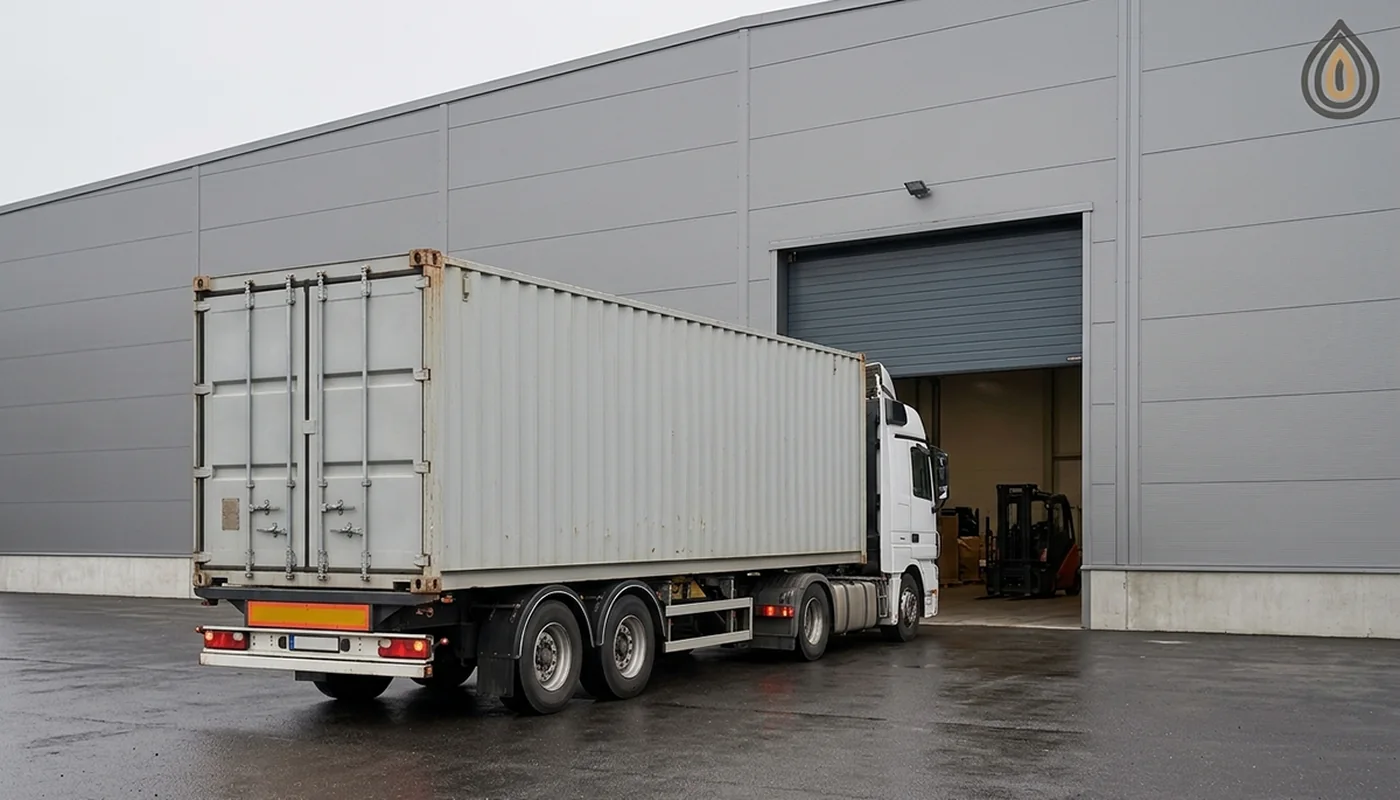
A quote should state the term, the edition, the named place, and the basis of any freight element. "FOB Pipavav, Incoterms 2020" names the port; "CIF Hamburg, Incoterms 2020" names the destination port; "DAP [buyer's address], Incoterms 2020" names the door. The named place matters: "FOB India" is not a term, "CIF Germany" is not a term, and "CIF Hamburg" on a container that the line delivers to Bremerhaven leaves the buyer with an on-carriage bill. A quote should also say what the freight element assumes, the shipping line or a range, the validity, and whether destination charges are included, since some carriers' "CIF" rates exclude destination terminal handling and some include it. The most useful request to a supplier is FOB and CIF side by side on one quote: the difference should be within a few percent of the forwarder's freight rate plus insurance, and a difference much larger than that means the supplier is marking up the freight; a difference much smaller may mean the freight element is out of date and the supplier will requote when the booking is made.
Mistakes seen in quotes and contracts
- No edition. "FOB" alone; write "Incoterms 2020". The rules on who pays terminal handling changed between 2000 and 2010 and disputes still arise from it.
- A country instead of a place. "CIF Europe" or "FOB India"; name the port.
- CIF read as delivered. A buyer who thinks the seller is responsible until the goods arrive; under CIF the risk passed at Pipavav and the remedy for transit damage is the insurance.
- CIF with Clauses (C) insurance. Legally sufficient and practically useless for a wetting or theft loss; specify Clauses (A).
- EXW from a plant that cannot export. The buyer then needs an Indian broker, an IEC in whose name to export, and someone to load the truck; use FCA and let the seller clear export.
- DDP from an Indian seller. It requires the seller to pay EU VAT in its own name; it will not work as promised.
- FOB on an LCL or air shipment. The risk point is undefined; use FCA, CPT, CIP or DAP.
- Freight at the quote date, booked at the ship date. A CIF quote a month old carries a freight element that has moved; the contract should say whether the freight is fixed or passed through at cost.
- Customs value under FOB. Duty is charged on the CIF value; a FOB buyer who declares the FOB invoice value underdeclares.
Which term to choose, and when to change it
For a first container from a new supplier, CIF to the buyer's port with Clauses (A) insurance is the practical choice: the seller, who knows the forwarders and the lines at Pipavav, arranges the freight, the buyer's exposure is defined, and the buyer's broker handles clearance and the last leg in a country it knows. For a pallet or LCL shipment, DAP to the door is simpler still, and the premium for it is small; a first-time buyer who has never cleared a container should use it. Once a buyer ships regularly, FOB is usually cheaper, because a European importer's forwarder often has better rates and better service on the westbound lane than an Indian exporter can buy, the buyer controls the routing and the schedule, and insurance goes under the buyer's open cover; the switch from CIF to FOB is the normal step at the second or third year of a relationship. Traders and larger manufacturers buy FOB almost exclusively for those reasons. The term to avoid at any stage is EXW, and the term to insist on for LCL is FCA or DAP rather than a nominal FOB. The whole sequence of a first import, with the term decisions in their place, is in How to Import Dehydrated Onion from India.
Contract wording
- Term: "The goods are sold CIF Hamburg, Incoterms 2020. Cargo insurance under Institute Cargo Clauses (A) for 110 percent of the CIF value, claims payable in Germany in euro."
- Freight basis: "The freight element of the price is fixed at the rate stated in the quotation for shipments within the contract period; surcharges imposed by the carrier after the contract date are for the buyer's account on presentation of the carrier's invoice."
- Named place: "Port of discharge: Hamburg. Where the carrier discharges elsewhere, on-carriage to Hamburg is for the seller's account."
- Delivery: "Delivery is complete when the container is on board the vessel at Pipavav, at which point risk passes to the buyer."
- Documents: "The seller shall provide the commercial invoice, packing list, full set of clean on-board bills of lading or a telex release, certificate of origin, certificates of analysis per lot, insurance certificate and any declarations agreed in the specification."
- Import: "Import clearance, duty and VAT in the country of destination are for the buyer's account."
The payment and claims clauses that sit beside these are in Payment Terms for Dehydrated Onion Imports and B2B Contract Terms for Dehydrated Onion.
Who arranges what: a responsibility matrix
The cost split says who pays; the responsibility matrix says who does the work, and the two are not the same. Under FOB the seller arranges the truck, the customs broker in India and the terminal, and the buyer's forwarder books the vessel and tells the seller which one; under CIF the seller's forwarder books the vessel and the buyer's broker handles the destination; under DAP the seller's forwarder runs everything to the door and the buyer's broker files only the import declaration. The practical questions a buyer should settle before the first container, whichever term is used: who nominates the forwarder, since a buyer buying FOB should nominate its own and tell the seller early enough to align the production slot with the sailing; who inspects the empty container at the depot, which is the seller's forwarder under every term and should be written into the contract; who books the truck slot at the destination terminal and returns the empty, the buyer's forwarder under FOB, CFR and CIF and the seller's under DAP; and who receives the arrival notice, which the carrier sends to the party named as notify on the bill of lading, so the buyer's broker must be named there or the notice goes astray. A one-page matrix with those lines, agreed at the first order, prevents the container that sits at Hamburg for a week because each side thought the other had booked the truck.
| Task | EXW | FCA | FOB | CFR / CIF | DAP |
|---|---|---|---|---|---|
| Load the truck at the plant | Buyer | Seller | Seller | Seller | Seller |
| Inspect and accept the empty container | Buyer's forwarder | Seller's forwarder | Seller's forwarder | Seller's forwarder | Seller's forwarder |
| File the Indian shipping bill | Buyer's agent (impractical) | Seller | Seller | Seller | Seller |
| Book the vessel | Buyer | Buyer | Buyer | Seller | Seller |
| Buy cargo insurance | Buyer | Buyer | Buyer | Buyer (CFR) / Seller (CIF) | Seller |
| Receive the arrival notice | Buyer | Buyer | Buyer | Buyer | Seller's agent |
| File the EU import declaration | Buyer | Buyer | Buyer | Buyer | Buyer |
| Book the destination truck and return the empty | Buyer | Buyer | Buyer | Buyer | Seller |
| Pay demurrage if the box overstays | Buyer | Buyer | Buyer | Buyer | Seller, until delivery |
Demurrage, detention and the free days
Two charges sit outside every Incoterm and catch first-time importers: demurrage, the carrier's charge for a full container left in the terminal beyond the free days, and detention, its charge for a container kept outside the terminal, at the buyer's warehouse, beyond a second allowance. Carriers grant five to seven free days at most northern European ports, sometimes fewer at the busiest, and then charge 50 to 150 euros a day rising in steps, so a container that waits ten days for a missing certificate of origin can cost more in demurrage than the broker's fee for a year. Under FOB, CFR and CIF the charges fall on the buyer from arrival; under DAP they fall on the seller until the container is delivered, which is one reason DAP quotes carry a risk premium and why a DAP seller will press the buyer for a delivery slot. The defences are the same under every term: documents checked before sailing so that the declaration is pre-lodged, a truck slot booked against the vessel's scheduled arrival, an unloading crew ready so that the container is turned round in a day, and a forwarder who negotiates extended free days into its contract with the carrier, which the larger ones do. Storage at the terminal after customs release is a third charge, levied by the terminal rather than the carrier, and it starts sooner. A buyer's contract with its forwarder should state the free days and the rates, and the clearance timeline in Customs Clearance for Dehydrated Onion in the EU shows where the days go.
Changing the term mid-relationship
A relationship that starts on CIF and moves to FOB, which is the usual path, changes three things at once and they should be changed deliberately rather than by a line on a purchase order. The price falls by the freight and insurance element, and the buyer should ask for the FOB price on the same basis as the CIF quote it had, since a seller who has been marking up freight will show a smaller drop than the forwarder's rate implies. The buyer's forwarder takes over the booking, and the seller needs the forwarder's contact and the booking reference for each container early enough to fix the production slot; a buyer whose forwarder books late leaves the seller with a lot dried and no vessel. And the insurance moves to the buyer's open cover, which must be confirmed in force before the first FOB sailing, since a container that sails uninsured in the gap between the seller's CIF cover ending and the buyer's cover starting is uninsured. The reverse move, from FOB to DAP, happens when a buyer's own logistics capacity shrinks, a warehouse change or a staff departure, and needs the seller's forwarder to be given the delivery address, the unloading hours and the pallet-exchange rules of the receiving site. Either change is best made at a contract renewal, on a written amendment that restates the term, the edition, the named place and the freight basis, and the contract clauses that carry those are in B2B Contract Terms for Dehydrated Onion.
How KlarHarvest quotes
Every KlarHarvest quotation carries FOB Pipavav and CIF to the buyer's named port side by side, Incoterms 2020, with the freight rate and the shipping line named, insurance under Clauses (A), and the validity stated; DAP to the door is quoted for pallet and LCL buyers and for any buyer who prefers it, and FCA is used for LCL in the contract. Freight is passed through at the forwarder's rate with no mark-up, so the difference between the two columns is the freight and the insurance and nothing else. The quote comes with the landed-cost estimate for the buyer's country so that the number a buyer plans with is the number it will pay. The quote is requested through the contact page with the port and the cut.
Frequently asked questions
What is the difference between FOB and CIF for dehydrated onion?
Under FOB the seller's price ends with the goods on board at Pipavav and the buyer arranges and pays freight and insurance; under CIF the seller has paid freight to the named port and bought insurance. The risk passes at Pipavav under both.
Which Incoterm is best for a first import of dehydrated onion?
CIF to your port with Clauses (A) insurance for a container, DAP to your door for a pallet. Move to FOB once you ship regularly and your forwarder's rates beat the seller's.
Does CIF mean the seller is responsible until the goods arrive?
No. Risk passes when the goods are on board at the origin port; the seller has paid freight and bought insurance in your favour. Transit damage is claimed from the insurer.
What does DAP include and exclude?
Everything to the named place, including freight, destination handling and trucking, with the seller carrying the risk to that point. It excludes import clearance, duty, VAT and unloading.
Can I buy EXW from a Mahuva plant?
You can, but you then need Indian export clearance in someone's name, an Indian broker and a truck; it saves nothing and creates work. Ask for FCA or FOB instead.
What Incoterm should I use for an LCL shipment?
FCA, CPT, CIP or DAP, which work for goods handed to a consolidator; FOB and CIF are sea-only terms written for goods placed on board a vessel.
On what value is EU import duty charged?
On the customs value, which is the CIF value: goods plus freight plus insurance to the EU border. A FOB buyer adds the freight and insurance it paid to the invoice value when declaring.
Next step
Request a quote with your port and the cut, and it comes with FOB and CIF side by side, the freight named, and a landed-cost estimate for your country; or request a sample first and settle the term when the product has passed your trial.