- Harvest at peak: arrivals and what is left in the ground
- Crop quality at mid-season
- Market yard prices, week by week
- Plant operations: round-the-clock running
- The April lots: colour, moisture, counts
- FOB indications by cut
- Red and pink onion: the runs begin
- Season contracts: what buyers are locking and how
- Logistics: Pipavav at its busiest
- Costs: fuel, labour, power in April
- The weather risk: heat and early rain
- April 2026 against the two previous seasons
- Buyer questions answered this month
- What to expect in May
- How this report is compiled
- What KlarHarvest is doing this month
- Frequently asked questions
Judge the product, not the words
200-500 g from a current lot, dispatched by courier with the lot lab report.
Request a sampleThe dehydrated onion price April 2026 question is the one every buyer with an annual contract to place asks this month, and the answer from Mahuva in the first three weeks of April is: the bottom is in sight but not yet reached. The harvest is at its peak, arrivals at the market yard are the heaviest of the year, every certified plant is running around the clock, and yard prices for dehydration-grade white onion have eased below the March levels into the range the industry regards as comfortable. New-crop FOB indications have followed the yard down and stabilised, and the plants have begun to quote season contracts. This report covers the harvest and arrivals, the crop quality at mid-season, the market yard week by week, plant operations, the quality of the April lots, FOB indications for each cut, red and pink onion, contract activity, logistics, costs, the weather risk that hangs over the last weeks of the harvest, and what to expect in May.
It is written from the fields, the yard and the plants of Bhavnagar district in the first three weeks of April 2026, for the buyers and product developers who use Indian dehydrated onion and want the season as it is rather than as it is quoted. The March report, which covered the start of the harvest, is at Mahuva Ground Report, March 2026; the season's shape, and why April is the month that sets the year's price, is in The Indian Onion Harvest Calendar.
What this report covers
- Harvest at peak: arrivals and what is left in the ground
- Crop quality at mid-season
- Market yard prices, week by week
- Plant operations: round-the-clock running
- The April lots: colour, moisture, counts
- FOB indications by cut
- Red and pink onion: the runs begin
- Season contracts: what buyers are locking and how
- Logistics: Pipavav at its busiest
- Costs: fuel, labour, power in April
- The weather risk: heat and early rain
- April 2026 against the two previous seasons
- Buyer questions answered this month
- What to expect in May
- How this report is compiled
- What KlarHarvest is doing this month
- Frequently asked questions
Harvest at peak: arrivals and what is left in the ground
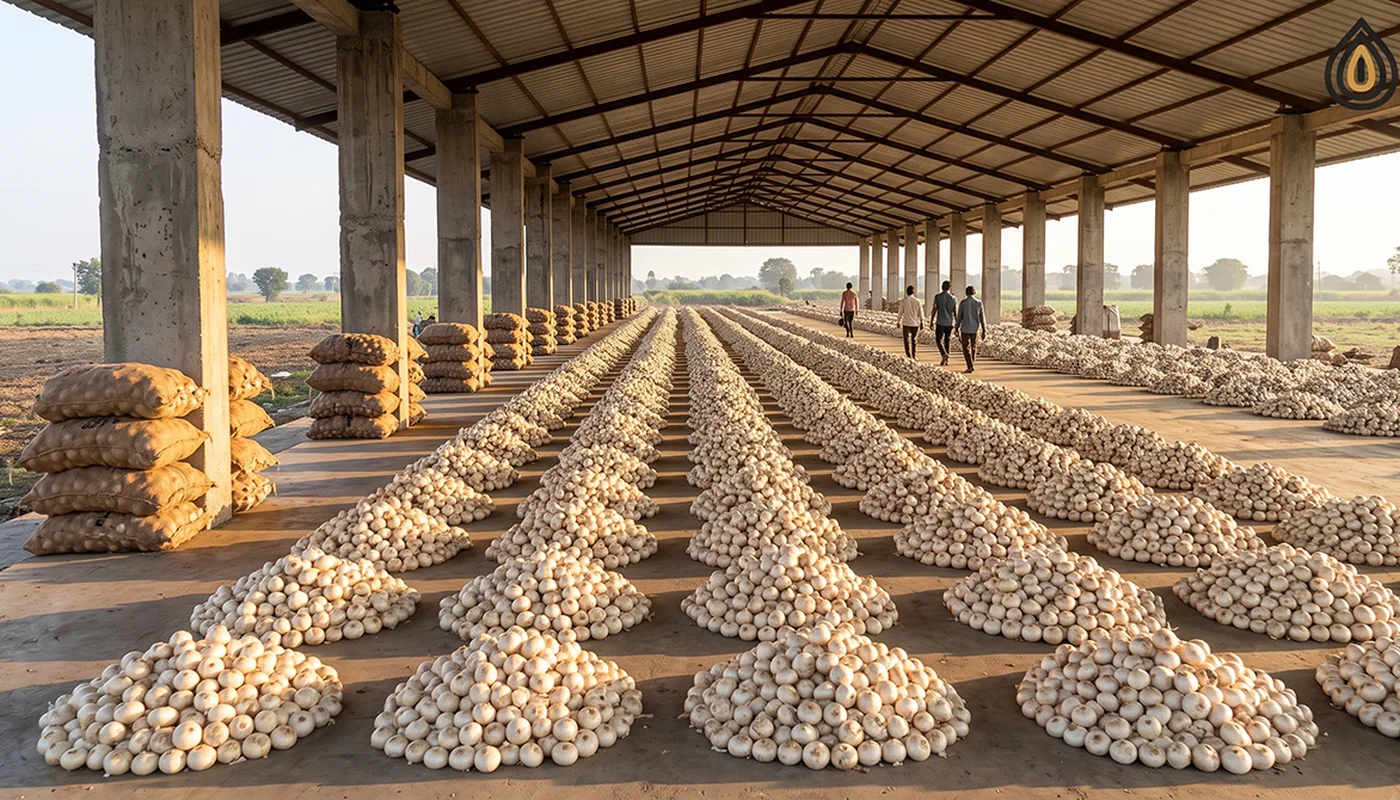
By the third week of April roughly 70 to 75 percent of the rabi white onion in the Mahuva, Talaja, Palitana and Amreli belts has been lifted, against a normal-year figure of about 70 at this date; the harvest is running a few days ahead of the average because March was dry and the fields were workable throughout. The tractor-trailer queues at the Mahuva yard and at the plant gates are at their longest, with arrivals on the heaviest days in the second week estimated by the yard at 8,000 to 9,000 tonnes, and the plants that buy direct from farmers under contract are taking delivery at their own weighbridges from dawn. What remains in the ground is the later-transplanted crop on the heavier soils toward Talaja and the second plantings on irrigated land, which will lift through the end of April and into the first half of May. Farmers with storage sheds have begun holding back part of their crop for the summer market, a decision that depends on the price they see at the yard this month, and the share held back, which the trade puts at 25 to 30 percent of the crop in a normal year, is what will feed the plants from June to the autumn and decide the off-season price. The red onion harvest, which lags the white by three to four weeks in this district, has started on the earliest fields.
Crop quality at mid-season
The mid-season lots are the best of the year, and this year's are good. Bulb size is medium to large, 55 to 75 millimetres, in the mainstream fields, with dry matter at the plants' intake tests of 18 to 20.5 percent, half a point above last year, which the agronomists attribute to the dry, cool bulbing period in January and February. Skins are firm and the necks tight, which means low field losses and clean peeling. Defects are low: sprouting is negligible, bolting is under 2 percent, and the fungal rots that a wet March would have brought are absent. The one quality note from the plants is that some of the early-lifted onion from the lightest soils near the coast is a shade smaller and lower in dry matter than the mainstream, and is being directed to the powder and granule lines where its yield matters less than its flavour. Pungency, measured as pyruvate at the two plants that run the test, is in the normal range for the dehydrator varieties, which means the season's product will have the standard flavour intensity rather than the milder profile of a wet year. Sugar content is average, which is good for colour, since higher reducing sugars brown faster in the dryer.
Market yard prices, week by week
| Week | Dehydration-grade white, ₹/kg at the yard | Table-grade white, ₹/kg | Arrivals | Note |
|---|---|---|---|---|
| 30 Mar - 4 Apr | 4.8-5.8 | 6.0-7.5 | Heavy | Easing from March's 5.0-6.0 |
| 6 - 11 Apr | 4.5-5.5 | 5.5-7.0 | Heaviest of the season | Plants buying at full capacity; some queues held overnight |
| 13 - 18 Apr | 4.5-5.3 | 5.5-6.8 | Heavy | Stable; the floor forming |
| 20 - 22 Apr (to date) | 4.6-5.4 | 5.8-7.0 | Heavy, slightly less | Firming a fraction on storage buying |
The dehydration grade, small to medium bulbs of high dry matter that the table market does not want, has settled in a range centred on 5 rupees per kilogram, which is the level the industry regards as comfortable: at 8.5 kilograms of fresh onion to a kilogram of flakes, it puts the raw-material share of a kilogram of product at 40 to 45 rupees, a third below the same weeks of a tight year. The table grade has held a premium of 1.5 to 2 rupees, which is normal, and the gap is what keeps the larger bulbs out of the plants and in the fresh trade. Prices at the yard are quoted per 20 kilogram lot and vary through the day with the arrivals; the ranges above are the mid-morning auction for sound, dry lots, and damaged or wet lots trade a rupee or more below. The relationship between the yard price and the FOB price, worked through with the yield ratio, is in 8 to 1: The Fresh-to-Dry Yield Ratio Behind Every Dehydrated Onion Price.
Plant operations: round-the-clock running
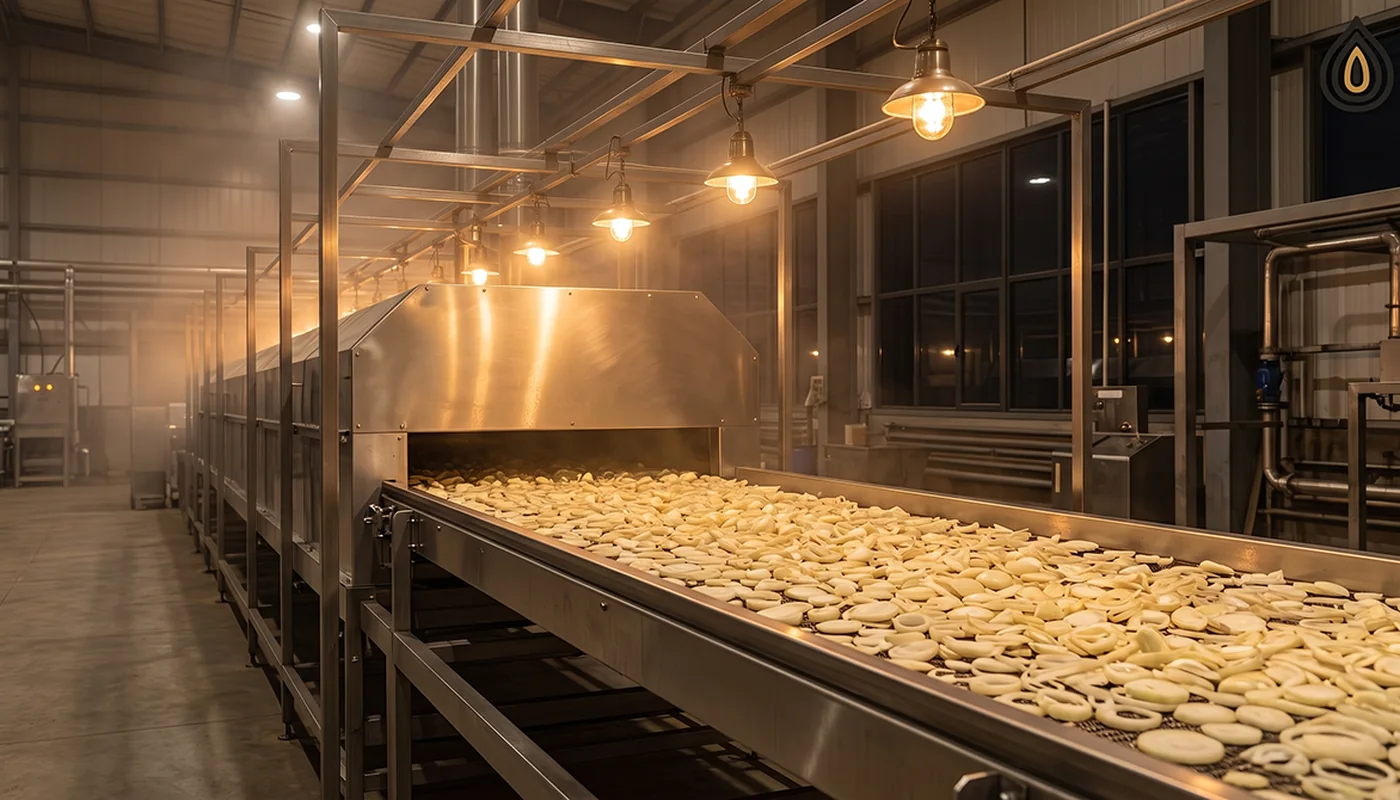
Every certified plant in the district has been on three shifts since the middle of March, and April is the month the year's tonnage is made: a plant with a 40 tonne per day fresh-intake line produces 4.5 to 5 tonnes of dry product a day and runs 25 to 27 days in April, which is a fifth of its annual output in one month. The constraints this month are not raw material but people and heat. Seasonal labour is fully employed and the plants have been paying a small premium over the March rate to hold crews through the peak; a few of the smaller plants have run short on the peeling lines and have leaned on mechanical peeling more than usual, which costs a point of yield. Ambient temperatures in the second half of April have reached 40 to 42 degrees in the afternoons, which helps the dryers' inlet side and hurts the packing rooms, where product must be cooled before bagging; the better plants have added cooling time and are packing more at night. Dryer maintenance is being deferred to May, as it is every year, which means the last weeks of the peak are when belt problems and hot-spot browning appear, and the quality staff are watching the dry end more closely than the wet. No plant reported an unplanned stop of more than a shift in the first three weeks. The plants' capacity question, and how a plant's lines are laid out, is in How Dehydrated Onion Is Made.
The April lots: colour, moisture, counts
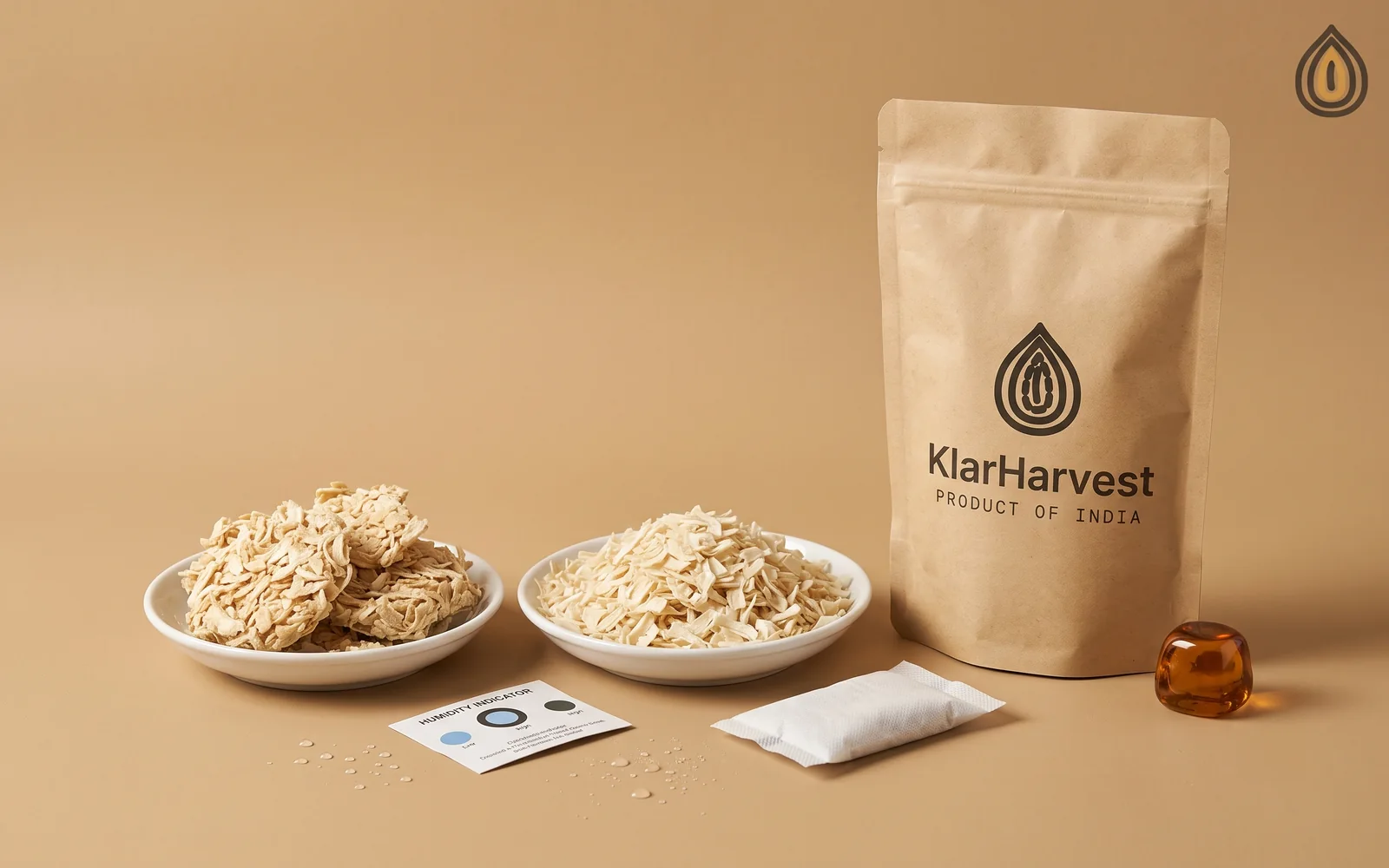
The lots dried in April are the ones that will fill most of the year's contracts, and they are conforming comfortably. Colour on white flakes is at the top grade at every plant sampled, ivory to bright white, with browned-edge counts below 1 percent; the higher dry matter helps, since the tissue spends less time in the dryer. Moisture on packed product is running 4.5 to 5.5 percent at the plants that dry to the lower end of the specification and 5.5 to 6.0 at the ones that dry to the limit; a buyer who wants the lower figure should say so, since it costs the plant a little fuel and yield. Total plate counts on standard product from the first April lots are in the 100,000 to 300,000 range, the lower end of the standard tier, which is normal for a clean crop early in the season; steam-treated lots are meeting the low bacterial tier with room to spare. Sieve analyses on granules are inside their bands with fines at 3 to 4 percent. Two notes from the laboratories: the pesticide screens on April raw onion are clean at the 0.01 milligram per kilogram level at the plants that test intake, with one plant reporting a mancozeb trace on a single farmer's lot that it rejected; and sulphite results by ion chromatography on sulphite-free product are all below 10, as they should be. What a buyer should read on the certificates for these lots is in How to Read a Dehydrated Onion Lab Report.
FOB indications by cut
| Product, white, standard tier | FOB Pipavav, ₹/kg | FOB, €/kg (at ₹100 = €1.00) | Change vs March |
|---|---|---|---|
| Flakes 8-20 mm | 145-160 | 1.45-1.60 | -3 to -5 % |
| Chopped 3-5 mm | 145-160 | 1.45-1.60 | -3 to -5 % |
| Minced 1-3 mm | 148-163 | 1.48-1.63 | -3 to -5 % |
| Granules 16-40 mesh | 150-165 | 1.50-1.65 | -3 to -4 % |
| Powder 80 mesh | 152-168 | 1.52-1.68 | -3 to -4 % |
| Low bacterial, any cut | +8 to +15 | +0.08 to +0.15 | Unchanged premium |
| Extra low bacterial, any cut | +20 to +35 | +0.20 to +0.35 | Unchanged premium |
| Red, any cut | +15 to +30 over white | +0.15 to +0.30 | First new-crop quotes |
The indications have come down 3 to 5 percent from March and about 8 to 12 percent from the February old-crop levels, and have been steady for two weeks, which is what the trade means by the bottom forming. They are indications for container quantities from certified plants with the standard packing, and they exclude freight; the freight and landed-cost build is in Landed Cost of Dehydrated Onion in Europe. Quotes from plants this month carry validities of 7 days as usual, and the plants are, unusually, willing to hold indications for a second week for buyers negotiating season volumes, because they want the volume committed while the raw material is cheap. The customs unit-value data, which lags by two months, will show April's fall in the June release; the pattern of previous years, with unit values firmest in February and May and softest in the second half, is in What Does Dehydrated Onion Cost per Kilogram?
Red and pink onion: the runs begin
The first red onion arrived at the plants in the second week of April from the earliest fields, and by the third week four of the larger plants had started red runs, mostly for flakes and granules against existing contracts. Red raw material at the yard is trading at 5.5 to 7.0 rupees, a premium of about 1.5 rupees over dehydration-grade white, and the red crop is expected to be somewhat smaller than last year, since the acreage shifted toward white on last summer's prices. Red runs will build through May, and buyers who need red product for the year should note that its window is shorter than white's: the plants run red in blocks between white runs, the raw material stores less well in the summer, and by August the red offer is whatever was dried in April to June. Pink onion, the intermediate type from the Saurashtra fields, is being offered by two plants in small quantities for buyers who want colour at a lower premium than red. The colour, flavour and price differences are in White vs Red Dehydrated Onion, and the pink type in Pink Onion, Dehydrated.
Season contracts: what buyers are locking and how
April is when the year's contracts are placed, and this year's pattern is clear. European importers and the larger manufacturers are locking volume for the second and third quarters at the April indications, typically 40 to 60 percent of their annual need, with shipment schedules from May to September and price fixed; the remaining volume is left to be bought in the second half at whatever the market then shows, as a hedge against a price fall that nobody expects but everybody insures against. The plants prefer that structure too, since it commits the tonnage they are drying now. Terms have not changed: 30 percent advance at order confirmation and the balance against documents, with the plants' price lock holding for the contracted shipments provided the schedule is kept; a buyer who delays a shipment past its month is back on the market price. Dutch and Belgian traders, who buy for resale, are taking larger positions than the manufacturers, in the expectation that the second-half price will be higher, which it usually is; the way traders and direct buyers differ is in Buying Dehydrated Onion via Dutch Traders or Direct from India. Sample requests have moved from "send me new crop" to "send me the lot you would ship", which is the sign that buyers are past evaluation and into placement. The quote validity and price-lock logic is in Why Dehydrated Onion Quotes Are Valid for 7 Days.
Logistics: Pipavav at its busiest
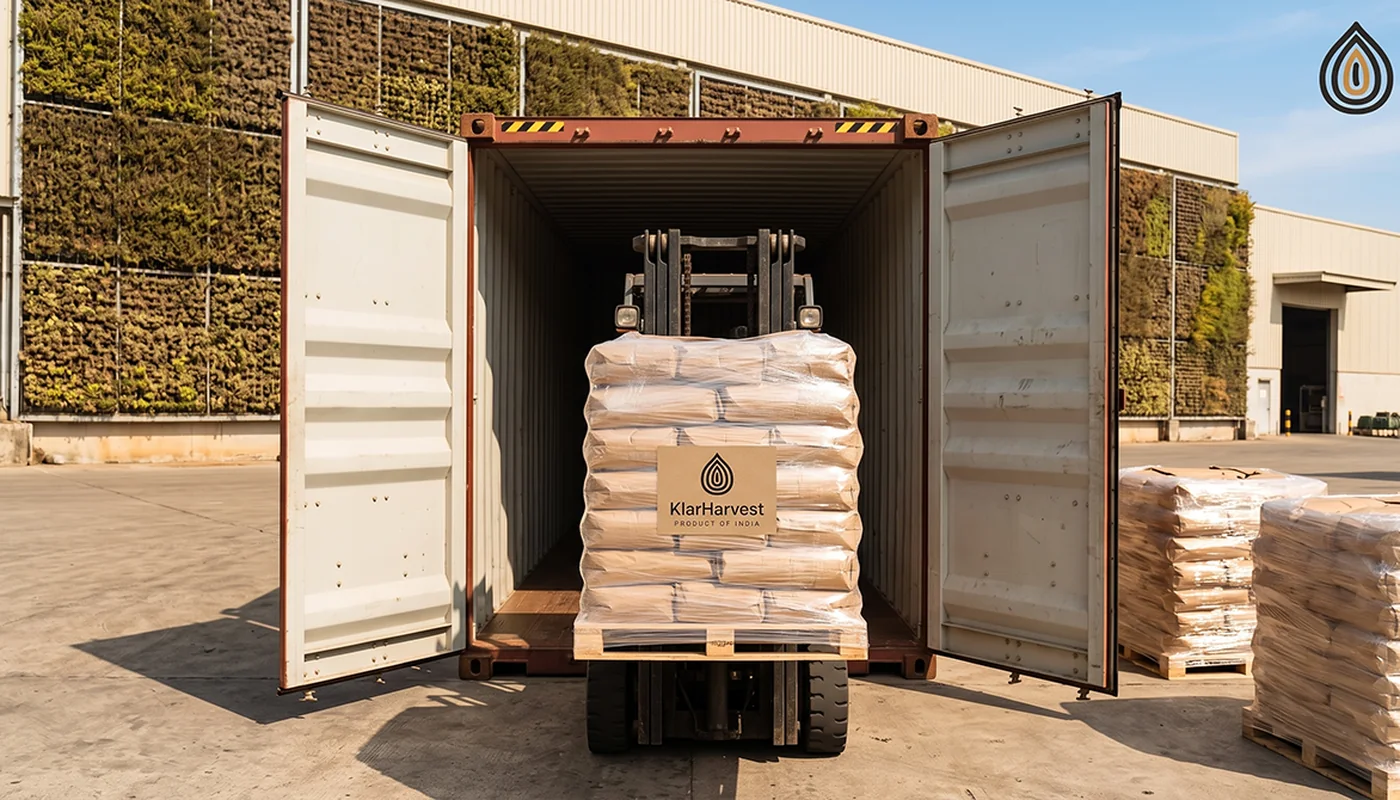
April and May are the peak months for dried-onion exports through Pipavav, and the port is busy without being congested: container availability for the Europe services is adequate, with the lines adding capacity for the peak as they do each year, and the gate-in to sailing time is running three to five days. Trucking from Mahuva, 60 to 70 kilometres, is at its seasonal high with some delay at the plants' loading bays rather than on the road. Rates to Hamburg and Rotterdam for a 20-foot box are steady from March at a level that puts freight at roughly 10 to 15 rupees per kilogram of flakes, and the transit of 25 to 30 days is unchanged; the route detail is in Pipavav to Hamburg. Mundra is taking some of the powder and granule volume for the lines that call there first, and Nhava Sheva remains the fallback. LCL consolidation for pallet buyers is running weekly from the Bhavnagar and Ahmedabad consolidators; the sailing schedules are a little tighter this month because full containers take priority at the plants, and a pallet buyer should allow an extra week. The container loading practice at the plants, and the weights per cut, are in How a Dehydrated Onion Container Is Loaded.
Costs: fuel, labour, power in April
The conversion cost, everything in a kilogram of flakes that is not the onion, is steady from March at 45 to 55 rupees, with two movements inside it. Labour is up a further 3 to 5 percent on the March rate as the plants pay to hold crews through the peak, which adds about a rupee per kilogram of product. Fuel is flat: briquette prices held at 8 to 9 rupees per kilogram, and groundnut shell is still plentiful. Power has become the watch item, since the summer load on the Gujarat grid has brought the first short cuts to the GIDC estates in the afternoons, and the plants have run their diesel sets for an hour or two on the hottest days; at three times the grid cost, an hour a day adds about half a rupee per kilogram. None of this moves a quotation by more than a rupee or two; the yard price moves it by ten. Packing costs, the lined bags and the cartons, are unchanged, and the private-label packing premium is where it was. The cost model behind the numbers, from yard to FOB, is in What Does Dehydrated Onion Cost per Kilogram?
The weather risk: heat and early rain
The season's remaining risk is weather in the last three weeks of the harvest. Heat is the lesser one: at 40 to 42 degrees the standing crop cures faster in the field, which is welcome, but lifted onion left in the sun sunburns and the plants are asking farmers to windrow under the leaves and bring the crop in within two days. Rain is the larger one. Pre-monsoon showers in Saurashtra in late April or May are not usual but not rare, and a wet spell of two or three days on a half-lifted crop causes rots in the field and mould on the onion waiting at the yard, which shows in the plants as rejected lots and higher counts. The forecast into the last week of April is dry, and the trade's view is that the risk window closes when the main harvest finishes, around the second week of May. Buyers who want to insure against the risk have done so by contracting April-dried lots, which are already in the bag. The monsoon proper, from mid-June, is a storage and humidity question rather than a crop one, and it is covered in Monsoon and Dehydrated Onion.
April 2026 against the two previous seasons
| Indicator, third week of April | 2024 | 2025 | 2026 |
|---|---|---|---|
| Harvest lifted | ~65 % | ~70 % | ~72 % |
| Dehydration-grade white at the yard, ₹/kg | 7.5-9.0 (tight year) | 5.0-6.0 | 4.5-5.4 |
| Dry matter at intake | 17-18.5 % | 18-19.5 % | 18-20.5 % |
| White flakes FOB indication, ₹/kg | 185-205 | 155-170 | 145-160 |
| Plants running three shifts | Most | All certified | All certified |
| Weather incidents to date | None | Showers, 2 days, minor | None |
| Share of season volume contracted by buyers | Low; buyers waited | Normal | High; buyers locking early |
2026 is a comfortable year for buyers: a good crop, a low raw price, plants at capacity and an early lock-in. The comparison with 2024, when a short crop took the yard to 9 rupees and FOB to 200, is the reason the experienced buyers are contracting now rather than waiting for a lower number that the market is unlikely to give them; the price history is in Dehydrated Onion Price History 2020-2026.
Buyer questions answered this month
Will the price go lower in May? Possibly by a rupee or two at the yard as the last of the harvest arrives, which is a percent or two at FOB; the trade's view is that the April level is within a few percent of the year's low. Waiting for May saves little and risks the weather. Should I contract the whole year now? Half to two thirds, with shipments scheduled; the rest in the second half. Buying everything now ties up capital and storage and forgoes the small chance of a lower price; buying nothing now forgoes the near-certainty of a higher one. Are April lots better than March lots? Slightly, on dry matter and colour; both conform. A buyer who wants the year's best product asks for April and May drying dates. Is red available now? Yes from the second half of April, in blocks; contract it by May for the year. Can I still get low bacterial at the same premium? Yes; the steam treatment premium is unchanged, and April is the best time to run it because the plants have the capacity.
What to expect in May
The harvest finishes in the first half of May and the yard arrivals thin from the third week; prices at the yard typically firm by a rupee as the last lots arrive and storage buying starts, which puts a floor under FOB rather than lifting it. Plants run at capacity through May and begin to drop to two shifts in June as the fresh supply shifts from field to storage; red and pink runs peak in May. Season contracts placed in April begin shipping, and the container availability at Pipavav tightens a little as the year's peak export volume moves. The maintenance stops begin at the end of May, which is when the last of the season's mixed lots, from the tail of the harvest and from stored onion, appear; a buyer who contracts May drying dates gets the last of the fresh-crop product. Weather remains the watch item until the harvest is in. The May report will cover the season's close, the stock position going into the summer, and the first read on how much onion the farmers have put in storage, which is the number that sets the off-season price.
How this report is compiled
From visits to the Mahuva market yard and to plants in the Mahuva, Talaja and Bhavnagar GIDC belts during the first three weeks of the month; conversations with plant owners, quality managers, commission agents and farmers; the plants' own intake and laboratory figures where they were shared; the yard's daily arrival and price boards; and the public customs and market data where it is current. Prices are ranges observed in the period, not offers, and FOB indications are for container quantities of standard product from certified plants; a quotation for a specific lot and date can differ. Figures in this series are indicative and should be confirmed against a written quote before any commercial decision.
What KlarHarvest is doing this month
Placing season volume with the plants at the April indications for the buyers who have contracted, with drying dates in April and May and shipments scheduled through September; sending named-lot samples from April production, with certificates, to buyers finishing their evaluations; and quoting red and pink product from the first new-crop runs. The April lot record for each shipment, with the plant, the drying date and the laboratory report, is visible to the buyer through the portal described on our process page.
Frequently asked questions
What is the dehydrated onion price in April 2026?
FOB Pipavav indications for white flakes from certified plants are 145 to 160 rupees per kilogram, about 1.45 to 1.60 euros, down 3 to 5 percent from March; granules and powder are a few rupees higher. Low bacterial adds 8 to 15 rupees, red 15 to 30.
Is April the cheapest month to buy Indian dehydrated onion?
April and May are usually the low of the year at the plant, because raw onion is at its cheapest and the plants are at full capacity. The second half of the year is usually higher as stored onion feeds the plants.
How much of my annual volume should I contract in April?
Most experienced buyers lock 40 to 60 percent with scheduled shipments and buy the rest in the second half. Contracting the whole year ties up capital; contracting nothing exposes the buyer to the usual second-half rise.
What is the raw onion price at Mahuva in April 2026?
Dehydration-grade white onion is trading at 4.5 to 5.4 rupees per kilogram at the yard in the third week of April, a comfortable level for the industry; table grade carries a 1.5 to 2 rupee premium.
Are the April lots the best quality of the year?
April and May lots are usually the season's best on dry matter and colour, and this year's are conforming comfortably. Ask for April or May drying dates if the year's best product matters.
When does red dehydrated onion become available?
From the second half of April, as the red harvest follows the white by three to four weeks; runs peak in May. Contract red by May for the year, since its window is shorter than white's.
What is the main risk to the 2026 crop now?
Pre-monsoon rain on the unharvested tail of the crop in late April or May. The forecast is dry; the risk window closes when the harvest finishes around the second week of May.
Next step
Request a sample of the cut you use from an April lot, with its certificate and drying date; if you are placing season volume, request a quote with the tonnage and the shipment months and the schedule comes back priced at the April indications within one business day.