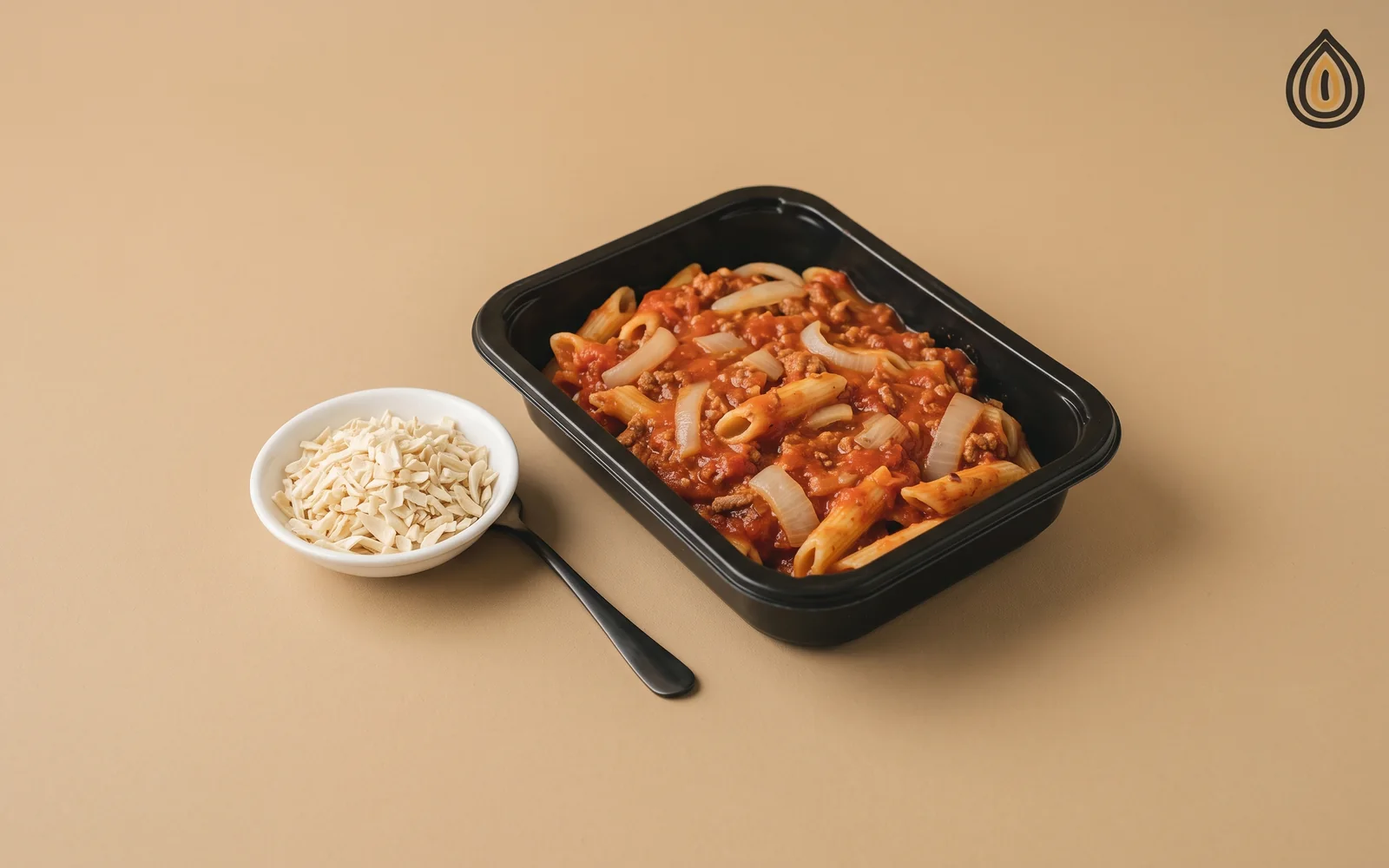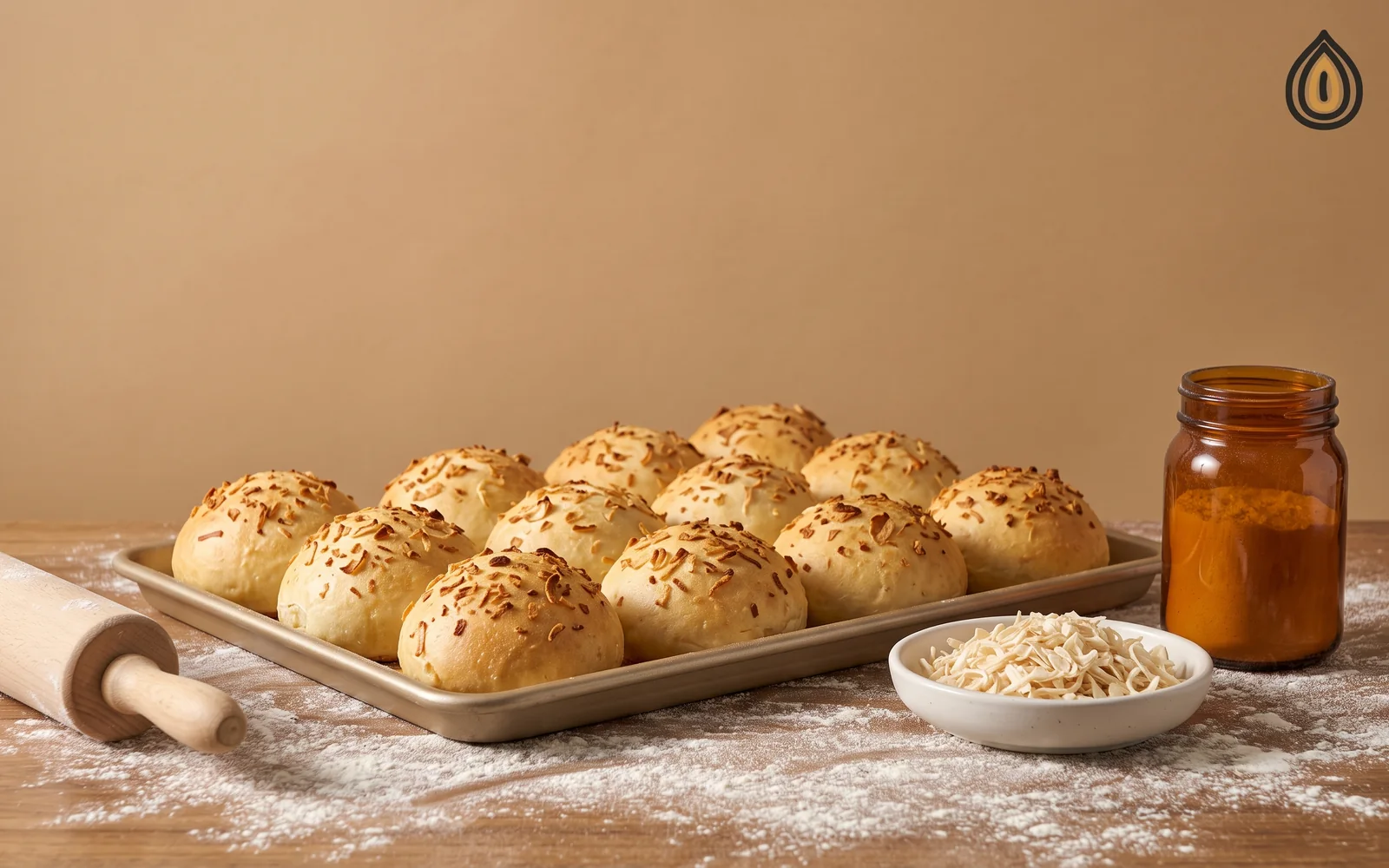
- Why bakeries use dried rather than fresh onion
- The four uses and the cut for each
- Toppings: why a dry flake scorches
- Soaking, oiling and the topping mix
- Onion in the dough: inclusions
- Crackers, breadsticks and flatbreads
- Savoury pastry and fillings
- Dosing against the flour
- Dough water, crumb and proof
- Browning and colour in the oven
- Toasted onion in the bakery
- Microbiology tier by product
- Shelf life of baked products with onion
- Common faults and fixes
- Cost per unit
- Specification lines for bakery use
- A worked formulation: onion rolls
- Industrial lines: depositors, sheeters and the topping station
- Bagels, pretzels and the boiled-crust products
- What KlarHarvest supplies to bakeries
- Frequently asked questions
Judge the product, not the words
200-500 g from a current lot, dispatched by courier with the lot lab report.
Request a sampleThe dehydrated onion bakery use is older than the industrial soup trade and larger than most people in the onion business realise: onion rolls, onion bread, bagels, focaccia, savoury crackers, breadsticks, cheese-and-onion pastries and stuffed breads are made in every European country, and nearly all of them use dried onion, because fresh onion in a bakery is water, waste and a wet room that a dough does not want. The bakery asks something specific of the dried product: it must survive an oven at 220 to 250 degrees without burning, sit on a crust or in a crumb without going hard, and taste of cooked onion at a dose that does not weep into the bread. Each of those has a technique, and the techniques are what this guide is about.
It covers the four ways bakeries use onion, topping, dough inclusion, cracker flavouring and pastry filling, which cut fits each, the soaking and oiling methods that stop a topping scorching, dosing against the flour weight, what the onion does to the dough's water and the crumb, browning and colour, the microbiology tier by product, shelf life in a baked product, common faults, cost per unit, specification lines and a worked onion roll. Values are for Mahuva product in the 2026 season.
What this guide covers
- Why bakeries use dried rather than fresh onion
- The four uses and the cut for each
- Toppings: why a dry flake scorches
- Soaking, oiling and the topping mix
- Onion in the dough: inclusions
- Crackers, breadsticks and flatbreads
- Savoury pastry and fillings
- Dosing against the flour
- Dough water, crumb and proof
- Browning and colour in the oven
- Toasted onion in the bakery
- Microbiology tier by product
- Shelf life of baked products with onion
- Common faults and fixes
- Cost per unit
- Specification lines for bakery use
- A worked formulation: onion rolls
- Industrial lines: depositors, sheeters and the topping station
- Bagels, pretzels and the boiled-crust products
- What KlarHarvest supplies to bakeries
- Frequently asked questions
Why bakeries use dried rather than fresh onion
Fresh onion in a bakery is 88 percent water that ends up in the dough, a raw microbial load in a room built for flour and yeast, a peeling and chopping job at a wage that bakeries cannot spare, 12 to 18 percent waste, and a topping that steams rather than toasts. Dried onion is a dry ingredient weighed from a bag, consistent across the year, with a certified microbiology, a two-year shelf life on the dry-store shelf, and a flavour that is already the cooked one a baked product wants. The one thing fresh onion does that dried does not, the raw sharpness, is lost in the oven anyway. The cost comparison, once labour and waste are counted, is in Dehydrated vs Fresh Onion: The Real Cost per Kilo; in a bakery it is not close.
The four uses and the cut for each
| Use | Preferred cut | Why | Also used |
|---|---|---|---|
| Topping on rolls, bagels, loaves, focaccia | Flakes 8-20 mm (kibbled), soaked or oiled | Large pieces stay visible and toast gold | Chopped 3-5 mm for a finer look; toasted flakes for a short bake |
| Inclusion in the dough | Chopped or minced, pre-hydrated | Even distribution, soft in the crumb | Flakes for a rustic loaf with visible pieces |
| Cracker, breadstick and flatbread dough | Granules 40-60 or powder | Flavour without pieces that break a thin sheet | Fine granules on the surface |
| Savoury pastry fillings (cheese and onion, quiche, pasties) | Minced or chopped, pre-hydrated | Soft pieces in a low-water filling | Powder in smooth fillings |
| Stuffing and crumb mixes | Minced or granules | Hydrates in the mix | |
| Seasoned crumb coatings | Powder | Adhesion and flavour |
The cuts as products are in Flakes, Chopped, Minced, Granules or Powder, and the large flake under its bakery name in What Is Kibbled Onion?
Toppings: why a dry flake scorches
A dried onion flake is 5 percent water, 35 percent sugar and mostly fibre, and put dry on a dough in a 230 degree oven it has nothing to protect it: the sugars caramelise and then burn within minutes, and the flake goes from ivory to black before the roll is baked. A fresh onion piece in the same oven steams itself from the inside and browns slowly. The bakery's answer is to give the dried flake water or fat to carry: a soaked flake toasts as a fresh one would, because its water must boil off before the sugars burn, and an oiled flake browns slowly and evenly because the oil conducts heat gently and keeps the surface from drying. The choice between them is a matter of the bake and the look, and both are standard. A flake put on dry is the most common bakery fault with dried onion and the easiest to fix.
Soaking, oiling and the topping mix
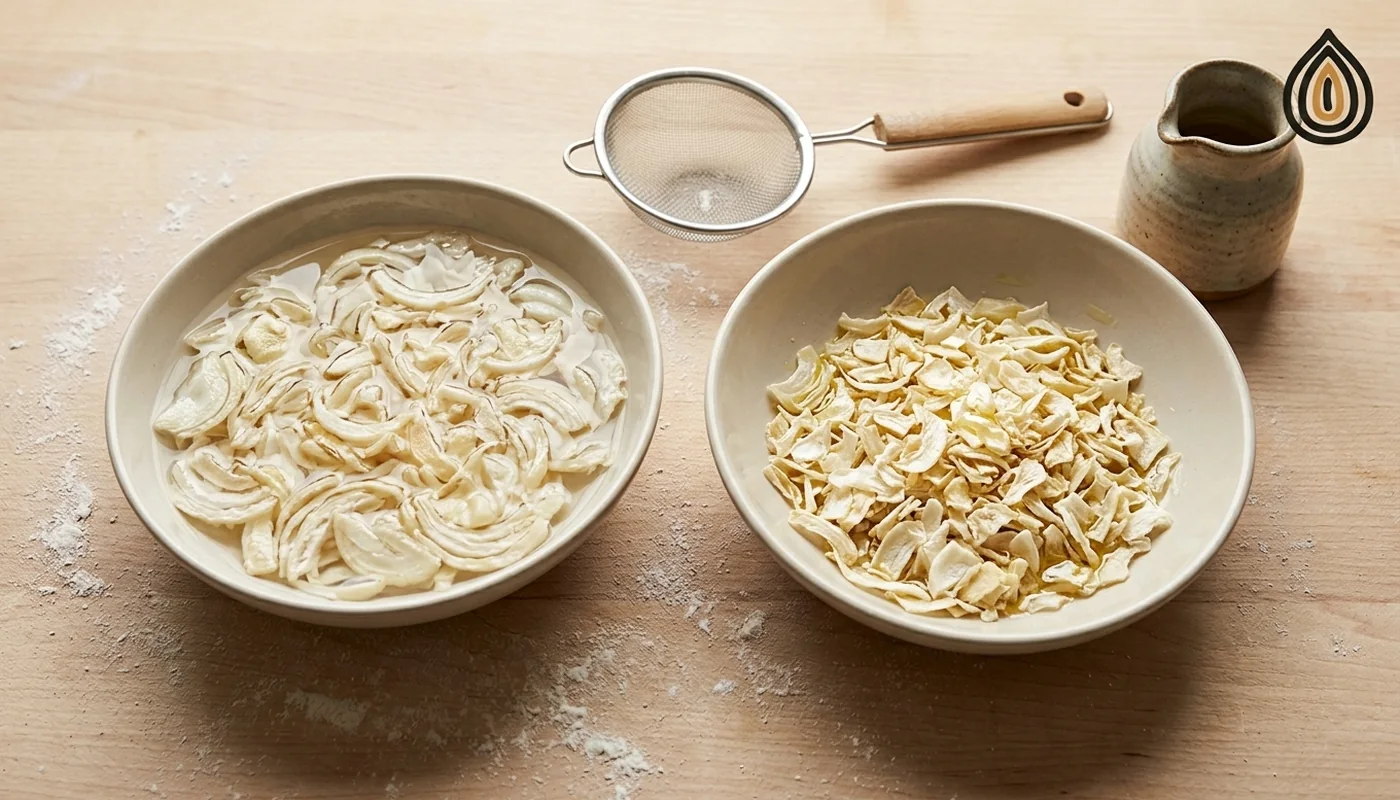
Soaking: flakes in cold water, one part flakes to three of water, for ten to fifteen minutes, then drained in a sieve until they stop dripping; the flakes double in size, soften, and toast to gold in a 12 to 15 minute bake. Soaked flakes are applied to the proofed dough after an egg or water wash so that they adhere, and they should be used within an hour of soaking or refrigerated, since a bowl of wet onion is a growth medium. Oiling: dry flakes tossed in oil at 10 to 15 percent of their weight, rapeseed or sunflower, until coated, then applied; the oil keeps them from burning for a 10 to 12 minute bake, gives a glossy finish and a slightly fried flavour, and the oiled flakes keep for a day. The topping mix: many industrial bakeries buy or make a topping blend, dried onion flakes with oil, salt, sometimes poppy or sesame seed and a little dextrose for colour, applied by a depositor; the onion in the mix is usually a slightly smaller flake, 6 to 12 millimetres, that adheres better. Toasted flakes, roasted at the plant before shipment, can go on dry for a short bake of under 10 minutes or be applied after baking with a light brush of oil, and give the deepest colour and flavour; they are discussed below.
Onion in the dough: inclusions
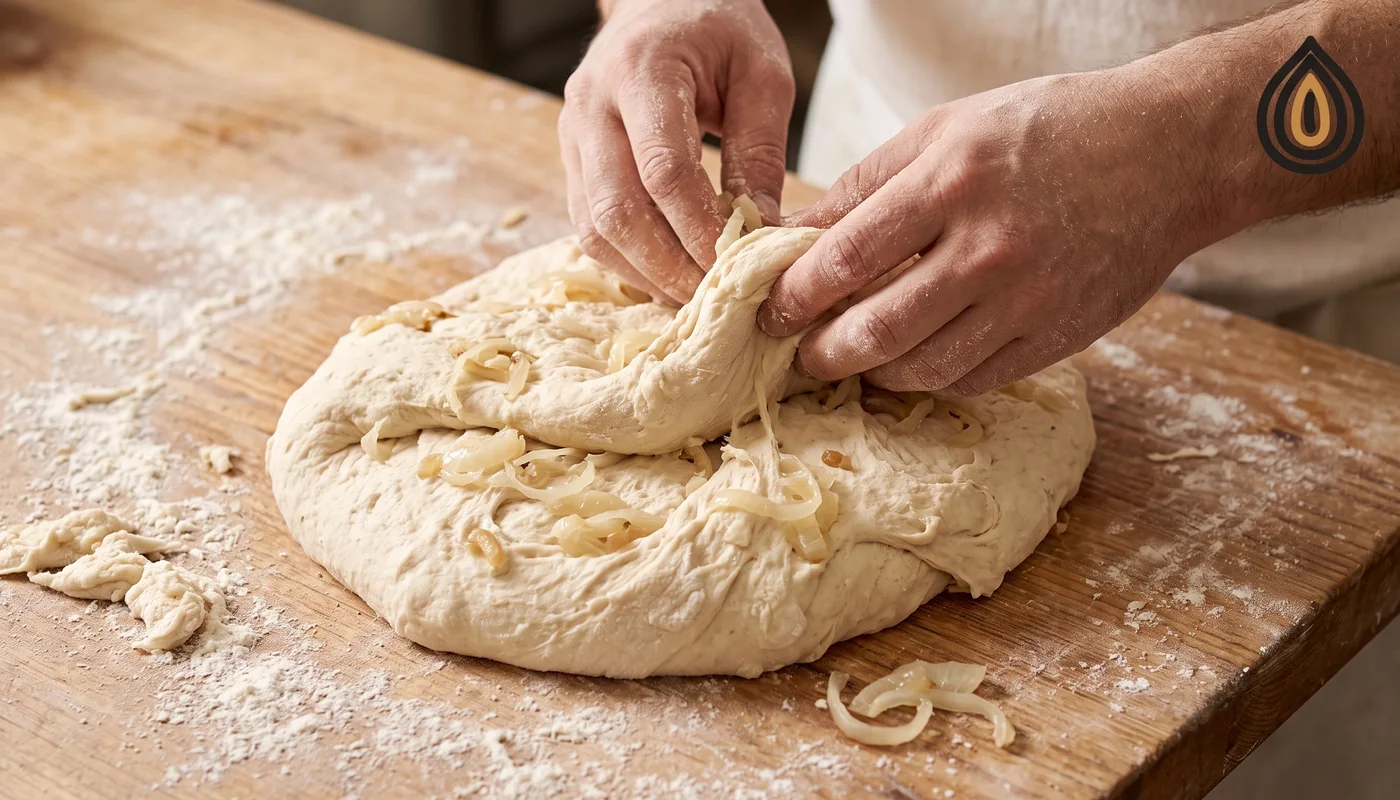
Onion inside a loaf must be hydrated before it goes in, because a dry piece takes water from the dough during mixing and proof, tightens the crumb around it, and stays firm in the baked bread; a piece hydrated in advance is soft in the crumb and flavours the bread around it. The method is the cold soak above, 20 minutes for chopped and 15 for minced, drained, and the drained onion added at the end of mixing so that the pieces are not torn up; the soak water is either discarded or counted into the dough water, since it carries flavour. The dose is 2 to 5 percent of the flour weight as dry onion, which is 8 to 20 percent as hydrated pieces, and an onion bread at the top of that range is a strongly flavoured loaf. Minced disappears into the crumb and flavours it; chopped shows as pieces; flakes give a rustic loaf with visible onion and a risk of large pieces tearing the crumb. The sugars in the onion feed the yeast a little and darken the crust a little, which a baker may allow for by cutting the added sugar. The rehydration data are in Rehydrating Dehydrated Onion.
Crackers, breadsticks and flatbreads
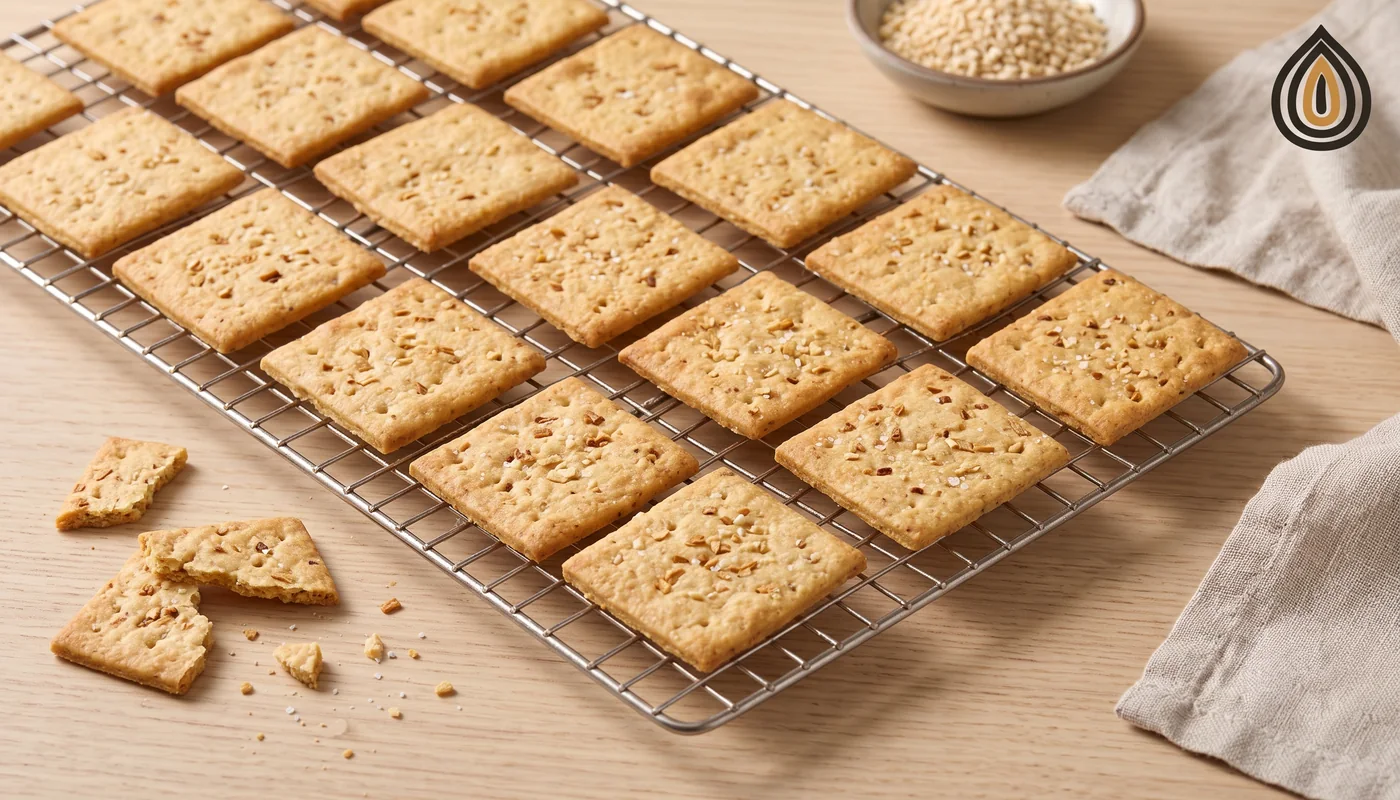
A cracker dough is thin, dry and sheeted, and a flake in it breaks the sheet and burns at the surface; onion goes into cracker, breadstick and flatbread doughs as powder or fine granules at 1 to 3 percent of the flour, and onto the surface as 40-60 mesh granules pressed in before baking, where they toast without breaking off. The powder's dispersion and its 30 to 40 percent sugar make it a browning agent as well as a flavour, and a cracker with onion powder colours faster in the oven than one without, which the baker sets against the bake time. Cheese-and-onion crackers, the largest single product in this group in Britain, carry onion powder at 1.5 to 2.5 percent of the flour with the cheese powder, and the two flavours are dosed together. Flatbreads and naan take chopped onion pressed into the surface, hydrated first, and onion powder in the dough for the base note. The flow and dosing of the powder on a sheeting line are in Bulk Density and Flowability of Onion Powder and Granules.
Savoury pastry and fillings
Cheese-and-onion pasties, onion bhaji rolls, quiches, sausage rolls and filled breads carry onion in a filling that is low in free water and enclosed in pastry that must stay crisp, which makes them the pre-hydration case with a twist: the onion is hydrated, drained well, and often sweated briefly in fat before it goes into the filling, so that it carries no free water into the pastry and tastes cooked. The dose is 3 to 8 percent dry onion of the filling weight, chopped or minced; a cheese-and-onion filling is often a third onion by hydrated weight. Quiche and egg-set fillings take minced or powder, since a chopped piece in a custard reads as a foreign body. Baked in the plant, the oven is the kill step; sold raw and frozen for the consumer to bake, the filling takes the low bacterial tier. The ready-meal versions of these products, and their processes, are in Dehydrated Onion in Ready Meals and Frozen Foods.
Dosing against the flour
| Product | Dry onion, % of flour weight | How applied | Notes |
|---|---|---|---|
| Onion rolls and bagels, topping | 3-6 (as 1-3 % of dough weight) | Soaked or oiled flakes on the proofed dough | 1-2 g dry per 60 g roll |
| Focaccia, flatbread, topping | 4-8 | Soaked flakes pressed in | With olive oil and salt |
| Onion bread, inclusion | 2-5 | Hydrated chopped or minced at end of mix | Strong at 5 |
| Rye and sourdough with onion | 2-4 | Hydrated minced | Complements the sour |
| Crackers, breadsticks | 1-3 | Powder or granules in the dough; granules on top | With cheese powder in cheese-and-onion |
| Cheese and onion pastry filling | 3-8 % of filling weight | Hydrated, drained, sweated | |
| Stuffing mixes | 4-8 % of dry mix | Minced or granules | Hydrates in the mix |
| Savoury scones and muffins | 2-4 | Hydrated minced |
Fresh equivalence is the trade's one part dried to eight or nine fresh by flavour, with the water added back at three to four parts per part of dried, as worked through in 8 to 1: The Fresh-to-Dry Yield Ratio; a recipe converted from fresh onion loses the raw sharpness that the oven would have removed anyway.
Dough water, crumb and proof
Onion affects a dough in three ways a baker should know. Hydrated onion adds water to the dough, about three parts per part of dry onion, and that water is inside the onion pieces rather than in the gluten, so the dough's effective hydration is a little lower than the recipe total suggests; a baker adding 4 percent dry onion hydrated at 3 to 1 has 12 percent of onion in the dough and should treat 8 to 9 of it as water that the gluten does not see. Dry onion in a dough, the fault above, takes water from the gluten and tightens the crumb; the fix is hydration, never more dough water. The onion's sugars feed the yeast, speeding the proof slightly, and its enzymes and acidity have a small softening effect on gluten at high doses; a strongly flavoured onion bread at 5 percent proofs a little faster and needs a slightly stronger flour. Onion powder in a dough behaves like a fine hygroscopic flour, taking up water in mixing, and is dosed into the dry ingredients. None of it is difficult, and a trial batch settles the recipe.
Browning and colour in the oven
Onion's 30 to 40 percent sugars, glucose and fructose mostly, are reducing sugars that brown fast in the Maillard reaction with the dough's proteins and caramelise on their own above 160 degrees, which is why an onion topping goes gold and then brown and then black, and why an onion dough crusts darker than a plain one. A baker uses it: an onion roll's colour is the onion's, and a topping that is meant to be deep gold is baked to that point and no further. A baker controls it with the soak or the oil, with the bake time and temperature, and with the position of the topping, since flakes on the crown of a roll brown faster than flakes on the shoulder. Toasted onion, already brown, goes on late or after baking. The dried onion's own colour grade matters less in the bakery than anywhere else, since the oven recolours everything, except in a product where the onion is applied after baking and seen pale; the grades are in Dehydrated Onion Colour.
Toasted onion in the bakery
Toasted onion, kibble roasted at the plant to a golden or deep brown before packing, is the bakery's premium topping: it carries the fried-onion flavour and colour that a home cook gets from frying onions for a roll, and it can be applied dry to a short bake or brushed on after baking for a product that is not baked again, a topped focaccia sold cold or a crispbread. It costs 20 to 40 percent more than natural flakes, scorches faster still if put dry into a long bake, and is the ingredient in the "fried onion" rolls and breads of northern Europe. Toasted onion powder goes into dark rye and pumpernickel doughs for a roasted note. Its grades and production are in Toasted Onion vs Natural Dehydrated Onion.
Microbiology tier by product
| Product | Kill step for the onion | Tier |
|---|---|---|
| Toppings and inclusions baked on or in | The oven, 200 °C+ | Standard |
| Fillings baked in the plant | The oven | Standard |
| Raw frozen filled pastries, consumer-baked | Consumer's oven | Low bacterial |
| Toppings applied after baking | None | Low or extra low bacterial |
| Crumb and stuffing mixes sold dry | Consumer's cooking | Low bacterial |
| Par-baked breads finished by the consumer | Partial | Standard or LB by risk assessment |
The oven is a reliable kill step and most bakery onion is standard tier, which is the cheapest; the tiers and the treatment behind them are in Low Bacterial and Extra Low Bacterial Dehydrated Onion.
Shelf life of baked products with onion
Onion in a baked product does not shorten its life; the bread's own staling and mould set the date. Two effects are worth knowing. Onion pieces in a crumb hold moisture and can migrate it to the crumb around them over days, which softens a crust locally in a packaged roll; a well-drained hydration limits it. And onion's flavour fades in a baked product over a week or two as its volatiles leave, so a bread sold on day five tastes less of onion than on day one, and a baker doses for the sale day, not the bake day. Crackers with onion powder, which are dry and low in water activity, hold their flavour for months in a barrier pack, though the onion's sugars make them a shade more prone to picking up moisture and softening than a plain cracker. Dry topping mixes with oiled onion have a life set by the oil's oxidation, three to six months. The dried onion's own storage in the bakery follows the rules in Dehydrated Onion Shelf Life.
Common faults and fixes
| Fault | Cause | Fix |
|---|---|---|
| Topping burnt black | Dry flakes on a long or hot bake | Soak or oil the flakes; toasted flakes only for short bakes or after baking |
| Topping falls off the roll | No wash under the flakes; dry flakes do not adhere | Egg or water wash; soaked or oiled flakes; press in lightly |
| Hard onion pieces in the crumb | Dry onion added to the dough | Hydrate first, 15-20 minutes, drain |
| Tight, dense crumb around the onion | Dry onion drew water from the gluten | Hydrate; do not add dough water instead |
| Crust too dark | Onion's sugars; too much powder in the dough | Lower the oven 10 degrees or shorten the bake; cut added sugar |
| Onion flavour weak on the sale day | Volatiles fade over days | Dose for the sale day; part as onion powder in the dough |
| Soggy pastry base | Wet onion in the filling | Drain and sweat the hydrated onion; count its water |
| Cracker sheet tears | Flakes or coarse granules in a thin dough | Powder or 40-60 granules in the dough; granules on the surface only |
| Wet onion soak turned sour | Soaked flakes held too long at room temperature | Use within an hour or refrigerate; soak per shift |
| Black specks in a pale product | Scorched pieces in the lot | Tighter defect count in the specification |
The lot defects that arrive rather than being made in the bakery are in Common Quality Defects in Dehydrated Onion.
Cost per unit
At a landed cost of 1.90 to 2.20 euros per kilogram for white flakes in mid-2026, the onion on a 60 gram onion roll at 1.5 grams dry costs 0.3 cents; in a 400 gram onion loaf at 3 percent of a 250 gram flour weight, 7.5 grams, 1.6 cents; in a 200 gram pack of cheese-and-onion crackers at 2 percent of flour, about 3 grams of powder, 0.7 cents. Fresh onion at the same flavour would cost the same on the invoice and several cents more in labour and waste per unit, as the cost guide shows; in a bakery, where the oven does the cooking and a wet room is a hazard, the dried product is one of the few ingredients that is cheaper, simpler and better. The landed-cost build is in Landed Cost of Dehydrated Onion in Europe.
Specification lines for bakery use
- Cut and band by use: flakes 8-20 mm or 6-12 mm for toppings, with a fines maximum, since fines burn first; chopped or minced for inclusions; 40-60 granules and 80 mesh powder for crackers.
- Moisture maximum 6 percent.
- Colour grade loose for baked-on uses, tight for after-bake toppings; scorched-piece count tight always, since black pieces show on a roll.
- Rehydration ratio minimum 3.5:1 in cold water in 15 minutes for flakes, by the buyer's method.
- Microbiology tier standard for baked-on and baked-in uses; LB or ELB for after-bake toppings and raw frozen products.
- Flavour clause against a retained reference, evaluated baked.
- Sulphite-free, declared; allergen statement for the plant, since a bakery's label carries every allergen.
- Packaging in 10 or 12.5 kilogram bags for flakes to limit breakage, and in sizes used within a shift.
The specification sheet as a whole is in How to Read a Dehydrated Onion Specification Sheet.
A worked formulation: onion rolls
A soft white onion roll, 60 grams baked, topped, for a supermarket in-store bakery; recipe per 10 kilograms of flour.
| Ingredient | kg | Notes |
|---|---|---|
| Strong white flour | 10.0 | |
| Water | 6.0 | Includes 0.6 kg for the dough onion |
| Yeast, fresh | 0.3 | |
| Salt | 0.2 | |
| Sugar | 0.2 | Reduced from 0.3 for the onion's sugars |
| Butter or oil | 0.5 | |
| Dehydrated white onion, minced 1-3 mm, standard | 0.2 | Hydrated 20 minutes in 0.6 kg of the water, drained, added at the end of mixing |
| Onion powder, 80 mesh | 0.05 | In the dry ingredients, for the base note |
| Topping, per 100 rolls: dehydrated white onion flakes 8-20 mm, standard | 0.15 | Soaked 10 minutes in 0.45 kg water, drained; applied after egg wash |
| Sesame seed, optional | 0.05 |
Method: bulk ferment, divide at 70 grams, round, proof 45 minutes, egg wash, top with the soaked flakes pressed in lightly, bake at 220 degrees for 13 to 15 minutes to a deep gold. The dough onion at 2 percent of flour flavours the crumb; the topping at 1.5 grams dry per roll gives the visible onion; the powder ties the two. Onion cost per roll, about half a cent. The soak is done per shift and the drained flakes used within the hour.
Industrial lines: depositors, sheeters and the topping station
An industrial roll line tops thousands of pieces an hour, and the hand baker's soak-and-scatter becomes a topping station with its own demands on the onion. Vibratory or drum depositors meter a dry or oiled topping onto the washed dough; soaked flakes are too wet and sticky for most depositors and are used on lines with a wet-topping applicator or applied by hand at low volumes, so the industrial norm is the oiled flake or the oiled topping mix, dosed from a hopper. The flake's size band matters more on a depositor than in a bakery: a 6 to 12 millimetre topping band flows and meters evenly where 8 to 20 bridges the hopper and lands unevenly, and a fines maximum keeps dust off the belt and out of the oven's burners. The topping mix is blended daily, since oiled onion oxidises over days, and the depositor is cleaned between shifts because onion sugars and oil bake onto its surfaces. On a cracker sheeter, onion powder is metered into the dry premix and granules onto the sheet before the docker; both want the moisture at 5 percent, since a damp powder clumps in the premix feeder. The flow properties that decide whether a topping meters are in Bulk Density and Flowability of Onion Powder and Granules, and the mesh bands in Mesh Size in Dehydrated Onion.
Bagels, pretzels and the boiled-crust products
Bagels and pretzels are boiled or dipped before baking, and the onion topping goes on after the boil, onto a wet crust that grips it without a wash; the bagel's short, hot bake at 240 to 260 degrees is the harshest test of a topping in the bakery, and the answer is the oiled flake or the toasted flake, never the dry one, with the onion-poppy-sesame "everything" mix the largest use. The onion in an onion bagel's dough is minced, hydrated, at 2 to 3 percent of flour, and an onion bagel with both is the classic. Pretzels take onion flakes on the lye-dipped surface less often, since the lye crust is the point, but onion pretzel sticks and rolls exist and use the oiled flake. Both products are often frozen raw or par-baked for in-store finishing, and a topping applied before freezing must be oiled rather than soaked, since a soaked flake freezes hard and falls off on thawing. The freezing question for the dough side is the same as for filled products, in Dehydrated Onion in Ready Meals and Frozen Foods.
What KlarHarvest supplies to bakeries
Flakes at 8-20 mm and at a 6-12 mm topping band, chopped, minced, 40-60 granules and 80 mesh powder, at the standard tier and the treated tiers, with a scorched-piece count and a fines figure on every certificate, in 10 and 12.5 kilogram bags for flakes; toasted flakes and toasted powder for fried-onion styles. Samples of the topping band come with a soak-and-bake note so that a test bake compares like with like. The products are on the flakes and minced pages, and a topping-band quote comes from the contact page.
Frequently asked questions
Which dehydrated onion is best for bread topping?
Flakes at 8-20 mm, or a 6-12 mm topping band, soaked ten minutes and drained or tossed in oil before applying, so that they toast gold rather than burn. Toasted flakes for a short bake or after baking.
Why does my onion topping burn?
Dry flakes have nothing to protect their sugars in a 230 degree oven. Soak them in cold water and drain, or coat them in 10 to 15 percent oil, and apply over an egg or water wash so they adhere.
How much dried onion goes in onion bread?
2 to 5 percent of the flour weight as dry onion, hydrated first in three parts water and drained, added at the end of mixing. Five percent is a strongly flavoured loaf.
Can I put dry onion straight into the dough?
No. Dry pieces take water from the gluten, tighten the crumb and stay hard in the baked bread. Hydrate chopped for 20 minutes or minced for 15, drain, then add.
What goes in cheese-and-onion crackers?
Onion powder at 1.5 to 2.5 percent of the flour in the dough with the cheese powder, and optionally 40-60 mesh granules pressed into the surface. Flakes break a thin sheet and burn.
What microbiology tier does a bakery need?
Standard for anything baked on or in, since the oven is the kill step. Low or extra low bacterial for toppings applied after baking and for raw frozen products the consumer bakes.
Does onion shorten the bread's shelf life?
No; staling and mould set the date. Onion flavour fades over a week, so dose for the sale day, and drain hydrated onion well so it does not soften the crust around it.
Next step
Request a sample of the topping band and the minced cut from one lot, with a soak-and-bake note, and run a test bake against your current onion; then request a quote with the bag size and the annual volume, and it is priced within one business day.